SleekFlow vs Fin: which AI agent fits your customer conversations?


TL; DR: Quick Summary
- SleekFlow runs AI agents for sales, marketing and support on WhatsApp and Instagram, and Fin runs one on your helpdesk.
- Fin replies to conversations customers start, and has no way to send a campaign itself.
- Where Fin invests in resolving tickets on the helpdesk you keep, SleekFlow invests in the messaging relationship.
- Before comparing feature lists, split last month's conversations into the ones customers started and the ones you started.
- If most of your revenue comes from conversations you begin, that work sits outside Fin entirely.
Author's note: this comparison reflects SleekFlow's assessment; product details are accurate as of publication and may change, so verify with each provider. Full note below.
You want an AI agent that answers real customer questions, and Fin can sit on top of the helpdesk your team already knows, whether that's Intercom, Zendesk, Salesforce or HubSpot. No migration, no retraining, and your macros and reports stay where they are.
That still holds if most of your customers email you or open a chat window on your site. Or maybe your customers have moved. They message you on WhatsApp or Instagram, and the same thread carries a question before they buy and a delivery query a week after.
Then the AI agent is only part of the decision. You're also choosing where your sales, marketing and support conversations live, and moving that means migrating a live WhatsApp number and retraining the people who answer it.
Below is how Fin and SleekFlow compare on the parts of that choice that are hardest to undo.
Is SleekFlow or Fin better for teams selling on messaging apps?
In our view, SleekFlow is the better fit when you want AI agents, a shared inbox and broadcast campaigns in one platform, running sales, marketing and support over WhatsApp, Instagram and other messaging apps. The clearest difference is direction: Fin is built to answer, and SleekFlow both answers and starts conversations. Fin is the better fit when you want to keep your current helpdesk and add an AI agent that also covers email and, for some teams, phone.
SleekFlow describes itself as "the AI suite for revenue-driving conversations." Fin describes itself as "the Customer Agent company delivering perfect customer experiences." The two descriptions point at different buyers.
Agents on messaging apps are no longer unusual. On Meta's earnings call of 29 July 2026, the company said there were "already more than 1 million businesses using them to talk to their customers or complete sales every week" on WhatsApp and Messenger.
Fin, Intercom, Intercom 2: which one are you actually buying?
This trips people up, because four things now share two words.
The practical point is the second row. Fin always sits on a helpdesk. Its own documentation describes running it with Intercom, Zendesk, Salesforce, HubSpot, Freshworks or a custom helpdesk, and no page describes running it on its own. So choosing Fin means keeping, and paying for, whatever sits underneath it.
That's why this page compares AI agents. If you're weighing helpdesk platforms instead, our SleekFlow vs Intercom comparison covers inboxes, ticketing and seat pricing.
SleekFlow vs Fin at a glance
How SleekFlow and Fin differ, feature by feature
Every capability below comes from each vendor's own live product, help and pricing pages, checked in September 2026. The two agents overlap on the basics, so each section focuses on the difference that would change your decision.
What each agent can do
Both agents answer from your own knowledge and take actions in other systems. Fin is designed as a single agent with deep procedural logic, working through your helpdesk. SleekFlow's AgentFlow runs several specialised agents against the same conversations, with the Inbound Agent handling sales enquiries and support requests end to end.
Fin's agent:
Procedures for multi-step queries, with business logic and approvals
Data Connectors that look up and act in Shopify, Stripe and Salesforce
Answers drawn from help articles, internal content, PDFs and URLs
One customer-facing agent, with different paths for different audiences
SleekFlow's agents:
An Inbound Agent that qualifies leads, books appointments and resolves issues
An Outbound Agent, a Data Analyst Agent and a Copilot Agent alongside it
Playbooks that call APIs in sequence, from availability checks to payments
Knowledge built by crawling your website and scanning internal docs
A visible source on every AI reply
What this means for you: one deep agent suits a team with a few high-volume, well-defined jobs, and a set of specialised agents suits a team where sales, support and reporting pull in different directions.
Who starts the conversation
This is the difference that decides most shortlists, and it is a design choice rather than a gap. Fin is built as a responder: it answers what arrives, and on Intercom it picks up when someone replies to a message the helpdesk sent. SleekFlow sends as well as answers, so a campaign, the reply it earns and the sale that follows sit in one thread.
What Fin handles:
Replies to conversations customers start, across web, email, WhatsApp, Instagram, Messenger, SMS and voice
On Intercom, picks up when a customer replies to an Outbound message or a Workflow
Proactive sending isn't supported on other helpdesks; Fin's help centre points those teams to Intercom
Intercom's campaign tools, Series, Posts, Checklists, Product Tours and Surveys, sit in the Proactive Support Plus add-on at US$99 a month
What SleekFlow sends:
Broadcast campaigns on WhatsApp, Messenger, WeChat, Telegram, SMS, Viber and LINE
Flow Builder journeys triggered by Click to WhatsApp Ads
An Outbound Agent inside AgentFlow, working alongside the Inbound Agent that answers
Campaigns are included in the plan, with WhatsApp and SMS message fees charged on top, as they are with any provider
What this means for you: if the conversations that make you money are ones you start, that work sits outside Fin and is priced separately, so the fair comparison is the whole stack you'd need rather than the agent on its own.
Channels
Fin and SleekFlow both run on WhatsApp, Instagram, Facebook Messenger and SMS. Past that shared core the lists diverge, and neither is a superset of the other: Fin adds email, voice, Slack and Discord, and SleekFlow adds TikTok, WeChat, LINE, Telegram and Viber.
Fin covers:
Email, plus its own web and in-app Messenger
Voice, offered to select customers on custom pricing, running on its own low-latency model
WhatsApp on the official WhatsApp Business API, plus Instagram, Messenger and SMS
Slack, Discord and an agent API for custom channels
SleekFlow covers:
WhatsApp Business API, as an official WhatsApp Business Solution Provider
Instagram, Facebook Messenger and SMS
TikTok, WeChat, LINE, Telegram and Viber
Gmail, Outlook and VoIP calls, which it lists as coming soon
What this means for you: a queue that's mostly email and phone points to Fin today, and customers on LINE, WeChat or Telegram point to SleekFlow, because each of us covers channels the other doesn't.
How much do SleekFlow and Fin cost?
Fin charges for outcomes, such as a resolution, a handoff or a qualified lead, with one outcome billed per conversation, plus seats if you run the Intercom helpdesk. Its pricing page puts the value plainly: as Fin handles more conversations, your support costs go down. SleekFlow charges by monthly active contacts, with AI agents included inside a monthly credit allowance, so the bill tracks the size of your audience rather than the volume of tickets it produces. Both publish list prices in US dollars, so the cleanest comparison is Fin's pricing page next to SleekFlow's pricing page.
The more useful question is how each bill behaves as your business grows.
How Fin's bill grows:
It rises with the work the AI does, because every resolved or handed-off conversation is an outcome
A qualified lead is priced higher than a resolution
On a helpdesk other than Intercom, a monthly minimum number of outcomes applies
How SleekFlow's bill grows:
It rises with the number of contacts who message you, or whom you message, in a month
AI replies don't add a per-answer or per-resolution charge, and usage sits inside the monthly AI agent credit allowance set by contact tier in the Fair Use Policy
Pro and Premium include 10 user accounts, so adding agents doesn't add seat fees up to that point
On both platforms, WhatsApp and SMS usage is charged on top of the plan. SleekFlow bills these per its rate card plus a number hosting fee, and Intercom bills outbound WhatsApp messages and SMS segments, with inbound WhatsApp conversations free. WhatsApp messaging fees are set by Meta and vary by country and message category.
What this means for you: Fin's bill grows fastest when your AI handles more conversations, and SleekFlow's grows fastest when more customers message you, so the better deal depends on which of those two numbers climbs quicker in your business.
Which should you choose, SleekFlow or Fin?
The order that works is goal first, channels second, billing last, because the goal decides what you're buying and the channels decide what's possible.
SleekFlow makes sense if:
You want the agent, your team and your campaigns working from the same conversations
Your customers reach you on TikTok, WeChat, LINE, Telegram or Viber as well as WhatsApp and Instagram
You'd rather budget by active contacts than by each outcome the AI completes
Fin makes sense if:
You're keeping Intercom, Zendesk, Salesforce or another helpdesk and want AI on top
Most of your volume comes through email or phone, where Fin has products today and we list ours as coming soon
You handle health data and need HIPAA coverage, which Fin's certification list carries and ours does not
Some teams run both for a while, keeping a helpdesk for email while chat moves to SleekFlow. That works as a bridge, though it means paying two platforms for AI on one customer base, so it's best with an end date.
SleekFlow vs Fin: the verdict for brands that sell over chat
For brands whose customers buy, ask and come back through WhatsApp and other messaging apps, SleekFlow puts the agent, the inbox and the campaigns in one place. For teams whose support runs through a helpdesk they want to keep, Fin adds an AI agent without changing that setup.
ETS Global, the international arm of ETS, provides assessments and learning solutions to institutions and learners worldwide. Its email open rates were falling, and Gen Z audiences expected faster, more conversational replies than email could give. The team moved customer conversations to WhatsApp with SleekFlow, using Broadcast Campaigns, Flow Builder and the inbox, plus an AgentFlow AI agent trained on its own information.
Results:
63% increase in engagement
Significant improvement in reply rates
Better time management and operational efficiency
If your customers already message you more than they email you, see how AgentFlow works.
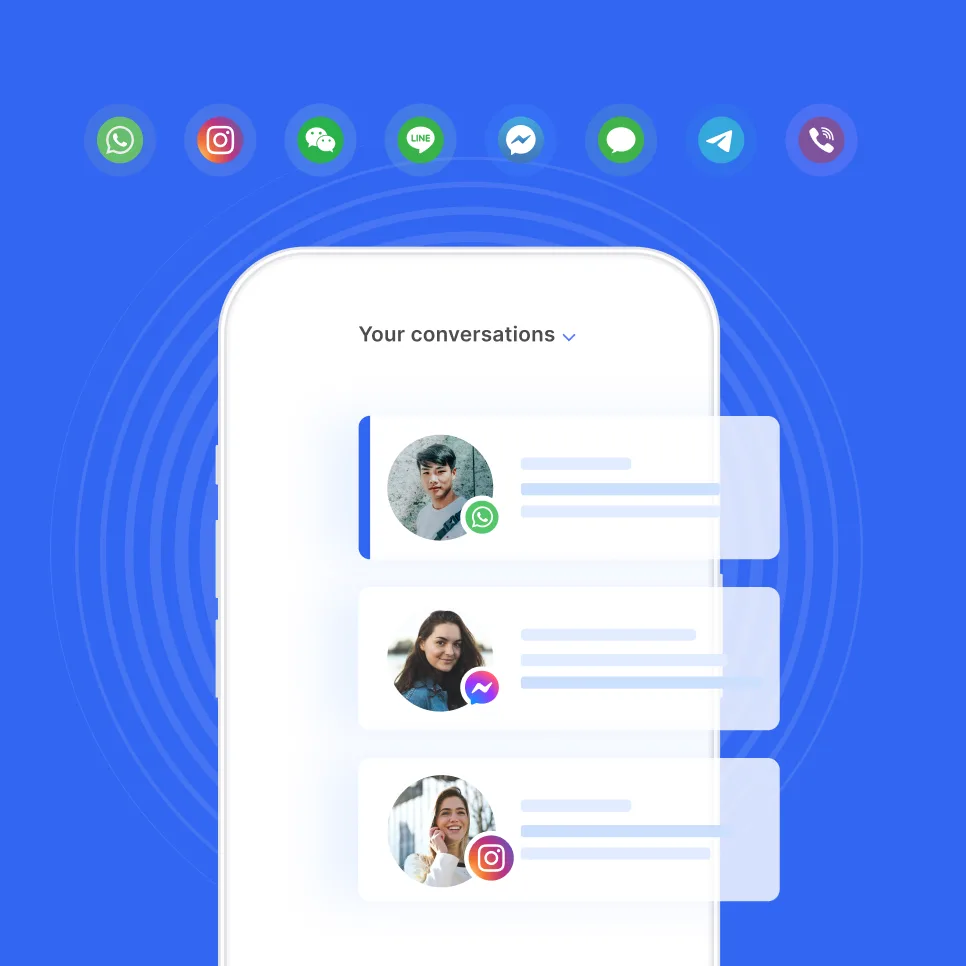
Want to outcompete your peers with SleekFlow's help?
Book your personalised demo with SleekFlow today and unlock the potential of seamless communication
Author's note: This comparison reflects SleekFlow's assessment and is for general information. Product details are accurate to the best of our knowledge at the time of publishing, drawn from each provider's public information, and change often, so verify the latest with each provider directly. Both providers' published pages were checked on 28 Sep 2026. We may update this article from time to time. Opinions are our own. Think we've got something wrong? Contact us and we will review and correct it promptly.


