How Tax Firms Can Capture & Convert More Leads During US Tax Season with AI Automation


TL; DR: Quick Summary
- US tax season is a short, high-stakes revenue window where slow responses lead to lost clients and missed filings.
- AI automation helps tax firms respond instantly, qualify leads, route inquiries, and manage peak demand without extra staff.
- AI chatbots, SMS automation, and scheduling bots reduce delays, no-shows, and repetitive follow-ups.
- SMS is critical during tax season, delivering urgent reminders, booking links, and document requests with 90%+ open rates.
- A purpose-built CRM centralizes chats, tracks leads, automates reminders, and protects sensitive client data.
- Combining AI, SMS, and CRM turns tax-season chaos into a scalable, high-conversion lead engine.
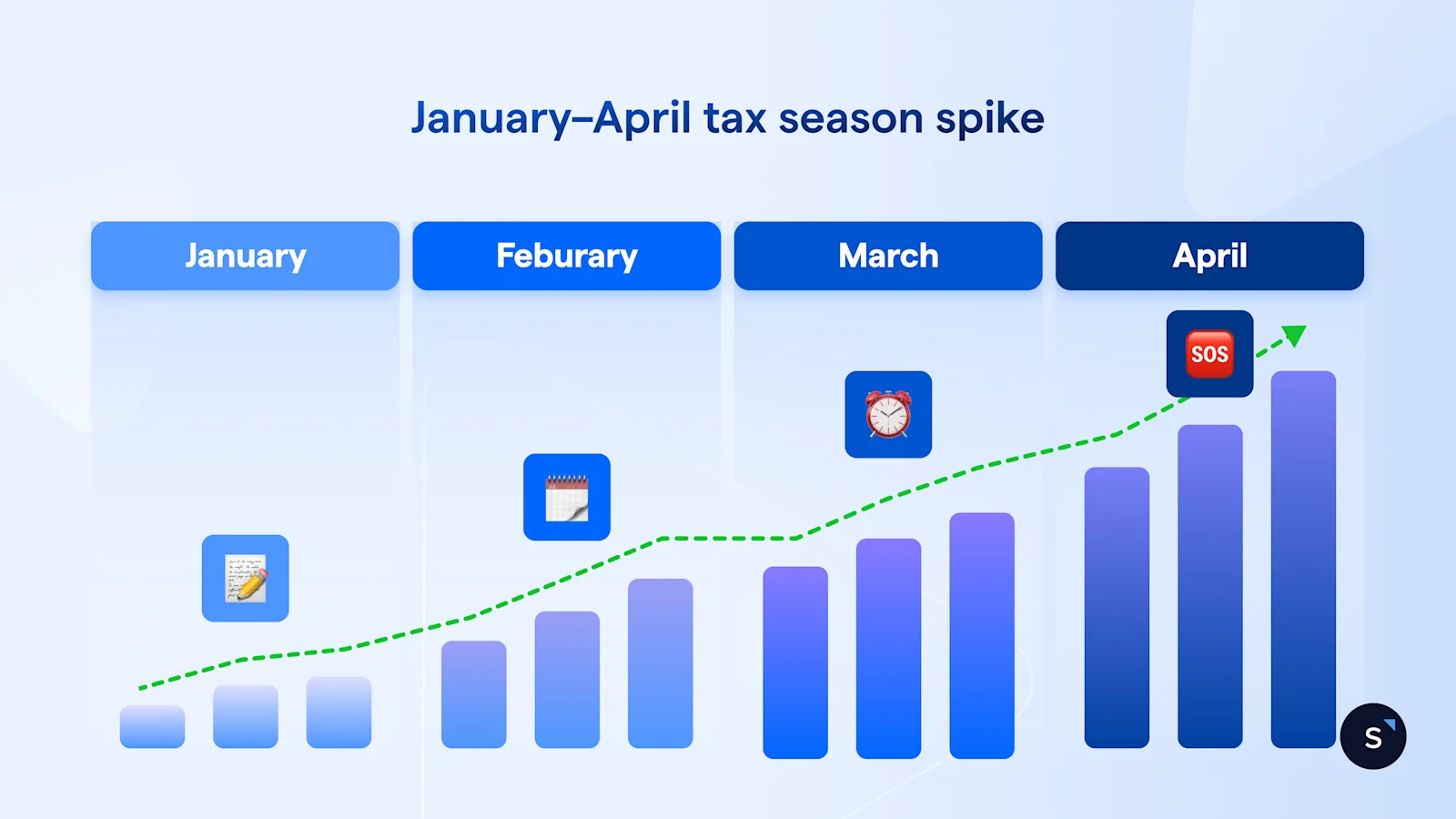
From January through April, the US tax season represents the most critical revenue window for tax preparation firms. During this period, millions of individuals and businesses actively search for tax preparation services, resulting in a surge in inbound inquiries, consultations, and filing requests.
According to the IRS, over 163.5 million tax returns are filed annually in the United States, with the vast majority submitted during the first four months of the year. This makes tax season one of the most competitive and time-sensitive periods for customer acquisition in the financial services industry.
However, with opportunity comes pressure!
Tax firms often face various challenges like:
A sharp spike in calls, emails, and website inquiries
Tight filing deadlines and compliance requirements
Clients expecting instant responses and real-time updates
Limited staff capacity to follow up with every lead quickly
In this environment, even a small delay in response can result in lost leads and missed revenue, especially when potential clients are comparing multiple providers.
This is where AI automation becomes a game-changer.
By combining AI tax returns, intelligent chat automation, and a modern CRM system for tax professionals, firms can:
Respond instantly to high volumes of tax inquiries
Qualify and nurture leads automatically
Route prospects to the right tax expert faster
Run scalable tax season marketing campaigns without overwhelming internal teams
Instead of struggling to keep up, forward-thinking firms use AI systems to turn peak-season chaos into a streamlined, high-conversion lead engine.
Why AI Automation Is a Game-Changer for Tax Professionals
During peak tax season, speed and accuracy determine whether a lead converts or moves on to a competitor. Traditional manual workflows simply can’t keep up with the volume of inquiries, documents, and compliance-related questions arriving every day. This is where AI automation fundamentally transforms how modern tax firms operate.
By leveraging AI tax returns solutions and intelligent automation, tax professionals can reduce response times, eliminate repetitive tasks, and maintain high service quality even under extreme seasonal pressure.
How AI Solves Core Tax Season Challenges
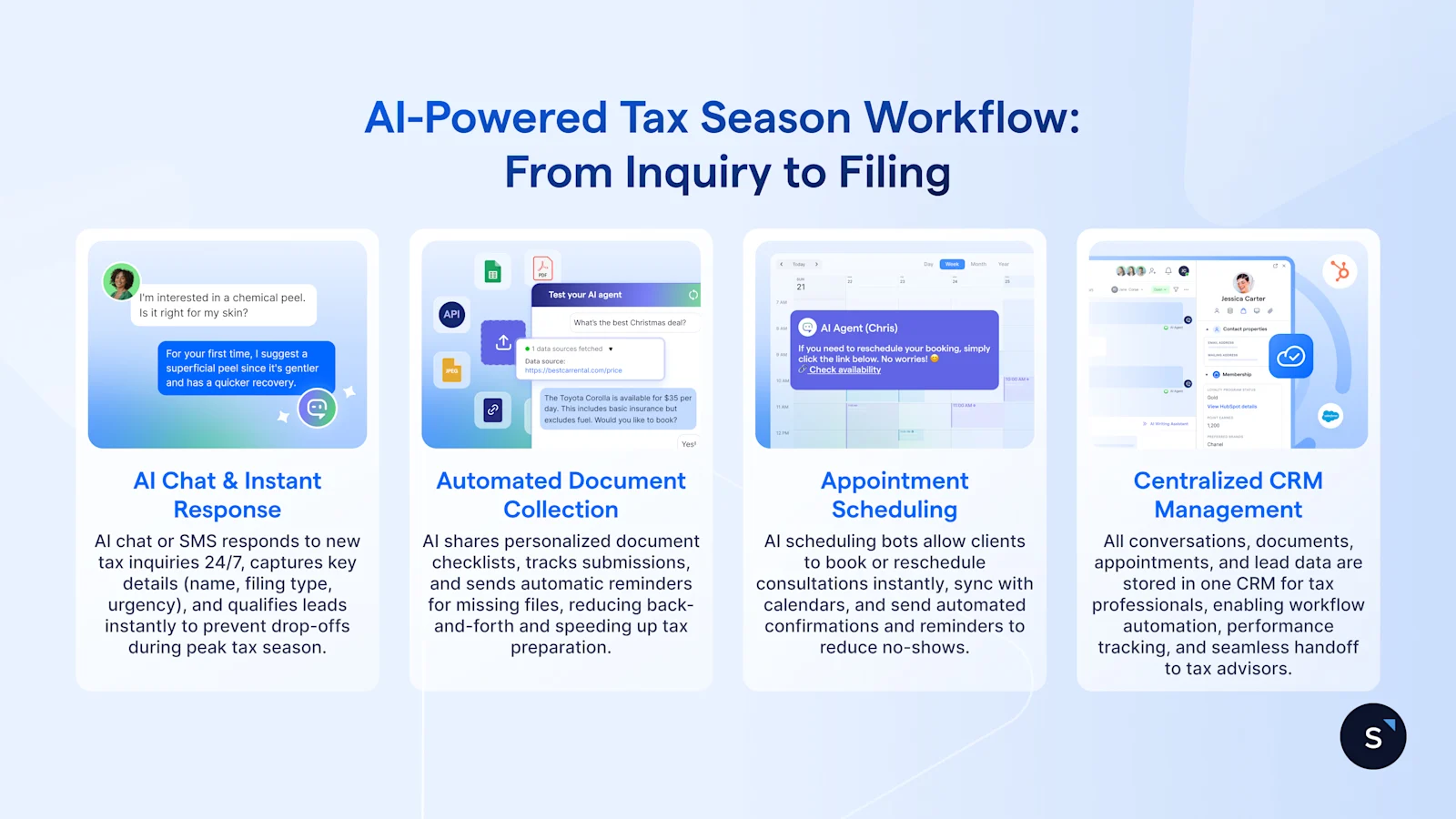
Instant responses via AI chat or SMS
AI chatbots and SMS automation enable firms to respond to client queries 24/7. Whether prospects are asking about pricing, document requirements, or filing deadlines, AI ensures no inquiry goes unanswered dramatically improving first-response time and lead conversion.
Automated document checklists
Instead of manually chasing clients for missing paperwork, AI systems automatically:
Share personalized document checklists
Track submission status
Send reminders for incomplete files
This significantly reduces back-and-forth and speeds up tax preparation workflows.
Appointment scheduling bots
AI scheduling assistants sync with your team’s calendar and allow clients to:
Book consultations instantly
Reschedule without human intervention
Receive automated confirmations and reminders
This minimizes no-shows and frees up staff time during peak season.
Lead qualification
Not every inquiry is ready to file immediately. AI can automatically qualify leads based on:
Filing urgency
Tax complexity
Business vs individual needs
Qualified leads are routed to the right tax advisor, while early-stage prospects are nurtured automatically.
Faster support during compliance-heavy tasks
With AI tools designed for compliance workflows, firms can use AI to review tax returns, flag inconsistencies, and assist preparers with validation checks. An AI tax return assistant acts as a support layer, helping teams work faster while reducing human error during high-pressure periods.
Best AI-Driven Marketing Strategies for Tax Firms During Tax Season
While AI improves operations, its real competitive advantage lies in marketing execution. The most successful firms use AI systems to run scalable, personalized tax season marketing campaigns that convert interest into booked filings.
Below are proven, AI-driven marketing strategies for seasonal businesses specifically tailored for tax services.
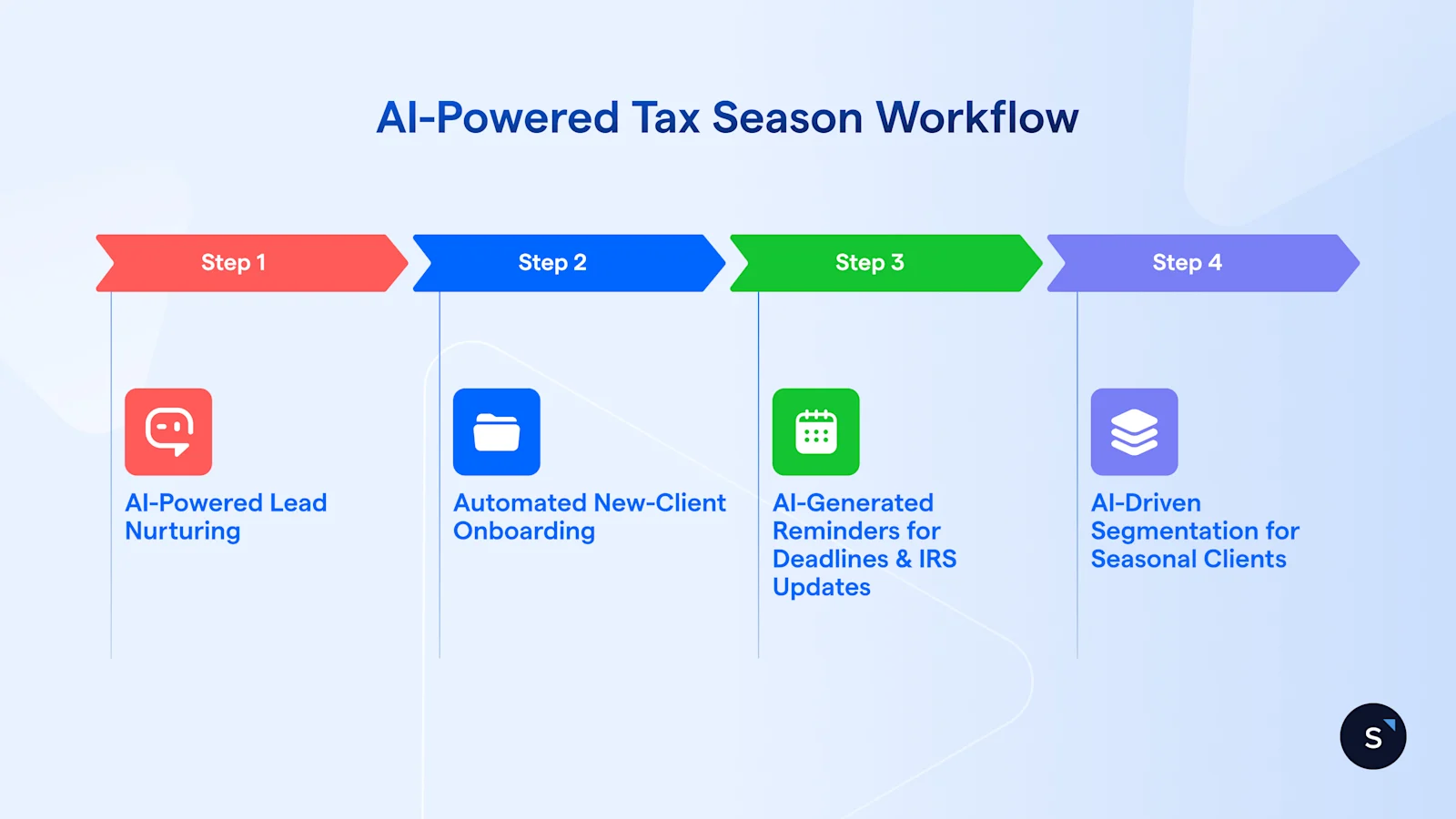
AI Lead Nurturing
AI automatically follows up with leads across email, SMS, and messaging apps based on behavior and intent. Instead of generic blasts, prospects receive:
Personalized filing reminders
Service recommendations based on tax type
Timely nudges as deadlines approach
This ensures no lead goes cold during peak demand.
Automated New-Client Onboarding
First impressions matter. AI onboarding flows can:
Welcome new clients instantly
Share document upload links
Explain the next steps clearly
This reduces friction and builds trust early in the client journey.
AI-Generated Reminders for Deadlines & IRS Updates
AI systems monitor key IRS milestones and automatically notify clients about:
Filing deadlines
Extension options
Regulatory updates
These proactive alerts strengthen credibility and improve retention throughout tax season.
AI-Driven Segmentation for Seasonal Clients
AI analyzes historical and real-time data to segment audiences such as:
Last-minute filers
Small business owners
Returning clients vs new leads
This allows firms to run targeted tax season email marketing campaigns that speak directly to each client group’s needs, maximizing engagement and ROI.
Why CRM Software Is Essential for Tax Professionals During Peak Season
During the US tax season, managing client relationships manually becomes increasingly difficult. High inquiry volumes, multiple communication channels, strict deadlines, and sensitive financial data demand a more structured approach. This is why a purpose-built CRM software for tax professionals is no longer optional, it’s essential for maintaining accuracy, responsiveness, and compliance during peak season.
Unlike generic CRMs, the best CRM platform for tax professionals is designed to handle seasonal spikes, confidential data, and multi-step workflows that define tax services.
What makes a CRM suitable for tax firms isn’t just contact management, it’s the ability to securely manage clients, automate workflows, and keep every tax season interaction organized.
Secure client data storage
Tax firms handle highly sensitive personal and financial information. A reliable CRM system for tax professionals provides centralized, secure storage for:
Client contact details
Filing status and service history
Document submission tracking
This reduces data silos while supporting regulatory and data protection requirements.
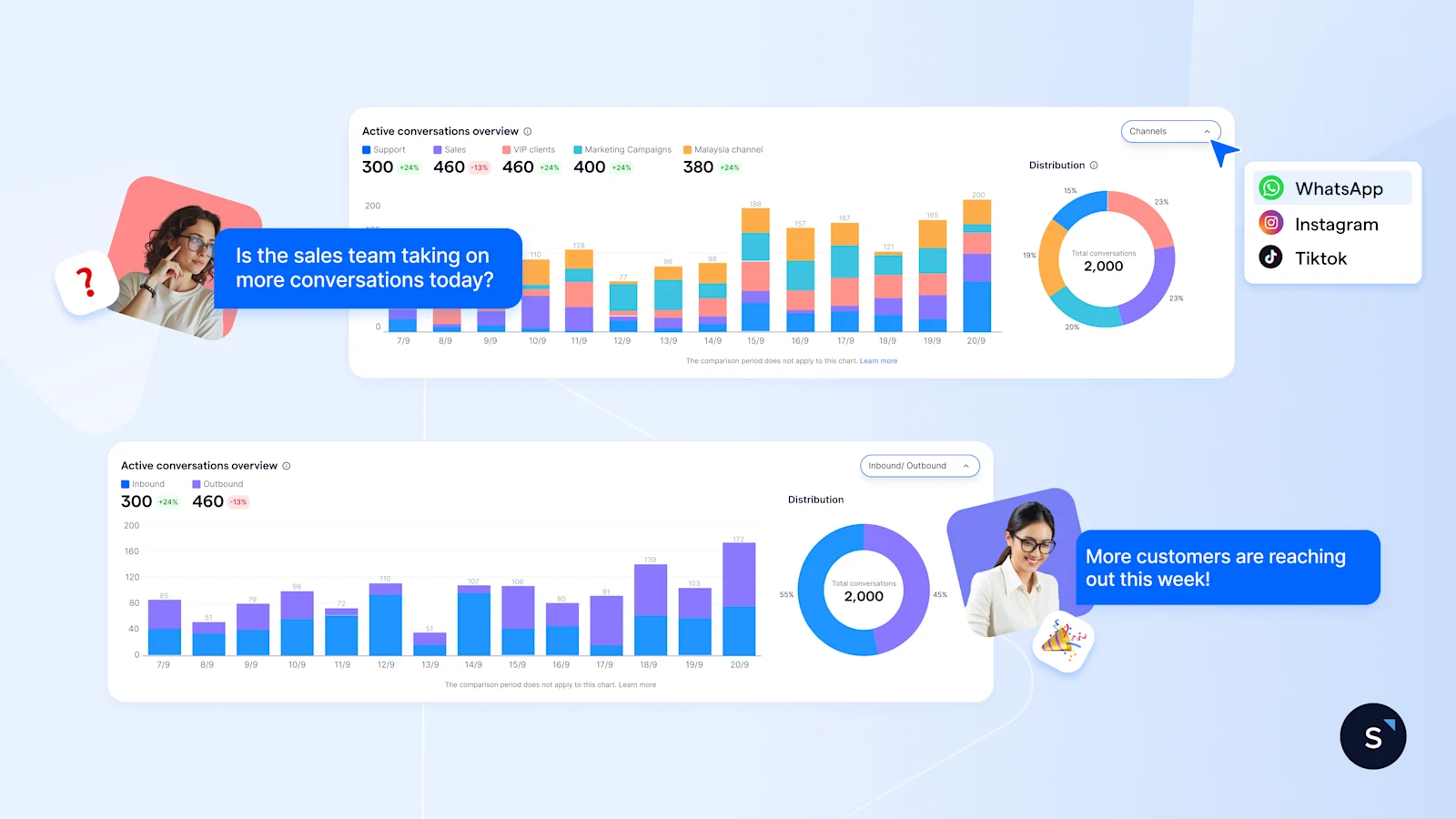
Centralizing chats, SMS, email, and calls
Clients communicate across multiple channels; mail, SMS, WhatsApp, website chat, and phone calls. Without a centralized system, conversations get lost or duplicated.
A modern CRM software for tax professionals consolidates all communication into a single client timeline, allowing teams to:
View past conversations instantly
Continue discussions across channels seamlessly
Avoid missed follow-ups during high-volume periods
This is especially valuable during tax season when response speed directly impacts conversion.
Automating reminders and workflows
Manual reminders for document submission, appointments, and deadlines are time-consuming and error-prone.
With CRM-powered automation, tax firms can:
Send automatic reminders for missing documents
Trigger deadline alerts as filing dates approach
Assign tasks internally based on client status
These workflows help firms stay organized and compliant without increasing staff workload.
Tracking lead sources and conversions
During peak season, understanding where leads come from and which channels convert best is critical.
The best CRM platform for tax professionals enables firms to:
Track lead sources (ads, referrals, website, email campaigns)
Monitor conversion rates across campaigns
Optimize tax season marketing spend based on real performance data
This insight allows firms to focus resources on high-impact channels rather than guesswork.
Platforms like SleekFlow demonstrate how CRM automation can simplify tax season operations by:
Centralizing client communication across channels
Automating routine follow-ups and reminders
Supporting lead tracking and workflow visibility
Instead of replacing human expertise, CRM tools act as operational support helping tax professionals focus more on advisory work and less on administrative coordination.
How Tax Firms Can Use SMS to Boost Lead Capture & Appointment Bookings
During peak tax season, timing is everything. Potential clients are often juggling work, family, and multiple financial deadlines, making it easy for emails or calls to go unnoticed. This is where SMS becomes one of the most effective communication channels for tax firms.
Studies consistently show that SMS messages have open rates exceeding 90%, with most texts read within minutes of delivery. For time-sensitive services like tax filing, this makes SMS marketing especially powerful for capturing leads and securing appointments before deadlines pass.
Why SMS Works Exceptionally Well During Tax Season
High visibility for urgent communication
Unlike email, SMS notifications appear directly on a client’s phone screen and are typically read within minutes of delivery. Research shows that over 90% of SMS messages are opened, and the majority are read within 3 minutes, making SMS one of the most effective channels for time-sensitive communication. This level of immediacy is especially valuable during tax season, when clients must act quickly on critical updates such as:
Filing deadline alerts
Appointment confirmations
Missing document reminders
This high visibility is why SMS marketing for tax filing performs well during short, compliance-driven seasons.
Perfect for deadlines, reminders, and urgent updates
Tax season revolves around dates, filing deadlines, extension cut-offs, and appointment windows. SMS ensures these reminders are delivered and seen in real time, reducing no-shows and last-minute confusion.
Ideal for busy clients who prefer texting
Many clients - especially professionals and small business owners, prefer quick texts over long calls. SMS allows them to:
Confirm appointments
Ask simple questions
Receive updates without interrupting their day
This makes SMS marketing for tax return services a natural fit for modern client behavior.
Real-World SMS Scenarios Tax Firms Use During Tax Season
Below are common, high-impact SMS use cases tax firms rely on during peak season.
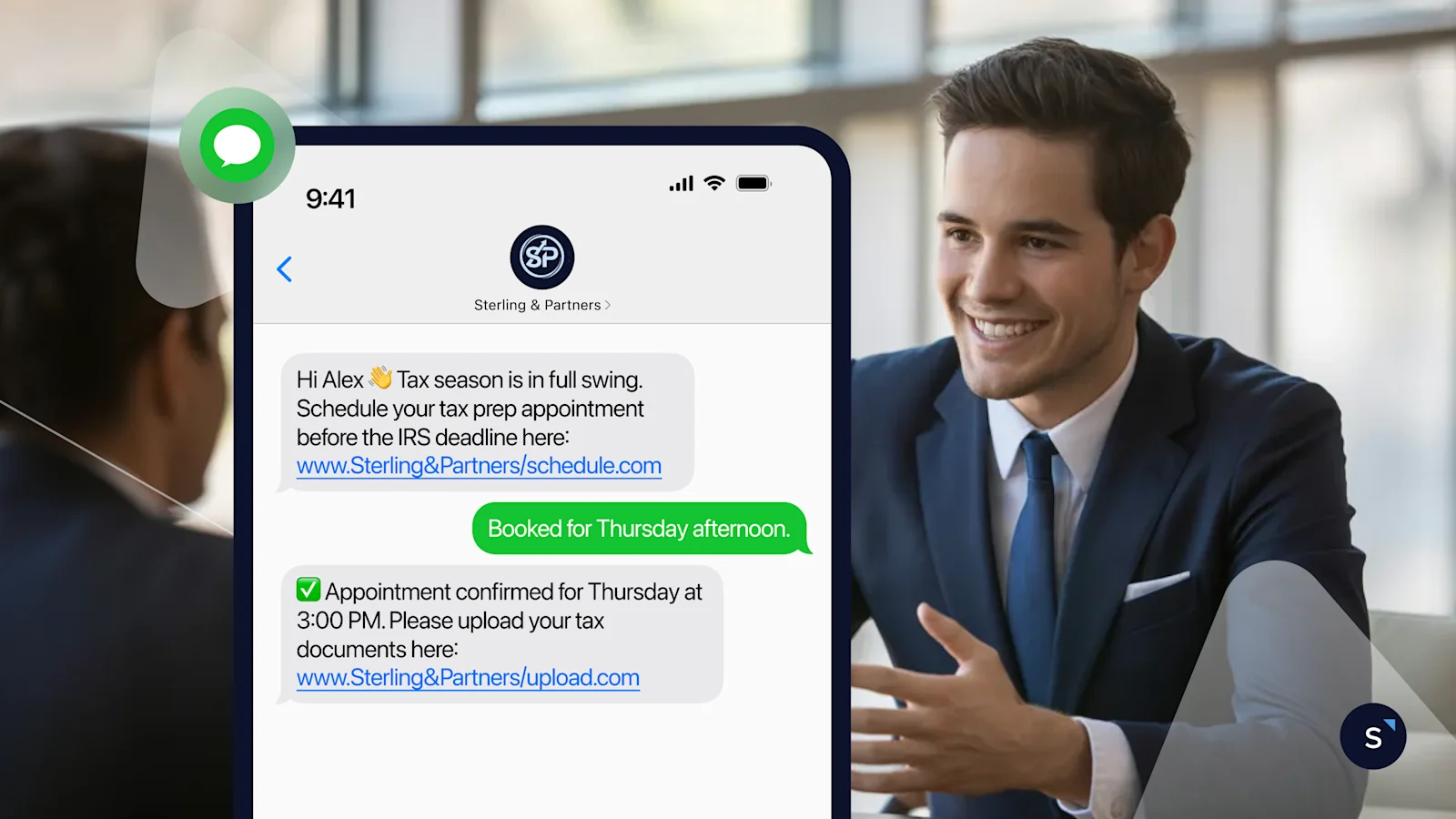
1. Appointment Scheduling Reminders
Prompting leads to take action before they book elsewhere.
Example SMS:
Hi {{First Name}}, slots are filling fast. Schedule your tax prep appointment before the deadline here: {{Link}}
2. Missing Document Notifications
Reducing delays caused by incomplete submissions.
Example SMS:
Hi {{First Name}}, we’re missing one or more documents needed to complete your tax return. Please upload them here: {{Link}}
3. Last-Minute IRS Deadline Alerts
Helping clients avoid penalties and late filing stress.
Example SMS:
Reminder: The IRS tax filing deadline is approaching. Contact us today if you still need assistance.
4. Two-Way Texting for Quick Client Questions
Enabling fast clarifications without lengthy calls.
Example SMS:
Have a quick question about your tax return? Reply to this message and our team will assist you shortly.
Use Cases: How AI Agents Can Transform Tax Return Processing
During peak tax season, speed, accuracy, and consistency are critical but human teams alone often struggle to scale under pressure. This is where AI agents for tax return companies play a transformative role. By automating repetitive tasks and supporting review-heavy workflows, AI enables tax firms to process more returns without sacrificing quality.
Below are practical, real-world use cases showing how AI is already improving tax return processing during high-demand periods.
AI Agents for Pre-Filing Data Validation & Error Detection
One of the most time-consuming stages of tax preparation is reviewing client-submitted data for inconsistencies, missing fields, or calculation errors, especially during peak filing weeks.
Intuit (TurboTax) uses AI and machine learning models to automatically review tax data, identify missing information, and flag potential errors before submission, helping reduce mistakes and rework for both consumers and tax professionals.
How AI agents help tax firms:
Scan tax forms for missing or mismatched information
Detect anomalies by comparing entries against historical filing patterns
Flag potential compliance risks before human review
Impact metrics observed across the industry:
30–40% reduction in manual review time
Fewer rework cycles and faster turnaround times
Improved first-time filing accuracy during peak season
This is a strong example of how AI to review tax returns supports rather than replaces tax professionals by reducing repetitive checks and allowing them to focus on higher-value advisory and compliance decisions during high-pressure tax season.
2. AI-Assisted Tax Return Preparation During Peak Volume
During filing deadlines, tax firms often face processing backlogs that delay client delivery and increase staff pressure.
A global consumer tax services provider uses AI and automation to assist tax professionals by extracting data from uploaded documents, categorizing information, and accelerating return preparation during peak filing periods.
How AI systems support high-volume tax preparation:
Auto-populate tax forms from uploaded W-2s, 1099s, and financial documents
Categorize income, deductions, and expenses accurately
Suggest entries based on prior-year filings and similar tax profiles
Impact metrics observed across the industry:
20–50% faster tax return preparation during peak season
Higher throughput without adding seasonal staff
More consistent handling of high-volume individual returns
These efficiencies allow firms to serve more clients within the same filing window, critical for revenue optimization during tax season.
3. AI Agents Supporting Post-Filing Reviews & Client Queries
After returns are prepared, tax firms still spend significant time answering client questions, explaining outcomes, and performing final checks, especially as deadlines approach.
Several software solutions for tax and accounting professionals use AI tools to support post-filing review workflows that assist tax professionals with client inquiries and quality checks.
How AI agents support post-filing workflows:
Answer common post-filing questions (refund status, filing confirmation, next steps)
Provide instant explanations of filing outcomes and notices
Support final quality checks before submission or e-filing
Impact metrics observed across the industry:
25–35% reduction in repetitive client queries
Faster response times during deadline weeks
Improved client satisfaction during high-stress filing periods
For AI agents for tax return companies, post-filing support is just as valuable as pre-filing automation, ensuring smoother, end-to-end client experiences throughout the tax season.
How to Create a High-Converting Tax Season Marketing Campaign with SleekFlow
A successful tax season marketing campaign isn’t about running more ads, it’s about responding faster, personalizing communication, and guiding prospects smoothly from inquiry to appointment. During peak filing months, firms that combineomnichannel messaging (WhatsApp/Instagram/Facebook Messenger/SMS/Live Chat) in one inbox, automation, and conversion tracking consistently outperform those relying on manual follow-ups.
Below is a proven, step-by-step framework tax firms can use to run high-performing tax return marketing campaigns during the US tax season using SleekFlow.
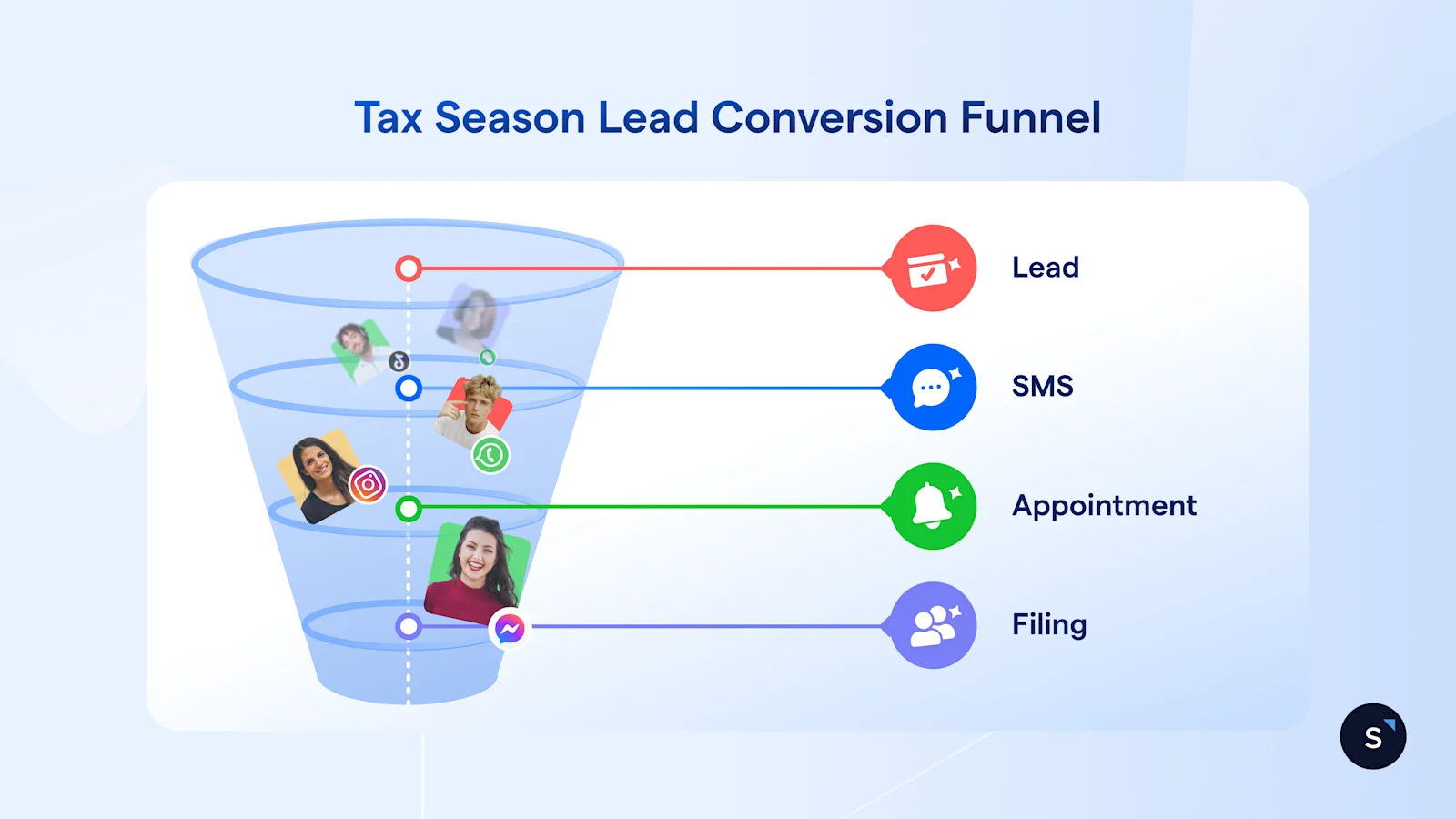
Step 1: Build a Clear Lead Capture Funnel
Your funnel should make it effortless for prospects to express intent. Use short forms and clear calls to action that prioritize speed over data collection. The goal is to capture leads quickly and follow up immediately.
In SleekFlow, capture leads through multiple entry points like the Live Chat Widget (website), QR codes, and wa.me links, then centralize every inquiry into one unified team inbox
*Ask only for essential details (name, phone number, filing type) to avoid drop-offs during high-intent moments.
High-converting lead sources include:
Website “Book Tax Appointment” forms (plus SleekFlow Live Chat Widget for instant website inquiries)
Google Search or Local Service Ads (send clicks to a chat-first entry point like a wa.me link / QR code so the lead lands directly in SleekFlow Inbox)
Referral landing pages for returning clients
Step 2: Respond Instantly Using AI + SMS
Fast responses win during tax season. Use SleekFlow AI SMS Automation services and Flow Builder (no-code) to trigger an instant first reply when an incoming message arrives (or when a keyword is detected), across channels including SMS.
You can also make your AI Tax Agent knowledgeable about any tax topic by uploading your own documents, such as tax guides, pricing sheets, FAQs, or policies, so it can accurately support clients throughout the filing process. The AI automatically learns and adapts as you update these files, making setup simple from the firm’s side.
* First responses sent within minutes significantly increase appointment booking rates. SleekFlow also tracks response-time metrics in analytics, so you can monitor whether your “instant response” promise is actually being met.
Use AI automation to:
Instantly reply to new inquiries (Flow Builder “Incoming message” trigger → “Send message” action)
Send SMS confirmations within seconds
Answer basic questions before human follow-up (use automated responses + routing/handoff to an agent when needed)
Sample auto-reply SMS template:
Thanks for contacting us! A tax specialist will reach out shortly. You can also book your appointment here: {{Link}}
(Tip: personalize with SleekFlow contact properties once captured, e.g., “Hi [First Name]…”)
This approach ensures your tax season marketing campaign never loses leads due to slow response times.
Step 3: Segment New vs Returning Clients
Not all leads are equal. Segmenting new and returning clients allows firms to tailor messaging based on familiarity and urgency.
In SleekFlow, segments using Contact Labels (tags) and Contact Lists, driven by Contact Properties / Custom Properties (e.g., Client Type = New/Returning, Filing Type, Urgency).
Common tax season segments:
New filers
Returning clients
Last-minute filers
Small business owners
Why this matters:
Returning clients convert faster
New leads need more guidance and reassurance
*Personalized messaging increases engagement and response rates during short filing windows. With SleekFlow, you can also use these properties to route conversations (smart routing) and trigger different automated journeys in Flow Builder.
Step 4: Automate Appointment Scheduling
Automated scheduling removes friction from the booking process. By using Sleekflow Flow Builder you can send booking links immediately, automate booking confirmations, and send reminders (appointments & booking are a common Flow Builder use case).If your scheduler lives elsewhere (e.g., a booking tool), connect via integrations (Zapier/API) or fetch booking data using Flow Builder HTTP requests, then update the contact record automatically.
Automation benefits:
24/7 appointment availability
Fewer back-and-forth messages
Automatic confirmations
SMS booking example:
Appointments are filling fast. Book your tax prep slot here before the deadline: {{Link}}
(Tracking tip: define a “Booking” conversion event in SleekFlow Conversion Analytics, then “Log Event” from Flow Builder when the customer books.)
Step 5: Use Messaging Reminders to Reduce No-Shows
Missed appointments are costly during tax season. Automated reminder sequences using both email and SMS help ensure clients remember deadlines and show up prepared.
Combining SMS and email reminders significantly lowers no-show rates for time-sensitive services.
Recommended reminder flow:
Email: 3 days before appointment
SMS: 24 hours before
SMS: Morning-of reminder
In SleekFlow, build this with Flow Builder using “Scheduled time” triggers and “Delay” actions, and send reminders in the channel the client used (or SMS for urgency)
*SMS reminders are especially effective for deadline-driven services like tax filing.
Step 6: Track Campaign Performance in Your CRM
Tracking campaign performance helps firms understand what’s working and where improvements are needed.
With SleekFlow, track
conversation performance (reply rates, first reply time, resolution time, deliver/read/reply rates)
conversion outcomes via Conversion Analytics (e.g., Booking).
You can also filter reporting by channel/team/agent/contact properties, and export reports as CSV
Review metrics weekly during tax season to make real-time adjustments and maximize ROI.
Key metrics to track:
Lead source performance
Response time
Appointment booking rate
No-show rate
Conversion to completed tax returns
Tracking these metrics helps you optimize fast, while the season is still in full swing.
Conclusion: AI + SMS = The Future of Tax Season Lead Conversion
The US tax season is short, intense, and highly competitive. Firms that rely on manual follow-ups and disconnected tools often struggle to keep up with inquiry volumes, deadlines, and client expectations. As this guide has shown, combining AI, SMS, and a CRM system for tax professionals creates a powerful system that turns urgency into opportunity.
When used together:
AI automation ensures instant responses and faster lead qualification
SMS communication delivers high-visibility reminders and deadline alerts
CRM software for tax professionals centralizes conversations, tracks performance, and reduces administrative workload
The result is a smoother tax season with more captured leads, higher conversion rates, and less operational stress even during peak filing weeks.
As client expectations continue to shift toward faster, more convenient communication, tax firms that adopt automation early will be better positioned for the upcoming season and beyond.

Start for free!
Grow your revenue and turn chats into conversions with AI agents. Try SleekFlow for free, forever.
Frequently Asked Questions
How can tax firms use AI for lead generation?
Is SMS effective for tax season reminders?
What is the best CRM system for tax professionals?
How can AI reduce workload during peak tax season?
How do tax firms automate appointment scheduling?
Can AI help review tax returns?
Recommended for you


