AI Shopping Assistants - How E-commerce Brands Increase Conversion Rate & AOV


TL; DR: Quick Summary
- Rising competition, high customer acquisition costs, and shrinking attention spans make engaging shoppers difficult, leading to a 70% cart abandonment rate.
- AI shopping assistants use conversational AI, behavioral signals, and real-time product guidance to act like a virtual sales associate, increasing engagement, reducing friction, and boosting conversions.
- AI assistants provide personalized product recommendations, automate common queries, and handle last-minute buyer objections across multiple channels (SMS, social media, email).
- They improve customer experience by offering instant responses, relevant suggestions, and continuous personalization, leading to reduced cart abandonment and increased average order value.
- Brands that deploy AI assistants see improved conversion rates, AOV, and cart recovery. AI assistants are essential for staying competitive in the fast-paced digital marketplace.
E-commerce has never been more competitive or more expensive. Rising customer acquisition costs, shrinking attention spans, and endless product choices mean brands have just seconds to engage shoppers before they bounce. At the same time, online buyers expect instant answers, personalized recommendations, and seamless checkout experiences across devices and channels.
Yet, despite advanced storefronts and marketing tools, many brands still struggle with low engagement and high cart abandonment rates. Industry data shows that nearly 70% of online shopping carts are abandoned, often due to hesitation, lack of clarity, or friction during the buying journey (Baymard Institute). Meanwhile, global e-commerce sales continue to grow rapidly, crossing $6 trillion annually, intensifying competition for every click (Statista).
This is where an AI shopping assistant becomes essential. Unlike basic chatbots or static FAQs, a modern ecommerce AI assistant uses conversational AI, behavioral signals, and customer context to guide shoppers in real time, much like an in-store sales associate. From answering product questions and delivering AI product recommendations to addressing objections and nudging hesitant buyers at checkout, shopping assistant AI helps brands increase e-commerce conversion rate, reduce cart abandonment, and increase average order value (AOV) at scale.
As conversational commerce becomes a standard part of online shopping, AI assistants are no longer optional. They are fast becoming foundational infrastructure for e-commerce brands that want to compete and convert, in today’s high-pressure digital marketplace.
What is an AI Shopping Assistant?
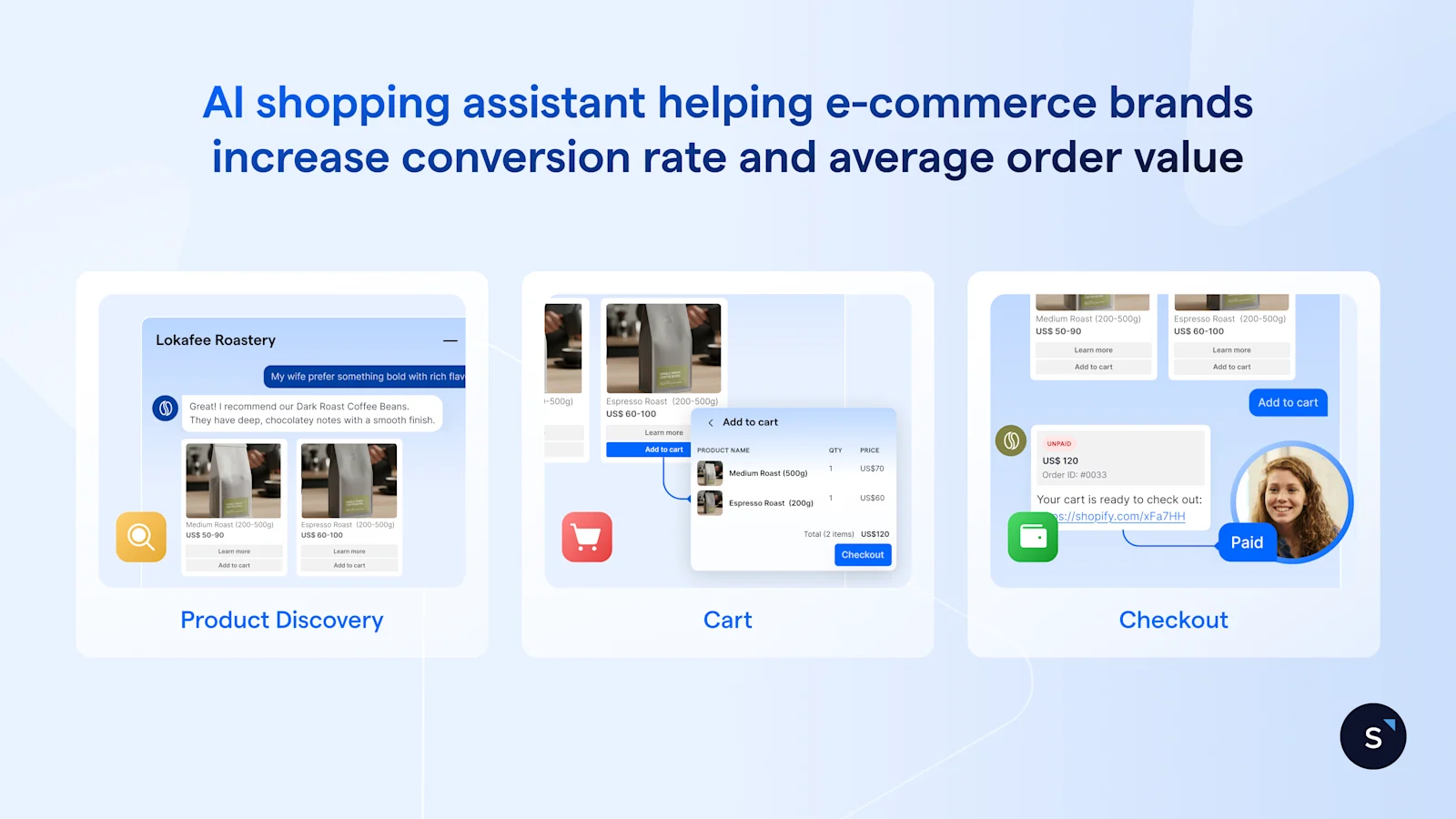
An AI shopping assistant is a conversational, AI tool that helps online shoppers discover products, answer questions, and complete purchases, just like a knowledgeable in-store sales associate, but available 24/7.
Instead of forcing customers to browse endlessly or search FAQs, a shopping assistant AI interacts with shoppers in real time, understands their intent, and guides them through the buying journey. The goal is simple: remove friction, build confidence, and help customers buy faster.
Read more:
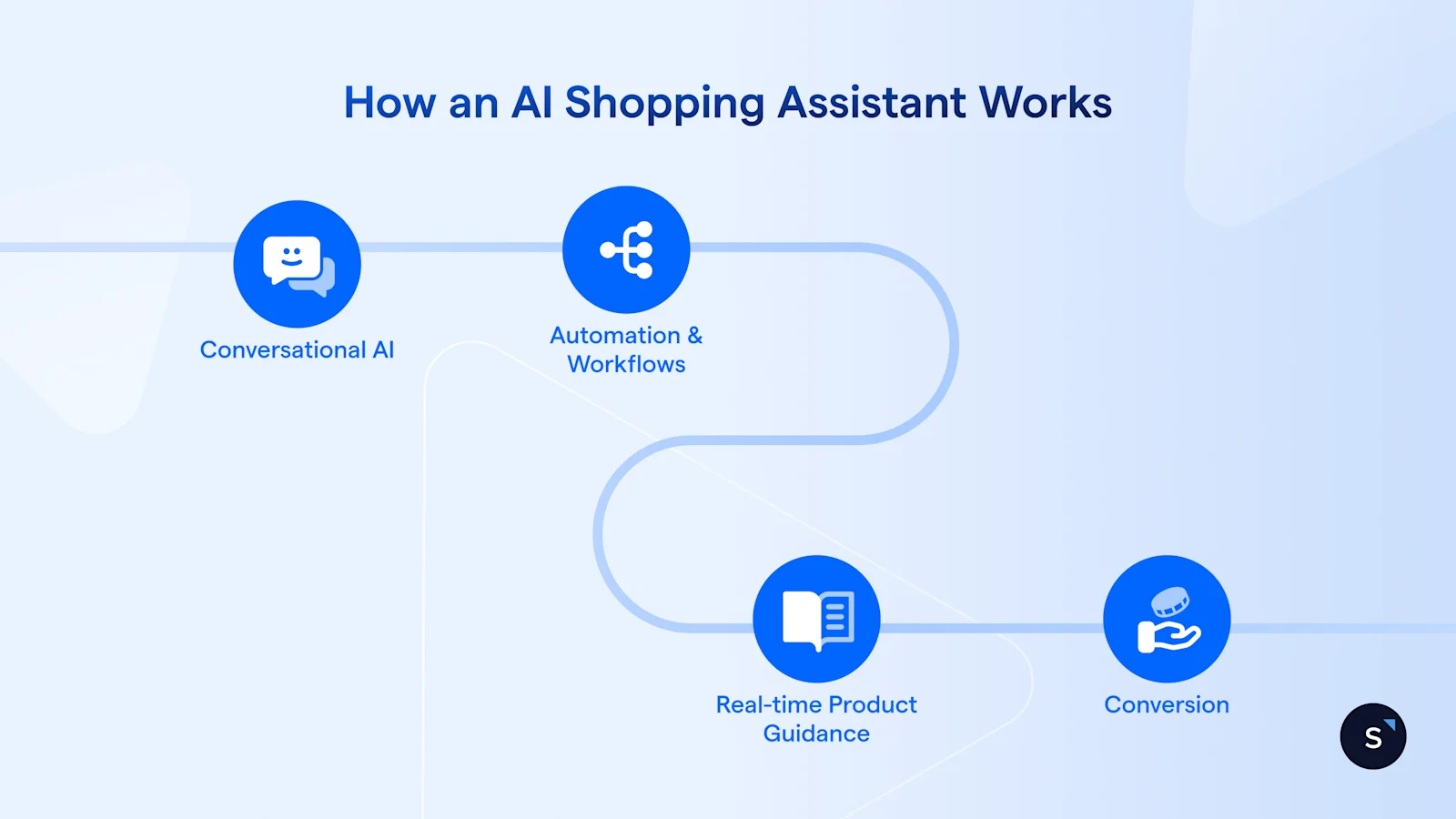
How an AI Shopping Assistant Works (High-Level)
At its core, an e-commerce AI assistant combines several technologies to create a smooth shopping experience:
Conversational AI
Conversational AI allows shoppers to ask natural questions without navigating menus or FAQs. Whether it’s product availability, size guidance, or comparisons, the assistant understands intent and responds contextually, just like a human associate.
Automation & Intelligent Workflows
Beyond conversations, AI assistants automate key interactions across the journey. They instantly answer common queries, surface product details, track orders, and escalate complex issues to human agents when needed,, ensuring fast support without sacrificing accuracy.
Real-Time Product Guidance
By analyzing browsing behavior, purchase history, and contextual signals, the assistant delivers relevant suggestions and AI product recommendations in real time. This helps shoppers discover suitable products faster and encourages higher-value purchases.
Together, these capabilities enable AI personalized shopping experiences that adapt to individual shoppers, reducing friction, increasing confidence, and improving conversion outcomes.
Why This Matters for Modern E-commerce
When combined, conversational AI, automation, and real-time guidance enable AI personalized shopping experiences that adapt to each shopper’s needs. Instead of treating every visitor the same, shopping assistant AI helps brands deliver contextual, one-to-one interactions, leading to higher engagement, lower friction, and better business outcomes.
Where Do AI Shopping Assistants Appear?
Modern shoppers move across channels and AI shopping assistants follow them there:
Website chat widgets for real-time browsing assistance
SMS for abandoned cart nudges and quick follow-ups
WhatsApp for conversational commerce and order updates
Instagram & Facebook Messenger for social commerce interactions
Email & in-app chat for post-purchase support and upsell opportunities
By meeting customers on their preferred channels, an e-commerce AI assistant helps brands stay responsive, consistent, and conversion-focused across the entire journey.
How Shoppers Behave Online (and Why Conversions Drop)
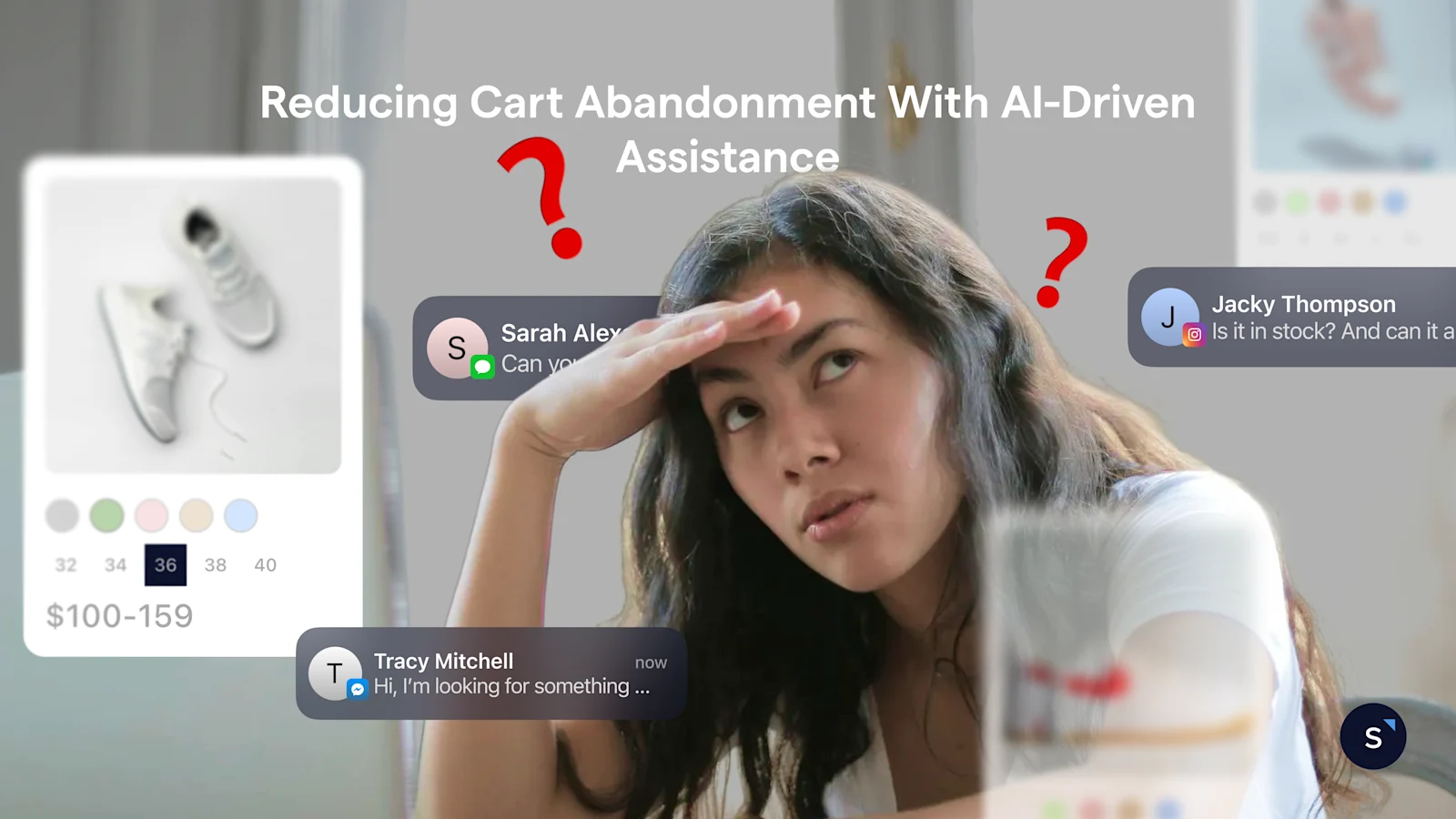
Online shopping is fast but buyer confidence isn’t. While customers enjoy convenience and choice, their actual behavior reveals why so many e-commerce journeys end without a purchase.
1. Decision Fatigue from Endless Choices
Modern e-commerce stores often showcase hundreds or thousands of SKUs. While variety attracts shoppers, it can also overwhelm them. Research shows that too many options reduce decision-making ability, leading users to postpone or abandon purchases altogether. When shoppers can’t quickly decide what’s best for them, conversion rates suffer.
2. No Instant Answers at Critical Moments
Questions like “Is this compatible with my device?” or “Will this fit me?” often arise right before checkout. If instant support isn’t available, shoppers leave to “think about it” and frequently never return. This lack of real-time guidance is a major contributor to cart abandonment issues.
3. Mobile Distractions & Short Attention Spans
Over 60% of e-commerce traffic now comes from mobile devices. Mobile shoppers are easily distracted by notifications, apps, or slow-loading pages. Any friction, unclear product info, delayed responses, or complex checkout can instantly break momentum.
4. Lack of Personal Relevance
Generic shopping experiences treat every visitor the same. But today’s customers expect relevance. When product suggestions, offers, or messaging don’t align with their intent, engagement drops and so does trust.
All these behaviors compound into one painful metric: nearly 70% of online carts are abandoned globally. To reduce cart abandonment, brands must remove hesitation, answer questions instantly, and guide shoppers with confidence, right when it matters.
How AI Shopping Assistants Increase E-commerce Conversion Rates
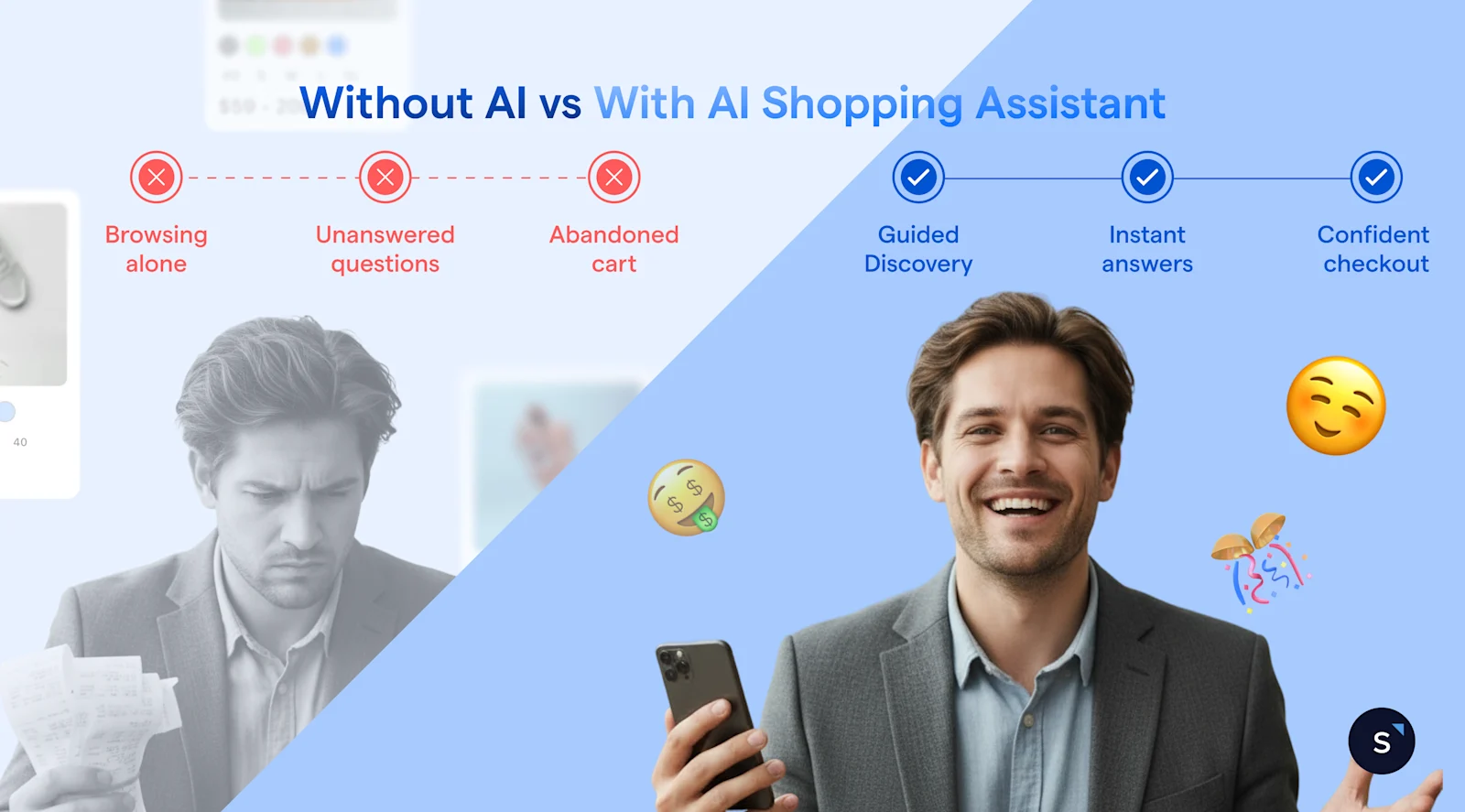
An AI shopping assistant directly addresses the friction points that cause shoppers to hesitate or leave. By acting like a real-time digital sales associate, it helps brands increase e-commerce conversion rate across the entire buying journey.
Instant Responses to Buying Questions
AI assistants respond immediately to high-intent questions about availability, shipping, returns, and payment options ,keeping shoppers engaged when decisions are being made.
Personalized Product Discovery
Instead of overwhelming shoppers with choices, AI narrows options using intent signals such as browsing behavior, past purchases, and stated preferences, helping customers find the right product faster.
Size, Fit, and Compatibility Guidance
For categories like fashion, electronics, or furniture, uncertainty often blocks conversion. AI assistants clarify specifications, recommend sizes, and suggest compatible add-ons, reducing doubt and returns.
Real-Time Objection Handling
At checkout, last-minute concerns around price or comparison can derail purchases. AI assistants respond by highlighting key benefits, surfacing reviews, or offering relevant alternatives, turning hesitation into confidence.
By guiding shoppers rather than leaving them to decide alone, shopping assistant AI transforms passive browsing into confident buying.
Reducing Cart Abandonment With AI-Driven Assistance
Cart abandonment rarely happens by accident. Most shoppers leave because of last-minute friction, unclear shipping costs, return policies, pricing doubts, or simple hesitation. An AI shopping assistant helps brands reduce cart abandonment by intervening precisely when intent is highest.
How AI Shopping Assistants Intervene at the Right Moment
Exit-intent prompts
When a shopper shows signs of leaving, the AI assistant proactively asks if help is needed, answering questions or suggesting alternatives before the cart is abandoned.Cart reminders via chat or SMS
Automated reminders sent through WhatsApp, SMS, or web chat gently nudge shoppers to complete their purchase, keeping the conversation contextual and relevant.Last-minute question handling
AI instantly clarifies common checkout blockers like delivery timelines, return policies, taxes, or payment options, without forcing users to search or wait.
Speed is critical here. Studies show that even small delays or unanswered questions can trigger cart abandonment behavior. By delivering real-time, personalized assistance across channels, shopping assistant AI turns hesitation into reassurance, recovering revenue that would otherwise be lost.
AI Product Recommendations: From Browsing to Buying
Modern shoppers don’t want more options, they want better ones. This is where AI product recommendation engines outperform static “related products” widgets.
An AI shopping assistant continuously analyzes real-time behavior, past interactions, and contextual signals to surface products that are most likely to convert. Instead of treating every visitor the same, recommendations evolve as shoppers browse, ask questions, or add items to their cart.
How AI Product Recommendations Work in E-commerce
Behavior & Intent Analysis
AI tracks signals such as:
Pages viewed and time spent
Search queries and questions asked
Cart activity and drop-off points
This helps the assistant understand why a shopper is browsing, not just what they clicked.
Upsell and Cross-Sell Logic
AI uses context to recommend:
Premium alternatives when price tolerance is high
Complementary add-ons (accessories, bundles, refills)
Higher-value bundles that increase AOV e-commerce
Unlike rule-based systems, AI adapts recommendations in real time based on shopper intent.
The result: fewer irrelevant suggestions and a smoother path from browsing to buying.
AI Personalized Shopping Experiences
Personalization is no longer about using a customer’s name, it’s about remembering context and intent across the entire journey. AI personalized shopping enables brands to deliver experiences that feel helpful, not intrusive.
How AI Personalization Builds Trust and Conversions
Remembering Shopper Preferences
AI shopping assistants can recall:
Preferred categories, sizes, or colors
Budget ranges and brand affinities
Communication preferences (chat, WhatsApp, SMS)
This reduces friction and speeds up decision-making.
Recognizing Returning Customers
When shoppers return, the AI assistant can:
Resume conversations where they left off
Reference previously viewed or saved items
Suggest logical next steps instead of starting over
This continuity mirrors an in-store experience online.
Personalized Follow-Ups across Channels
AI enables consistent personalization across:
Website chat
WhatsApp and Instagram
SMS cart reminders and product alerts
A shopper who abandons a cart on mobile can receive a context-aware reminder later, helping brands reduce cart abandonment without spamming.
How SleekFlow Enables AI Shopping Assistants for E-commerce Brands
As e-commerce conversations spread across websites, messaging apps, and social channels, brands need a way to deliver consistent, fast, and personalized shopping support, without adding operational complexity. This is where platforms like SleekFlow enable scalable AI shopping assistant experiences in a practical, brand-friendly way.
Rather than replacing human teams, SleekFlow helps e-commerce brands combine automation, conversational AI, and customer data to support shoppers throughout their buying journey.
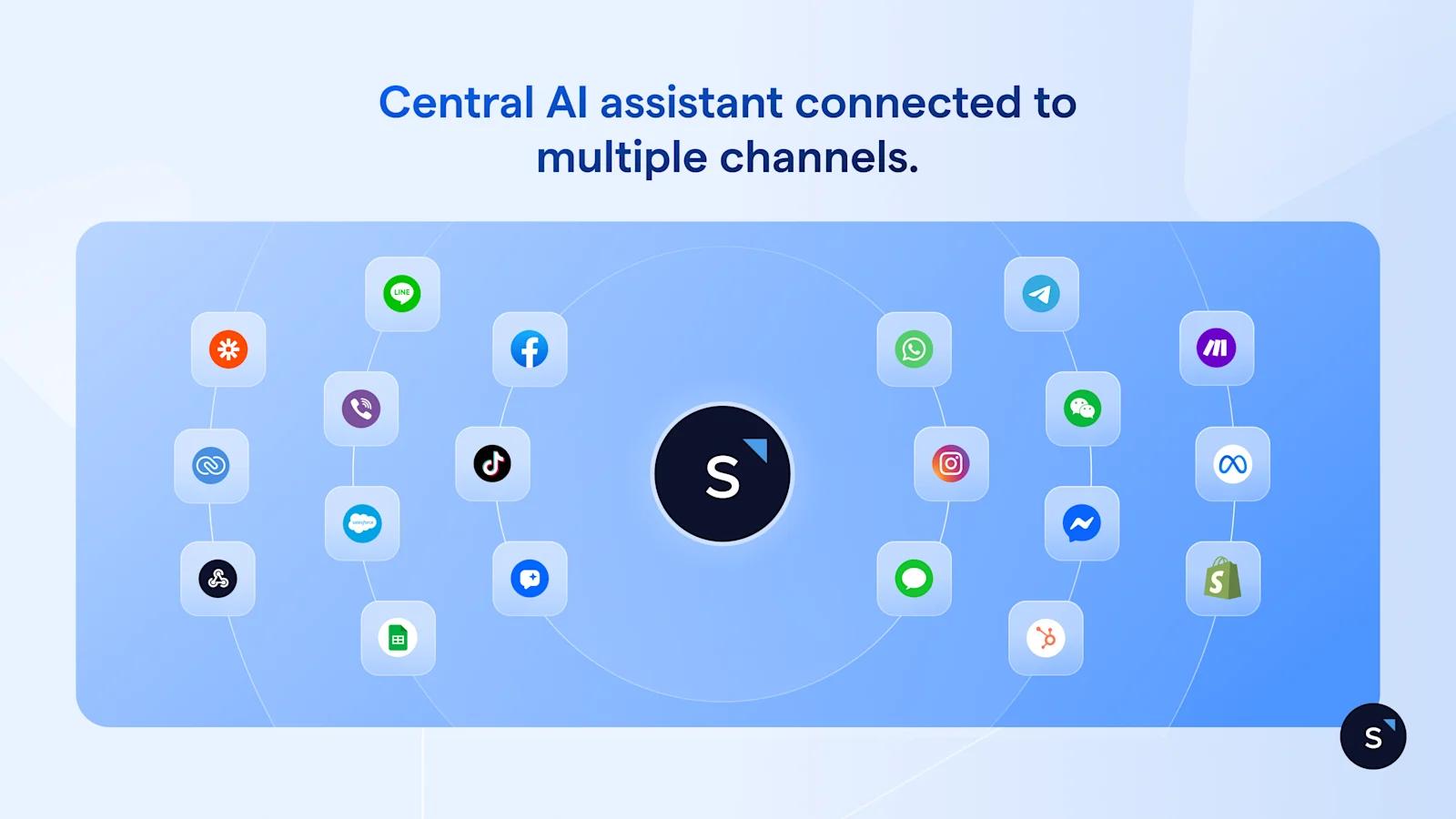
Centralized Omnichannel Conversations
Modern shoppers don’t stick to one channel. They may browse on a website, ask questions on Instagram, and complete purchases via WhatsApp or SMS.
SleekFlow provides a centralized omnichannel inbox that brings together conversations from:
This allows e-commerce AI assistants and human agents to maintain context across channels, ensuring shoppers don’t have to repeat themselves, an important factor for trust and conversion.
AI Agents for Product Queries with AgentFlow
Using AgentFlow, SleekFlow enables AI agents to handle high-volume, repetitive shopping queries such as:
Product availability and variants
Pricing and promotions
Shipping timelines and return policies
Basic product comparisons
These AI agents use conversational AI and predefined workflows to respond instantly, while escalating complex queries to human agents when needed. This ensures speed without sacrificing accuracy, especially during peak traffic periods.
Automated Cart Recovery Across Channels
Cart abandonment often happens when shoppers hesitate or get distracted. SleekFlow supports automated cart recovery messages that re-engage shoppers through:
WhatsApp or SMS reminders
Timely follow-ups triggered by inactivity
Context-aware nudges that reference items left in the cart
By reaching customers where they are most responsive, these workflows help brands reduce cart abandonment without relying solely on email.
CRM Syncing for Context-Aware Conversations
Personalization only works when conversations are informed by data. SleekFlow syncs customer information across interactions, enabling:
Recognition of returning customers
Access to past conversations and purchases
More relevant, context-driven responses from AI and human agents
This shared context supports smoother AI personalized shopping experiences and avoids fragmented or repetitive interactions.
Why This Matters for E-commerce Teams
By combining omnichannel messaging, AI agents, automation, and CRM context, SleekFlow enables brands to deploy shopping assistant AI capabilities that are:
Fast enough for real-time decision moments
Consistent across channels
Scalable during high-demand periods
Supportive of both conversion rate and AOV growth
Rather than acting as a standalone chatbot, SleekFlow helps e-commerce teams operationalize AI shopping assistants as part of their broader customer engagement strategy.
Real-World Use Cases: AI Shopping Assistants in Action
To truly understand the impact of shopping assistant AI, it helps to see how these solutions perform in real e-commerce settings. Below are practical scenarios showing how AI assistants help brands reduce friction, support customers at key moments, and ultimately increase e-commerce conversion rate and customer lifetime value.
First-Time Visitor Product Discovery
Scenario: A shopper lands on a site looking for a gift but isn’t sure where to start.
AI in action:
The AI assistant greets the visitor and asks a few questions (e.g., occasion, budget).
Based on responses, it offers targeted product suggestions using AI product recommendation logic.
It highlights best sellers and filters options instantly.
Outcome: Reduces overwhelm from too many choices, boosts engagement, and shortens time-to-decision.
Example: As reported by, Manifest case study , an AI assistant integrated on an e-commerce site delivered personalized guidance and upselling, significantly improving engagement and conversions. According to a case study, the brand saw a 102% increase in conversion rates and a 143% rise in add-to-cart actions after deploying AI for product guidance and recommendations.
Most e-commerce shoppers leave when they can’t find relevant products quickly. Personalized recommendations accelerate discovery and guide visitors toward purchase.
Abandoned Cart Recovery
Scenario: A shopper adds items to cart but navigates away before checkout.
AI in action:
The AI detects exit intent and triggers a proactive message: “Still deciding? Here’s a 10% coupon.”
Sends follow-ups via SMS, WhatsApp, or website chat with reminders about the cart contents or answers to last-minute questions (e.g., shipping timing, return policy).
Addresses hesitation instantly, a key factor in lowering hesitation.
Outcome:
By intervening at crucial moments, the AI helps reduce cart abandonment and recover otherwise lost revenue.
Example: Adobe and ASOS worked together using AI and machine learning to analyze behavior and deliver real-time incentives like personalized urgency messaging. This effort produced an 18% reduction in cart abandonment and a 23% increase in checkout conversions in 90 days.
Exit-intent assistance and timely reminders can significantly improve conversion rates, especially when the AI anticipates shopper questions before they leave the funnel.
Cross-Sell & Upsell During Checkout
Scenario: A repeat customer is checking out headphones.
AI in action:
Just before purchase, the assistant suggests related accessories like cases, cables, or warranty plans.
It uses past purchase history and browsing context to ensure relevance.
Outcome: This upsell and cross-sell logic increases the average order value, encouraging customers to add more value to their carts without interrupting the checkout flow.
Example: Many Shopify merchants using cross-sell strategies (such as recommending accessories or bundled products at checkout) have reported increases in AOV, especially when recommendations are relevant and well-timed.
Post-Purchase Follow-Up for Repeat Purchases
Scenario: A customer completes a purchase and exits the store.
AI in action:
Send tailored product suggestions via email or chat a few days later.
Offers care tips or reminders (e.g., “Need replacement filters?” for appliances).
Remembers preferences and channels where the customer is most responsive.
Outcome: Reinforces brand loyalty and encourages repeat purchases, an essential factor in long-term revenue growth.
Example: ASOS - AI Virtual Assistants Boost Sales
Fashion brands like ASOS have deployed AI virtual assistants that act like stylist chatbots, guiding shoppers on style and fit and improving product relevance. Reports suggest such implementations boost average order value and conversions, while reducing hesitation that leads to dropped carts.
Also explore SleekFlow case studies to see how brands are using SleekFlow’s AI agents, flow builder, and omnichannel automation to elevate customer engagement and drive measurable results.
Best Practices for Implementing AI Shopping Assistants
Rolling out an AI shopping assistant isn’t just about adding a chatbot, it’s about placing intelligence where it directly impacts buying decisions. Use this checklist to ensure your implementation drives real business outcomes like higher conversions and AOV.
Start with High-Intent Pages
Focus your AI assistant on pages where shoppers are closest to making a decision:
Product detail pages (questions around features, size, availability)
Cart and checkout pages (shipping, returns, pricing doubts)
Pricing and comparison page
These touchpoints have the highest potential to increase e-commerce conversion rate and reduce cart abandonment.
Keep Responses Short, Clear, and Helpful
AI responses should reduce friction, not create it:
Use simple, conversational language
Answer one question at a time
Avoid long paragraphs or technical jargon
Shoppers want clarity fast. The faster the answer, the lower the chance of drop-off.
Combine AI Automation with Human Handoff
AI handles speed and scale, but humans handle nuance:
Let AI resolve common questions instantly
Escalate complex or high-value conversations to live agents
Ensure smooth context transfer during handoff
This hybrid approach builds trust while maintaining efficiency.
Use Data to Continuously Optimize
Treat your AI assistant as a performance channel:
Track assisted conversions
Monitor AOV changes from AI-driven interactions
Measure cart recovery rates and response times
Regular optimization ensures your shopping assistant AI improves results over time, not just engagement. A modern shopping assistant shouldn’t “guess.” The safest setups pull answers from your product catalog, shipping/returns policies, and approved FAQs, and escalate to a human when confidence is low or the request is complex (e.g., high-ticket items, medical/regulated claims, custom orders).
Conclusion: The 60-Second Rule Is the New Standard
In modern e-commerce, hesitation is costly. If questions go unanswered or decisions feel difficult, shoppers leave, often within seconds. This is why the 60-second rule now defines conversion success.
AI shopping assistants help brands meet this expectation by delivering instant, relevant, and personalized support throughout the buying journey. From product discovery and recommendation to checkout assistance and cart recovery, AI-driven conversations help brands increase e-commerce conversion rate, reduce cart abandonment, and increase AOV ecommerce, without adding operational complexity.
More importantly, conversational AI turns shopping into a guided experience. Customers feel supported, understood, and confident in their decisions.
As expectations continue to rise, AI omnichannel shopping experiences are becoming the baseline, not a differentiator. Brands that adopt them early are better positioned to compete, convert, and scale.


