WhatsApp vs SMS Marketing: Which Works Best for Your Business?


TL; DR: Quick Summary
- Both WhatsApp and SMS deliver ~98% open rates, making them two of the most direct and reliable marketing channels for US businesses.
- WhatsApp excels at conversational commerce with multimedia, automation, catalogs, and lower costs at scale via the Business API.
- SMS works best for urgent alerts, OTPs, and guaranteed reach without internet, but has character and media limits.
- Costs differ: SMS is charged per message, while WhatsApp Business API charges per conversation, often more scalable for large campaigns.
- Real brands use WhatsApp for engagement and sales, and SMS for time-sensitive updates to improve efficiency and results.
- Combining both through omnichannel platforms like SleekFlow maximizes reach, automation, personalization, and overall ROI.
WhatsApp and SMS are both proven messaging channels, but they are not equal in how they drive engagement, scale, or cost efficiency, especially for businesses operating in the US.
Around 91% of consumers opt in to receive SMS updates, and WhatsApp Business API messages often achieve open rates close to 98%. Together, they remain extremely two of the most direct and reliable ways to reach customers.
Instant messaging, including SMS and WhatsApp, tends to see higher open rates than most other marketing channels, with open rates of around 98%.
Why use WhatsApp marketing?
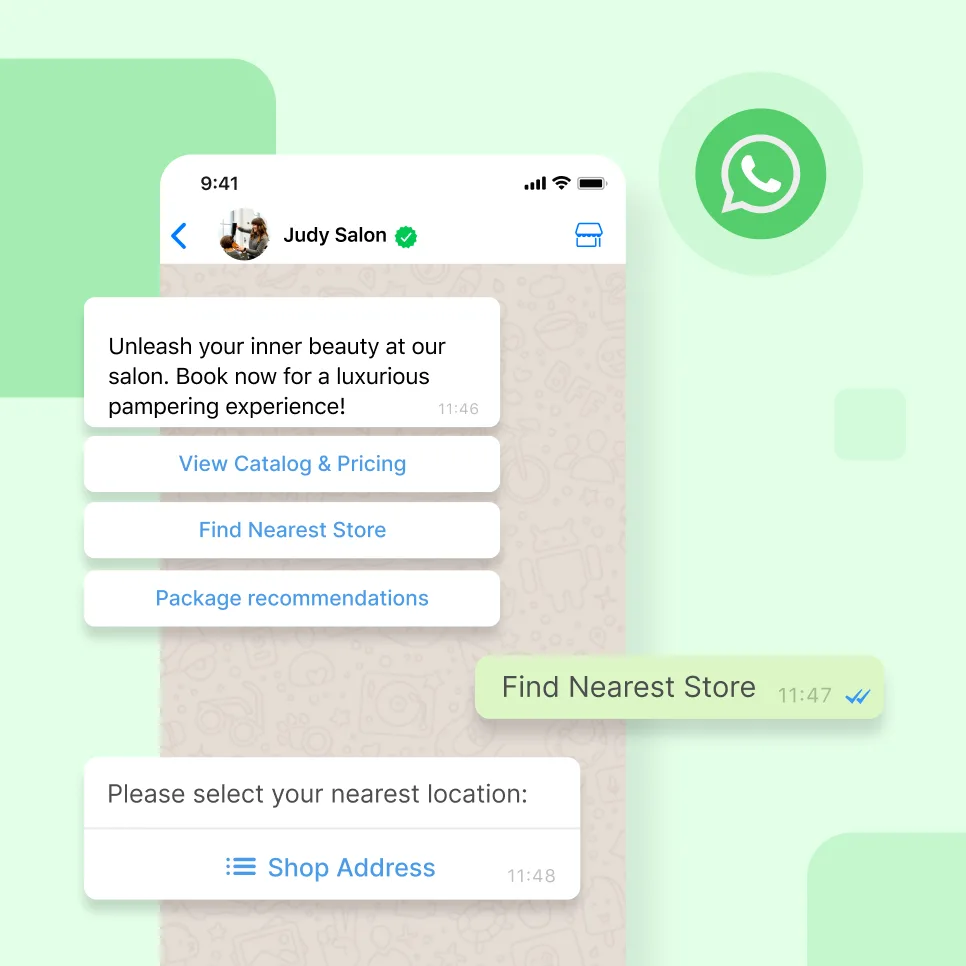
WhatsApp is designed for conversational commerce, not just notifications. It enables brands to build relationships, guide customers through decisions, and convert conversations into revenue. Similar to SMS, WhatsApp is effective in capturing the attention of consumers and increasing customer engagement. They are also beneficial because:
Benefits of WhatsApp marketing:
Extremely high open rate (~98%)
Enables real-time conversations and automation
Cost-effective for both small and large businesses
Detailed analytics through the WhatsApp Business API
Ensures opt-in, permission-based communication
Sending bulk WhatsApp marketing messages lets you reach more customers at once and grow sales in ways traditional email often cannot match.
Watch: Complete WhatsApp Marketing Strategy (2026)
Why use SMS marketing?
SMS remains relevant, but its role has shifted.
Instead of being the primary engagement channel, SMS now works best as a supporting channel for reach and reliability, especially when internet access is limited.
Benefits of SMS marketing:
High open rate (~98%)
Works without internet access
Effective for urgent or time-sensitive updates
Reaches even basic mobile phones
Lower cost compared to print or broadcast ads
Personalized messages via customer data
Opt-in model ensures interested audiences
Today, with so many instant messaging apps available, consumers are increasingly shifting from SMS to social chat platforms like WhatsApp. Many businesses now manage conversations across multiple channels at the same time.
Limitations of SMS and WhatsApp Marketing
While both channels are effective, they do have some drawbacks:
SMS: Limited to 160 characters, no native media, higher per-message costs, and cross-border delivery restrictions.
WhatsApp: Requires internet and compliance with Meta’s Business and commerce policies.
Cost comparison: WhatsApp vs SMS Marketing
A quick comparison of the pricing for SMS vs WhatsApp marketing campaigns:
SMS marketing
Charged per message (usually $0.25–$0.50). Suitable for small-scale outreach, but can be expensive for large audiences. Bulk pricing or automation via marketing providers can reduce costs
WhatsApp marketing
Free for smaller lists using the Business App (up to 256 contacts). For larger campaigns, the WhatsApp Business API offers scalable plans, charged per conversation, making it more affordable at scale.
To understand how WhatsApp conversation fees work, check out our latest 2025 pricing guide.
WhatsApp Vs SMS Marketing: Quick Comparison
Here's a table summarizing the main differences between WhatsApp and SMS for marketing:
How Businesses Use WhatsApp and SMS in Real Life
Different messaging channels solve different business problems. The examples below show how companies use WhatsApp main customer communication channel, supported by SMS for reliable, time-sensitive communication.
Coffee Mais Boosted Engagement with WhatsApp Automation (H3)
Coffee Mais, a fast-growing specialty coffee chain, struggled to manage increasing customer inquiries, promotions, and repeat orders across locations. Manual replies slowed response times and limited their ability to scale personalized engagement.
By adopting SleekFlow’s WhatsApp Business API, Coffee Mais automated customer conversations, centralized messaging in one inbox, and launched targeted WhatsApp campaigns to re-engage customers efficiently.
Results achieved:
35% increase in customer engagement through automated WhatsApp conversations
28% faster response times by reducing manual follow-ups
22% growth in repeat orders driven by personalized WhatsApp outreach
Lalamove Photo Story Improved Delivery Updates with SMS (H3)
Lalamove Photo Story, a logistics-focused service, required a fast and reliable way to send delivery confirmations and photo submission reminders. Internet availability and device limitations made app-based messaging inconsistent for time-sensitive updates.
Using SleekFlow’s SMS automation, they delivered critical notifications instantly, ensuring customers and drivers received updates regardless of connectivity.
Results achieved:
48% improvement in on-time confirmations via automated SMS alerts
32% reduction in follow-up inquiries through proactive notifications
25% increase in operational throughput with less manual coordination
Combining WhatsApp and SMS for Better Results
Use WhatsApp for engagement, sales, support, catalogs
Use SMS for OTPs, alerts, and fallback delivery
Integrate both via omnichannel marketing automation
By prioritizing WhatsApp and supporting it with SMS, businesses can reach customers more effectively while keeping messaging costs under control.
Choosing the right messaging platform for your business
You don’t need to choose between WhatsApp and SMS, use both to maximize impact. Tools like SleekFlow help you run, compare, and automate campaigns across multiple channels to see which performs best for your audience.
Combining SMS and WhatsApp for Better Results
Both channels serve different purposes, and when combined, they can deliver powerful results.
Use SMS for urgent alerts, OTPs, and short notifications where internet access may be limited.
Use WhatsApp for richer engagement, sending images, videos, catalogs, and two-way customer interactions.
Integrate both using an omnichannel platform to maintain one customer view, automate responses, and measure performance in a single dashboard.
By blending the immediacy of SMS with the interactivity of WhatsApp, businesses can create a smoother and more consistent customer experience.
Why choose SleekFlow for WhatsApp and SMS marketing
SleekFlow, as an omnichannel social commerce platform, understands your business needs. You can use a WhatsApp Business API to send marketing messages through SMS and WhatsApp.
As an official WhatsApp Business Solution Provider (BSP), SleekFlow helps you:
Manage conversations in one shared inbox
Enable instant in-chat payments
Segment audiences and personalize message integration
Integrate with CRM and e-commerce tools
Automate customer interactions with AgentFlow; Build no-code AI agent workflows to send personalized messages, route chats, and nurture leads automatically across channels
Want to see how other businesses succeed in doing WhatsApp and SMS marketing via SleekFlow? Explore our customer success stories.
Connect to WhatsApp Business API now!
Connect to WhatsApp Business API and unlock powerful tools to engage your audience.


