SMS vs WhatsApp: which is the best marketing tool?


TL; DR: Quick Summary
- SMS and WhatsApp marketing are highly effective, with both SMS and WhatsApp are boasting a 98% open rate, making them vital for timely business communication.
- SMS marketing is ideal for urgent messages, with a wide reach and low cost, but has limitations like character restrictions and lack of multimedia support.
- WhatsApp marketing offers interactive features, multimedia support, and real-time analytics, but requires the WhatsApp Business API for large-scale campaigns.
- SMS marketing is costlier per message, while WhatsApp offers lower pricing for larger campaigns via its Business API, with per-message fees based on country and message type.
- SleekFlow enables businesses to leverage both SMS and WhatsApp marketing, providing extra tools for automation, segmentation, and enhanced customer experience across channels.
Mobile messaging has evolved from a "nice-to-have" feature into a core business requirement. WhatsApp is now the world’s most popular messaging app—boasting over 3 billion monthly active users—and 91% of customers eager to receive texts from brands they trust. This just proves how both of these communication channels are essential for businesses looking to communicate with their customers in a timely manner.
“Instant messaging, including SMS and WhatsApp, generates better marketing results with an impressive open rate of around 98%.
When comparing SMS marketing vs. WhatsApp marketing as business communication channels, businesses of any size may wonder what the difference is: let's explore the basics of SMS and WhatsApp marketing campaigns to understand their differences.
Why use SMS marketing?
Businesses use SMS marketing software as part of their overall marketing strategy for several reasons:
High open rate (~98%)
Instant delivery, effective for time-sensitive promotions or urgent messages
Wide reach, since almost everyone has a mobile phone
Does not require an internet connection
Requires a lower budget as compared to print advertising or TV commercials
Personalized communication through analyses of customer data
Opt-in ensures messages are only sent to people interested in your products or services
We now have a variety of instant messaging apps for sending text messages, and consumers are shifting from SMS to other popular social media channels, such as WhatsApp. Hence, it is crucial for businesses to adopt WhatsApp marketing tactics to attract and retain customers.
Why use WhatsApp marketing?
Similar to SMS, WhatsApp is effective at capturing consumer attention and increasing customer engagement. They are also beneficial because:
High open rate (~98%)
WhatsApp has a large user base of over 3 billion monthly active users worldwide
Personalized communication and interactive features such as quick reply buttons, WhatsApp catalogs, WhatsApp Flows, etc.
You can attach multiple pieces of multimedia (images and videos) to WhatsApp messages.
Cheaper than SMS marketing, especially if sent to a smaller audience using the free WhatsApp Business App.
Real-time analytics for WhatsApp marketing campaigns
Messages are only sent to people who opt in, ensuring you reach an interested audience.
By sending bulk WhatsApp marketing messages, you can scale your marketing activities and boost sales in ways email marketing has never achieved.
Watch how WhatsApp marketing campaigns work in practice
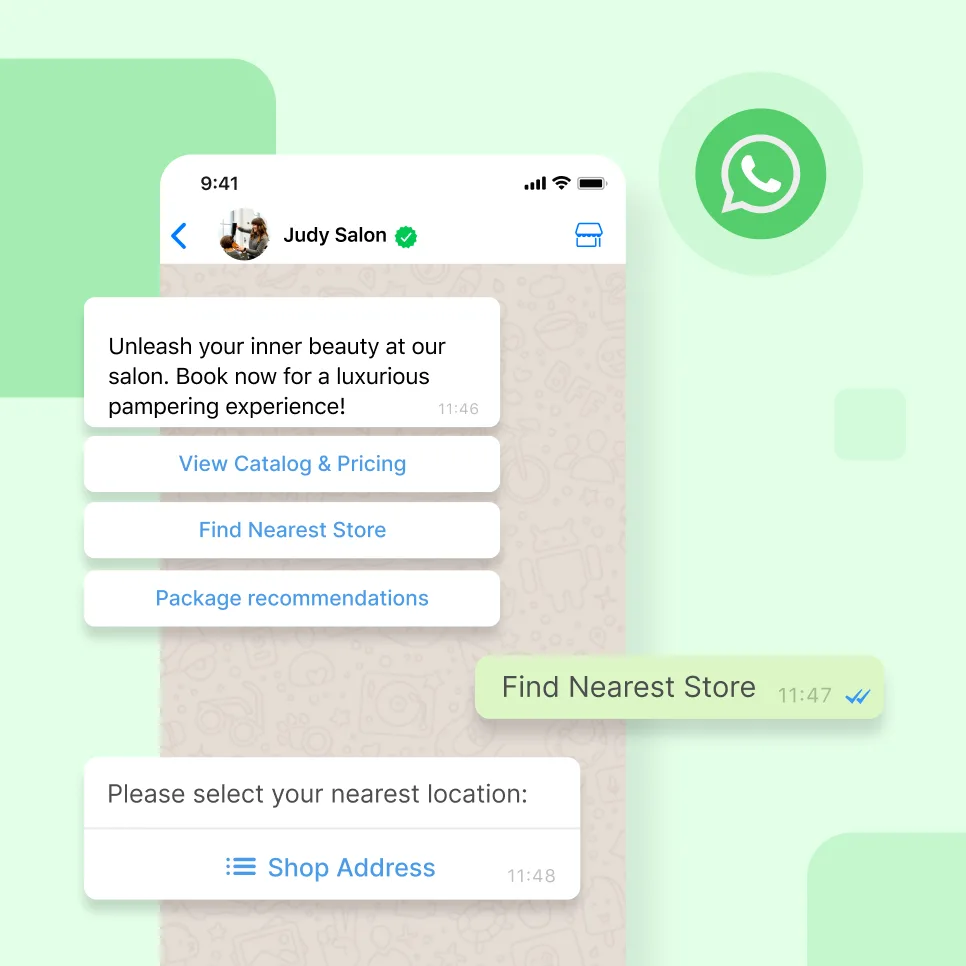
Go beyond basic messaging— engage and convert with WhatsApp
Book your personalised demo with SleekFlow today and let us show you the full marketing potential of WhatsApp
How Bowtie Life Insurance Enhanced Customer Experience on WhatsApp with SleekFlow
Bowtie Life Insurance, Hong Kong's first virtual insurer, included critical processes like "Know Your Customer" (KYC) checks and underwriting.
Customers often ignored email and SMS communications, finding them impersonal. This led to low response rates, stalled applications, and delayed policy issuance.
Bowtie implemented SleekFlow’s WhatsApp API to create a more interactive and trustworthy communication channel. They used it to automate follow-ups for missing information.
A 23% higher response rate for KYC checks compared to email and SMS, which dramatically sped up underwriting.
A 50% conversion rate from lead to customer using their "Web-to-WhatsApp" lead capture method.
Using SleekFlow has made our customers happier and saved both us and them time in managing the tedious aspects of insurance policies.

Gabriel Kung
Chief Commercial Officer, Bowtie Life Insurance
The limitations of WhatsApp and SMS for business
Once you exceed the 160-character limit in an SMS message, it will be split into multiple segments, counted as another message, and incur additional charges per message. This could triple your costs for a single promotion.
Furthermore, SMS does not support images or any media like WhatsApp does. You need to use another format, MMS (Multimedia Messaging Service), so you can send pictures with your messages.
For global brands, SMS also faces fragmented cross-border regulations that can block international delivery entirely.
WhatsApp marketing, by contrast, offers a richer experience but operates within a 24-hour Customer Service Window. Once a customer reaches out, you have 24 hours to engage freely with AI or human agents. Beyond this timeframe, you must transition to a paid, pre-approved template to re-activate conversation.
Regardless of the channel you choose, both SMS and WhatsApp require explicit user opt-in to comply with global privacy standards and maintain high deliverability rates.
WhatsApp marketing vs SMS marketing: Pricing
A quick comparison of the pricing for SMS vs WhatsApp marketing campaigns:
SMS marketing prices
SMS broadcast messages are charged per message sent. Pricing varies between $0.25 to $0.50 per message, depending on your chosen carrier.
This means that when sending marketing messages to a large customer base, you'll need to set aside a large budget for your SMS marketing.
Budget planning is an important aspect of SMS marketing to avoid overspending and ensure effective reach of the target audience. Working with an SMS marketing provider can be beneficial in managing costs. Benefits include:
Packages or bulk pricing options that save money when sending messages to larger audiences.
Valuable features like message tracking and analytics to assess campaign effectiveness.
These tools allow for better decision-making when allocating your marketing budget.
WhatsApp marketing prices
You can send WhatsApp broadcast messages for free on the WhatsApp Business App, but you're limited to 256 recipients. To reach a larger audience, you'll need to use the WhatsApp Business API platform. Here’s a breakdown of what that looks like:
Subscription fee: A monthly fee required for the WhatsApp Business Solution Provider (BSP).
Per-message template fees: Meta charges for every business-initiated template sent (Marketing, Utility, or Authentication). You are billed per message template sent.
Free of charges: You can send unlimited free-form messages and utility templates for free during the 24-hour service window. Each time the customer replies, the 24-hour clock resets, allowing for long, complex conversations without additional charges.
To understand how WhatsApp messaging fees work, check out our latest WhatsApp API pricing guide.
SMS marketing vs WhatsApp: key differences
Here's a table summarizing the main differences between WhatsApp and SMS for marketing:
Choosing the right instant messaging platform for your business goals
SMS marketing vs. WhatsApp marketing, both have their advantages and disadvantages, but the truth is, you don’t have to choose either one.
On SleekFlow, you can achieve your marketing goals using both SMS marketing and WhatsApp marketing. You can compare the results and see which instant messaging strategy works best for your business, products or services. The fastest way to find the most effective solution is to test it out on your customers.
WhatsApp vs SMS: business use cases at a glance
How geography affects your WhatsApp vs SMS strategy
Your location—and your customers' location—is the biggest factor in your strategy.
WhatsApp-first markets: In places like India, Brazil, Southeast Asia, and parts of Europe, almost everyone uses WhatsApp for daily life. In these regions, WhatsApp Business is the best tool for marketing, sales, and support.
SMS-native markets: In the US and some APAC regions, SMS is still the default for basic alerts and short marketing messages. It covers all age groups and doesn't require a data plan.
The global solution: With SleekFlow, you can use a "WhatsApp-first" journey in markets where adoption is high, and automatically switch to SMS as a backup in markets where WhatsApp is less common.
Playbook: How to combine SMS and WhatsApp with SleekFlow AI
Using both channels together keeps your costs low and your engagement high. Here is a simple 3-step plan:
1. Let customers choose their favorite channel
Add SleekFlow’s AI Growth Widget to your website. Instead of forcing visitors to use one app, let them pick between WhatsApp, SMS, or Live Chat. Let AI agent to instantly greet & qualify these leads and start a conversation in the app they actually use. This makes people much more likely to opt-in to your marketing.
2. Start with WhatsApp, fallback to SMS, or vice versa
Send your big marketing updates on WhatsApp first. It allows for beautiful images and "Quick Reply" buttons. If the customer doesn't read the message within a few hours, SleekFlow can automatically send a short SMS fallback with a link. This ensures you reach everyone without paying for SMS unless you have to.
3. Close deals faster with a unified AI inbox
All replies from WhatsApp and SMS flow into one Omnichannel Inbox. Your team no longer has to jump between different apps to find a customer's history, doesn't have to manage them alone.
Deploy specialized AI agents across channels to qualify leads, recommend products based on purchase history, and sync updates to your CRM—freeing humans to close deals faster.
Once a human takes over, the inbox AI assistant acts as a coachmsummarizing long chat histories instantly and suggesting the best professional replies to help you close the deal faster.
Power up your SMS + WhatsApp marketing strategy with SleekFlow
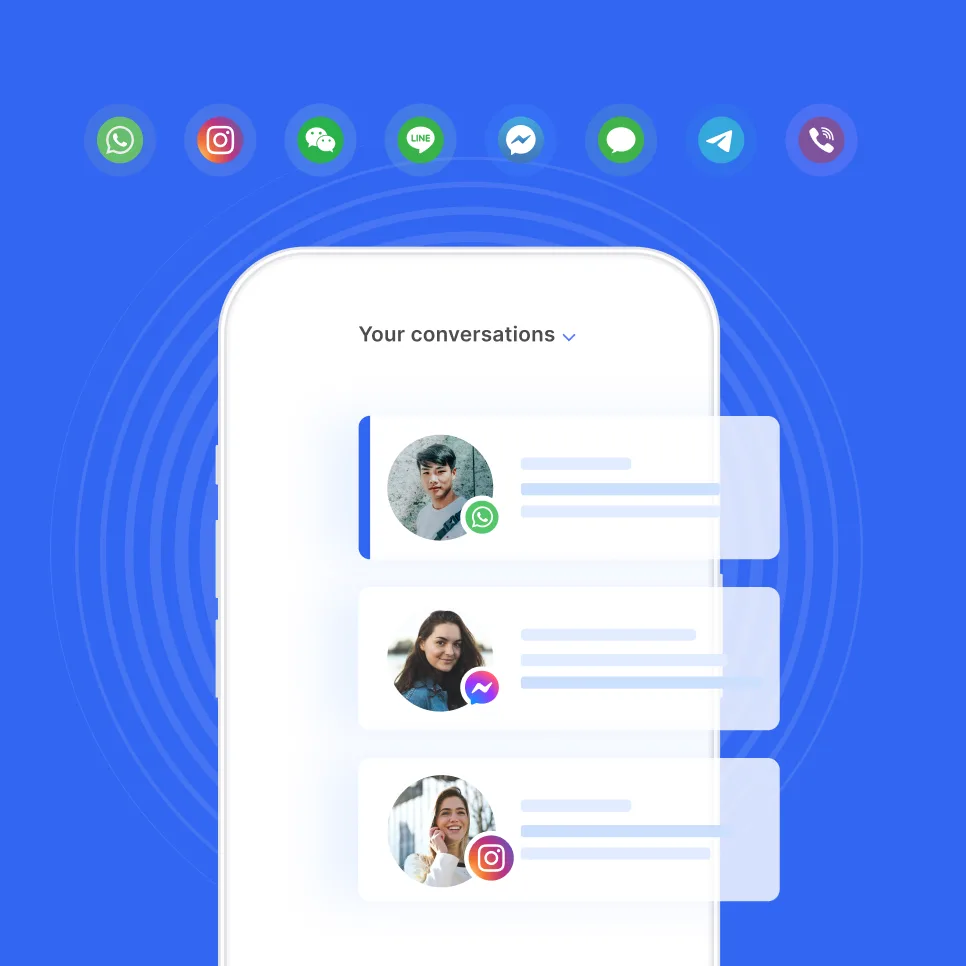
SleekFlow's AI omnichannel platform unifies SMS and WhatsApp—plus Instagram, Facebook Messenger, and more—into one team inbox for seamless customer journeys.
By completing your SMS and WhatsApp chat marketing strategy on SleekFlow, you can benefit from many other features:
Unified omnichannel inbox: Manage conversations across SMS, WhatsApp Business API, and social channels in one place. Seamlessly transfer chats between sales, support, and success teams to boost conversions.
Native social CRM tools: Capture customer profiles, segment audiences, and trigger personalized retargeting campaigns.
Deep platform integrations: Connect Shopify, Salesforce, HubSpot, and more to complete customer details (such as lead stage or purchase history) right next to the chatbox
Proven result: Pristine Aroma increased marketing conversion rates with SleekFlow's omnichannel solutions
Pristine Aroma, a home fragrance brand in Singapore, sought a more effective approach to complement their Shopify store and improve communication with their audience.
Traditional email marketing failed to deliver high engagement and conversions. Managing customer inquiries across multiple platforms, including WhatsApp, Instagram, and Facebook was also inefficient.
The brand unified customer data using SleekFlow and utilized targeted WhatsApp campaigns, segmented broadcasts, and automated workflows.
Their targeted WhatsApp campaigns achieved a 56% open rate and a 16% click-through rate.
These efforts led to an 18% conversion rate and a 13x ROI.
They improved operational efficiency by 90% and significantly boosted customer engagement.
Want to outcompete your peers with SleekFlow's help?
Book your personalised demo with SleekFlow today and unlock the potential of seamless communication


