SMS Retargeting for Website Leads: How to Shorten the Sales Cycle


TL; DR: Quick Summary
- Most website visitors don’t convert on the first visit, SMS retargeting re-engages high-intent users (pricing views, form starts, cart abandonment) while intent is still high.
- Compared to email and ads, SMS reaches users faster, supports two-way conversations, and drives higher response and conversion rates.
- SMS retargeting shortens sales cycles, improves ROI, and reduces reliance on manual follow-ups and paid retargeting.
- Effective SMS retargeting requires clear opt-ins, intent-based segmentation, personalized messages, timely triggers, and simple CTAs.
- Automation turns SMS retargeting into a scalable system for lean business teams.
- SleekFlow enables compliant, automated, and personalized SMS workflows that help businesses recover abandoned leads and convert more website visitors.
For most business websites, the biggest challenge isn’t attracting visitors; it’s converting them. A large percentage of users browse pricing pages, start filling out forms, or even add items to a cart, only to leave without completing the action. Traditional ad or email-based retargeting methods like display ads or email follow-ups often take hours or days to reach these users, by which time interest has already cooled.
SMS retargeting is a simple way to reach people who already showed interest. By using permission-based text messages to follow up with high-intent website leads shortly after they show intent, businesses can restart conversations when buyers are still evaluating options.
In this article, we’ll break down:
What SMS retargeting is and how it differs from traditional SMS remarketing and website ads
Why conversational, two-way messaging consistently outperforms passive channels
Practical implementation steps businesses can follow without complex infrastructure
How SleekFlow enables compliant, scalable conversational SMS marketing for website retargeting
This approach turns one-way follow-ups into real conversations.
Why SMS Retargeting Is Vital for Businesses
Every website visit signals potential interest, but limited time and staffing often delay follow-ups. SMS-based follow-ups address this gap by helping teams reply quickly when interest is highest.
Long Sales Cycles and Limited Follow-Up
Without dedicated sales teams, businesses struggle to respond to inbound leads quickly. This results in missed intent windows and extended sales cycles. Retargeting SMS workflows trigger automatically based on real website behavior, so no one has to chase leads manually.
Most Visitors Don’t Convert on the First Visit
Even users who view pricing, start forms, or abandon carts often leave without converting. These visitors are usually undecided, not uninterested. Text-based re-engagement allows businesses to reconnect with these leads while purchase decisions are still active.
Email and Ads Miss the Moment
Email and paid ads remain common tools for website retargeting, but both introduce friction. Emails compete in crowded inboxes, while ads rely on delayed exposure. SMS-driven retargeting reaches users directly and quickly, which works better when timing matters.
Why SMBs Need an SMS-Led Retargeting Approach
For lean teams, SMS-led re-engagement offers a focused alternative to manual outreach and broad ad-based retargeting. By prioritizing speed, intent, and relevance, SMBs can re-engage website leads efficiently, without increasing operational complexity.
Benefits of SMS Retargeting for Businesses
For businesses focused on efficiency and ROI, SMS retargeting works better than email or ads for most SMB teams. By re-engaging users at moments of high intent, it directly impacts speed, conversions, and customer experience, without increasing operational burden.
Shorter Sales Cycles Through Faster Re-Engagement
Timing is critical in lead conversion. When follow-ups are delayed, interest fades, and competitors step in.
SMS retargeting shortens sales cycles by:
Reaching users within minutes of key actions (pricing views, form abandonment, carts)
Restarting conversations while purchase intent is still high
Reducing back-and-forth delays common with email follow-ups
Industry data consistently shows that SMS messages are read far faster than email, making retargeting SMS one of the most effective ways to move prospects from consideration to action, especially for SMBs with lean sales teams.
Higher Conversion Rates From High-Intent Website Visitors
Unlike cold outreach, retargeting website visitors focuses only on users who have already shown intent. This relevance directly impacts conversion performance.
Key reasons SMS remarketing converts better:
Messages are tied to a specific on-site action, increasing relevance
Short CTAs reduce friction (reply, tap, book)
Two-way replies enable conversational SMS marketing, not one-sided promotions
Compared to email or ad-based website retargeting, SMS follow-ups typically generate higher response and completion rates, particularly for abandoned forms and carts.
Cost-Effective Retargeting for Resource-Constrained Teams
Paid ads and manual outreach can quickly strain business budgets. SMS retargeting offers a more controlled, intent-driven alternative.
Cost-efficiency advantages include:
Lower spend compared to ongoing ad retargeting
Minimal waste by targeting only qualified website visitors
Automation reduces manual follow-up effort and staffing costs
By combining website retargeting signals with automated SMS workflows, businesses can achieve consistent results without escalating acquisition or operational costs.
Enhanced Customer Experience Through Conversational Engagement
Modern buyers expect fast, relevant, and frictionless interactions. Conversational SMS marketing meets these expectations by turning retargeting into dialogue.
Customer experience benefits include:
Helpful, timely reminders instead of generic ads
Personalized follow-ups based on real behavior
Easy replies that feel human, not transactional
When done with clear consent and relevance, SMS retargeting enhances trust while guiding users smoothly back into the buying journey, strengthening both conversions and brand perception.
How SMS Retargeting Works: A Step-by-Step Guide
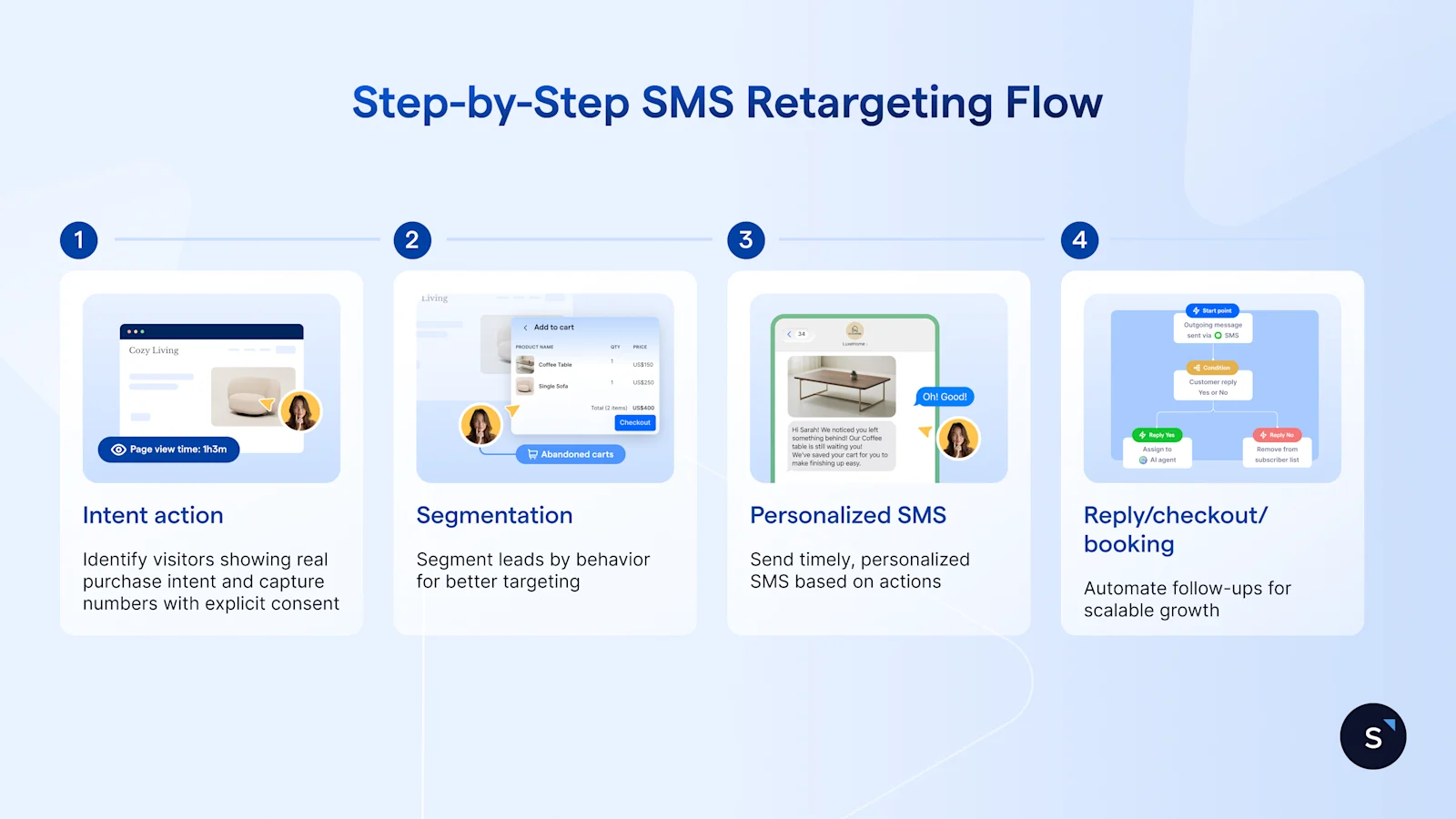
Implementing SMS retargeting doesn’t require complex infrastructure. When done correctly, it connects website retargeting signals with timely, personalized follow-ups that move leads forward faster.
Step 1: Track High-Intent Website Visitors
Effective retargeting of website visitors starts with identifying intent. Businesses should track meaningful actions such as:
Pricing or plan page views
Product detail page visits
Form starts without submission
Cart or booking abandonment
These behaviors form the foundation of website retargeting, ensuring SMS outreach is relevant and justified.
Step 2: Collect Phone Numbers With Clear Opt-Ins
Because SMS retargeting is permission-based, phone numbers must be collected transparently. Common opt-in methods include:
Lead forms with SMS consent checkboxes
Checkout pages with order update opt-ins
Demo or consultation booking forms
Clear disclosure builds trust and ensures compliance while enabling future retargeting SMS outreach.
Step 3: Segment Leads Based on Intent
Not all visitors should receive the same message. Segmentation allows SMS remarketing to stay contextual and effective.
Typical segments include:
Pricing page visitors
Abandoned carts
Incomplete lead forms
Returning visitors
By combining segmentation with website retargeting data, businesses can tailor messages that feel helpful, not intrusive.
Step 4: Send Personalized, Timely SMS Messages
This is where conversational SMS marketing delivers the most impact. Effective messages:
Reference the exact action taken
Use simple, direct language
Offer a clear next step
For example, a short reminder or assistance-based prompt can guide users back to checkout, booking, or form completion, often within minutes of drop-off.
Step 5: Use Automation to Scale Without Extra Effort
Automation is what makes SMS retargeting scalable for businesses. Trigger-based workflows ensure:
Messages are sent at the right moment
Follow-ups don’t rely on manual effort
Every high-intent lead is addressed consistently
Automation transforms retargeting website activity into a repeatable, reliable conversion engine.
Best Practices for SMS Retargeting
To maximize results and maintain trust, businesses should follow proven best practices when implementing SMS retargeting.
Obtain Explicit, Verifiable Consent
Consent is non-negotiable. Always:
Clearly state what users are opting into
Specify message purpose and frequency
Provide easy opt-out options
Permission-based retargeting SMS protects both compliance and brand credibility.
Personalize Messages Using Website Context
Personalization is what separates effective SMS remarketing from generic follow-ups.
Best practices include:
Referencing viewed pages or abandoned actions
Using the recipient’s name when appropriate
Matching tone to the stage of the buying journey
Relevant context significantly improves engagement and response rates.
Time Messages for Maximum Impact
Timing can determine success or failure. For retargeting website visitors, the best timing usually means:
Minutes, not days after abandonment. If a user abandons a high-intent action, SMS sent within the first 5–15 minutes performs dramatically better than delayed follow-ups. If a user abandons a high-intent action, SMS sent within the first 5–15 minutes performs dramatically better than delayed follow-ups.
Business hours aligned with user location
Avoiding excessive follow-ups
Well-timed SMS follow-ups feel helpful rather than intrusive when they align with user intent.
Use Clear, Low-Friction Calls-to-Action
A clear text message should have a single, obvious next step:
“Reply YES to continue”
“Tap to complete your booking”
“Schedule a quick call”
Clear CTAs reduce friction and help move users back into the funnel quickly.
Track Performance and Continuously Optimize
To improve results, businesses should track:
Delivery and response rates
Conversion completion after SMS
Drop-off points after re-engagement
Performance data allows teams to refine timing, messaging, and segmentation, making website retargeting via SMS increasingly effective over time.
Automate and Optimize for Sustainable Growth
The most successful businesses treat SMS retargeting as a system, not a one-off campaign. Automation enables:
Consistent execution without added headcount
Ongoing optimization through analytics
Scalable growth driven by real intent data
When paired with conversational SMS marketing, automation turns retargeting website visitors into a predictable source of revenue.
How SleekFlow Supports SMS Retargeting for Businesses
Executing effective SMS retargeting requires more than sending messages; it demands accurate intent tracking, automation, personalization, and compliance. SleekFlow is designed to help businesses run SMS retargeting without adding extra tools or work.
Automating SMS Retargeting at Scale
SleekFlow enables businesses to automate retargeting SMS campaigns based on real-time website behavior. This means:
Triggering SMS follow-ups when visitors abandon forms, carts, or bookings
Automatically segmenting retargeting website visitors by intent and stage
Ensuring timely outreach without relying on manual follow-ups
Automation allows small teams to maintain fast response times, critical for shortening sales cycles.
Personalization Powered by Website Intent
Rather than generic SMS remarketing, SleekFlow supports highly contextual messaging by:
Linking SMS workflows to website actions and CRM data
Personalizing messages based on pages viewed or actions taken
Enabling two-way replies for conversational SMS marketing
This approach ensures SMS retargeting feels helpful and relevant, not intrusive, improving engagement and trust.
Real-World Results From SleekFlow Customers
Businesses across industries use SleekFlow to recover lost website leads and accelerate conversions through retargeting website workflows.
Common outcomes seen in SleekFlow case studies include:
Faster follow-ups to high-intent website visitors
Improved conversion rates from abandoned forms and carts
Reduced reliance on paid ads for website retargeting
Real-world examples from SleekFlow customers show how businesses use SMS-led re-engagement to follow up with high-intent website leads faster, recover abandoned conversions, and help them turn missed opportunities into measurable revenue.
Real-World Examples: SleekFlow in Action
AQUMON: Accelerating Lead Response With Automated Messaging
AQUMON used SleekFlow to centralize customer communications and automate follow-ups, helping the team respond to inbound inquiries 50% faster. By reducing response delays and enabling timely, message-based engagement, AQUMON improved how quickly high-intent leads were re-engaged, an essential factor in shortening the sales cycle for business teams.
Damar Langit: Turning Faster Conversations Into Conversions
In the hospitality sector, Damar Langit leveraged SleekFlow’s automated messaging workflows to streamline guest inquiries and follow-ups. The result was up to 3× faster response times and a 25% increase in conversions, demonstrating how timely, conversational re-engagement can directly impact bookings and revenue.
Turning Website Visits Into Conversions With SMS Retargeting
For businesses, speed and relevance are the difference between lost leads and closed deals. SMS-based re-engagement enables businesses to reconnect with interested leads at moments of peak intent, shortening sales cycles, improving conversions, and reducing manual follow-up effort.
By combining website retargeting signals, automation, and conversational SMS marketing, businesses can:
Recover abandoned leads efficiently
Engage prospects with timely, relevant messages
Convert interest into action without increasing headcount
If you’re looking to operationalize SMS retargeting in a scalable, compliant way, SleekFlow provides the necessary tools to get you started.
Download the SleekFlow mobile app 2.0 today
Enjoy smoother chatting on the go
Frequently Asked Questions
What is SMS retargeting?
How does SMS retargeting work?
Why is SMS retargeting helpful for my business?
What is the cost of SMS retargeting?
How do I measure the success of SMS retargeting campaigns?
Recommended for you


