Conversational AI vs chatbots: Key differences, use cases, and revenue impact


TL; DR: Quick Summary
- Chatbots handle simple, scripted tasks. Conversational AI handles real conversations.
- If your goal is FAQs, routing, or basic support, a chatbot may be enough.
- If your goal is lead qualification, conversion, or personalized support, conversational AI is the stronger option.
- The biggest difference is not technology, but business impact: chatbots improve efficiency, while conversational AI can also drive revenue.
- For many businesses, the best setup is a mix: structured bots for simple tasks, and conversational AI for higher-intent customer journeys.
If you are comparing conversational AI and chatbots, the main difference is simple: traditional chatbots usually follow fixed rules, while conversational AI can understand context, intent, and more natural language to handle more complex customer journeys.
That difference matters because automation is no longer measured only by how many tickets it deflects. In chat-first buying journeys, automation also affects how quickly you qualify leads, answer buying questions, route high-intent enquiries, and move customers toward purchase or resolution.
A rule-based chatbot may be enough to answer business hours, collect basic details, or appointment enquiries. But when customers ask layered questions, switch topics, show buying intent, or need personalized responses, a basic chatbot often breaks down. That is where conversational AI becomes a stronger option.
In this guide, we’ll break down:
the difference between chatbots and conversational AI
where each one works best
when chatbots start costing you sales
how to choose the right solution for support, marketing, and conversion
Conversational AI vs chatbots: The short answer
A chatbot is best for simple, predictable, repetitive tasks. Conversational AI is better when conversations are more open-ended, context-rich, and tied to outcomes like lead qualification, bookings, support resolution, or conversion. Freshworks and Coursera both describe conversational AI as better suited to understanding context, tone, and multi-step interactions than rule-based bots.
So the real question is not just which technology sounds more advanced. It is which kind of automation fits the job your business actually needs done.
What is a chatbot?
A chatbot is a tool that automates conversations using predefined rules. It usually works through:
keyword triggers
button-based choices
scripted conversation flows
decision trees
For example:
Customer: “I need to change my appointment and also check if I can bring someone with me.”
Chatbot: “Please choose one option: Reschedule / Cancel / Talk to support.”
This works when the customer follows the expected flow. But once the request becomes more nuanced, contains two intents at once, or falls outside the script, the chatbot often struggles.
What is conversational AI?
Conversational AI is a more advanced form of automation that can understand and respond to natural language in a more flexible way.
Instead of relying only on rigid scripts, conversational AI can:
interpret what a customer means, not just the exact words they type
handle more open-ended questions
keep track of context across multiple messages
personalize replies based on customer data, past behavior, or intent
decide when to answer, when to ask follow-up questions, and when to hand over to a human agent
For example:
Customer: “I need to change my appointment and also check if I can bring someone with me.”
Conversational AI: “I can help with both. First, would you like to move the appointment to another day or time? Also, tell me which service you booked, and I’ll check the guest policy.”
That is the practical difference: the system is not just reacting to keywords. It is understanding the request and helping move the conversation forward.
Conversational AI vs chatbots: Key differences at a glance
That comparison broadly reflects how current market leaders explain the category: traditional bots are structured and efficient, while conversational AI is more adaptable and better suited to complex interactions.
Chatbots vs conversational AI: The real difference is business impact
A basic chatbot can save time. A stronger conversational AI setup can save time and help generate more revenue.
That is the real shift.
Chatbots are built to contain predictable conversations. Conversational AI is built to progress more variable ones. That matters when your team is trying to qualify leads, answer buying questions, recover abandoned conversations, or support customers across multiple channels. In those situations, the quality of the interaction affects not just efficiency, but conversion and customer experience too.
When chatbots are enough
Chatbots still have value. In fact, they are often the right starting point when your use case is simple and repetitive.
A traditional chatbot may be enough if you mainly need to:
answer FAQs
collect contact details
share store hours or branch locations
route customers to the right team
capture basic support requests
guide users through a short fixed workflow
For these use cases, a rule-based bot can be cost-effective, fast to launch, and easy to manage.
This is especially true for businesses that:
have lower conversation volume
do not need deep personalisation
want a lightweight automation layer first
are solving operational efficiency before conversion optimisation
When chatbots start costing you sales
The problem starts when businesses expect a basic chatbot to do work it was not built for.
A traditional chatbot can become a revenue blocker when it:
cannot understand buying intent unless users click the right option
forces customers through too many steps
gives generic replies to nuanced pre-sales questions
fails when users type naturally instead of following a script
cannot use customer context such as order history, product interest, or lead source
creates dead ends instead of moving the customer toward a decision
This is where the cost is not always visible in a dashboard.
You may not see a line item called “lost sales from bad automation.” But it often shows up in other ways:
qualified leads that drop off before speaking to sales
slow follow-up on high-intent enquiries
abandoned conversations on WhatsApp, Instagram, or live chat
poor customer experience during key decision moments
agents spending time rescuing broken bot journeys
In other words, the issue is not that the chatbot exists. The issue is that the automation is built for containment, not conversion.
Where conversational AI delivers more revenue impact
Conversational AI becomes more valuable when conversations are tied to outcomes such as bookings, qualified leads, upsells, repeat purchases, or faster resolutions.
Here are some examples.
1. Lead qualification
Instead of showing a fixed menu, conversational AI can ask follow-up questions based on what the lead actually says.
For example:
“I’m looking for a WhatsApp solution for 2 markets.”
“We need support and sales automation.”
“We already use HubSpot.”
A basic chatbot may not know what to do with that. Conversational AI can continue the conversation, capture the important details, and route the lead based on fit, urgency, or deal potential.
2. Sales enquiries
When customers ask product or pricing questions in different ways, conversational AI can handle a wider range of phrasing and respond more naturally.
That matters because buyers often want quick answers before they are ready to book a demo or talk to sales.
3. Support automation
For support, conversational AI can do more than push customers into a help centre article. It can guide troubleshooting, retrieve information, and escalate based on urgency or sentiment.
This helps businesses improve both efficiency and customer satisfaction.
4. Personalized product recommendations
When connected to customer data, conversational AI can tailor suggestions based on previous purchases, browsing behaviour, or known preferences.
That creates a stronger path from enquiry to conversion than a one-size-fits-all scripted response.
5. Omnichannel customer journeys
Customers do not always start and finish on one channel. They may come from an ad, ask questions on Instagram, continue on WhatsApp, and return later through live chat.
Conversational AI is better suited to these less linear journeys, especially when paired with a shared customer profile and unified conversation history.
Explore more about the top conversational AI platforms.
Chatbots vs conversational AI: Which one should you choose?
The right choice depends on your goals.
Choose a chatbot if your priority is:
handling simple repetitive questions
reducing manual workload
routing enquiries efficiently
launching fast with a fixed conversation structure
Choose conversational AI if your priority is:
improving lead quality
increasing conversion from inbound conversations
personalising customer interactions
supporting more complex support or sales journeys
scaling across channels without creating fragmented experiences
For many businesses, the best path is not choosing between rigid bots and fully open-ended AI in absolute terms. It is building a smarter automation mix: structured flows for simple tasks, and conversational AI for higher-intent, more complex, or more revenue-linked conversations. Once a business reaches that point, the next question becomes which platform can actually support that shift across channels, teams, and customer journeys.
How SleekFlow AgentFlow helps businesses move from basic chatbots to conversational AI
This is where SleekFlow AgentFlow fits.
Once a business outgrows menu-based automation, it usually needs more than a scripted bot. It needs conversational AI connected to customer context, messaging history, automation workflows, and smooth human handoff.
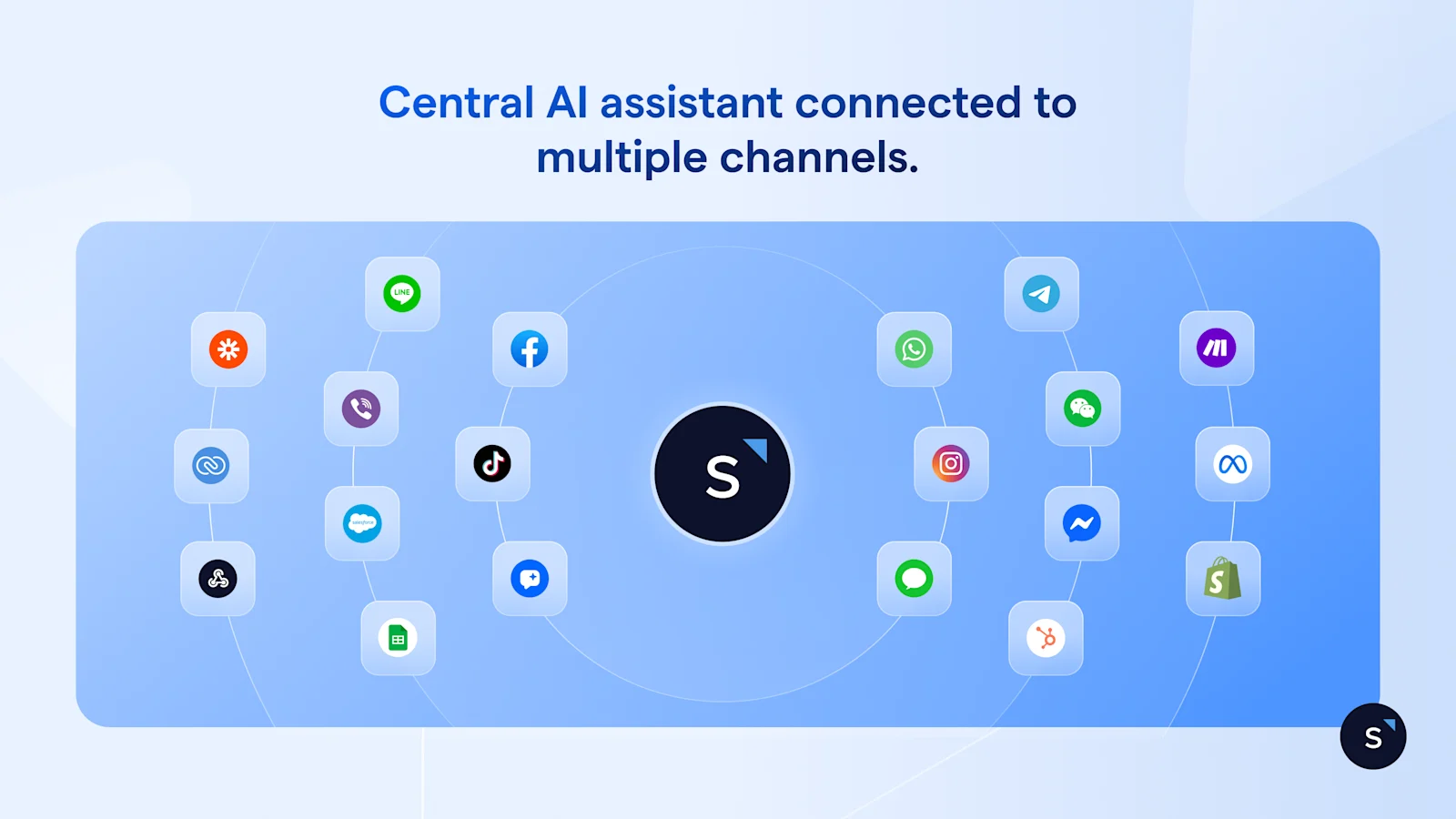
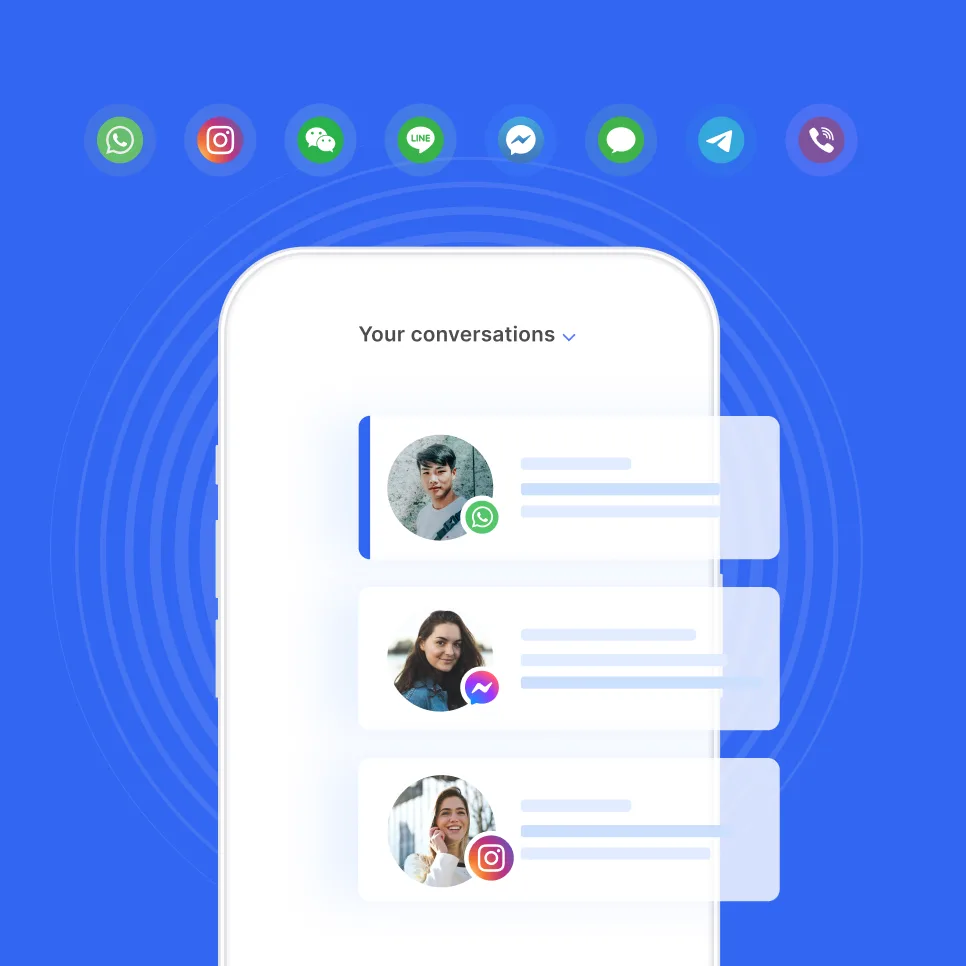
SleekFlow is built for exactly that shift. As an AI-native omnichannel messaging platform, it brings together channels such as WhatsApp, Messenger, Instagram, and live chat in one workspace, so teams can manage conversations with more context and less fragmentation.
Its AgentFlow product is designed for businesses that want automation to do more than answer simple questions. Instead of relying only on rigid decision trees, AgentFlow helps teams engage leads instantly, qualify enquiries, schedule meetings, automate follow-ups, and route conversations to the right human team when needed.
That makes SleekFlow a stronger fit when the goal is not just to reduce workload, but to move customers toward the next step, whether that is a demo booking, a purchase, or a faster resolution.
Real life examples: AgentFlow AI automation in action
1. Checkmob uses AgentFlow AI to automate lead qualification and demo booking
Checkmob was spending significant time on repetitive early-stage sales conversations, manually responding to enquiries just to qualify leads and arrange demos. With AgentFlow, the company automated the most time-consuming parts of this workflow, helping the sales team respond faster while reducing manual back-and-forth.
AgentFlow handled first contact on WhatsApp, qualified incoming leads, and scheduled demos automatically before handing qualified conversations to the sales team. This ensured every lead received an instant response, while SDRs could focus more on high-intent prospects instead of repetitive qualification tasks.
As a result, Checkmob reported:
70% reduction in response time
20% increase in demo bookings
30% time savings for the sales team
Today, AgentFlow does all of that automatically — the first contact, the qualification, and the demo scheduling…”

Andre Zacarias
Head of Sales at Checkmob
2. Elétron Seguros uses AgentFlow AI to automate WhatsApp support with smart human handoff
Elétron Seguros needed to scale WhatsApp support without losing control, consistency, or service quality. Before SleekFlow, the business faced instability from unofficial tools, limited visibility for managers, and too much repetitive work handled manually by the team.
With AgentFlow, Elétron introduced AI as the first layer of support on WhatsApp. The AI agent handled frequent enquiries instantly, followed governance rules, and transferred only more complex cases to human agents with the right context. This allowed the team to scale support more efficiently without making the customer experience feel robotic.
As a result, Elétron Seguros reported:
80% of conversations resolved by AI
20% of conversations transferred to the human team
No need for new hires to sustain growth
Today, around 80% of conversations are handled by AI, and only 20% are transferred to the team — in a much more organized way.

Mauro Filho
Founder & CEO, Elétron Seguros
Choose the right automation for your business
If your conversations are simple, repetitive, and low-stakes, a chatbot may be enough.
If your conversations affect lead quality, conversion, customer experience, or retention, conversational AI is usually the stronger long-term investment.
The goal is not to automate for the sake of automation. It is to build conversations that help customers move forward and help the business grow.
For teams that are ready to move beyond rigid bot flows, SleekFlow AgentFlow offers a practical way to apply conversational AI across messaging channels while keeping automation, customer context, and human handoff connected in one place.
Want to outcompete your peers with SleekFlow's help?
Book your personalised demo with SleekFlow today and unlock the potential of seamless communication


