Facebook Messenger marketing strategy for businesses


TL; DR: Quick Summary
- Facebook Messenger marketing helps businesses turn interest into direct conversations.
- It works well for lead generation, sales, and customer support in one channel.
- Businesses need to follow Meta’s 24-hour messaging rule for promotional outreach.
- Click-to-Messenger ads, automation, and chatbots can improve response speed and conversions.
- The best strategy uses Messenger across the full customer journey, from enquiry to follow-up.
While WhatsApp may lead in global communication, diversifying your approach is key to maximizing reach. Facebook Messenger, a popular messaging app, presents a powerful alternative, allowing you to connect with new leads directly where they are most active: social media marketing channels.
Here's why integrating Facebook Messenger marketing strategy is a game-changer:
People today expect instant, real conversations with brands. This shift is driving the rise of conversational commerce, where businesses and buyers connect in real time to build trust.
By combining WhatsApp and Messenger, you expand your reach and can convert casual scrollers into engaged, ready-to-act leads.
Features like click-to-Messenger ads bypass traditional landing pages. Instead of competing for attention in a crowded feed, you can invite visitors directly into a one-on-one conversation with Messenger Ad Campaigns.
What is Facebook Messenger marketing?
Facebook Messenger marketing is the practice of using Meta’s instant messaging app to build direct relationships with both potential and current customers.
Unlike traditional posts that compete for attention on a news feed, Messenger marketing focuses on sparking genuine, two-way conversations in a private and focused space.
Brands use Messenger to:
Send marketing messages to their subscribers
Answer questions in real time
Guide people through a seamless sales journey
Policies, compliance, and messaging rules
To keep Messenger useful and spam-free, Meta has strict rules that all businesses must follow. These policies are designed to ensure a quality user experience and prevent unwanted marketing messages.
24-Hour Messaging Window: The clock starts when a user contacts your business. You get 24 hours to send both promotional and non-promotional messages without limits.
After the 24 Hours: After that window closes, regular promotional messages are off-limits. You’ll need special Facebook Message Tags (for things like event reminders or shipping updates), or you can use paid Sponsored Messages to reconnect.
Compliance Penalties: Cutting corners or ignoring these rules can restrict your messaging access, trigger warnings in your Meta Business Suite inbox, or even get your Facebook Page unpublished.
Managing Messenger’s 24-hour rule and messaging tags
Messenger mirrors WhatsApp’s “24-hour rule” for customer protection. When someone starts a chat, you get a full day to respond with anything from offers to support. After the window closes, your options shift:
Message Tags: Meta-approved tags allow you to send non-promotional messages like Confirmed Event Updates (e.g., event reminders), Post-Purchase Updates (e.g., shipping info), or use the Human Agent tag, which hands you seven days for customer support conversations.
Sponsored Messages: These paid messages go directly to people who’ve previously chatted with you, letting you send targeted offers outside the 24-hour window.
Recurring Notifications: Invite customers to opt-in for regular updates—daily, weekly, or monthly newsletters and promotions—while staying within compliance.
Why use Facebook Messenger for marketing?
Successful marketing means meeting people where they already spend their time. With billions of active users worldwide, Messenger is a direct line to your audience.
Compared to email, Messenger marketing offers several key advantages:
Higher engagement rates: While a strong email blast might achieve a 36% open rate, Messenger often sees rates within 80%. This is thanks to instant delivery and attention-grabbing push notifications.
Personal connection: The instant, conversational format makes customers feel like they’re messaging with a real person, not reading a generic corporate message.
How does Facebook Messenger marketing work?
To make Messenger marketing work, you need the following:
Technical setup
Ad integrations
Smart automation
This framework ensures your campaigns run efficiently, freeing you to focus on strategy instead of manual tasks.
Meta Business Suite setup and tools
Your Messenger marketing foundation rests within Meta Business Suite (formerly Facebook Business), a unified dashboard that connects your Facebook Page and Messenger inbox.
Within the suite, you can:
Set up automated greetings
Assign permissions to team members
Configure your page for efficient collaboration and fast customer responses
Paid messenger advertising
Paid advertising options like Click-to-Messenger ads, Sponsored Messages, and Messenger Ads help you start conversations and re-engage your audience at different stages of their journey.
Click-to-Messenger Ads: A powerful tool for turning interest into direct conversations. Instead of sending users to a landing page, these ads open a chat directly in Messenger. This seamless transition allows you to capture peak interest and start personalized sales conversations immediately.
Sponsored Messages: Send targeted promotions to people who have already engaged with your Page in Messenger. This is perfect for re-engaging inactive contacts with special offers after the standard 24-hour messaging window has closed.
Messenger Ads: These display ads appear within the Messenger app alongside a user's personal chats. A tap can either start a new conversation with your business or send users to your website, making them ideal for reaching new audiences.
Integrating Facebook Ads with Messenger
Connecting Ads Manager to your Messenger system tightens your lead capture process. Here’s how it works:
When someone clicks an ad, automation can trigger an instant welcome response in Messenger.
Information flows straight from the ad interaction into your sales pipeline.
This seamless data transfer helps your sales team close leads effectively, armed with valuable context from the very first click.
Marketing tools to boost your Facebook Messenger campaigns
To deliver professional, high-volume customer service that scales with your business, you'll need the right tools designed to handle the load. These platforms are essential for managing a large number of inquiries without sacrificing support quality.
Unified iInboxes
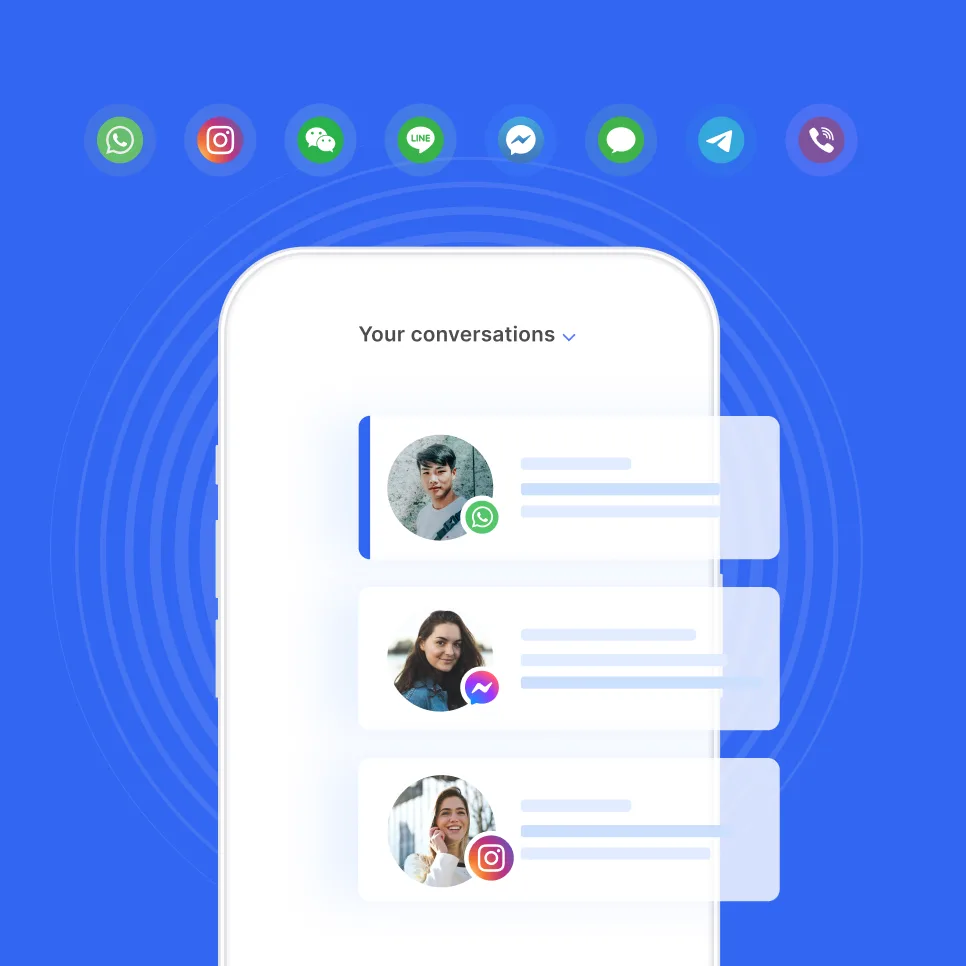
A unified inbox centralizes all your messages—from Facebook Messenger, Instagram DMs, WhatsApp, and SMS—into a single platform, eliminating the need to switch between different apps or lose track of conversations. This streamlined setup offers several key benefits:
Faster Response Times: Agents can see and reply to all messages from one screen, reducing delays.
Improved Team Communication: Centralizing conversations makes it easier for team members to collaborate and share information.
Enhanced Customer Support: Agents can stay on top of every inquiry, ensuring no customer is left waiting.
Broadcast messages and chat blasts
Messenger blasts are no longer just generic mass chats. Today, businesses can send personalized broadcasts by using marketing segmentation to deliver the right message at the right time.
Welcome new leads: Greet potential customers with a tailored introductory message.
Alert loyal buyers: Inform your dedicated customer base about exclusive sales and promotions.
Reignite inactive contacts: Re-engage with past customers who haven't interacted with your business recently.
To ensure compliance while still reaching a wide audience, be sure to adhere to Meta's 24-hour messaging window or use the appropriate message tags.
Marketing automation
Manual replies don’t scale. AI automation picks up the heavy lifting, allowing your team to focus on high-value tasks. Key benefits include the following:
Answering FAQs: Instantly respond to common customer questions.
Guiding prospects: Help potential customers navigate your sales funnel.
Running campaigns: Execute drip campaigns and scheduled broadcasts effortlessly.
With AI smart reply, you can keep communication running 24/7.
Printstrix scaled their business and ad strategy with Messenger automation
Printstrix, a personalized gifts company, faced a flood of inquiries that bogged down their staff and led to wasted ad spend. Many interested buyers got lost in the shuffle, costing the business real sales.
By shifting to Click-to-Messenger ads and automating with AI, they greeted users, answered frequently asked questions, and filtered high-intent buyers to human agents. The overhaul included advanced ad attribution to track which campaigns delivered conversions—not just clicks.
Staff workload dropped thanks to automated responses.
Ad spend became more efficient by focusing on real conversions, reducing acquisition costs.
Better visibility across the sales funnel, from first click to purchase.
Higher customer satisfaction with instant, around-the-clock responses.
AI bot or chatbot
AI agents take automation a step further than basic chatbots. With tools like SleekFlow's AgentFlow, you can build specialized teams of bots designed to handle more than just scripted questions. These advanced agents can:
Anticipate a customer’s next steps
Qualify leads
Suggest products
Set up appointments
Hand off valuable prospects to your sales team, complete with chat summaries for speedy, informed service
Human agent handoff
While automation is great for routine requests, some situations need a human touch. AI Agents makes this transition seamless.
Detailed summaries: When it's time for your team to step in, SleekFlow’s AgentFlow sends them detailed chat summaries for context.
Inbox Co-Pilot: This feature helps your staff create fast, accurate replies by pulling information from your internal knowledge base, ensuring every customer receives top-quality support.
How White Coat Manila saved time and effort with an AI chatbot on Messenger
White Coat Manila, a medical scrubs retailer in the Philippines, needed a smarter way to respond to a high volume of customer questions without burning out their team.
Adopting Meta’s Business AI, they launched a Messenger chatbot to handle repeat queries, letting staff focus on complex or VIP sales. The bot was fine-tuned in Tagalog to serve local shoppers.
In six weeks, this approach delivered the following:
20% savings on customer service costs.
5% more customer conversations handled efficiently.
CRM integrations
Syncing Messenger with your CRM system is essential. This integration automatically logs every message, order, and detail, creating a complete customer profile.
Track sales touchpoints.
Craft laser-focused, personalized marketing strategies based on real data.
Analytics dashboards
Data fuels decisions. Analytics dashboards help you track key metrics from chatbot-driven flows, including:
Delivery rates
Open rates
Block rates
Conversion paths
By monitoring these metrics, you’ll pinpoint where engagement lags and make data-backed adjustments to boost your messaging results.
Facebook Messenger marketing playbook: 5 campaign ideas, leads, sales, and retention
Having the right tools is only part of the equation. To get real results from Facebook Messenger marketing, businesses need campaign ideas that match where customers are in the journey.
Here are 6 practical ways to use Messenger for lead generation, conversion, re-engagement, and retention.
1. Turn ad clicks into qualified leads
Use Click-to-Messenger ads to start conversations with people who are interested enough to respond, instead of sending them to a landing page and hoping they convert later. Meta says ads that click to message can send people directly into Messenger conversations with your business.
How it works:
Run Facebook or Instagram ads with Messenger as the destination
Trigger an automated welcome message when someone clicks
Ask a few quick qualification questions, such as product interest, budget, or timeline
Route high-intent leads to a sales rep
Best for:
demo requests
service enquiries
product consultation
high-consideration purchases
What to measure:
conversation start rate
qualified leads
cost per qualified conversation
conversion to sales call or purchase
2. Answer FAQs before they become drop-offs
Many prospects leave because they cannot get a quick answer. Use Messenger automation to handle common questions the moment someone starts a chat, then escalate complex cases to a human agent when needed.
How it works:
Set up automated replies for pricing, availability, delivery, or product fit
Use quick replies or button prompts to guide the next step
Hand off to a human when the customer shows buying intent or asks a more complex question
Best for:
ecommerce
clinics
education providers
service businesses with frequent inbound questions
What to measure:
first-response time
resolution rate
drop-off rate before handoff
conversion after FAQ flow
3. Re-engage past Messenger contacts with Sponsored Messages
If you want to reconnect with people who have already chatted with your business, Sponsored Messages are the more suitable format. Meta describes Sponsored Messages as a way to send offers, promotions, and updates to people your business has previously talked to on Messenger.
How it works:
Segment previous Messenger contacts by campaign, product interest, or customer status
Send a targeted offer, event reminder, or limited-time promotion
Use clear copy and one main CTA to move people back into conversation or purchase
Best for:
reactivating old leads
promoting launches
driving repeat purchases
seasonal campaigns
What to measure:
reopen rate
click-through rate
repeat purchase rate
revenue from re-engaged contacts
4. Use Messenger as a guided product recommendation channel
Instead of treating Messenger as a support inbox only, use it as a lightweight guided selling channel. Ask a few simple questions, narrow the choices, and recommend the best next product or service.
How it works:
Ask about goals, preferences, budget, or urgency
Use automation or AI to suggest the most relevant option
Offer a direct next step such as checkout, booking, or speaking to sales
Best for:
retail and ecommerce
skincare and beauty
travel and hospitality
financial or education services with multiple packages
What to measure:
product recommendation click rate
add-to-cart or booking rate
conversion by recommendation path
5. Turn Messenger into a retention and support channel
Messenger is not just for acquisition. It can also help you keep customers engaged after the first purchase through support, updates, and human follow-up. Zendesk also frames Messenger as a strong support channel because it helps businesses stay on top of customer conversations and offer quick, convenient service.
How it works:
Use Messenger for order questions, appointment changes, and post-purchase support
Let automation handle repeat queries
Use human agents for sensitive or higher-value cases
Feed customer data into your CRM so future outreach is more relevant
Best for:
repeat-purchase brands
subscription businesses
clinics and service providers
businesses with high support volume
What to measure:
repeat contact resolution rate
customer satisfaction
response time
retention or repeat order rate
Overcoming the limits of Meta Business Suite
As your business expands, Meta’s free tools quickly show their limits. When your chat traffic surges, those built-in systems often can’t keep up—resulting in missed messages, lost sales opportunities, and growth that gets stuck in first gear.
Looking to accelerate your growth? Here’s how SleekFlow delivers real results:
Maximizing ROI with paid ads attribution and conversions API
Advanced Messenger setups unlock valuable data. While most basic setups only track the start of a chat, a robust system can log the campaign, ad group, and specific ad behind every conversion.
Integrating Meta’s Conversions API (CAPI) offers significant advantages:
Every verified conversion automatically reports back to Meta.
When an AI agent qualifies a lead or a sale closes in chat, Meta receives instant feedback.
This trains Meta's algorithm to target lookalike buyers, resulting in lower acquisition costs and fewer spammy leads.
Want to see your messages drive real, trackable growth? SleekFlow gives you the tools you need to build a messaging strategy that stands the test of time.
Want to outcompete your peers with SleekFlow's help?
Book your personalised demo with SleekFlow today and unlock the potential of seamless communication


