WhatsApp for sales teams: how to capture, qualify, and close deals in chat


TL; DR: Quick Summary
- Your prospects answer WhatsApp, not email. WhatsApp usage exceeds 85% of the smartphone population across Europe, including roughly 40 million people in the UK, and messages see open rates around 95% versus roughly 20% for email.
- Buyers prefer it. 54% of consumers say they'd rather receive marketing messages on WhatsApp than by email or SMS, and two-thirds report making purchases after chatting with a brand.
- It covers the whole sales cycle. Lead capture from ads, instant qualification, quoting and payment in-thread, automated follow-up, and re-engagement all happen in one conversation.
- Speed wins deals. AI agents engage new leads the moment they message, which matters because conversion odds collapse within minutes of an enquiry.
- Compliance is manageable. Opt-in consent under UK GDPR, PECR, and their EU equivalents is a solved problem with proper consent flows, and it keeps the channel effective
Most sales teams have a channel problem they don't talk about. Emails go unopened, calls go to voicemail, and the follow-up sequence that worked five years ago now gets ignored. Meanwhile, the same prospects are answering WhatsApp messages from friends within minutes.
The tools to fix this have matured. Click-to-WhatsApp ads, catalogues, payment links, in-chat forms, and AI agents mean a deal can now start, progress, and close inside a single chat thread. What's been missing is a playbook written for the people who carry a quota.
That's what this is. Not another explainer of the WhatsApp Business Platform (we have a full guide to the platform and a definitive WhatsApp Business API guide for that), but a practical look at what WhatsApp changes for a sales team: pipeline, speed, follow-up, and close rates.
What does selling on WhatsApp actually mean?
Selling on WhatsApp means running your sales conversations, not just your support, through the channel your buyers already use daily. In practice: a prospect taps an ad or a website widget, lands in a chat, gets qualified by an AI agent or a rep, receives the quote and payment link in the same thread, and gets followed up in the place they actually look.
One clarification before the playbook. The free WhatsApp Business App runs on one phone and suits sole traders; sales teams need the WhatsApp Business Platform (API) for shared inboxes, automation, CRM sync, and broadcasts. If you need the full breakdown of features, pricing, and setup, read the WhatsApp Business API definitive guide. If you're on the free app and worried about losing chat history when upgrading, WhatsApp Coexistence solves that. This article assumes the platform and focuses on what your team does with it.
It's where buyers are. WhatsApp usage exceeds 85% of the smartphone population across Europe, with penetration around or above 90% in Spain, Italy, Portugal, and Ireland (Statista ,LinkMobility), over 53 million users in Germany, and roughly 40 million in the UK (SQ Magazine).
Attention email can't buy. WhatsApp business messages typically see open rates around 95%, compared with roughly 20% for email, and click-through rates on well-targeted campaigns commonly reach 45–60% (Infobip, AiSensy).
Buyers prefer the channel. 54% of consumers say they prefer receiving marketing messages via WhatsApp over email or SMS, and two-thirds report making purchases after interacting with a brand there (Electroiq). Around 175 million people message a business account every day (Meta, Oct 2020).
Speed converts. Leads engaged within minutes convert at dramatically higher rates than leads contacted hours later (Harvard Business Review, "The Short Life of Online Sales Leads"). WhatsApp, with instant automated first response, is built for that window.
Key benefits of WhatsApp for sales teams
Follow-ups that actually get seen
The maths of outreach changes when open rates jump from ~20% to ~95%. A quote follow-up, a demo reminder, or a renewal nudge lands in the same place as messages from the prospect's family, with the same notification. For reps battling stuffed inboxes, this alone justifies the channel.
One number, whole team, full context
Every conversation lives in a shared inbox with assignment rules, internal notes, and CRM-synced history. No more deals trapped on one rep's personal phone, no more "sorry, who am I speaking to again?" when someone's on holiday. Handovers keep full context, and managers finally see the pipeline that used to live in private chats.
Speed to lead, automated
Instant auto-responses, qualification chatbots, and AI agents engage a new lead the moment they message, including from click-to-WhatsApp ads on Facebook and Instagram. The lead gets an immediate, useful reply; the rep gets a qualified, context-rich conversation instead of a cold form fill.
How a WhatsApp sales motion works
Capture. Click-to-WhatsApp ads, QR codes, and website widgets drop prospects into a conversation instead of a form. Cost per conversation is measurable per campaign.
Qualify. An AI agent asks about budget, timeline, and product interest, answers first questions, and scores the lead against your criteria before any rep spends a minute.
Route. Qualified conversations are assigned instantly to the right rep with the full transcript and CRM record attached.
Advance. Quotes, brochures, demos, and payment links go out in-thread. WhatsApp Flows collect structured details like booking slots, configuration options, and application forms without the prospect leaving the chat.
Follow up. Automated but personalised sequences revive stalled deals: a quote reminder after three days, a case study after a week, a check-in before the quote expires. Because opens are near-universal, sequences can be shorter than email cadences.
Re-engage. Won or lost, the thread stays. Renewal nudges, cross-sell offers, and win-back messages go to a segment that actually reads them.
(Platform setup, business verification, and BSP selection are covered step by step in the API definitive guide.)
Common use cases across the sales funnel
Top of funnel
Ads that start conversations
Click-to-WhatsApp campaigns turn paid impressions into live conversations, and the qualification happens before the rep is ever involved. Teams track cost per qualified conversation rather than cost per form fill.
Website and event capture
Chat widgets and QR codes at events replace "leave your email" with "start the conversation now", while intent is at its peak.
Middle of funnel
Qualification and discovery
AI agents run first-line discovery on budget, need, and timeline in any language, around the clock, then brief the rep.
Quoting and negotiating in-thread
Quotes, spec sheets, and payment links live in one thread with full history, so nothing gets lost between calls and email chains.
Bottom of funnel and beyond
Closing and payment
Payment links and in-chat confirmation compress the gap between "yes" and "paid", where deals traditionally leak.
Renewals, upsells, and win-backs
Segmented broadcasts based on purchase history revive dormant accounts and time renewal conversations, with measurable read and click rates.
Best practices for selling on WhatsApp
Opt-in first, always. Marketing messages need prior consent under UK GDPR, PECR, and EU GDPR/ePrivacy rules. Build the opt-in into forms, checkout, and first conversations, and log it. The ICO's direct marketing guidance is the reference point [External link: add ICO guidance URL].
Separate transactional from promotional. Replies to customer-initiated chats and order updates are low-risk; broadcasts need explicit consent and easy opt-out.
Sell like a human, not a broadcast. Low frequency, high relevance, conversational tone. One spammy blast can poison the channel for the whole team.
Respond in minutes, not hours. If WhatsApp is on your website and ads, prospects expect fast replies. Automate the first response so no enquiry sits unanswered.
Start with one revenue workflow. Lead qualification from ads, or quote follow-up, or abandoned carts. Prove ROI, then expand.
Wire it into the CRM from day one. Conversations synced with HubSpot or Salesforce give reps context and give managers a pipeline they can actually inspect.
Email vs phone vs WhatsApp: comparison for sales outreach
The point is not to abandon email or the phone. It's that WhatsApp now carries the connective tissue of the deal: the fast replies, the reminders, the documents, the "just confirming" moments where slower channels leak revenue.
How SleekFlow helps sales teams sell on WhatsApp
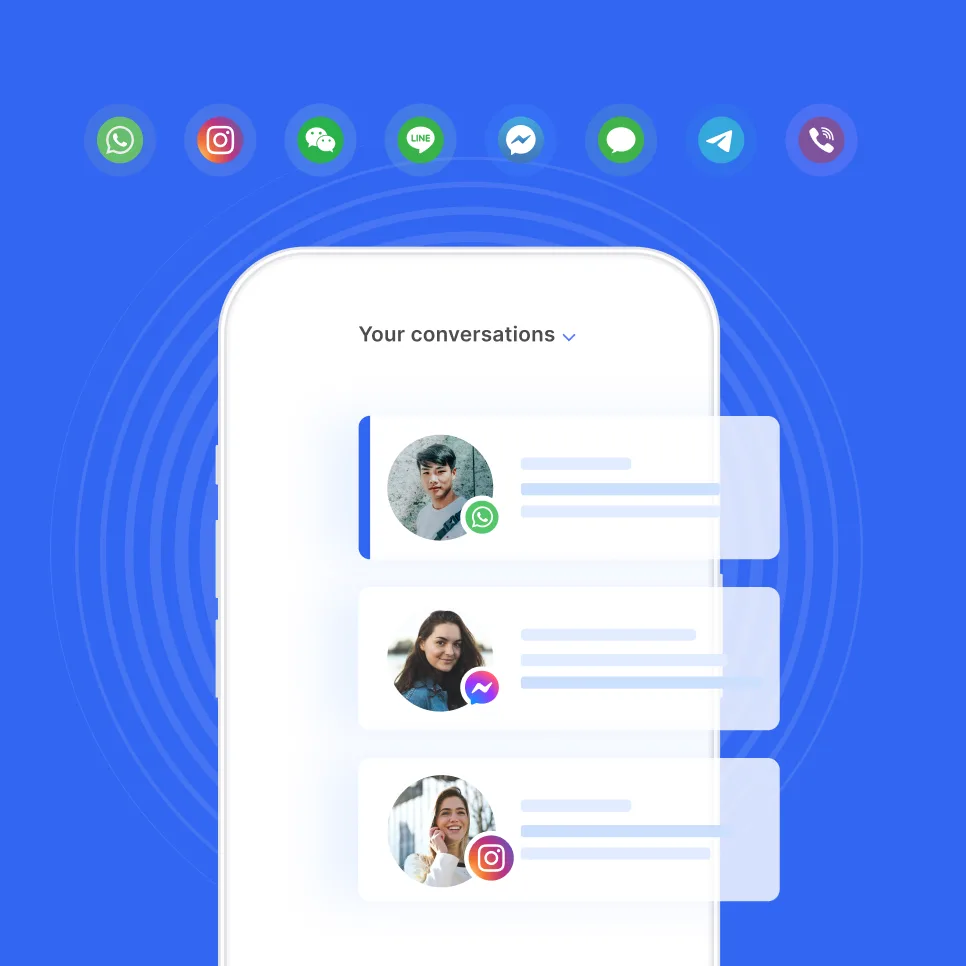
SleekFlow is a Meta Business Solution Provider that puts WhatsApp alongside Instagram, Facebook Messenger, live chat, and email in one inbox with a unified customer record. AgentFlow AI agents qualify leads against your criteria, book meetings, and hand over to reps with full context, while Flow Builder automates routing, follow-up sequences, and broadcasts without code.
CRM integrations with HubSpot and Salesforce keep pipeline data in sync both ways, and analytics track response times, conversion by campaign, and rep performance. Security and compliance are enterprise-grade: ISO 27001, SOC 2 Type II, ISO 42001, and GDPR-aligned data practices with role-based access and data masking.
Put your sales team where your buyers already are
Buyers haven't stopped responding. They've just stopped responding on the channels most sales teams still rely on. WhatsApp is where their attention actually lives, and a proper sales motion on it delivers qualified leads, faster follow-up, visible pipeline, and compliant outreach.
The teams that win won't be the ones that add WhatsApp as another disconnected inbox. They'll be the ones that wire it into their CRM, automate the busywork, and let salespeople do what they do best, inside the app their buyers open forty times a day.
Book a demo to see what a WhatsApp sales motion looks like for your team.
Make the most of every seasonal sales opportunity.
Book your personalised demo with SleekFlow today and unlock more conversions through conversations
Frequently Asked Questions
Do sales teams need the WhatsApp Business App or the API?
Is selling on WhatsApp compliant?
Won't prospects find sales messages on WhatsApp intrusive?
How is this different from putting a chatbot on our website?
What metrics should a sales leader track?
Can WhatsApp conversations sync with our CRM?

