WhatsApp Business Platform: a guide to grow your business


TL; DR: Quick Summary
- WhatsApp Business Platform is built for medium to large businesses to automate messaging, integrate with CRMs, and scale sales, marketing, and support.
- Cloud API suits fast-growing teams; On-Premise API (phasing out Oct 2025) was for strict data control.
- WhatsApp Business App is best for small businesses; upgrade when sending 1,000+ messages/month.
- 2025 pricing is template-based (marketing, utility, authentication), with service conversations free.
- Click-to-WhatsApp ads open a free messaging window that may stay open for as long as 7 days, helping lead conversion.
- With the right BSP like SleekFlow, brands achieve faster response times, higher open rates, and lower messaging costs.
WhatsApp Business Platform now comes in multiple forms — Business App, Cloud API and, On-Premise API. This guide explains the differences, latest pricing updates (2025), and how to choose the right option for your business.
Overview: What is WhatsApp Business Platform?
The WhatsApp Business Platform is a paid solution that helps medium to large businesses connect with customers at scale. It includes the WhatsApp Cloud API, on-premise WhatsApp Business API, and the WhatsApp Business Management API.
With these APIs, businesses can:
Send and receive messages in bulk
Automate marketing, sales, and customer support
Integrate with CRMs (e.g., Salesforce, HubSpot) and e-commerce platforms (e.g., Shopify)
Track key metrics like delivery and read rates
The platform is designed for enterprises managing high volumes of customer interactions and complex workflows. Businesses can get the API by working with a Meta Business Partner.
WhatsApp Cloud API vs. On-Premise API
So, which one should you choose?
If your business is a fast-growing e-commerce store, the Cloud API is probably your best bet. It's built to handle a high volume of messages with minimal downtime, making it perfect for businesses that are rapidly expanding and need reliable, scalable communication.
However, if you're in a sector like finance, where data security and regulatory compliance are top priorities, the On-Premise API offers the control you need. This option ensures that all sensitive customer data stays within your own infrastructure, helping you meet strict standards.
Cost Comparison between Cloud API and On-Premise API
When it comes to cost, both the Cloud API and the On-Premise API offer value depending on your specific needs, but the pricing models differ significantly. For a mid-market business sending approximately 10,000 messages per month:
Cloud API: Typically operates on a pay-as-you-go model or flat-rate pricing. On average, you might expect to pay around $0.01 per message, which translates to an estimated monthly cost of $100. This cost covers hosting, maintenance, and the reliability of a cloud infrastructure.
On-Premise API: Requires a one-time setup fee for the infrastructure, followed by ongoing costs for hardware, software licences, and maintenance. While these costs vary, a rough estimate could range from $500 to $1,000 per month depending on server requirements, IT support, and other operational factors.
Tip: Cloud API users report a 40% faster time-to-market compared to on-premise deployments.
WhatsApp Business Platform vs WhatsApp Business App
The differences between the WhatsApp Business Platform vs. WhatsApp Business App can be summarized as follows:
Note: The App is best suited for small businesses, while the Platform is designed for scaling customer communication at enterprise level.
Read more about the limitations of WhatsApp Broadcast on the free WhatsApp Business App.
Using a WhatsApp Business PlatformManager , businesses can get more detailed insights and analytics about their messaging while exploring more advanced features, automations and integrations.
WhatsApp Business App, on the other hand, is a messaging app that businesses can use to communicate with customers directly on their mobile devices. The app includes limited features such as quick replies and labels. ,and labelsIt is intended for small businesses or individual entrepreneurs who want to use WhatsApp as a communication tool.
Businesses suitable for using the WhatsApp Business Platform
The WhatsApp Business Platform is ideal for industries that need automation, integration, and personalization at scale.
E-commerce: order confirmations, shipping updates, returns
Customer service: automate FAQs, account info, flight status
Healthcare: appointments, test results, patient updates
Retail: promotions, product launches, personalized offers
Travel & Tourism: booking confirmations, itineraries, alerts
EdTech: class updates, reminders, student support
Logistics: shipment tracking, delivery notifications
Government services: citizen updates, application status, alerts
Note: Across industries, AI chatbots enhance automation, enabling faster, consistent, and scalable customer communication.
Just a simple act of sending a promotional WhatsApp message can result in hundreds of responses. This helps our operations team confidently plan early-bird sales and budget for events, flights, and hotels.

Henry Lee
Head of PR and Marketing, EGL Tours Hong Kong
How to choose between WhatsApp Business Platform vs. WhatsApp Business App
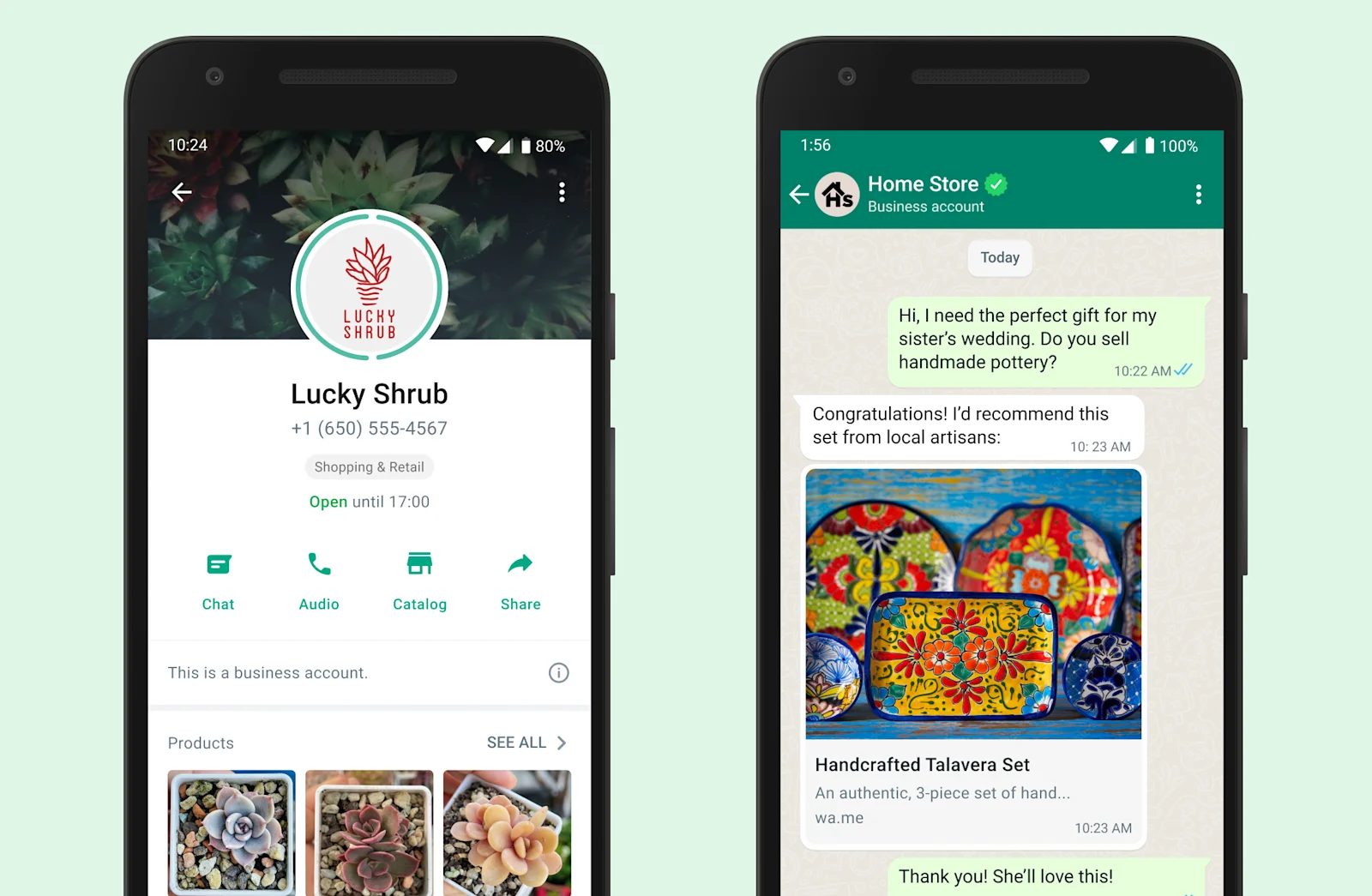
Choosing between WhatsApp Business Platform vs. WhatsApp Business App depends on the specific needs and use cases of your brand. Here are some factors to consider when making the decision:
When Should You Upgrade to the WhatsApp Business Platform?
Most businesses start on the app and eventually move to the platform. But when's the right time to switch? Here’s a quick question to help you decide.
Are you sending over 1,000 messages a month?
Yes: The Business Platform is your best bet for scale and automation.
No: The Business App might be all you need for now.
Checklist: Moving to the WhatsApp Business Platform
Ready to make the switch? Here’s what you need for a smooth migration.
Ensure Admin access: Confirm you have full "Admin" access to the Meta Business Portfolio linked to your WhatsApp account.
Verify your business: Go to the Meta Security Center and complete business verification.
Prepare an active phone number: The number you’re migrating must receive SMS or voice calls for OTP verification.
Record your display name: Note your current WhatsApp Display Name exactly as it appears (case-sensitive) for setup.
Disable 2FA temporarily: Turn off 2-Step Verification in WhatsApp Manager. If left on, the new provider can’t take control of the number, blocking migration.
SleekFlow’s onboarding gets you live in as little as 3 minutes with expert guidance.
Real-World Examples
Let’s look at how two different businesses might choose:
A local boutique handles about 500 customer messages a month. They focus on personal, one-on-one chats. For them, the WhatsApp Business App is perfect.
A growing e-commerce store manages over 5,000 inquiries monthly, sends promotions, and needs to integrate with Shopify. This business needs the WhatsApp Business Platform.
⚠️ The free WhatsApp Business App limits broadcast lists to 256 contacts, and frequent messaging could lead to an account ban. In contrast, the WhatsApp Business Platform allows unlimited, policy-compliant broadcasts.
Quick rule of thumb:
App = best for small/local businesses
Platform = best for scaling and enterprise
Latest WhatsApp Business Platform Updates (2025–2026)
The WhatsApp Business Platform continues to evolve to meet the needs of businesses. Here are the latest updates you should know about:
Centralized Campaigns: Businesses can now create, manage, and execute marketing campaigns for WhatsApp, Facebook, and Instagram directly within Meta Ads Manager. This unified workflow allows for consistent creative assets, copy, and budget parameters across all three platforms, eliminating redundant work.
Advantage+: Meta’s "Advantage+" AI optimizes ad spend by dynamically focusing resources on the channels with the highest engagement, ensuring more efficient budget allocation.
Voice and Video Calls: Customers can now initiate voice or video calls directly from chat, while businesses can call customers who have opted in, providing personalized support for more complex issues.
Voice Messaging: The platform supports sending and receiving voice notes, enabling detailed, asynchronous communication that feels more personal than text.
Click-to-WhatsApp Ads: Businesses gain a free conversation window up to 7 days for leads generated through "Click-to-WhatsApp" ads on Facebook or Instagram, offering more time to convert prospects without extra costs.
Template: Text for "Marketing" and "Utility" templates is now capped at 550 characters and 10 emojis to enhance message clarity and delivery rates.
On-Premises API: Meta is phasing out the On-Premises API, which haswill fully expiredexpire on October 23, 2025. Businesses mustare encouraged to migrate to the Cloud API, offering faster throughput (up to 1,000 messages per second) and exclusive access to the latest features.
WhatsApp Business Platform Pricing per Message Updates
The WhatsApp Business Platform pricing has two components:
Template message fees (Meta’s charges)
Provider subscription fees (charged by your WhatsApp BSP)
Meta charges based on the type of messages you send, there are three types of messages: marketing, utility and authentication.
Marketing messages are business-initiated conversations, which include promotions, welcoming messages, updates, invitations, recommendations, or requests to complete a new transaction.
Utility messages are business-initiated conversations which relate to a specific transaction and allow for confirmation, suspension or changes to a purchase. They are free of charge when sent in response to user-initiated messages.
Authentication messages are business-initiated conversations, they include one-time passcodes used for multiple login steps, such as account verification, recovery, integrity challenges.
To send these messages, they all require template approval and customer opt-in.
New in 2025: Pricing is applied per template sent. Multiple templates = multiple charges, even in the same session.
Key Takeaways
Service conversations → Now completely free.
Utility templates → Free within 24h window, enabling cost-effective transactional updates (order confirmations, shipping, etc.).
Authentication templates → Rates reduced and expanded to more countries, lowering costs for secure login/OTP use cases.Marketing templates → Still paid, remain the most expensive category.
For more detailed information about WhatsApp Business Platform pricing, read our WhatsApp Business API guide.
What This Means for Businesses
Lower costs for support and utility messaging → Encourages more customer engagement without extra charges.
More granular billing → Costs now scale with how many templates you send, not just active sessions.
Real Cost Example
Let’s look at a real scenario:
An e-commerce business that sends 50,000 marketing messages and 20,000 utility messages each month can expect to pay around $4,200/month to Meta. This number can fluctuate depending on your mix of message types and countries targeted, but it’s a practical benchmark for high-volume senders.
Curious about your monthly spend? Use our WhatsApp Pricing Calculator to estimate your WhatsApp messaging costs based on your unique volumes and message types.
How SleekFlow Can Help You Save
SleekFlow’s flat subscription model is designed with growing businesses in mind. Instead of unpredictable per-message charges, you benefit from a transparent, fixed subscription. When you optimize your workflow with automation, mid-market businesses typically see 30–50% savings on messaging costs—freeing up budget for other priorities.
Tip: Use free utility messages for transactional updates within the 24-hour customer care window. This reduces costs, improves engagement, and ensures compliance with template-based billing.
How to set up WhatsApp Business Platform
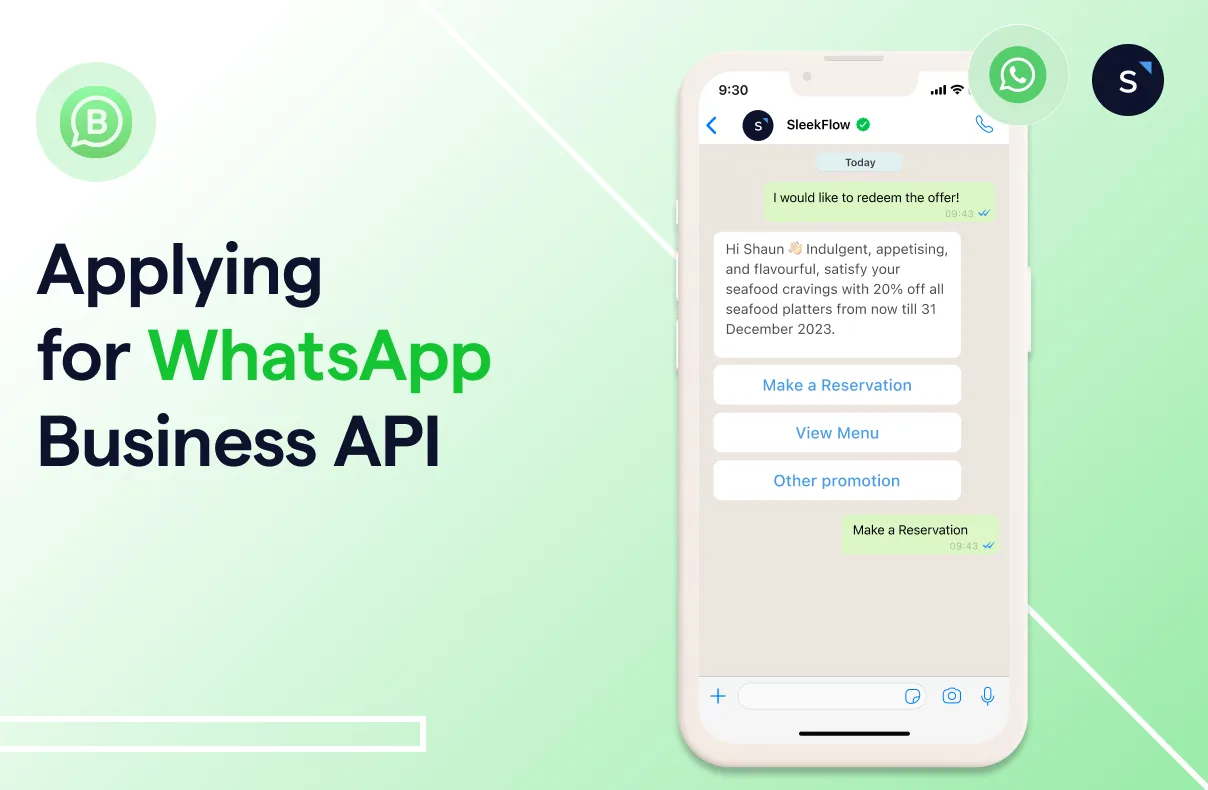
Before using the WhatsApp Business Platform (WABA), you’ll need a verified business account.
Quick Setup Checklist
Prepare your number → Verified business phone number (not already tied to personal WhatsApp).
Create a WABA → Apply directly via a BSP or WhatsApp Cloud API.
If migrating from the free WhatsApp Business App:
Back up chats
Delete your old Business App account
Apply for a new WABA
Messages received during setup are queued and delivered once live.
Provide documentation → Business registration certificate, tax ID, or official proof.
Comply with policies → WhatsApp Terms of Service & Privacy Policy.
Tips for getting the WhatsApp blue checkmark
Complete your profile: Ensure your official website, category, and business details are fully updated.
Maintain a high-quality rating: Keep your account healthy by providing a great customer experience to avoid blocks or complaints.
Strengthen social proof: For large brands seeking OBA status, organic media mentions and a strong online presence remain the key factors.
Note: Blue Tick verification does not depend on ad spend — it depends on Meta Verified subscription or notability (OBA), along with authenticity and quality rating.
For a detailed step-by-step process, see our full guide to applying for WhatsApp Cloud API.
A step-by-step guide to applying for an account on the WhatsApp Business Platform
Essentially, there are two ways to create an account on the WhatsApp Business Platform and use the WhatsApp Business API:
Apply directly through Meta using your own developer resources
Apply through a WhatsApp Business Solution Provider (BSP) such as SleekFlow
The first option is definitely more time and effort-consuming as it requires you to build an app on your own. If your company is looking to use the WhatsApp platform for business to kickstart on your conversational commerce strategy, go for the second option and apply via a WhatsApp BSP.
Step 1: Create Facebook and WhatsApp Business accounts
Step 2: Create a WhatsApp Business Profile
Step 3: Verify a WhatsApp Business number
Step 4: Connect to SleekFlow the phone numbers/ WhatsApp Business Accounts to SleekFlow
Step 5: Set a channel name for your WhatsApp Business Accounts
Step 6: Select a monthly subscription plan that suits your need
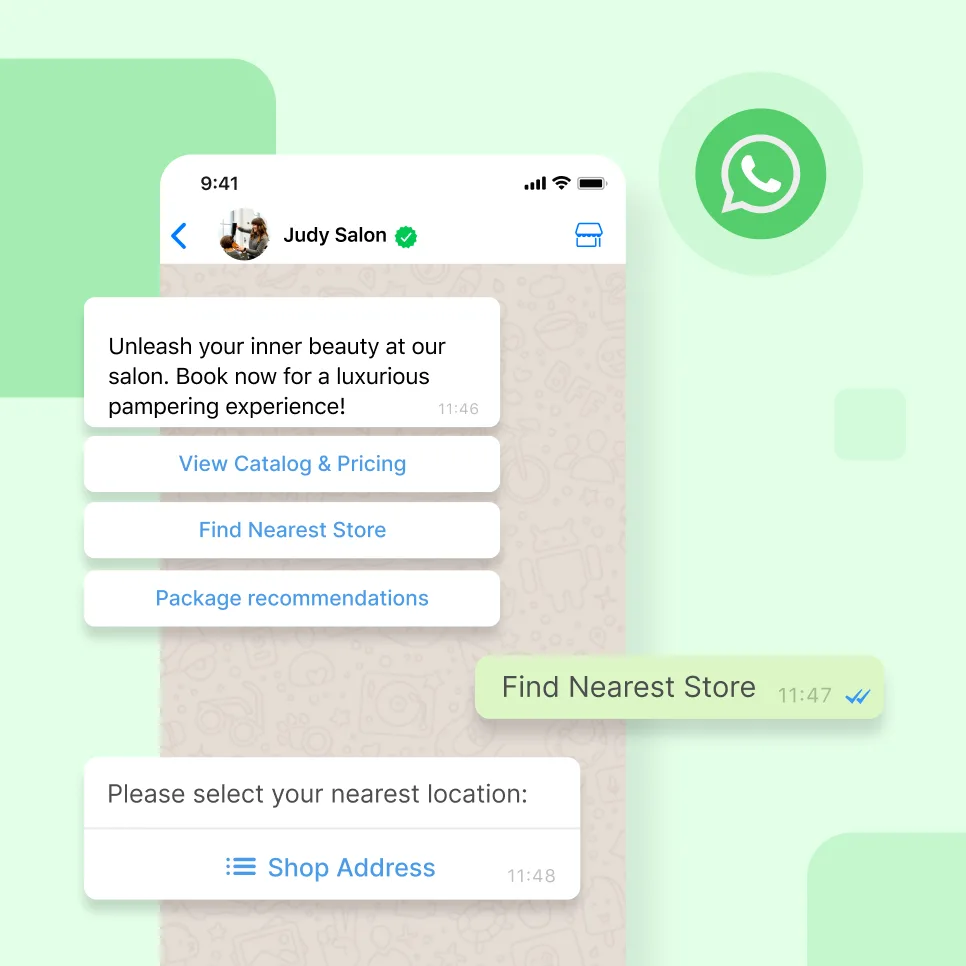
Connect to WhatsApp Business API now!
Connect to WhatsApp Business API and unlock powerful tools to engage your audience.
WhatsApp Business Platform Features via SleekFlow for sales, marketing, and customer support
Many businesses assume that the WhatsApp Business Platform (WABA) is only meant for customer support. In reality, it provides a full set of tools for sales, marketing, and service—making it a powerful end-to-end customer engagement channel.
WhatsApp Business Platform for sales
1. Broadcast promotions and updates
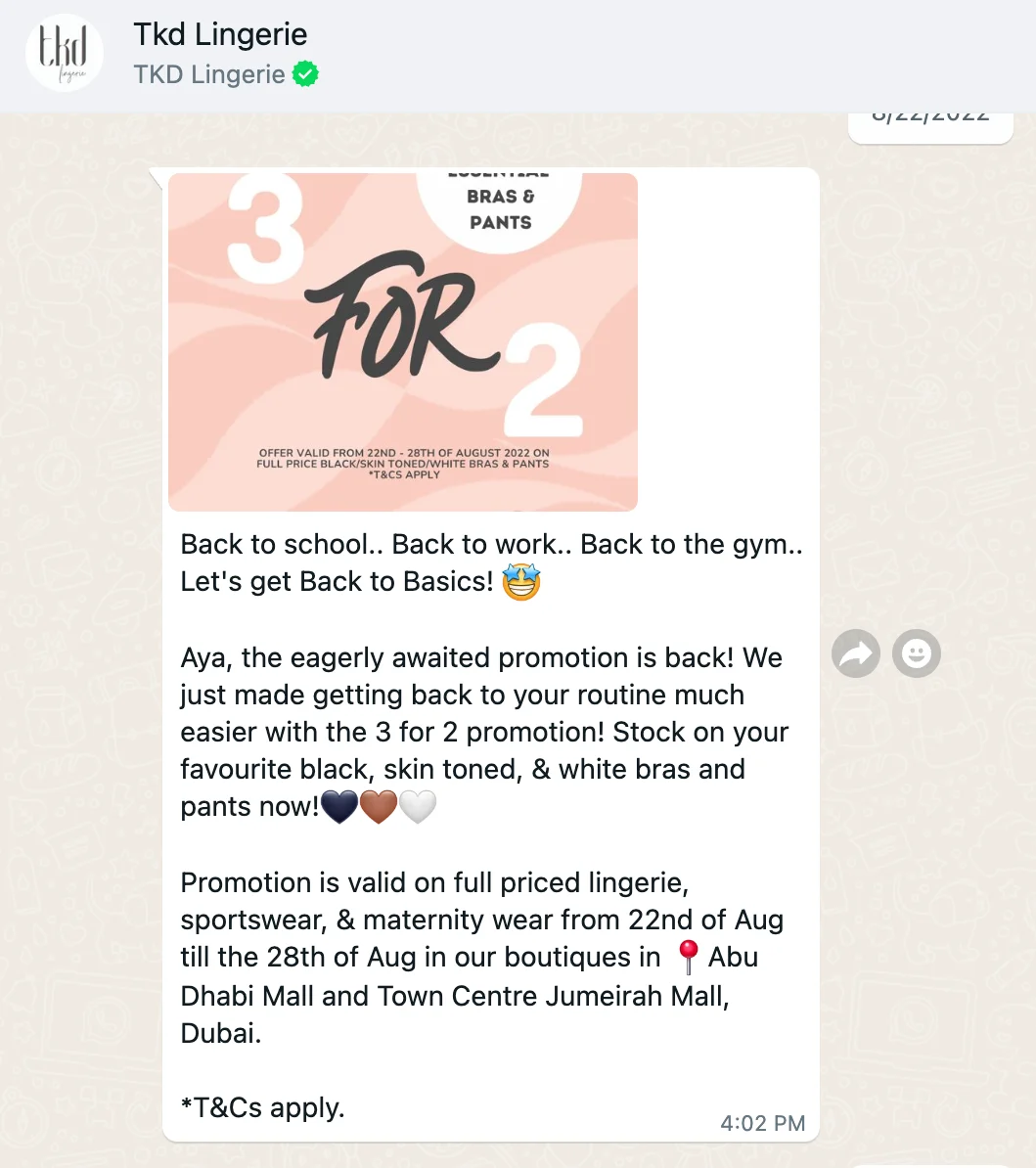
Send bulk promotional messages, discount codes, and event reminders through WhatsApp Broadcast. With personalization features, brands can tailor campaigns at scale while maintaining a one-to-one feel.
2. CRM and e-commerce integrations
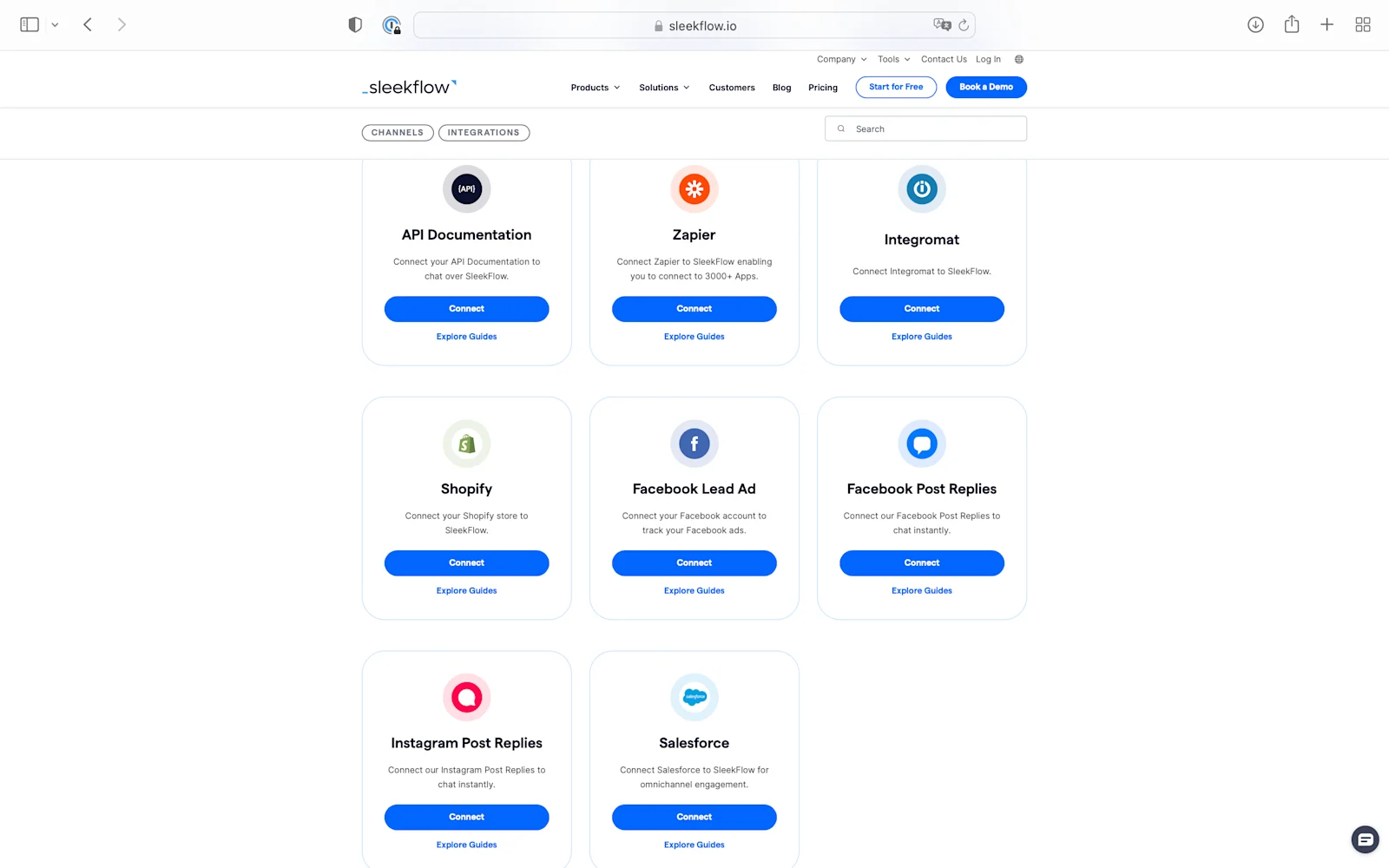
Connect WhatsApp with Shopify, Salesforce, HubSpot, or Stripe to streamline the sales process. Your team can draft orders directly in chat, send in-chat payment links, and instantly track leads and campaign sources—all without leaving WhatsApp.
3. Instant payments
Speed up the buying journey with seamless payment link sharing inside conversations, reducing drop-offs and shortening sales cycles.
Read the article about the complete walkthrough of WhatsApp Broadcast.
WhatsApp Business Platform for marketing
1. Lead generation through click-to-WhatsApp ads
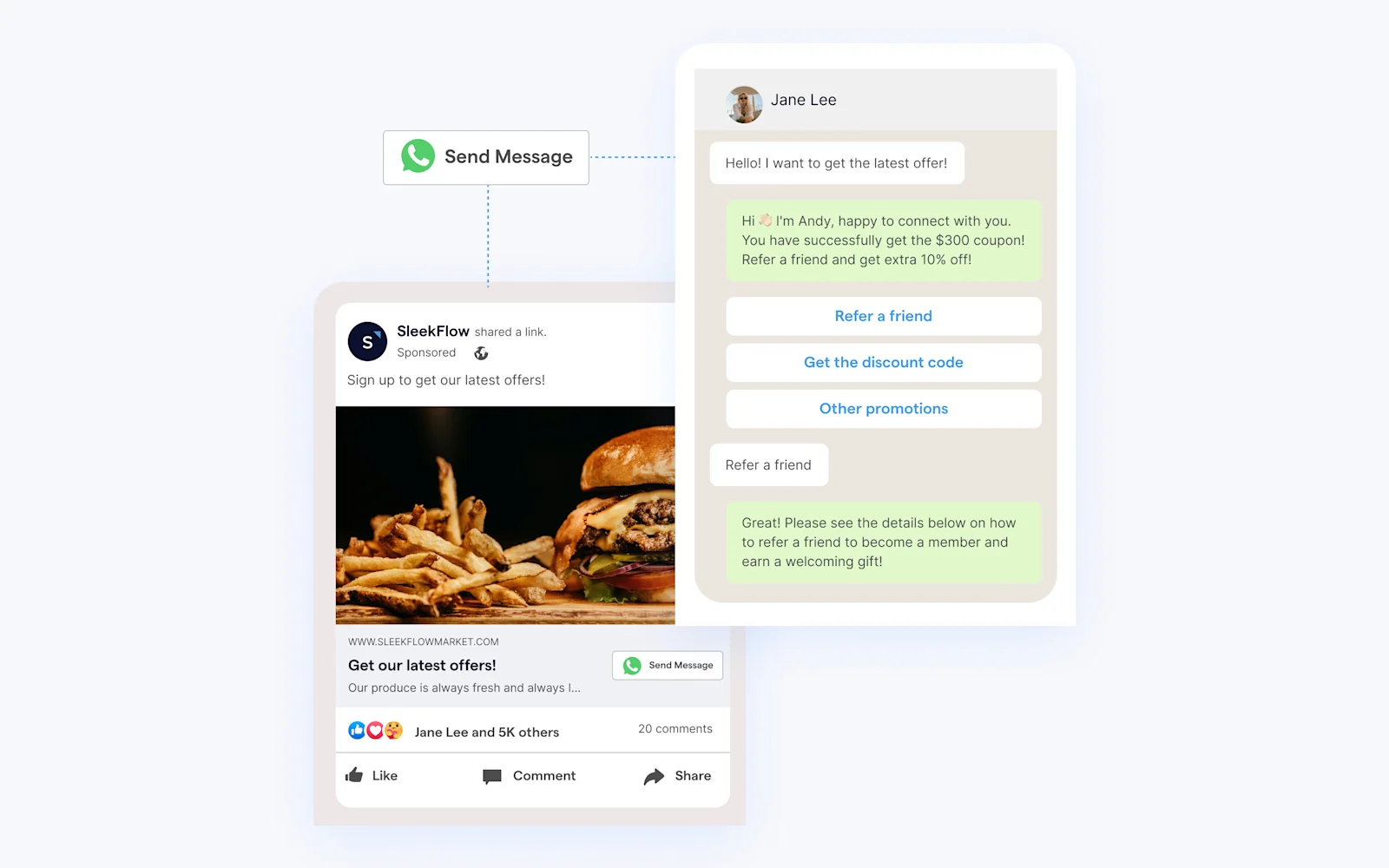
Run Click to WhatsApp ads on Facebook and Instagram that open a WhatsApp chat when clicked. If the customer initiates the conversation, businesses can reply for free, making this one of the most cost-effective lead-generation strategies.
2. Personalized recommendations
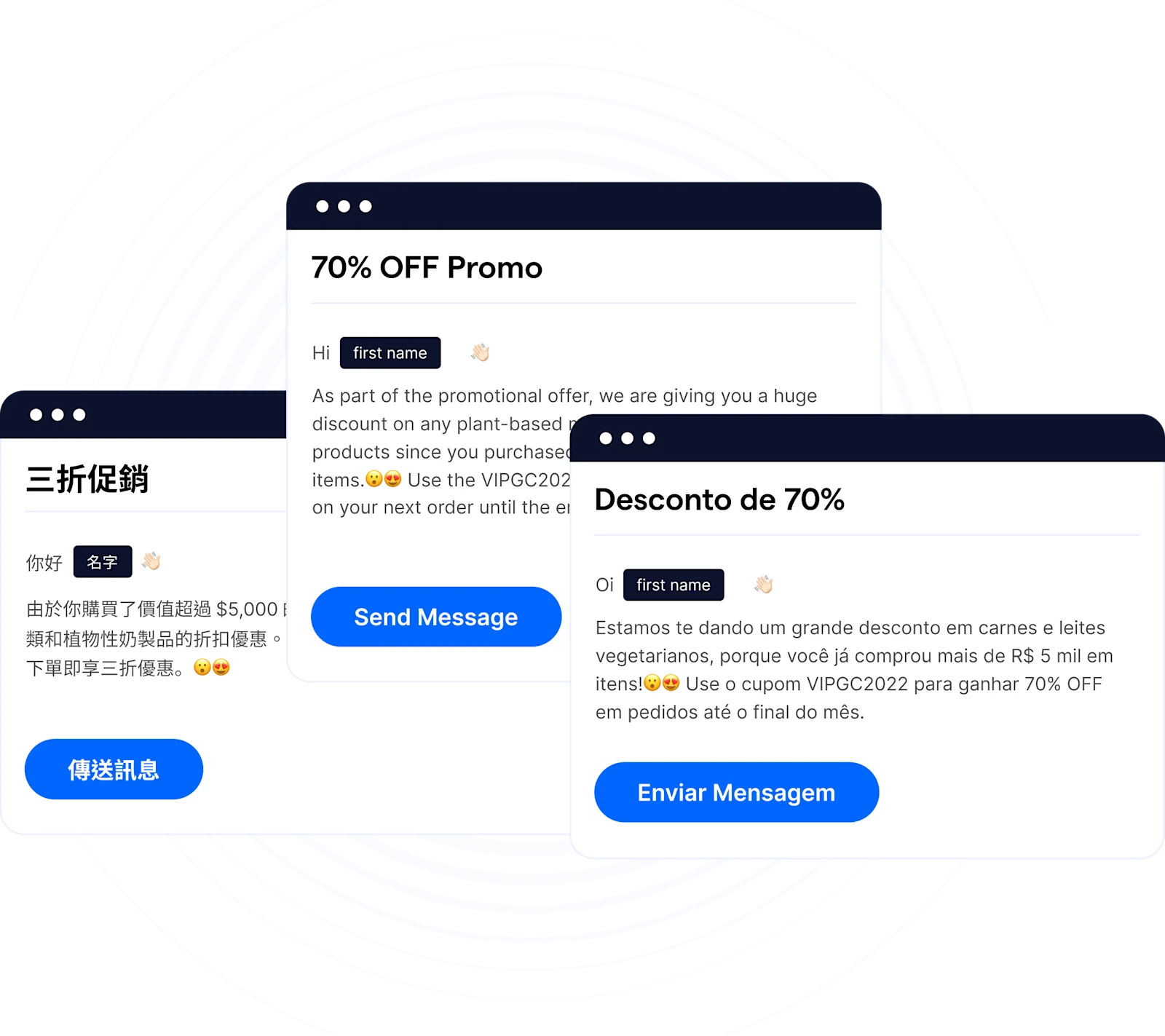
Use customer history and campaign analytics to recommend products or services in one-to-one chats. Dynamic variables and segmentation ensure every message feels tailored.
3. Drip campaigns and re-engagement
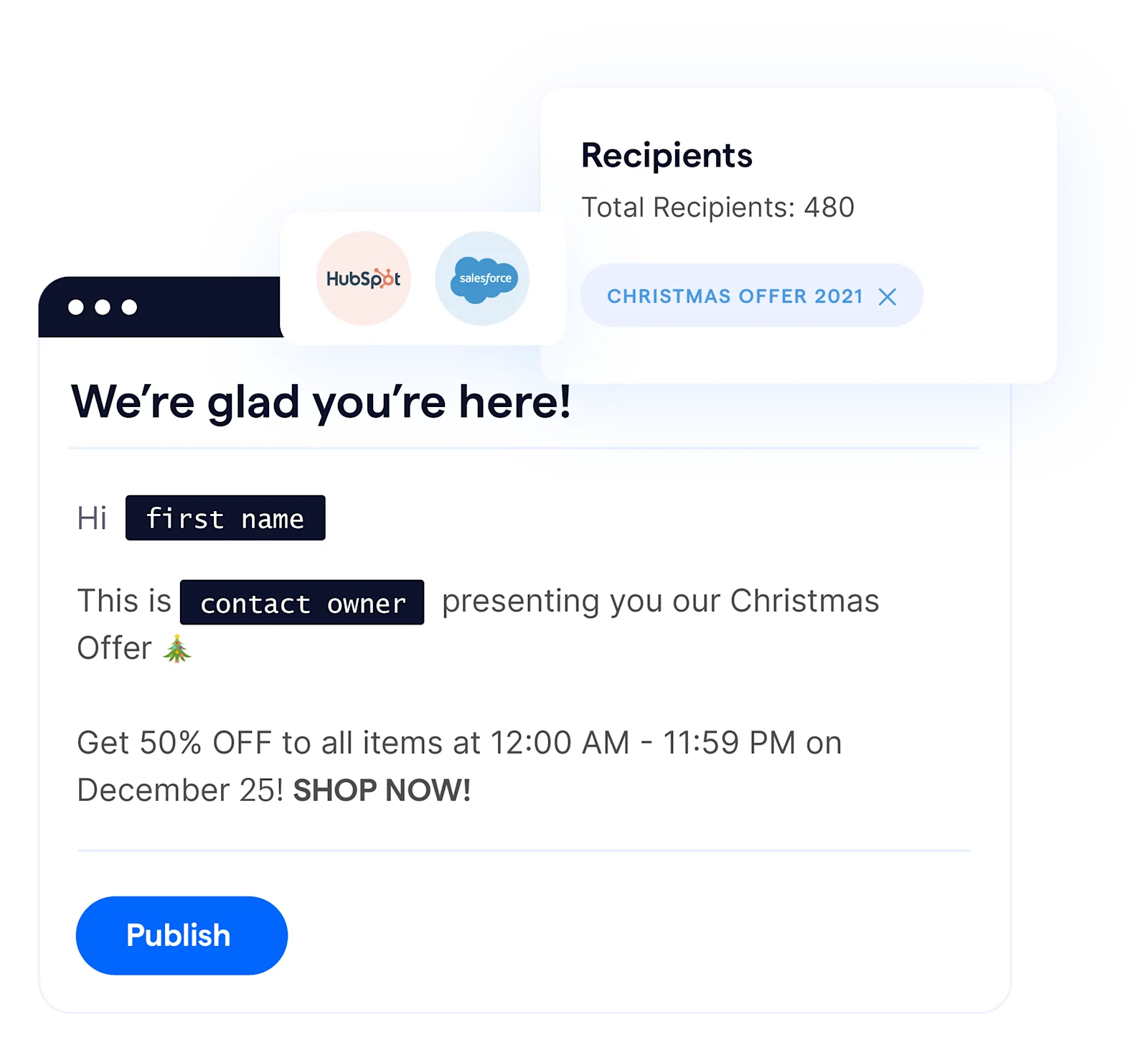
Automate scheduled messages—welcome flows, abandoned cart nudges, or reactivation campaigns. With open rates above 99%, WhatsApp drip campaigns achieve high engagement and conversion.
4. Brand awareness
Maintain visibility through regular updates, polls, quizzes, and interactive content to strengthen customer relationships.
WhatsApp Business Platform for customer support
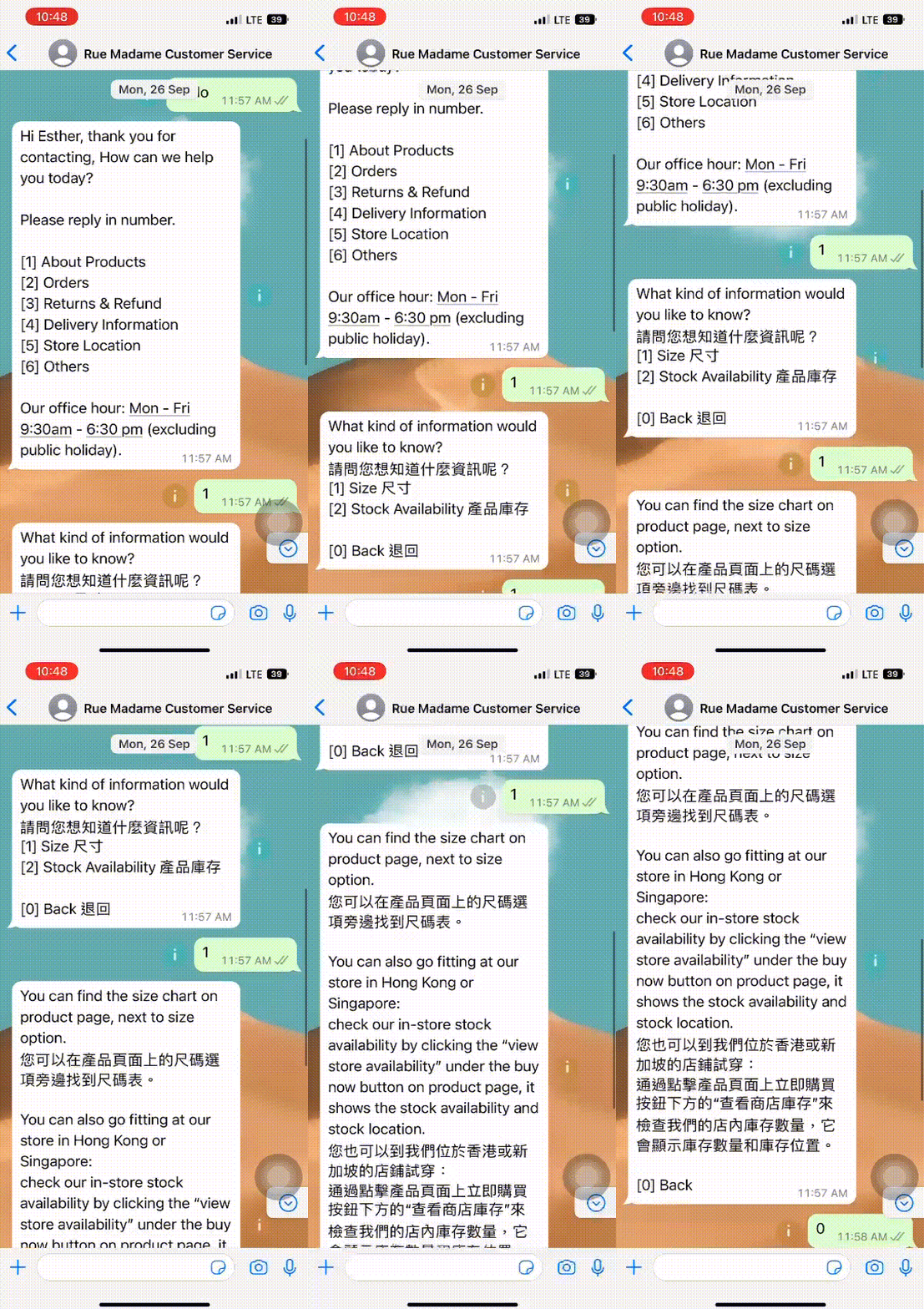
1. Smart chatbots and quick replies
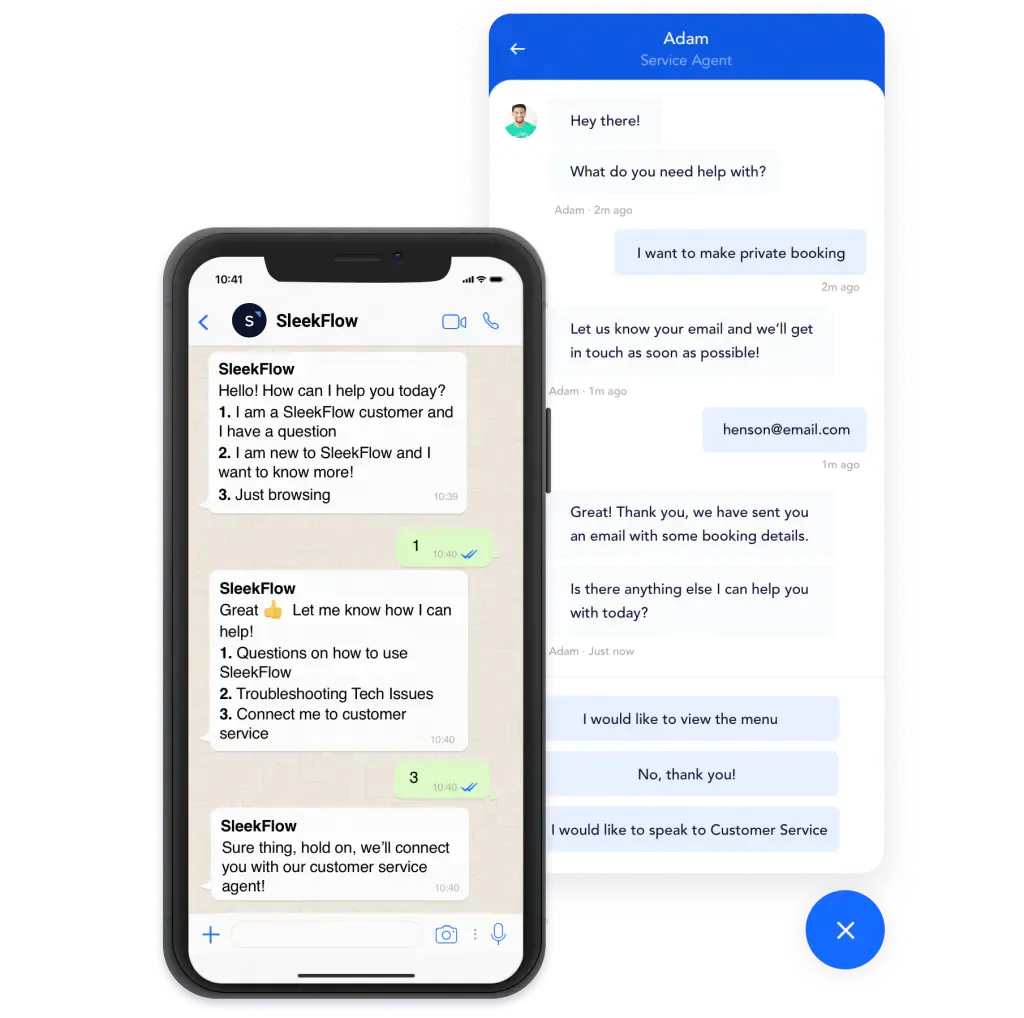
Set up AI chatbots to answer FAQs, route queries, or send welcome and away messages. They can also use chat buttons to guide customers through the product discovery journey when customer service representatives are unavailable.
What are WhatsApp chat buttons? Watch our WhatsApp interactive buttons video to find out.
2. Surveys and feedback collection
Run surveys or collect customer feedback directly in WhatsApp chats, making it easy to gather insights for product and service improvement.
3. Order tracking and updates
Provide real-time delivery status and order updates via automated WhatsApp messages, improving transparency and customer satisfaction.
Examples of WhatsApp Business Platform and its use cases
LUBUDS Group: an interactive dining experience with personalized marketing
LUBUDS Group, a dynamic F&B group with almost 40 outlets and a customer database of more than 500,000 in Hong Kong's competitive F&B market faced a major challenge: their customer data was fragmented across numerous brands.
This made it impossible to get a unified view of customer behaviour, leading to inconsistent service and ineffective marketing. Response times could stretch up to 48 hours, and marketing lists were managed manually.
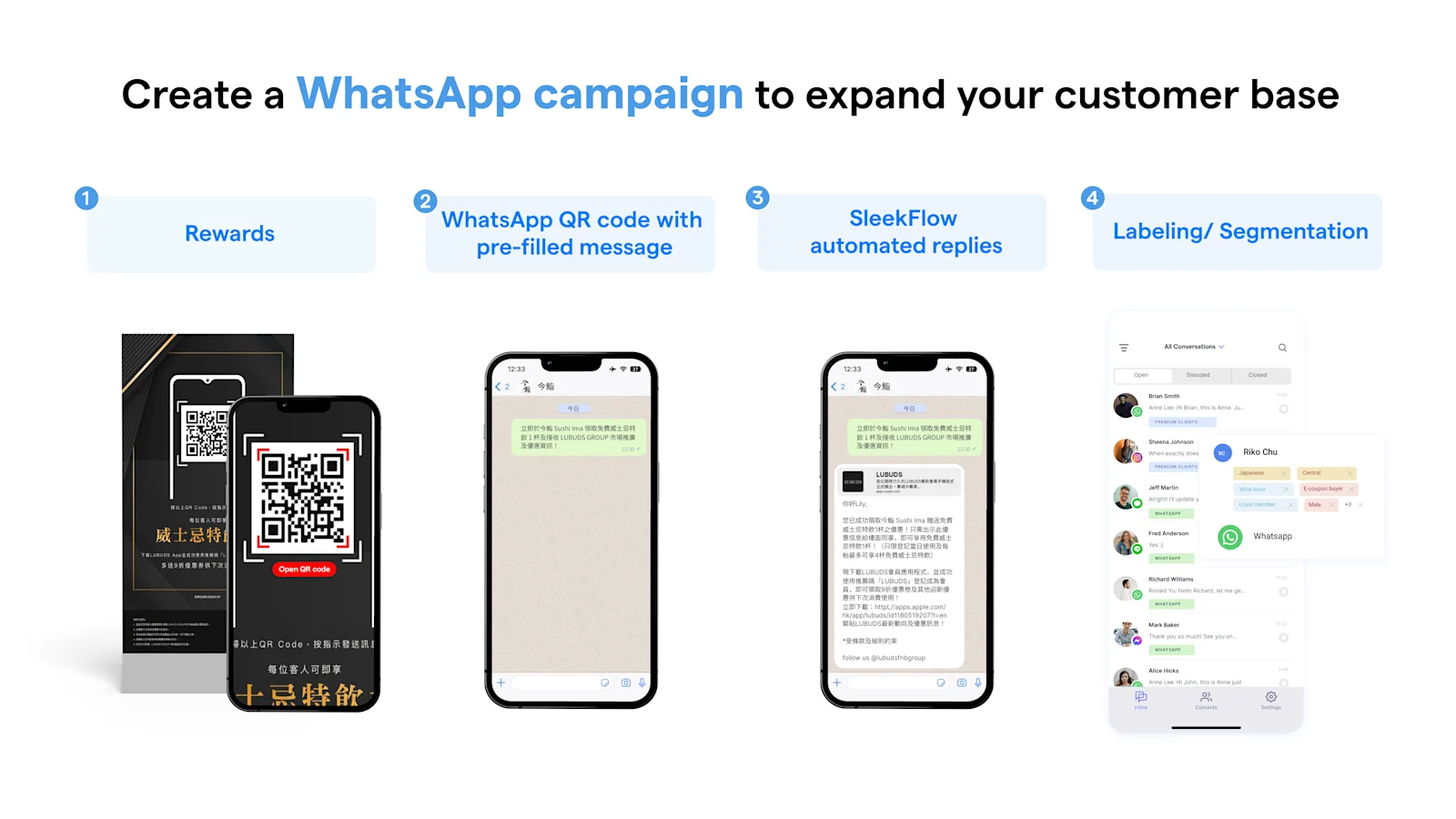
LUBUDSin Hong Kong, has implemented WhatsApp CRM via SleekFlow to offer its customers first-class customer experience. Using WhatsApp QR code and automated replies, LUBUDS Group managed to expand their customer database and send targeted broadcast messages using proper data labeling and segmentation.
Results achieved within three months were transformative.
LUBUDS automated their broadcasts and reduced average response time to 4 hours.
Customer engagement increased by 300%, and manual work decreased by 80% using WhatsApp CRM on SleekFlow.
Alfred24: 4X increase in campaign message open rates with WhatsApp Business API
Alfred24, a fast-growing delivery solution provider, relied on traditional email and phone support for customer and merchant communication. However, this approach was proving inefficient and ineffective for their growing operations.
The company struggled with low engagement from email newsletters and labor-intensive phone support, which led to slow response times. Their unofficial WhatsApp provider also caused frequent technical issues, resulting in significant downtime and delayed communication with customers.
To resolve these issues, Alfred24 switched to SleekFlow’s official WhatsApp Business Platform. They replaced email newsletters with WhatsApp Broadcasts for updates and automated their customer support with smart routing workflows.
Achieve a massive 300% increase in open rates, jumping from 25% to a whopping 75% compared to traditional email campaigns.
Reduced customer service manpower needs by 80%.
Decreased overall customer response times by 60%.
I think the best feature of SleekFlow is the automated assignment of conversation and automatic replies. We tried other platforms but there were too many restrictions. With SleekFlow, we can configure the settings on our own such as whom to assign the conversation and when to send out the out-of-office message.
Alvin Lee
General Manager
Interested in discovering more success stories for the WhatsApp Business Platform? Explore our customer success stories.
Using WhatsApp Business Platform to grow your business with SleekFlow
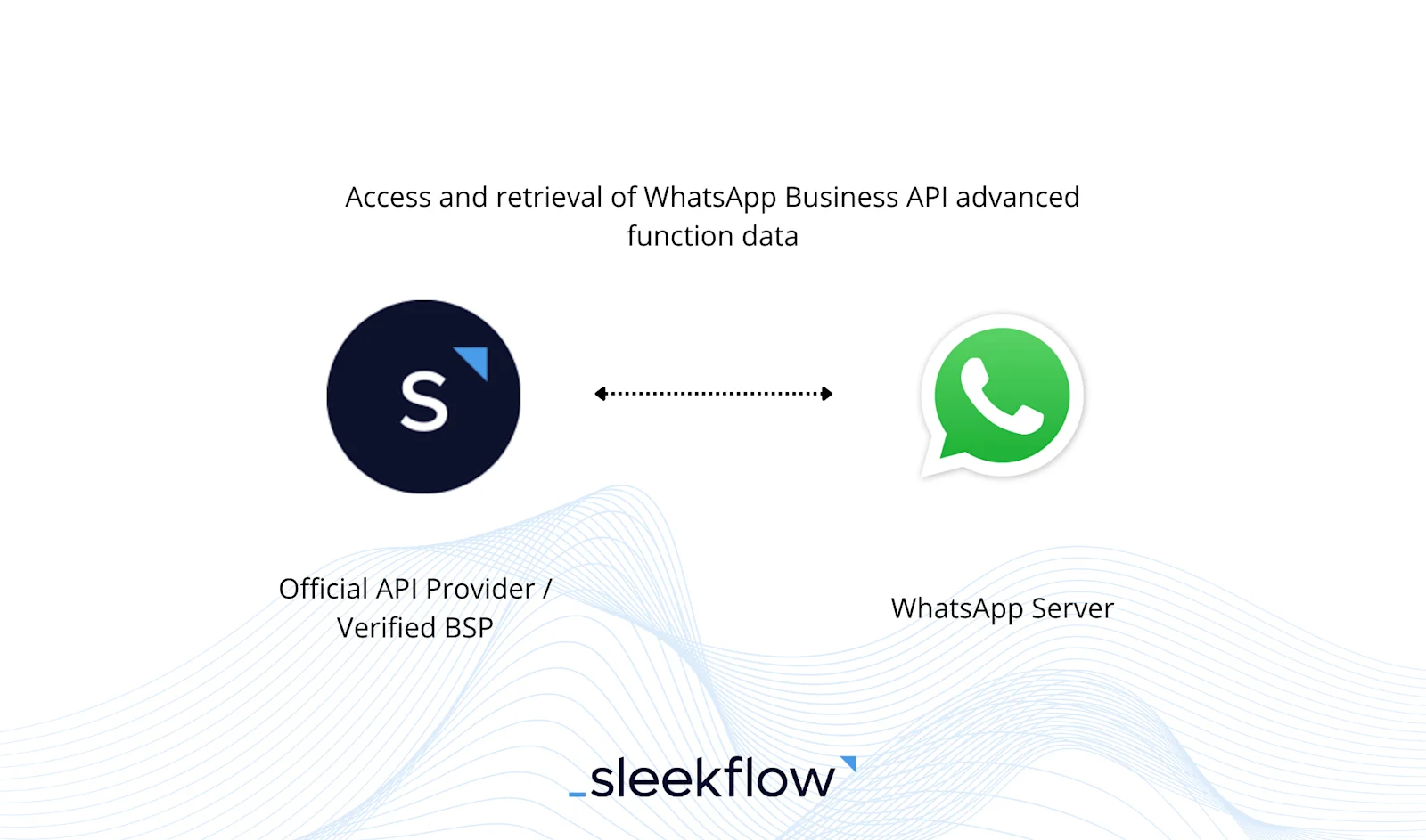
Before you begin your journey with the WhatsApp Business Platform, you must choose a WhatsApp BSP if you don’t have your own team of developers. Here’s why SleekFlow is the best WhatsApp Business Solution Provider:
User-friendly web and mobile versions
3-min speedy onboarding process for WhatsApp Cloud API
Stable connection for your WABA accounts, unlike REST API that pulls HTTP requests and frequently results in failure
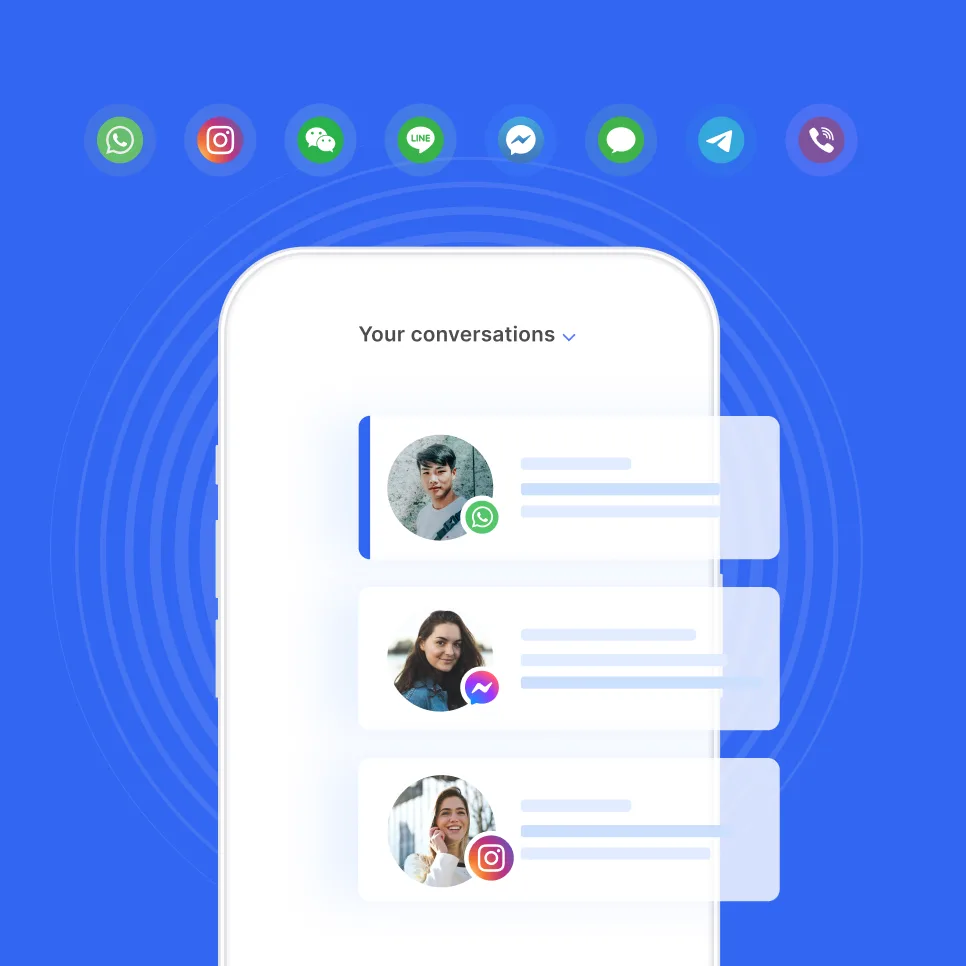
Comprehensive omnichannel social commerce platform which includes many native integrations such as Shopify, Salesforce and HubSpot CRM, Stripe, and more
Offers free features such as auto replies for chats and comments on Facebook and Instagram, Facebook Lead Ads integration, and more
AgentFlow, SleekFlow’s AI agent platfom, allows you to create a team of AI agent to provide intelligent reply suggestions, automates responses, and help human agents handle more conversations efficiently
AI features like sentiment analysis, smart message routing, and conversation summarization for improved customer engagement and faster resolutions
Want to outcompete your peers with SleekFlow's help?
Book your personalised demo with SleekFlow today and unlock the potential of seamless communication


