How to build a WhatsApp customer engagement strategy in the UAE: step-by-step guide


TL;DR: Quick Summary
- WhatsApp’s Importance in the UAE: With 99% adoption, WhatsApp is crucial for UAE businesses in sectors like real estate, retail, and healthcare to engage customers effectively.
- Audience Segmentation: Tailor WhatsApp messaging by customer intent, demographics, and language preferences to ensure personalized communication.
- Clear KPIs for Success: Set specific KPIs like conversion rates, response times, and customer satisfaction to measure WhatsApp campaign performance.
- WhatsApp Business API: Use WhatsApp Business API to scale engagement with automation, CRM integration, and multi-agent support.
- Compliance and Opt-ins: Ensure WhatsApp messages comply with UAE regulations and Meta’s policies by collecting clear customer opt-ins and managing data privacy.
- Continuous Optimization: Regularly monitor, analyze, and adjust campaigns based on performance metrics to optimize customer journeys and engagement.
WhatsApp is one of the most important customer communication channels for businesses in the UAE. Industry estimates place WhatsApp penetration in the UAE at around 99%, which means it is not just a messaging app customers use socially. It is where many people already expect fast, direct, and convenient conversations with brands.
That matters in a market where customer expectations are high and purchase journeys often move quickly. A property buyer wants a floor plan now. A hotel guest wants to change a booking without calling reception. A patient wants an appointment reminder in the same channel they use every day. A shopper wants delivery updates without checking email. In sectors such as retail, real estate, hospitality, healthcare, financial services, and beauty, WhatsApp can become a practical engagement layer across the full customer journey.
But WhatsApp only works well when it is treated as a strategy, not a shortcut. Sending one-off broadcasts or asking agents to manage hundreds of chats manually can create inconsistent responses, missed leads, duplicate follow-ups, and compliance risks. UAE businesses need a structured WhatsApp customer engagement strategy that covers audience segmentation, opt-ins, automation, CRM integration, data privacy, reporting, and continuous optimization.
The shift from email and phone-based communication to messaging is also changing how teams work. Customers do not want to repeat themselves across channels, and teams need context before replying. WhatsApp Business API helps businesses scale beyond the limits of the WhatsApp Business App by enabling multiple users, approved templates, automations, integrations, and analytics through platforms such as SleekFlow.
Compliance should be built in from day one. Businesses using WhatsApp in the UAE need to respect Meta’s WhatsApp Business policies, maintain clear customer opt-ins, avoid unsolicited messaging, and consider UAE privacy and marketing communication requirements. For highly regulated sectors such as healthcare, finance, insurance, and real estate, legal and compliance teams should review every opt-in, template, data flow, and retention process before launch.
This guide explains how to build a WhatsApp customer engagement strategy step by step, from defining your audience to measuring results. It also includes industry use cases and practical examples you can adapt for your business.
Step 1: Understand your UAE audience before sending messages
A strong WhatsApp strategy starts with the people you are trying to reach. The UAE is highly diverse, with local residents, long-term expatriates, short-term workers, business travelers, tourists, and international investors often sharing the same market. A single generic WhatsApp campaign rarely works for all of them.
Segment by customer intent, not only demographics
Basic segmentation such as age, location, nationality, or language is useful, but WhatsApp performs best when messages are tied to intent. A customer asking about a villa in Dubai Hills needs a different journey from someone comparing mortgage options. A clinic patient booking a first consultation needs a different journey from someone returning for a follow-up. An e-commerce customer who abandoned a cart needs a different message from someone waiting for delivery.
Useful WhatsApp audience segments for UAE businesses include:
SleekFlow’s contact CRM, custom properties, labels, lists, and integrations can help teams organize these segments and use them across broadcasts, Flow Builder automations, and inbox routing.
Match WhatsApp conversations to UAE customer expectations
Customers use WhatsApp because it feels immediate. A UAE customer who sends a WhatsApp message is often expecting a faster response than they would from email. That does not mean every conversation must be handled manually. It means the business must design the right mix of automation, AI, and human support.
Common WhatsApp expectations include:
Fast first replies, especially after ad clicks, website inquiries, and booking requests.
Clear next steps, such as “choose a viewing slot,” “upload your document,” or “confirm your delivery address.”
Personalized context, such as product interest, preferred location, language, budget, or appointment history.
Easy escalation to a human agent when the request is complex, sensitive, or high value.
Consistent service outside office hours, particularly for hospitality, real estate, retail, and healthcare.
For example, a Dubai real estate agency may receive dozens of WhatsApp inquiries after launching Click-to-WhatsApp ads for a new development. Without automation, agents may reply too late or spend time asking repetitive qualification questions. With a structured WhatsApp strategy, the first response can collect budget, preferred area, property type, and timeline. Hot leads can be routed to senior agents, while early-stage leads can receive brochures, virtual tour links, and follow-up reminders.
Build bilingual and culturally sensitive journeys
Arabic and English should be considered core languages for UAE WhatsApp communication. Depending on your audience, you may also need Hindi, Urdu, Tagalog, Russian, Mandarin, or other languages. At minimum, critical opt-in messages, support prompts, appointment reminders, and consent notices should be available in Arabic and English.
Language quality affects trust. Avoid literal translations that sound robotic or unclear. Make sure promotional messages are respectful of local culture, Ramadan timing, public holidays, and industry sensitivities. For example, hospitality campaigns during Ramadan should focus on relevance and service rather than aggressive discounting. Healthcare messages should be informative, private, and cautious.
SleekFlow’s AI Writing Assistant can help teams refine tone, translate messages, shorten long replies, and keep customer-facing communication consistent. AI should support human judgment, not replace compliance review.
Step 2: Set clear goals and KPIs for WhatsApp engagement
WhatsApp is not one channel with one goal. It can support marketing, sales, service, operations, and retention. Before setting up automations or templates, define what success means for each team.
Choose KPIs by business function
A WhatsApp customer engagement strategy in the UAE should connect messaging activity to measurable business outcomes. The most useful KPIs depend on your use case.
Set a baseline before launch. If your current first response time is four hours, reducing it to under five minutes for new inquiries could meaningfully improve sales outcomes. If your team cannot track how many WhatsApp conversations become bookings, add conversion tracking before scaling campaigns.
Align WhatsApp with business objectives
Different UAE industries should prioritize different WhatsApp goals.
For real estate, WhatsApp should reduce lead leakage, qualify buyers faster, and increase property viewing attendance. The journey may include ad click, qualification questions, brochure sharing, viewing appointment, reminder, agent handoff, and post-viewing follow-up.
For retail and e-commerce, WhatsApp should increase repeat purchases, reduce support volume, and recover abandoned carts. The journey may include order confirmation, delivery updates, size or product advice, cart reminders, and loyalty offers.
For healthcare and wellness, WhatsApp should improve booking efficiency and reduce no-shows while protecting sensitive information. The journey may include appointment reminders, intake forms, post-visit care instructions, and human handoff for clinical questions.
For hospitality, WhatsApp should support pre-arrival service, guest requests, upsell opportunities, and post-stay feedback. The journey may include booking confirmation, airport transfer options, in-stay requests, restaurant reservations, and review collection.
Balance ROI with compliance
High engagement should never come at the expense of compliance. WhatsApp is a personal channel, and over-messaging can quickly damage trust. A healthy strategy balances growth and permission.
Use this rule: every proactive WhatsApp message should pass three tests.
Permission: Has the customer clearly opted in to receive this type of message?
Relevance: Is the message connected to the customer’s intent, transaction, or stated preference?
Frequency: Would the customer still consider this helpful if they received it today?
A smaller, well-segmented opted-in audience often outperforms a large unqualified contact list. It also reduces complaint risk and improves long-term deliverability.
Step 3: Use WhatsApp Business API for scale, compliance, and automation
The WhatsApp Business App is useful for very small teams, but it becomes difficult to manage when multiple agents, departments, locations, or campaigns are involved. For many UAE businesses, WhatsApp Business API is the scalable option.
When to move from the WhatsApp Business App to WhatsApp Business API
Consider WhatsApp Business API if your business needs to:
Manage WhatsApp conversations across multiple agents or departments.
Use one official business number across sales, marketing, support, and operations.
Automate replies, lead qualification, routing, reminders, or post-purchase journeys.
Send approved template messages to opted-in customers outside the 24-hour service window.
Integrate WhatsApp with CRM, e-commerce, payment, calendar, ticketing, or analytics tools.
Track campaign performance and conversion outcomes.
Apply role-based access, data masking, IP allowlisting, or other enterprise controls.
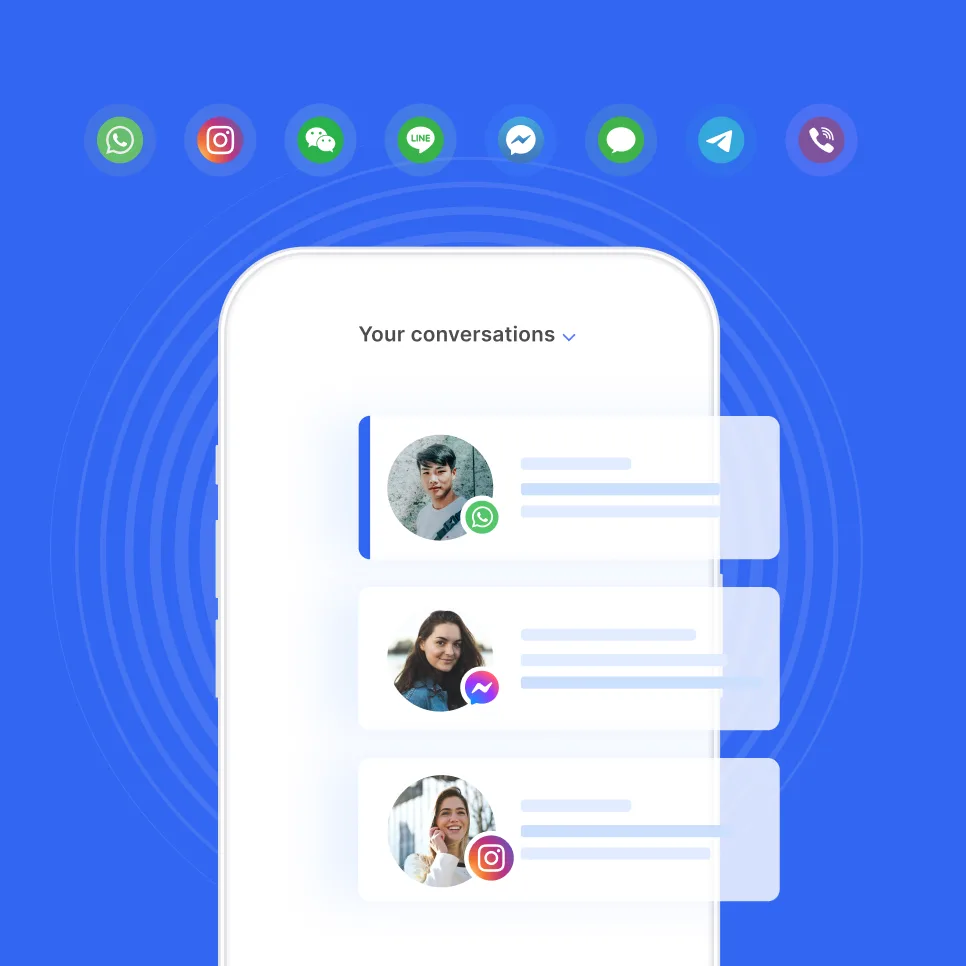
SleekFlow supports the WhatsApp Official API and unifies WhatsApp with Instagram, Facebook Messenger, live chat, SMS, WeChat, LINE, Telegram, and other channels in one inbox. That helps UAE teams avoid switching between apps and gives agents a complete view of customer conversations.
How to set up WhatsApp Business API in the UAE
The exact setup depends on whether you connect directly through Meta or work with a provider. A typical WhatsApp Business API setup includes:
Prepare your Meta Business Portfolio. Make sure your company details, website, admin access, and business verification information are ready.
Choose your WhatsApp number. Decide whether to use a new number, migrate an existing WhatsApp number, or use a setup path supported by your provider.
Set up your WhatsApp Business Account. Connect the account, configure your display name, and submit required information for review.
Create your business profile. Add your logo, description, website, address, support contact, and business hours.
Connect a customer engagement platform. Use a platform such as SleekFlow to manage team inboxes, automations, CRM records, AI replies, analytics, and integrations.
Create message templates. Prepare utility, authentication, and marketing templates for Meta review.
Test inbound and outbound journeys. Check opt-ins, routing, template variables, fallback messages, language versions, and escalation paths.
Launch with a controlled audience. Start with one use case, such as appointment reminders or lead follow-up, before expanding to broader campaigns.
A Business Solution Provider or customer engagement platform can simplify onboarding, especially when the business needs implementation support, automation design, CRM integration, and compliance checks.
Use automation without making conversations feel robotic
Automation should remove friction, not create barriers. The best WhatsApp automations are short, contextual, and easy to escape.
Examples include:
A real estate flow that asks for budget, preferred area, property type, and buying timeline.
A clinic flow that confirms appointment date, doctor, location, and reminder preference.
A hotel flow that handles check-in time, airport transfer, restaurant booking, and late checkout requests.
An e-commerce flow that shares order status, delivery tracking, returns policy, or product recommendations.
A support flow that collects issue type, order number, screenshots, and urgency before creating a ticket.
SleekFlow’s Flow Builder can automate these journeys with triggers, conditions, time delays, assignment rules, CRM updates, and integrations. AI Smart Reply and AI Knowledge Base can help agents respond faster using approved company information, while human handoff keeps complex or sensitive cases under control.
Connect WhatsApp with your CRM
WhatsApp becomes more valuable when it is connected to your customer data. A CRM integration allows teams to avoid asking for information the customer already gave elsewhere.
CRM-connected WhatsApp workflows can:
Create a new lead when a customer messages from an ad.
Update lead stage after qualification.
Trigger a follow-up when a deal status changes.
Add WhatsApp conversation notes to the CRM.
Segment customers based on purchase history, industry, location, interest, or lifecycle stage.
Send appointment reminders or renewal messages based on CRM dates.
SleekFlow supports CRM integrations such as Salesforce, HubSpot, and Zoho CRM, helping teams sync customer data and trigger messaging workflows from CRM events.
Step 4: Create personalized customer journeys on WhatsApp
Personalization is not just adding the customer’s first name. A personalized WhatsApp journey reflects the customer’s stage, context, preferences, and next best action.
Map the WhatsApp journey from first touch to retention
Start by mapping the full customer journey. Then decide where WhatsApp adds value.
For example, an Abu Dhabi clinic can use WhatsApp to send appointment reminders, collect pre-visit information, and provide post-appointment follow-up instructions. Promotional or health-related content should be handled carefully, with explicit consent, minimal data sharing, and legal review.
Personalize at scale with data and dynamic content
WhatsApp Business API supports features that can make conversations more interactive, including buttons, quick replies, rich media, catalogs, and WhatsApp Flows. When paired with CRM and e-commerce data, these features can support relevant journeys at scale.
Useful personalization inputs include:
Language preference.
Location or branch preference.
Product category interest.
Purchase history.
Appointment history.
Lead source.
Customer lifecycle stage.
Previous conversation topics.
Budget or service preference.
Consent category and opt-in date.
A fashion retailer, for example, can send segmented restock alerts to customers who opted in to fashion updates and previously viewed a specific category. A property developer can send different follow-up content to customers interested in off-plan investments versus ready-to-move units.
Use interactive engagement tactics
Interactive WhatsApp messages reduce effort for customers and help teams collect structured data. Consider using:
Quick replies for “Book now,” “Ask an agent,” “Send brochure,” or “View location.”
CTA buttons for payment links, website pages, or booking forms.
WhatsApp Flows for lead forms, appointment scheduling, quotation requests, and event registration.
Product catalogs for retail, beauty, F&B, and e-commerce use cases.
Rich media for property videos, product images, menus, maps, documents, or service guides.
AI-assisted replies for faster, consistent answers grounded in your approved knowledge base.
Avoid forcing every customer into a long automation path. High-intent customers should be able to reach a human quickly.
Step 5: Build compliance into every WhatsApp workflow
WhatsApp marketing compliance in the UAE should be treated as a workflow requirement, not an afterthought. Your strategy should consider Meta policies, UAE marketing communication rules, data protection obligations, and sector-specific requirements.
Important note: This section is for general information only and is not legal advice. UAE businesses should consult qualified legal counsel before launching WhatsApp campaigns, especially in regulated sectors.
Understand Meta’s WhatsApp Business requirements
Meta requires businesses to create a quality user experience and only contact people on WhatsApp when they have provided their mobile number and given opt-in permission to receive subsequent messages or calls from the business. Meta can limit or remove access for policy violations.
For WhatsApp Business Platform, businesses typically need approved message templates when sending outbound messages outside the customer service window. Template categories include marketing, utility, authentication, and service-related messaging. Templates should be accurate, non-misleading, and aligned with the user’s consent.
Practical implications for UAE businesses:
Do not upload purchased contact lists and start broadcasting.
Do not send promotional messages to people who only opted in for delivery updates.
Do not use vague consent such as “By submitting this form you agree to everything.”
Do not hide opt-out instructions.
Do not send irrelevant high-frequency campaigns that trigger blocks or complaints.
Do not use unapproved templates to bypass Meta review.
Meta policies can change, so review official WhatsApp Business policy and platform documentation regularly.
Consider UAE marketing communication and privacy rules
The UAE’s TDRA works to limit intrusive marketing SMS and encourages clear opt-in and opt-out mechanisms. Its Unsolicited Electronic Communications Regulatory Policy requires consent for marketing text messages, evidence retention, opt-out handling, and restrictions on sending marketing text messages between 9:00 PM and 7:00 AM.
While WhatsApp and SMS are not identical channels, UAE businesses should treat the TDRA policy as an important compliance benchmark for permission-based messaging. For WhatsApp campaigns, this means keeping clear records of consent, respecting opt-outs, and avoiding intrusive messaging practices.
The UAE Personal Data Protection Law also requires personal data processing to be fair, transparent, lawful, purpose-specific, limited to what is necessary, accurate, secure, and not retained longer than needed. Consent should be clear, simple, unambiguous, accessible, provable, and easy to withdraw when processing is based on consent.
This has practical consequences for WhatsApp strategy:
Store only the data needed for the customer journey.
Explain why you are collecting phone numbers and how WhatsApp will be used.
Separate transactional updates from marketing consent.
Keep opt-in records with timestamp, source, language, consent wording, and campaign category.
Mask sensitive data where possible.
Limit agent access based on role and team.
Define retention periods for conversations, attachments, and customer records.
Review cross-border data transfers and vendor agreements with legal counsel.
SleekFlow includes enterprise controls such as role-based access, data masking, IP allowlisting, team inboxes, and security settings that help businesses design safer workflows.
Avoid common compliance mistakes
Common WhatsApp compliance mistakes in the UAE include:
Importing old CRM contacts without checking WhatsApp consent.
Treating a customer inquiry as permission for future promotions.
Sending English-only consent notices to Arabic-speaking customers.
Mixing sensitive healthcare, financial, or ID information in general chat flows.
Not recording where and when consent was collected.
Sending repeated marketing reminders after opt-out.
Using the same template for different campaign purposes.
Allowing all agents to access all customer data by default.
Forgetting to audit automations after Meta policy updates.
Build compliance checks into the campaign approval process. Marketing, sales, support, operations, IT, and legal teams should all understand their responsibilities.
Step 6: Implement a clear opt-in process
A compliant WhatsApp strategy depends on a clear opt-in process. Consent should be specific, transparent, and easy to prove.
Valid WhatsApp opt-in methods for UAE businesses
Opt-in can happen across different touchpoints as long as the customer clearly understands what they are agreeing to receive.
Examples include:
Website forms: Add a checkbox for WhatsApp updates with clear wording and a link to privacy terms.
Booking forms: Ask customers if they want appointment reminders or booking updates on WhatsApp.
Checkout pages: Offer delivery updates, order support, or promotional messages as separate opt-ins.
QR codes: Place QR codes in stores, clinics, hotels, events, or showrooms with visible consent wording.
Click-to-WhatsApp ads: Use the ad copy and first automated reply to clarify the communication purpose.
In-person events: Let visitors scan a WhatsApp QR code and confirm consent in chat.
Customer support handoff: Ask customers if they want future case updates via WhatsApp.
Separate consent by message type where possible. A customer may want delivery updates but not promotional offers. Another may want booking reminders but not newsletters.
What not to do
Avoid consent shortcuts that create risk.
Do not:
Buy or scrape phone number lists.
Cold message customers who never opted in.
Use pre-ticked consent boxes.
Bundle WhatsApp marketing consent into general terms without clarity.
Assume consent from a business card exchange.
Assume consent because someone follows your Instagram page.
Send promotions to customers who only consented to transactional updates.
Continue messaging after a customer says “stop,” “unsubscribe,” or requests removal.
Regulated sectors should apply higher standards. Healthcare providers, insurers, banks, financial services firms, and education institutions may need additional legal review, identity verification, data minimization, and explicit consent processes.
Use bilingual opt-in wording
Here is a simple bilingual example for a retail or e-commerce business:
English:“By ticking this box, I agree to receive WhatsApp messages from [Brand Name] about my orders, customer support, and promotional offers. I can opt out at any time by replying STOP.”
Arabic:“بالضغط على هذا المربع، أوافق على تلقي رسائل واتساب من [اسم العلامة التجارية] بشأن طلباتي وخدمة العملاء والعروض الترويجية. يمكنني إلغاء الاشتراك في أي وقت عبر الرد بكلمة STOP.”
For healthcare or financial services, avoid broad promotional wording unless reviewed by legal counsel. Use narrower consent categories, such as appointment reminders, account updates, document requests, or case status notifications.
Track consent for audits
A good consent record should include:
Customer name or ID.
Phone number.
Consent source, such as website form, QR code, booking page, ad, or in-store form.
Consent wording shown to the customer.
Language of consent.
Consent category, such as utility, marketing, appointment reminders, or support updates.
Date and time.
IP address or form submission ID where relevant.
Opt-out date and reason, if available.
This information should sync with your CRM or customer engagement platform so campaign audiences are filtered correctly.
Step 7: Launch your WhatsApp engagement strategy in phases
Do not launch every WhatsApp use case at once. A phased rollout helps you identify operational, technical, and compliance issues before scaling.
Phase 1: Build the foundation
Start with the core setup:
Confirm your WhatsApp Business API setup.
Connect your inbox, CRM, e-commerce, ticketing, calendar, or payment tools.
Define user roles, team inboxes, routing rules, and working hours.
Create approved templates for the first use case.
Prepare bilingual opt-in messages.
Set up reporting dashboards.
Train agents on tone, escalation, opt-out handling, and data privacy.
Phase 2: Launch one high-value journey
Choose a use case that is easy to measure and relevant to your business.
Good first journeys include:
Lead qualification after Click-to-WhatsApp ads.
Appointment reminders for clinics, salons, wellness centers, or property viewings.
Order confirmation and delivery updates for e-commerce.
Booking confirmation and guest support for hotels.
Renewal reminders for subscriptions, memberships, or contracts.
Keep the flow simple. A typical lead qualification flow could ask three to five questions, apply a lead score, route hot leads to sales, and enroll lower-intent leads into a nurturing journey.
Phase 3: Add automation, AI, and CRM triggers
Once the first journey is stable, expand automation.
Examples include:
Triggering WhatsApp follow-ups when a CRM lead stage changes.
Creating tickets when customers mention complaint-related keywords.
Sending post-purchase surveys after order fulfillment.
Sending abandoned cart reminders to opted-in shoppers.
Routing high-value leads to senior agents.
Using AI Smart Reply to help agents answer common questions faster.
Using an AI Knowledge Base to keep answers consistent with company-approved materials.
SleekFlow’s Flow Builder supports workflows triggered by incoming messages, contact updates, CRM changes, custom object records, webhooks, and scheduled dates.
Phase 4: Scale campaigns with safeguards
Before launching larger WhatsApp broadcasts:
Confirm consent for every audience segment.
Check template approval and category.
Exclude opt-outs and bounced contacts.
Limit frequency.
Test Arabic and English versions.
Check links, buttons, variables, and media.
Monitor complaints, blocks, read rates, replies, and conversions.
Pause campaigns if complaint or opt-out rates rise.
SleekFlow Broadcast allows teams to segment audiences, personalize variables, send multimedia messages, add interactive buttons, and review campaign analytics.
Step 8: Measure, learn, and optimize continuously
WhatsApp performance should be reviewed weekly during launch and at least monthly once the strategy is stable.
Monitor engagement and operational KPIs
Track both customer engagement and internal team performance.
Useful metrics include:
New WhatsApp subscribers.
Opt-in rate by source.
Delivery rate.
Read rate.
Reply rate.
Click-through rate.
First response time.
Average reply time.
Resolution time.
Lead qualification rate.
Appointment booking rate.
No-show rate.
Conversion rate.
Revenue attributed to WhatsApp.
Opt-out rate.
Template rejection rate.
Failed message rate.
Customer satisfaction score.
SleekFlow Analytics helps teams track conversation volume, response efficiency, broadcast performance, and conversion events. The Conversion Dashboard can log important actions such as purchases, bookings, sign-ups, consultations, or renewals.
Optimize based on behavior, not assumptions
Use WhatsApp analytics to improve campaigns and workflows.
If read rates are high but replies are low, your message may lack a clear next step. Add quick replies or a stronger call-to-action.
If many leads stop after the second question in a flow, your automation may be too long. Reduce the number of questions or offer a human handoff earlier.
If opt-outs increase after promotional campaigns, review frequency, audience relevance, and consent category.
If agents have slow response times during evening hours, add after-hours automation or update expected response-time messaging.
If customers repeatedly ask the same questions, add those questions to your AI Knowledge Base, FAQ flow, or product content.
Audit compliance regularly
WhatsApp policies and UAE regulatory expectations can change. Schedule regular audits to review:
Opt-in language.
Consent records.
Template categories and approval status.
Data retention policies.
Access controls.
Automation logic.
AI-generated response quality.
Opt-out handling.
Cross-border data flows.
Sector-specific requirements.
For regulated industries, include legal, compliance, IT security, and department leads in the audit.
Industry use cases for WhatsApp customer engagement in the UAE
Hospitality: bookings, guest requests, and feedback
A Dubai hotel can use WhatsApp Business API to support guests before, during, and after their stay. Before arrival, guests receive booking confirmation, check-in information, airport transfer options, and restaurant recommendations. During the stay, they can request towels, housekeeping, spa bookings, or late checkout through WhatsApp. After departure, the hotel can ask for feedback or share loyalty offers with guests who opted in.
This improves response speed and reduces pressure on reception and phone lines. Compliance depends on clear opt-in at booking, approved templates for proactive messages, and an easy opt-out path for promotional content.
Real estate: lead generation, property tours, and viewing reminders
A Dubai real estate agency can capture leads through Click-to-WhatsApp ads on Instagram and Facebook. Once a lead starts a conversation, automation can ask for budget, preferred area, property type, and buying timeline. Qualified leads can receive listings, virtual tour links, floor plans, and appointment options. Hot leads can be assigned to agents immediately.
For viewing appointments, WhatsApp reminders sent 24 hours before the meeting can reduce no-shows and give customers an easy way to reschedule. Compliance requires clear opt-in for property updates and careful control over promotional broadcasts.
E-commerce: order tracking, customer support, and cart recovery
A Dubai-based e-commerce brand can use WhatsApp for order confirmations, dispatch updates, delivery tracking, returns, and customer support. Customers receive timely updates without calling support or checking email.
For opted-in customers, WhatsApp can also support cart recovery. A fashion retailer can send a personalized reminder with product images and a checkout link. To avoid over-messaging, the business should limit reminders, use approved templates, and segment based on customer behavior and consent.
Healthcare and wellness: appointment reminders and patient support
A clinic in Abu Dhabi can use WhatsApp to confirm appointments, send reminders, share location details, and request pre-visit forms. After a visit, it can send follow-up instructions or satisfaction surveys where appropriate.
Healthcare workflows need stricter privacy controls. Sensitive medical details should be minimized in WhatsApp messages, and patients should provide explicit consent before receiving information. Clinics should review UAE healthcare privacy requirements and internal policies before using WhatsApp for patient communication.
Practical WhatsApp customer engagement checklist for UAE businesses
Use this checklist before launching or expanding your WhatsApp strategy.
Strategy
Define the target audience and customer segments.
Choose priority use cases by business impact.
Set KPIs for marketing, sales, support, and compliance.
Map the customer journey from first touch to retention.
Prepare Arabic and English messaging.
Compliance
Collect clear opt-in before proactive messaging.
Separate transactional and marketing consent.
Store consent source, timestamp, language, and wording.
Provide a simple opt-out path.
Review Meta policies and UAE privacy requirements.
Get legal review for regulated sectors.
Technology
Set up WhatsApp Business API.
Connect a shared inbox for teams.
Integrate CRM, e-commerce, ticketing, calendar, or payment tools.
Create approved templates.
Configure automation and human handoff.
Enable analytics and conversion tracking.
Operations
Train agents on tone, privacy, escalation, and opt-outs.
Define response-time targets.
Assign ownership for campaigns and compliance checks.
Create fallback messages for after-hours inquiries.
Monitor template failures and message quality.
Optimization
Review campaign performance regularly.
Analyze response time and conversion bottlenecks.
Update AI knowledge sources.
Improve segmentation based on behavior.
Audit consent and workflows quarterly.
How SleekFlow supports WhatsApp customer engagement in the UAE
SleekFlow is an AI-native omnichannel conversation suite for customer engagement. It helps businesses manage WhatsApp, Instagram, Messenger, live chat, SMS, WeChat, LINE, Telegram, and other messaging channels from one shared workspace.
For UAE businesses building a WhatsApp customer engagement strategy, SleekFlow can support:
WhatsApp Business API setup and management for scalable customer communication.
Unified team inbox for sales, marketing, support, and operations teams.
Flow Builder automation for lead qualification, reminders, routing, and follow-ups.
AI Smart Reply and AI Writing Assistant to improve response speed and consistency.
CRM integrations with tools such as Salesforce, HubSpot, and Zoho CRM.
Broadcast campaigns with segmentation, variables, multimedia, buttons, and analytics.
Conversion analytics to track bookings, purchases, sign-ups, renewals, and other business outcomes.
Ticketing to organize support requests and track resolution.
Security controls such as role-based access, data masking, and IP allowlisting.
SleekFlow customer examples show the value of structured WhatsApp engagement. HKBN used WhatsApp broadcasts for targeted segments and achieved strong read, response, and contract renewal conversion results. Bowtie used web-to-WhatsApp campaigns and CRM-triggered follow-ups to improve health questionnaire responses and customer conversion. While these are not UAE-specific results, they show how measurable outcomes can improve when WhatsApp is connected to segmentation, automation, and customer data.
Build WhatsApp engagement UAE customers can trust
WhatsApp gives UAE businesses a direct path to customers, but the channel must be used responsibly. The most successful strategies are not built on mass messaging. They are built on permission, speed, personalization, automation, human support, and measurable outcomes.
Start with one clear use case. Collect proper opt-ins. Connect WhatsApp to your CRM. Automate the repetitive steps. Let humans handle complex moments. Track every result. Then scale the journeys that customers actually find useful.
That is how WhatsApp becomes more than a chat channel. It becomes a trusted customer engagement engine for growth.
Want to outcompete your peers with SleekFlow's help?
Book your personalised demo with SleekFlow today and unlock the potential of seamless communication
Frequently Asked Questions
What is a WhatsApp customer engagement strategy?
Is WhatsApp Business API available in the UAE?
What is the difference between WhatsApp Business App and WhatsApp Business API?
Do UAE businesses need opt-in before sending WhatsApp messages?
Can businesses send WhatsApp marketing messages in the UAE?
How can businesses collect WhatsApp opt-ins?
Can WhatsApp be connected to CRM systems?
How often should WhatsApp campaigns be sent?
Recommended for you


