Omnichannel loyalty program: examples and how to build one


TL; DR: Quick Summary
- Omnichannel loyalty matters because customers move across channels naturally. They shop online, visit stores, chat on WhatsApp, and expect rewards to follow them everywhere.
- The key difference is connection, not just presence on multiple channels. A real omnichannel loyalty program recognises the same customer across touchpoints and keeps rewards, status, and communications consistent.
- Strong programmes rely on a few essentials. These include unified customer identity, a central rewards ledger, real-time syncing, and triggered personalised communications.
- The business benefits are clear. Omnichannel loyalty can improve retention, drive repeat purchases, make personalisation more effective, and reduce operational friction for teams.
- Execution matters as much as strategy. Brands need clear goals, connected systems, simple reward mechanics, compliant messaging flows, and the right KPIs to measure success.
Customers do not think in channels. They browse on mobile, ask questions in chat, buy online, collect in store, and contact support after purchase. That is exactly why a strong omnichannel loyalty program matters, as it lets customers earn, track, and redeem rewards across every touchpoint, including ecommerce, stores, apps, and messaging channels like WhatsApp. The best programmes connect customer identity, rewards data, and personalised communications in real time.
Why omnichannel?
A loyalty scheme that only works on one channel no longer feels convenient. It feels broken. And when rewards do not sync, customers notice immediately. McKinsey reports that 71% of consumers expect personalised interactions and 76% get frustrated when they do not receive them. Loyalty is one of the clearest places where that gap shows up.
What is an omnichannel loyalty program?
An omnichannel loyalty program is a customer loyalty system that recognises the same customer across every touchpoint and lets them earn, track, and redeem benefits without friction. That includes online and offline touchpoints such as ecommerce, physical stores, mobile apps, customer service, and messaging channels like WhatsApp.
The key difference from a traditional or multichannel programme is consistency. A multichannel setup may offer rewards in several places. An omnichannel one connects them.
How an omnichannel loyalty program works
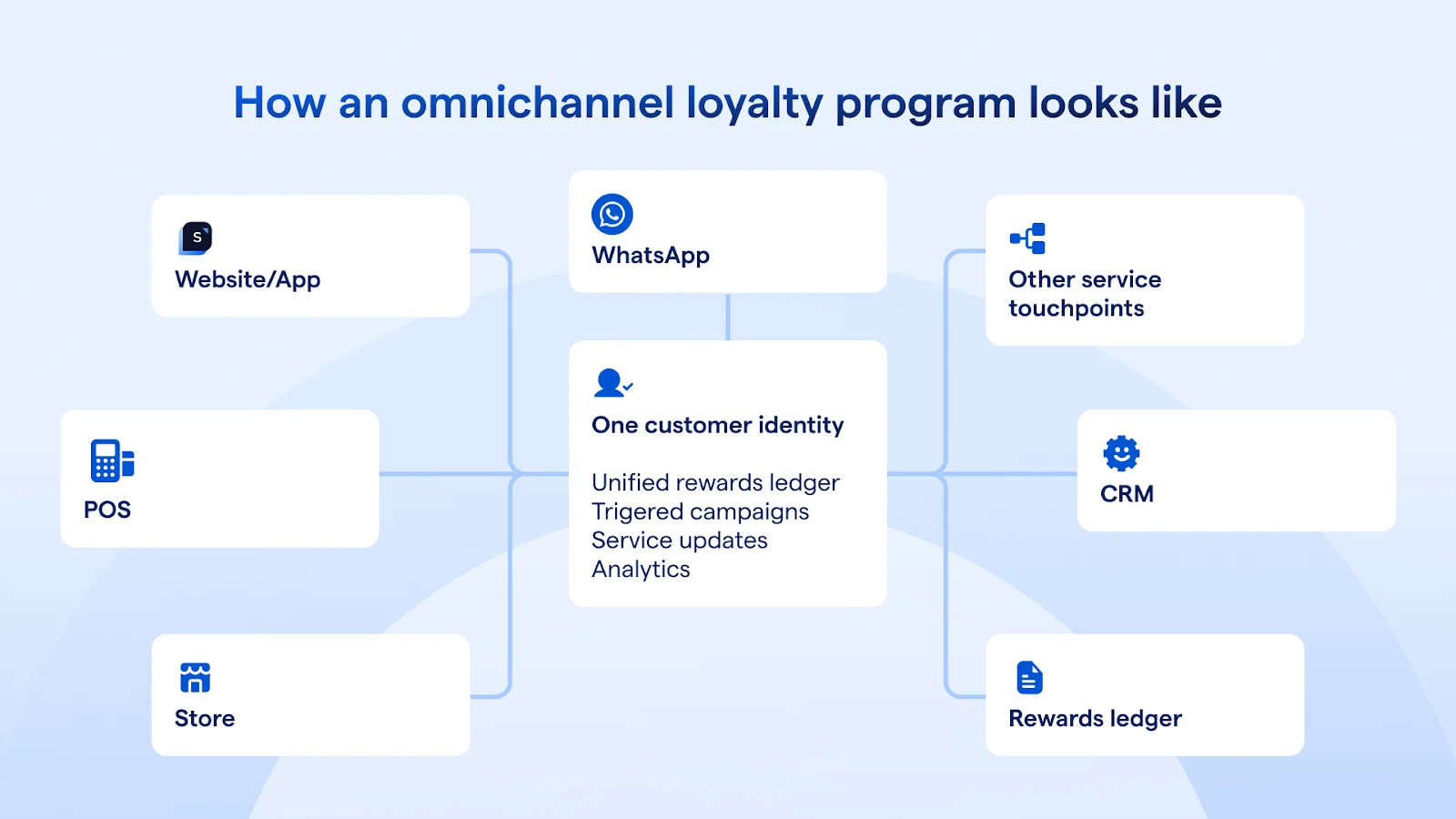
A strong omnichannel loyalty program works by connecting customer identity, rewards data, and communications across every touchpoint. Instead of treating E-commerce, physical stores, apps, and messaging channels as separate experiences, it creates one continuous loyalty journey.
Customer identity recognition
The first step is recognising the same customer across channels. A shopper who buys in-store, browses online, and messages support on WhatsApp should still appear as one profile, not three separate records. This usually relies on shared identifiers such as a phone number, email address, loyalty account, or app login.
Unified rewards ledger
Points, tiers, vouchers, cashback, and perks should sit in one central rewards ledger. This gives brands a single source of truth and ensures customers see the same balance and status wherever they interact. It also enables cross-channel earning and redemption, so customers can earn in one place and redeem in another without confusion.
Real-time syncing
An omnichannel loyalty program only feels seamless when updates happen quickly. If a customer earns points in-store, redeems a coupon online, or unlocks a new tier through a purchase, their balance and eligibility should update almost immediately to reflect the action. Delayed syncing creates friction and weakens trust.
Triggered communications
Loyalty should be visible throughout the customer journey. That means email, SMS, WhatsApp, app push notifications, and customer service conversations should all reflect the customer’s latest loyalty status. Brands can then trigger relevant actions, such as welcome rewards, points-expiry reminders, tier upgrades, birthday offers, or personalised product recommendations, based on real-time behaviour.
The main types of omnichannel loyalty programs
With an omnichannel setup, you can run many different kinds of loyalty programmes.
For most Singapore brands, a hybrid model performs best because it supports both transactional rewards and higher-engagement experiences such as birthday offers, referrals, member pricing, and chat-delivered coupons.
Benefits of omnichannel loyalty programs for customers and brands
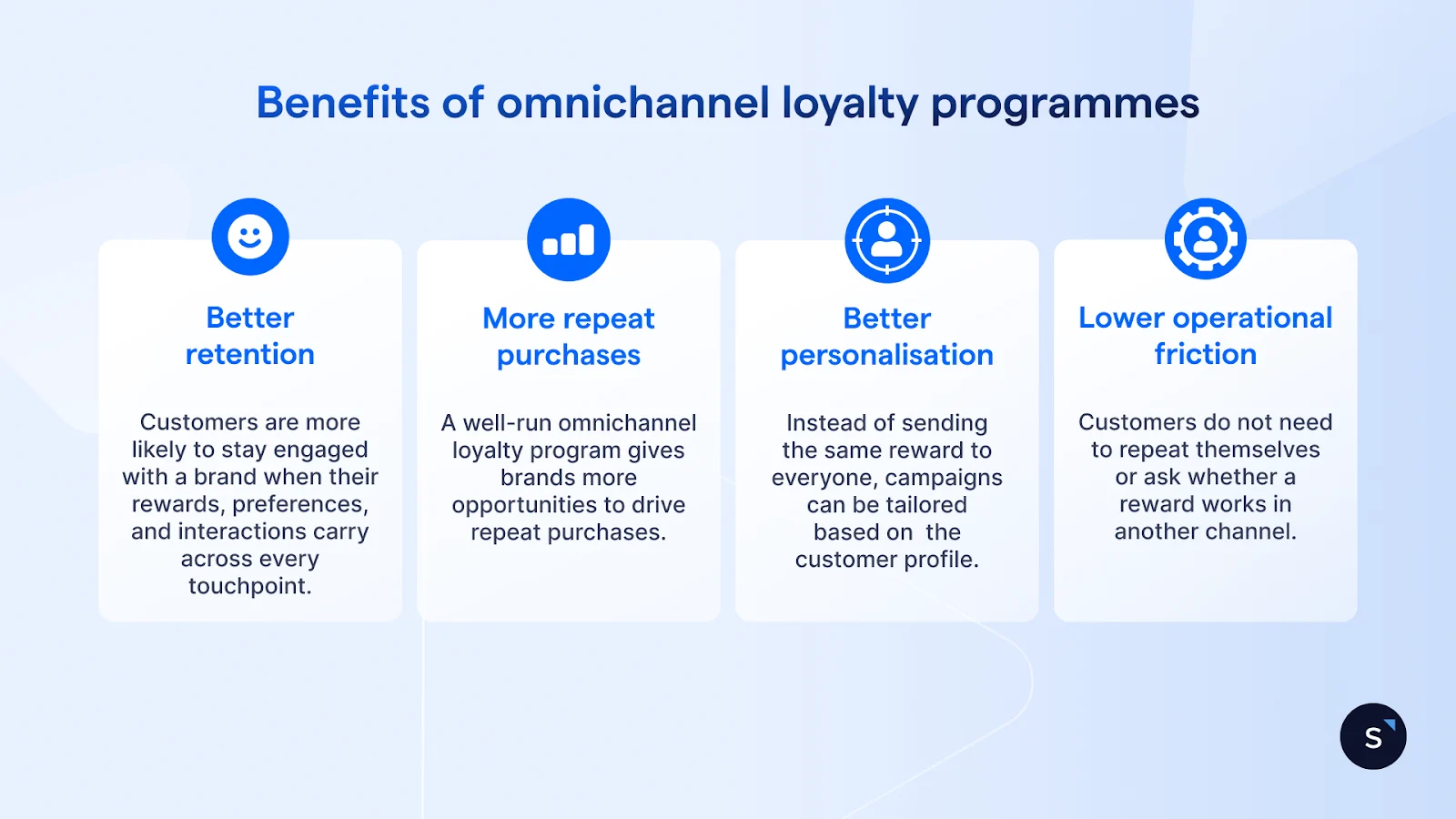
The biggest advantage of an omnichannel loyalty program is that it improves both the customer experience and business outcomes simultaneously. When rewards and communications are connected across channels, brands can build loyalty more efficiently, and customers get a smoother, more relevant experience.
Better retention
Customers are more likely to stay engaged with a brand when their rewards, preferences, and interactions carry across every touchpoint. A disconnected programme makes loyalty feel transactional, while a connected one makes customers feel recognised over time.
More repeat purchases
A well-run omnichannel loyalty program gives brands more opportunities to drive repeat purchases. Customers can be re-engaged with timely reminders, personalised offers, or rewards based on browsing behaviour, purchase history, and channel activity. This makes it easier to bring customers back after their first order.
More effective personalisation
When loyalty data is combined with customer conversations and transaction history, brands can personalise offers more accurately. Instead of sending the same reward to everyone, they can tailor campaigns based on what the customer has bought before, what they recently viewed, or how engaged they are with previous promotions.
Lower operational friction
An omnichannel setup reduces friction for both customers and internal teams. Customers do not need to repeat themselves or ask whether a reward works in another channel, while marketing, sales, and support teams can work from the same customer context. That makes the loyalty experience more consistent and easier to manage at scale.
Real-world omnichannel loyalty program example: Awfully Chocolate
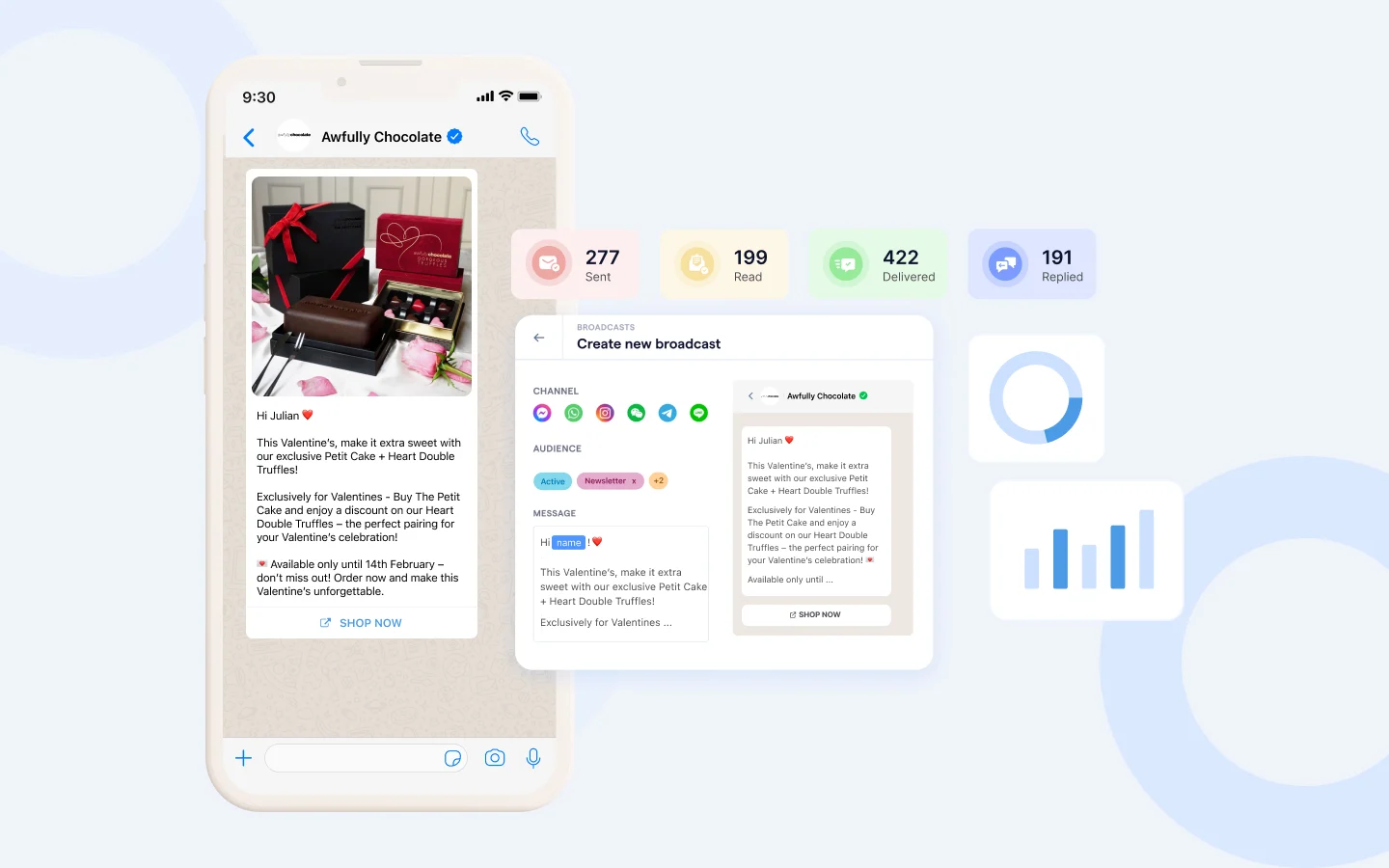
Awfully Chocolate shows that an omnichannel loyalty program need not rely solely on points. It can also be built through conversational commerce, connected customer data, and timely personalised re-engagement. With SleekFlow’s native Shopify integration, data such as recently viewed products, purchase history, and customer preferences syncs into SleekFlow’s Social CRM in real time. As a result, the team gets a 360-degree customer view directly beside the chatbox, allowing them to personalise support and recommend relevant products without switching between tabs.
The brand then uses this data to segment customers and send tailored offers based on behaviour and intent, from Valentine’s Day repurchase campaigns to promotions for limited-edition treats. By making outreach more relevant and contextual, Awfully Chocolate strengthens customer loyalty and creates an experience where customers feel recognised, understood, and valued.
What makes a good omnichannel loyalty experience?
A good omnichannel loyalty experience should feel easy for the customer, even if the backend is complex. The best programmes remove friction at every stage, from sign-up to redemption, and make loyalty feel like a natural part of the brand experience rather than an extra layer to figure out.
Quick UX checklist
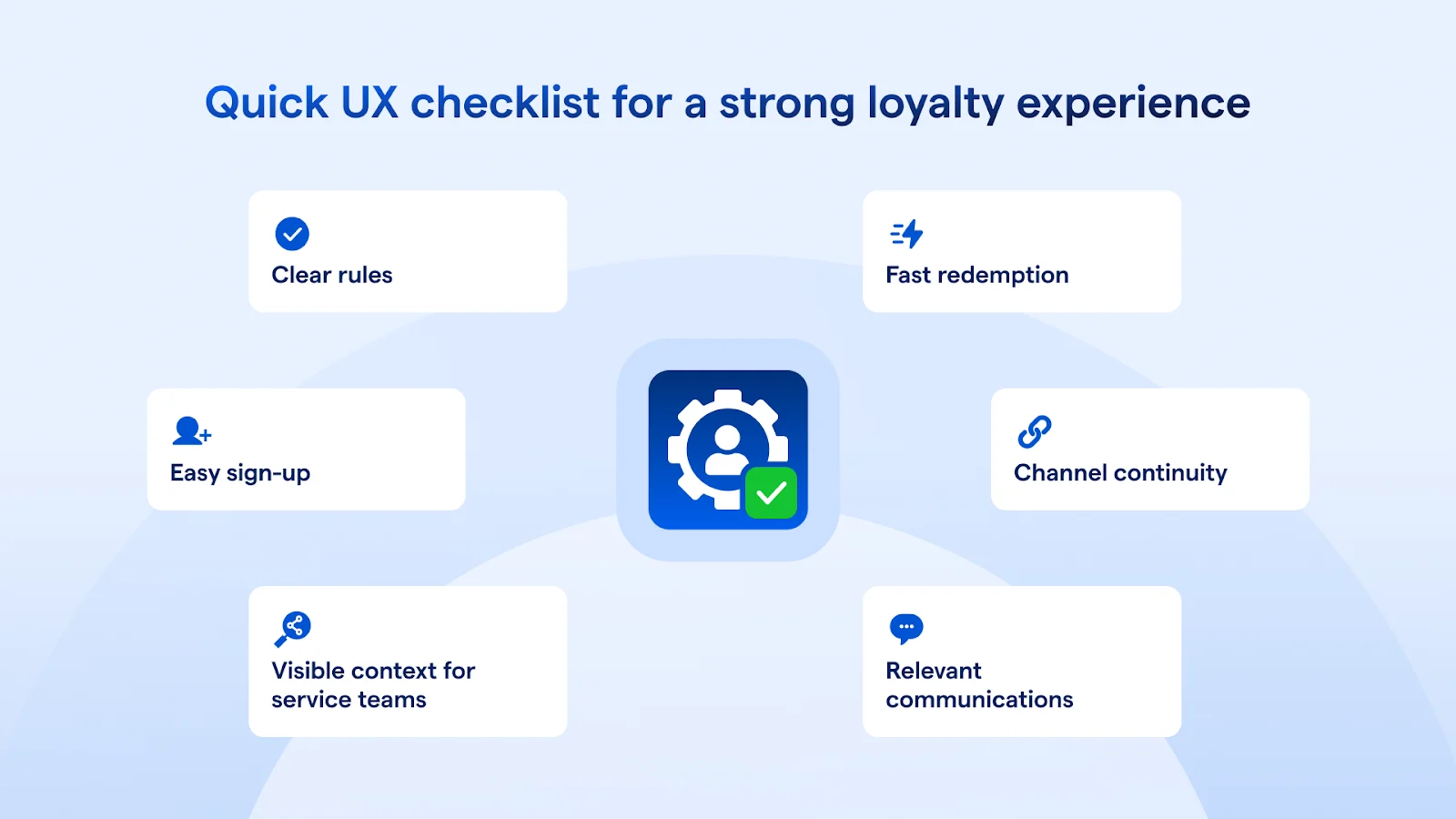
A strong loyalty experience should include:
Easy sign-up: customers should be able to join quickly online, in store, or through chat without long forms or unnecessary steps
Clear rules: earning rates, redemption options, expiry dates, and tier benefits should be simple to understand
Fast redemption: customers should be able to use rewards with minimal friction, whether they are shopping online, in store, or through a messaging channel
Channel continuity: points, perks, and customer history should follow the customer across ecommerce, stores, apps, and support conversations
Relevant communications: loyalty updates should feel timely and useful, not repetitive or overly promotional
Visible context for service teams: Agents should be able to see loyalty status, past purchases, and preferences while helping the customer
When these basics are in place, the omnichannel loyalty program feels consistent and intuitive. That is what turns a reward scheme into a stronger customer experience.
How to build an omnichannel loyalty program in 8 steps
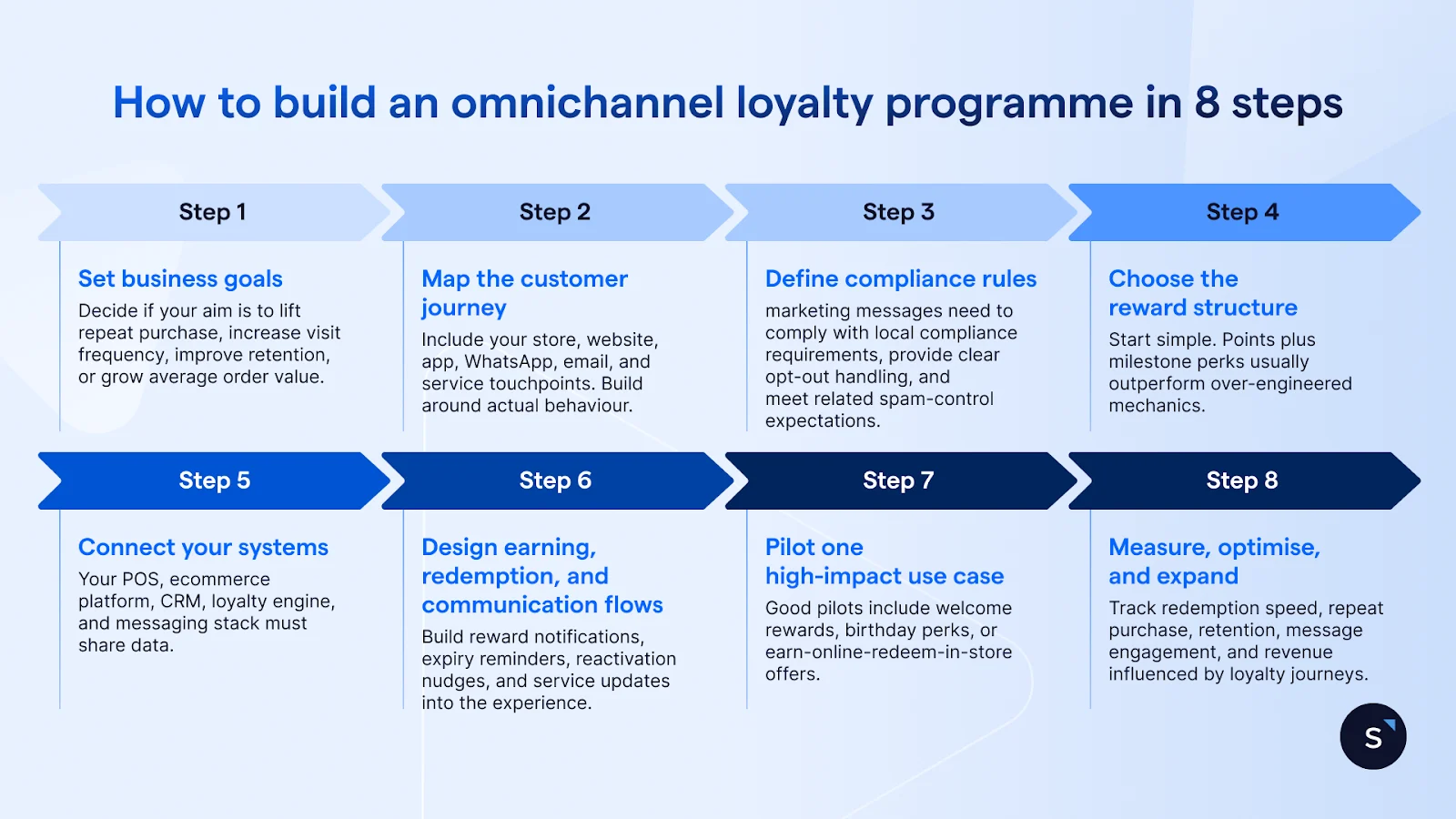
Set the business goal first: Decide whether the programme should lift repeat purchase, increase visit frequency, improve retention, or grow average order value.
Map the real customer journey: Include store, website, app, WhatsApp, email, and service touchpoints. Build around actual behaviour, not org charts.
Define identity, consent, and compliance rules: In Singapore, marketing messages sent to Singapore telephone numbers generally need to comply with PDPA DNC requirements, provide clear opt-out handling, and meet related spam-control expectations.
Choose the reward structure: Start simple. Points plus milestone perks usually outperform over-engineered mechanics.
Connect your systems: Your POS, ecommerce platform, CRM, loyalty engine, and messaging stack must share data. SleekFlow’s CRM and ecommerce integrations are built to sync customer records, trigger workflows, and keep updates flowing across teams.
Design earning, redemption, and communication flows: Build reward notifications, expiry reminders, reactivation nudges, and service updates into the experience. This is where omnichannel inbox and WhatsApp coupon campaigns can make loyalty feel immediate.
Pilot one high-impact use case: Good pilots include welcome rewards, birthday perks, or earn-online-redeem-in-store offers.
Measure, optimise, and expand: Track redemption speed, repeat purchase, retention, message engagement, and revenue influenced by loyalty journeys.


