Complete guide for WhatsApp Broadcast messages for your business in Singapore


TL; DR: Quick Summary
- WhatsApp Broadcast lets businesses send one message to many customers while keeping replies private and one-to-one.
- The WhatsApp Business app is useful for small teams, but broadcast lists are capped at 256 contacts and only reach users who saved your number.
- As your business grows, the app becomes harder to manage because it lacks strong segmentation, automation, approvals, and reporting.
- WhatsApp API is better for scaling campaigns, improving compliance, and connecting WhatsApp with your CRM, team workflows, and analytics.
- SleekFlow helps businesses turn WhatsApp broadcasts into personalised, trackable campaigns with better control, automation, and team collaboration.
WhatsApp is already where your customers spend their time. In Singapore, chat and messaging apps are still the top go-to platforms, and WhatsApp remains the most-used and most-loved app, with four in five people using it every month. Meta also says more than 2 billion people use WhatsApp every day. For businesses, that makes WhatsApp one of the most practical channels for promotions, reminders, updates, and re-engagement.
The harder part is using it well. You want to reach customers without creating manual work, hurting deliverability, or annoying the people you're messaging.
This guide explains how WhatsApp broadcast works, when the WhatsApp Business app is enough, what limits apply to the app and the API, and how to send and scale campaigns with SleekFlow.
What is WhatsApp Broadcast?
WhatsApp Broadcast lets a business send one message to multiple recipients while keeping the experience one-to-one. Customers receive the message in their private chat rather than in a group, so they do not see other recipients. On the WhatsApp Business app, you can create multiple broadcast lists, but each list is limited to 256 contacts, and messages are only delivered to customers who have saved your number in their address book.
That makes broadcast useful for businesses that want to send:
promotions and limited-time offers
appointment reminders
back-in-stock alerts
event invitations
important service updates
For a small business, that can be enough to get started. For a growing business in Singapore, it often becomes difficult to manage once your lists, campaigns, and team grow.
Whats the difference between WhatsApp broadcast vs group vs Channel
WhatsApp gives you three ways to reach many people at once, and they work very differently. A broadcast sends your message privately to each contact, a group puts everyone in one shared chat, and a Channel publishes updates to a one-way feed.
For marketing to customers, a broadcast is usually the best fit. Each message lands in a private chat, and every reply comes back to you as a one-to-one conversation. Groups work better when you want customers to talk to each other. Channels suit public news, but their notifications are muted by default, so followers can miss a time-sensitive offer.
How does WhatsApp Broadcast work on the WhatsApp Business App?
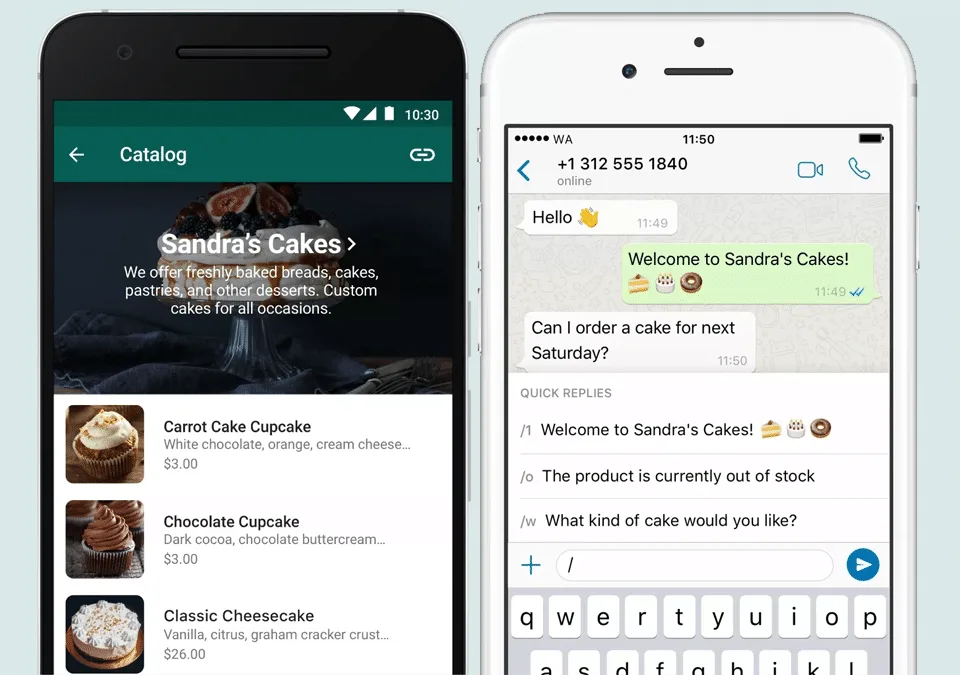
If you are using the WhatsApp Business app, broadcast is the fastest way to start sending outbound messages to a customer list. You create a broadcast list, select your audience, draft the message, and send it. Customers receive the message in their own chat thread and can reply privately.
On Android
Open the WhatsApp Business app and go to the Chats tab.
Tap More options (the three dots), then Broadcast lists.
Tap New list.
Select the contacts you want, to a maximum of 256, then tap the check mark.
Type your message and send it.
On iPhone
Open the WhatsApp Business app and go to the Chats tab.
Tap Broadcast lists.
Tap New list.
Select the contacts you want, to a maximum of 256, then tap Create.
Type your message and send it.
Only contacts who have saved your number will receive the message.
Each recipient gets the message in their own chat. If they reply, it comes back to you privately, not to the rest of the list.
The app works best when you:
have a relatively small audience
already know your customers well
do not need advanced automation
do not need deep reporting or CRM sync
It is also a practical option for local businesses that want to test WhatsApp as a channel before investing in a more scalable setup.
How to send a WhatsApp broadcast with SleekFlow
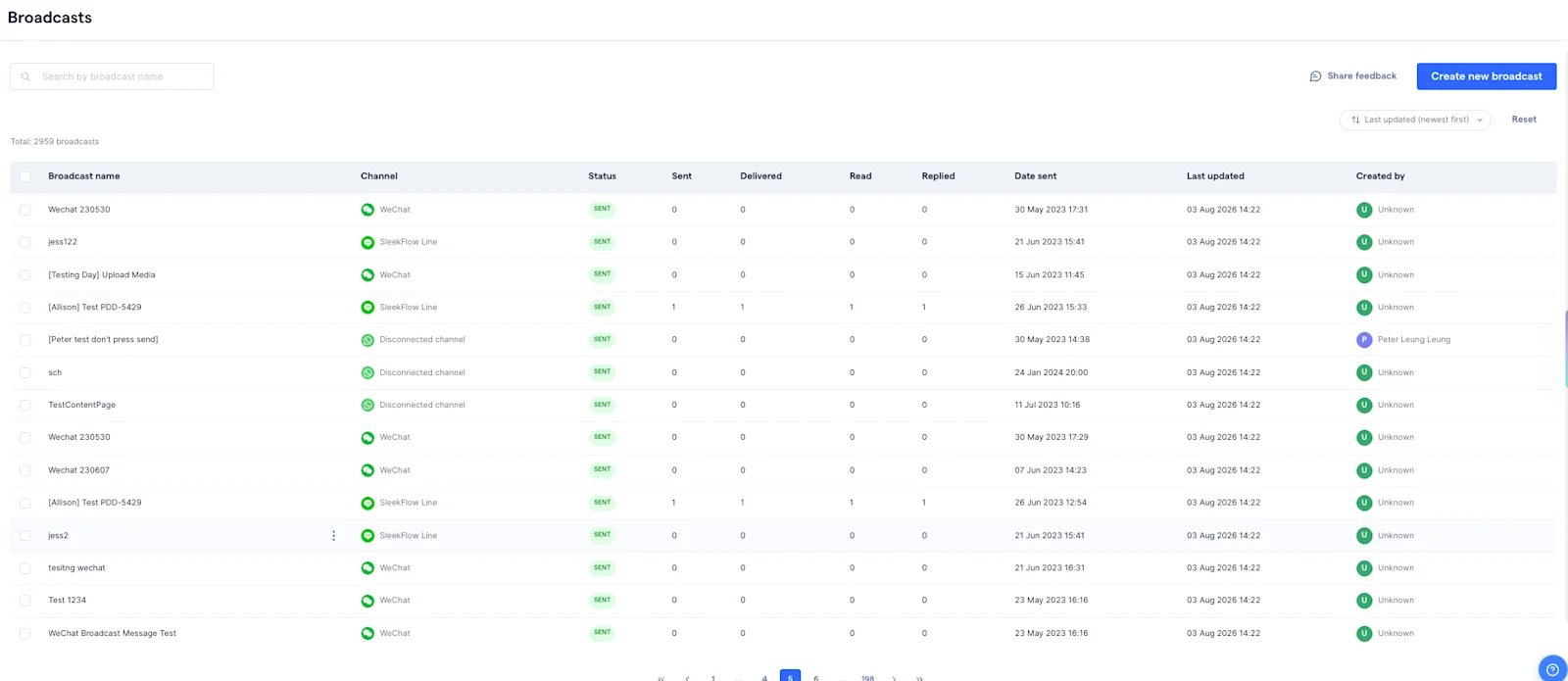
With SleekFlow, you send broadcasts through the WhatsApp Business API, so you're not limited to 256 saved contacts. To set one up:
Make sure your audience has opted in. SleekFlow only sends broadcasts to contacts whose Subscriber property is set to True.
Get your message template approved. Messages to customers outside an open 24-hour customer service window need a template that Meta has approved.
Go to Broadcasts and click Create new broadcast.
Name the broadcast, then choose to send it now or schedule it for later.
Choose the WhatsApp number to send from and the contacts who should receive it.
On the Content page, open the Template tab, choose your template, and fill in its variables, such as the customer's name or a product link.
Review the broadcast overview, then publish it or save it as a draft.
Once it's sent, you can track delivery, read, reply, and failure numbers for the campaign. For screenshots of each step, see our Help Center guide to creating a broadcast campaign.
WhatsApp broadcast limits for the app and the API
How many people you can reach depends on how you send.
In the WhatsApp Business app, each broadcast list is capped at 256 contacts, but you can create as many lists as you like. Only contacts who saved your number receive the message, and in some countries WhatsApp may also apply a monthly broadcast limit.
With the WhatsApp Business API, there's no list cap. Instead, Meta sets a messaging limit: the number of unique customers you can start conversations with in a rolling 24-hour period. Replies inside an open 24-hour customer service window don't count toward it. Since 7 Oct 2025, the limit applies to your whole business portfolio, so every WhatsApp number in the portfolio shares it.
Meta raises your limit automatically when your quality rating stays high and you use at least half of your current limit within 7 days. SleekFlow checks your business portfolio's messaging limit before a broadcast goes out and warns you when you're getting close. Meta explains the details in its messaging limits guide.
WhatsApp Business app vs WhatsApp API for broadcast messages
The right setup depends on where your business is today.
Use the WhatsApp Business app if you need a simple way to reach a smaller customer base and you are comfortable managing lists manually. It is best for early-stage operations, solo operators, or small teams that send occasional campaigns. Broadcast lists are still limited to 256 contacts each, and delivery depends on customers saving your number.
Use the WhatsApp Business Platform (API) when you need more scalable outbound messaging, better compliance controls, and a system that can work with your team and tech stack. Meta’s documentation says template messages generally require approval before sending, and businesses must obtain opt-in before messaging users. Meta also now lets you use the WhatsApp Business app and the API on the same phone number through WhatsApp Coexistence, so moving to the API no longer means giving up the app.
Here’s a quick side-by-side view of when the WhatsApp Business app is enough and when it makes sense to move to the API.
For most businesses, the app is a practical starting point, while the API becomes the better choice once broadcast volume, segmentation, team collaboration, and reporting start to matter.
WhatsApp broadcast best practices
The best-performing WhatsApp campaigns usually feel helpful, relevant, and timely.
Start with clear consent
Meta says businesses must get opt-in before messaging users on WhatsApp. That matters even more for promotional campaigns, because relevance affects both customer trust and message performance.
Segment before you send
A retail customer waiting for a restock should not receive the same message as a VIP loyalty member or a customer who has not purchased in six months. SleekFlow’s contact lists, labels, and properties are built for this kind of segmentation.
Keep the message specific
Instead of “Big sale this week,” send “VIP preview: 15% off new arrivals until Sunday.”
Instead of "Book now," send "Your service is due this week. Confirm your preferred time here.”
Personalise with context, not just names
Names are useful, but context is better. A message that references a booking, membership tier, location, or product interest is more useful than a message that only inserts a first name.
Respect frequency
Meta says users can give message feedback, stop chats, and block businesses when messages are not useful. That means quality and cadence matter just as much as reach.
7 WhatsApp broadcast message examples
Good WhatsApp broadcast messages are short, specific, and give the reader one clear next step. Use these formats as a starting point, then swap in your own product details, dates, and offers.
1. Flash sale
Hi {{first_name}}, our weekend sale starts now. Enjoy 15% off selected items until Sunday, 11:59 pm. Shop here: {{link}}
2. Back-in-stock alert
Hi {{first_name}}, good news! The {{product_name}} you asked about is back in stock. Order now before it sells out again: {{link}}
3. Event invitation
Hi {{first_name}}, we’re hosting an in-store styling event this Saturday at {{location}}. Reply YES and we’ll reserve your slot.
4. Appointment reminder
Hi {{first_name}}, this is a reminder for your appointment on {{date}} at {{time}}. Reply 1 to confirm or 2 to reschedule.
5. Membership renewal reminder
Hi {{first_name}}, your membership renews on {{date}}. Renew by {{deadline}} to keep your current benefits: {{link}}
6. Abandoned cart follow-up
Hi {{first_name}}, you left {{product_name}} in your cart. Complete your order here: {{link}}. Need help choosing? Reply to this message.
7. Customer reactivation
Hi {{first_name}}, it’s been a while. Here’s a returning-customer offer for your next purchase: {{offer_code}}. Valid until {{date}}.
How to avoid spam reports and low delivery
The fastest way to damage WhatsApp broadcast performance is to treat it like a bulk email list. Here is a short list of Don’ts:
Do not send messages without clear permission.
Do not blast every contact with the same generic promotion.
Do not keep messaging people who are no longer interested.
Do not use unofficial third-party messaging apps to broadcast.
Meta makes it clear that people can block businesses, provide negative feedback, and stop receiving these types of messages, while businesses that repeatedly violate policy can face restrictions.
A better approach is simple:
Collect opt-in clearly
Send relevant content
Use approved templates where required
Segment by customer intent
Monitor replies, read rates, and failures
Adjust cadence before fatigue sets in
Use the WhatsApp Business App or approved WhatsApp Business platforms only
This is where an approved WhatsApp Business Platform matters. SleekFlow gives teams a more controlled workflow with audience filters, review steps, scheduling, analytics, and centralised reply handling, making it easier to improve campaign quality over time rather than guessing.
Why some WhatsApp broadcasts don't get delivered
If a broadcast reaches fewer people than you expected, check these common causes:
The recipient hasn't saved your number (WhatsApp Business app only).
The number is wrong, inactive, or not on WhatsApp.
The recipient blocked your business or turned off marketing messages from you.
Your template wasn't approved or has been paused (API only).
You've reached your messaging limit for the day (API only).
WhatsApp limits how many marketing messages a person receives in a day, so someone who has already had several may not get yours.
Most of these come back to the same habits: collect opt-in, keep your contact list clean, and send messages people want.
Why businesses switch from the app to SleekFlow
Most businesses do not switch because they suddenly want “more features.” They switch because manual work starts slowing down growth.
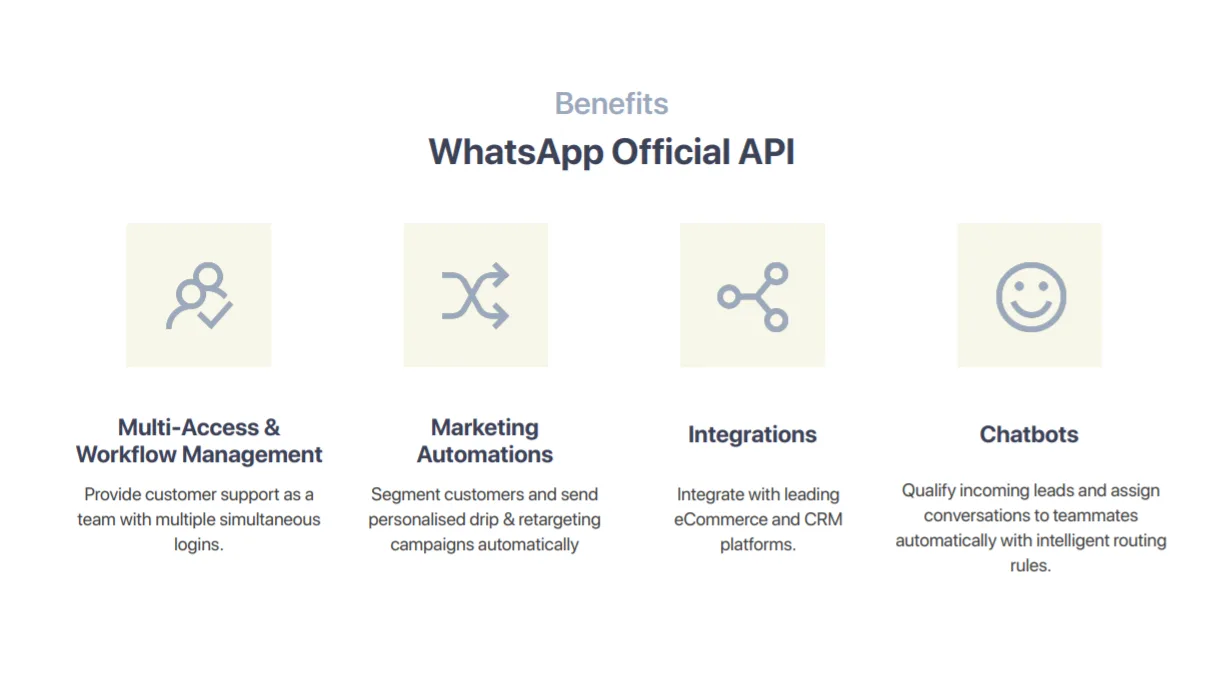
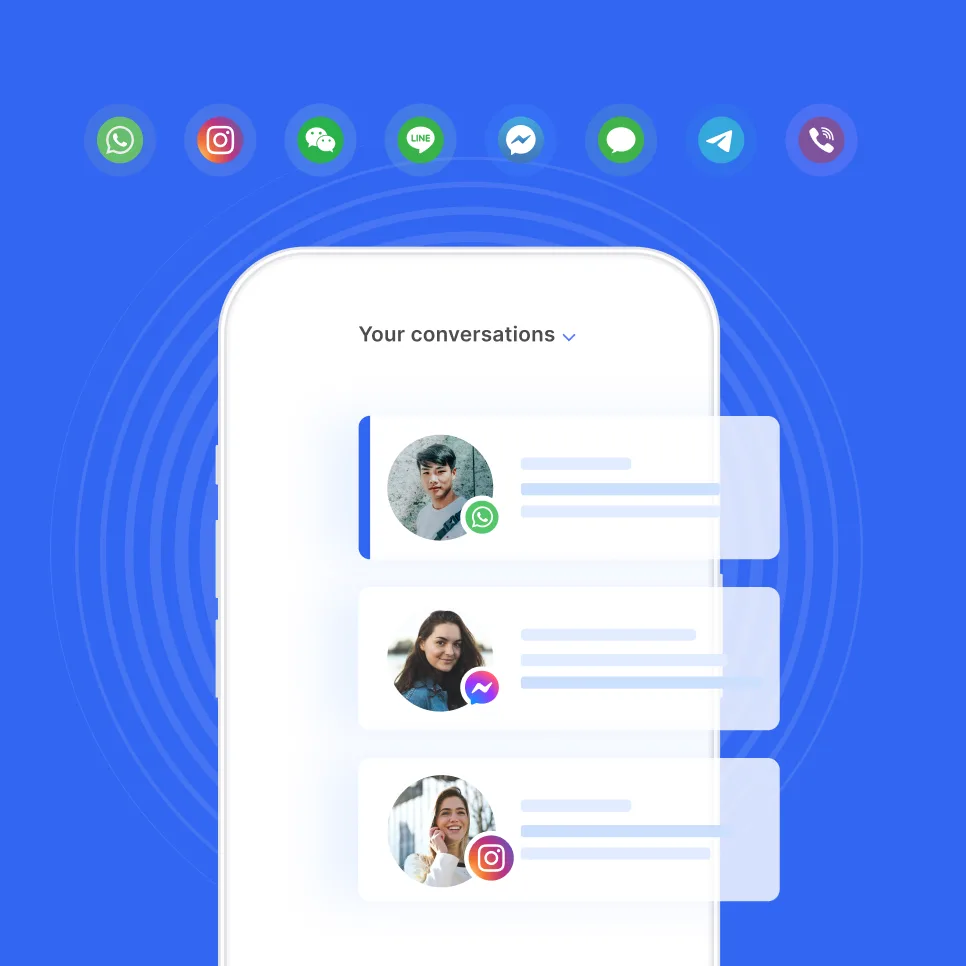
SleekFlow helps teams move from one-off broadcasting to a more complete customer engagement workflow. Teams can manage conversations across channels from one platform with a shared inbox, automate follow-ups to broadcasts with Flow Builder, personalise outreach with CRM integrations, and use AI agents plus Inbox Co-Pilot to improve response quality and speed. SleekFlow also supports broadcast campaigns with analytics, so teams can measure delivery, reads, replies, and campaign ROI in one place.
For businesses in Singapore, that matters because WhatsApp is rarely just a marketing channel. It is where leads ask questions, customers confirm bookings, buyers chase orders, and support conversations continue after the campaign ends.
If you're comparing tools, our guide to WhatsApp broadcast software in Singapore covers 8 options.
Want to outcompete your peers with SleekFlow's help?
Book your personalised demo with SleekFlow today and unlock the potential of seamless communication


