Everything you need to know about Omnichannel customer experience


TL;DR: Quick Summary
- Omnichannel customer experience connects channels so context follows the customer, not the other way around.
- It improves loyalty and revenue by reducing friction and repeat work—while enabling more personalisation at scale.
- Winning strategies rely on a unified inbox, shared customer profile, automation, analytics, and strong governance (privacy, permissions, templates/opt-in).
A customer messages you on WhatsApp about a delivery issue, follows up on Instagram DM while commuting, and then calls your support line when they’re home. If each touchpoint starts from zero, the experience feels slow—and trust drops quickly.
That’s why omnichannel customer experience (CX) has moved from “nice-to-have” to a growth and retention requirement. Research consistently shows customers expect consistency across teams and touchpoints. For example, Salesforce reports a large share of customers expect consistent interactions across departments.
What is an omnichannel customer experience?
The omnichannel customer experience is defined as seamless interactions across multiple channels and touchpoints with a unified experience. This means customers can move between channels (messaging, web chat, email, phone, in-store) and still receive a connected, consistent experience—because context and data are shared across touchpoints.
Omnichannel vs multichannel
Multichannel isn’t automatically omnichannel. Here’s the difference:
What makes omnichannel “real”:
A shared customer profile (identity, preferences, history)
Consistent service standards (tone, SLAs, escalation rules)
Connected reporting (so you can measure outcomes end-to-end)
Benefits of an omnichannel customer experience
A connected experience isn’t just nicer for the customer— it’s measurable. PwC highlights how quickly customers will leave after bad experiences, underscoring the cost of friction and inconsistency.
The most common business benefits and what to track:
For higher customer retention and loyalty, track repeat purchase rate, churn, CSAT, NPS. Stronger retention performance is associated with customer-obsessed organisations.
For faster resolutions and lower human effort, track first response time, time to resolution, first-contact resolution, and handover rate.
For more sales from conversations, track lead-to-sale conversion, abandoned-cart recovery, and revenue per conversation.
How to create an omnichannel customer experience
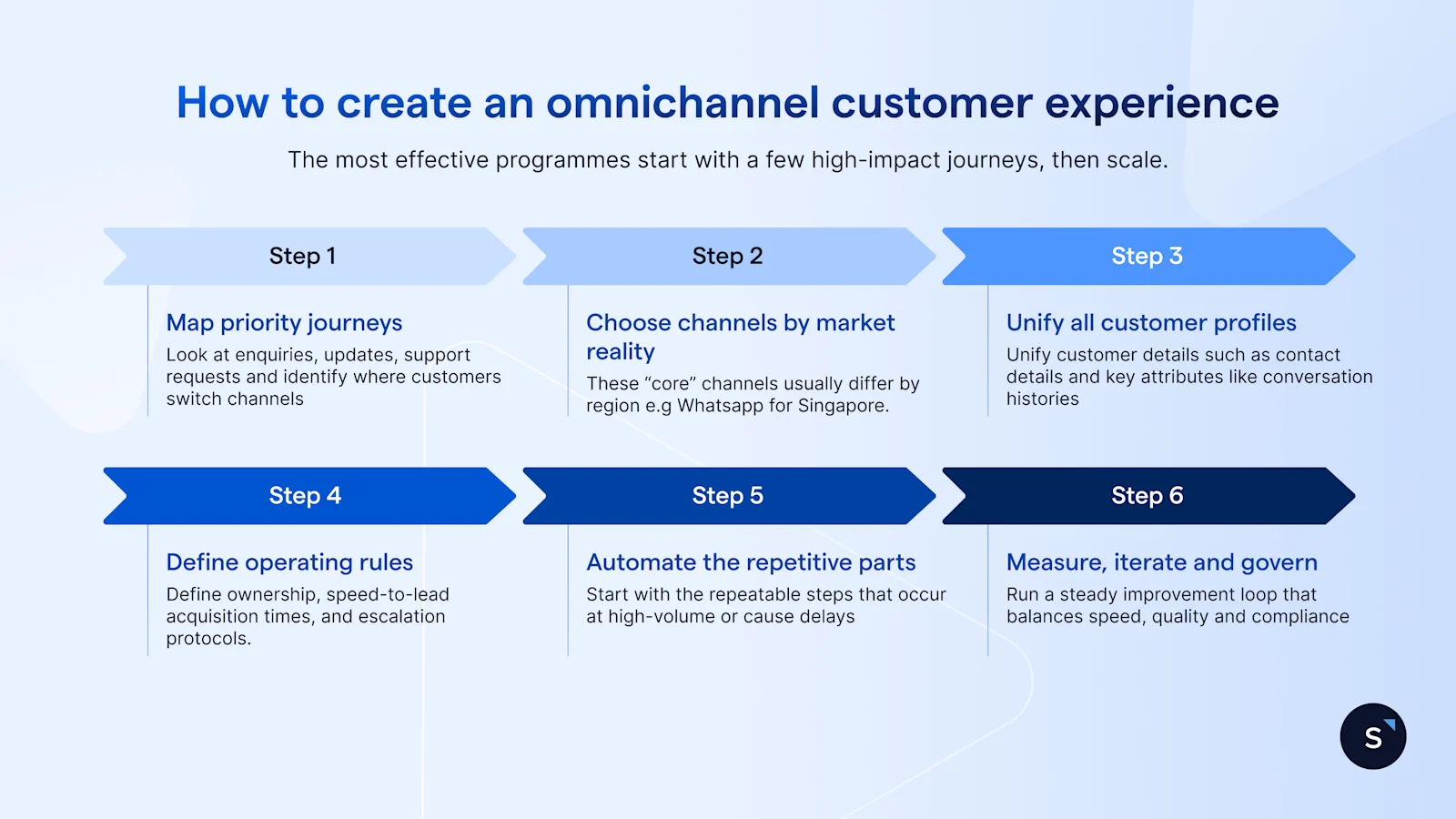
You don’t need to roll out every channel at once. The most effective programmes start with a few high-impact journeys, then scale.
Step-by-step implementation checklist:
1) Map priority journeys
Look at your sales enquiries, order updates, and support requests. Identify where customers switch channels and why.
2) Choose channels by market reality
These “core” channels usually differ by region (e.g., WhatsApp-heavy markets vs LINE/WeChat-heavy markets). SleekFlow supports multiple messaging channels from a unified inbox.
3) Unify all customer profiles
Unify customer identity (phone/email/social handles), conversation history across channels, and the key attributes teams need (e.g lifecycle stage, recent orders, open tickets, consent preferences) so customers never have to repeat themselves.
4) Define operating rules
Tools won’t fix fragmented experiences if teams don’t share the same playbook. Before you scale channels, lock down a few operational rules so every customer gets a consistent experience, no matter who answers or where they message. Define rules such as:
Ownership: who replies, when, and in which channel
Speed-to-lead acquisition (SLA): how fast is “fast enough”
Escalation: when to involve specialists or management, and how
5) Automate the repetitive parts
Automation is most effective when it reduces customer effort and admin work without blocking a human when needed. Start with repeatable steps that occur at high volume or cause delays, then expand to more sophisticated journeys once you’ve proven impact.
6) Measure, iterate, and govern
Omnichannel isn’t a one-off rollout but an operating system. The best teams run a steady improvement loop that balances speed, quality, and compliance.
Features you need to support your omnichannel customer experience strategy
If you’re building omnichannel customer experience across marketing, sales and support, these are the non-negotiables.
Must-have capabilities:
Unified inbox and collaboration (so teams don’t work in silos)
SleekFlow centralises multi-channel conversations in one workspace.Customer profile + segmentation (properties, labels, lists)
Contacts and properties enable targeted, personalised messaging.Automation/workflow orchestration
Use event triggers to reply, route, capture data, and sync systems.Ticketing or structured case management
SleekFlow ticketing supports categorisation, assignment, prioritisation, and linked conversation context.Analytics that connect activity to outcomes
Track conversion, response time, and campaign performance (not just message volume).Security and access controls
Role-based access, data masking, and IP controls help reduce risk when handling personal data.
Can AI improve your omnichannel customer experience?
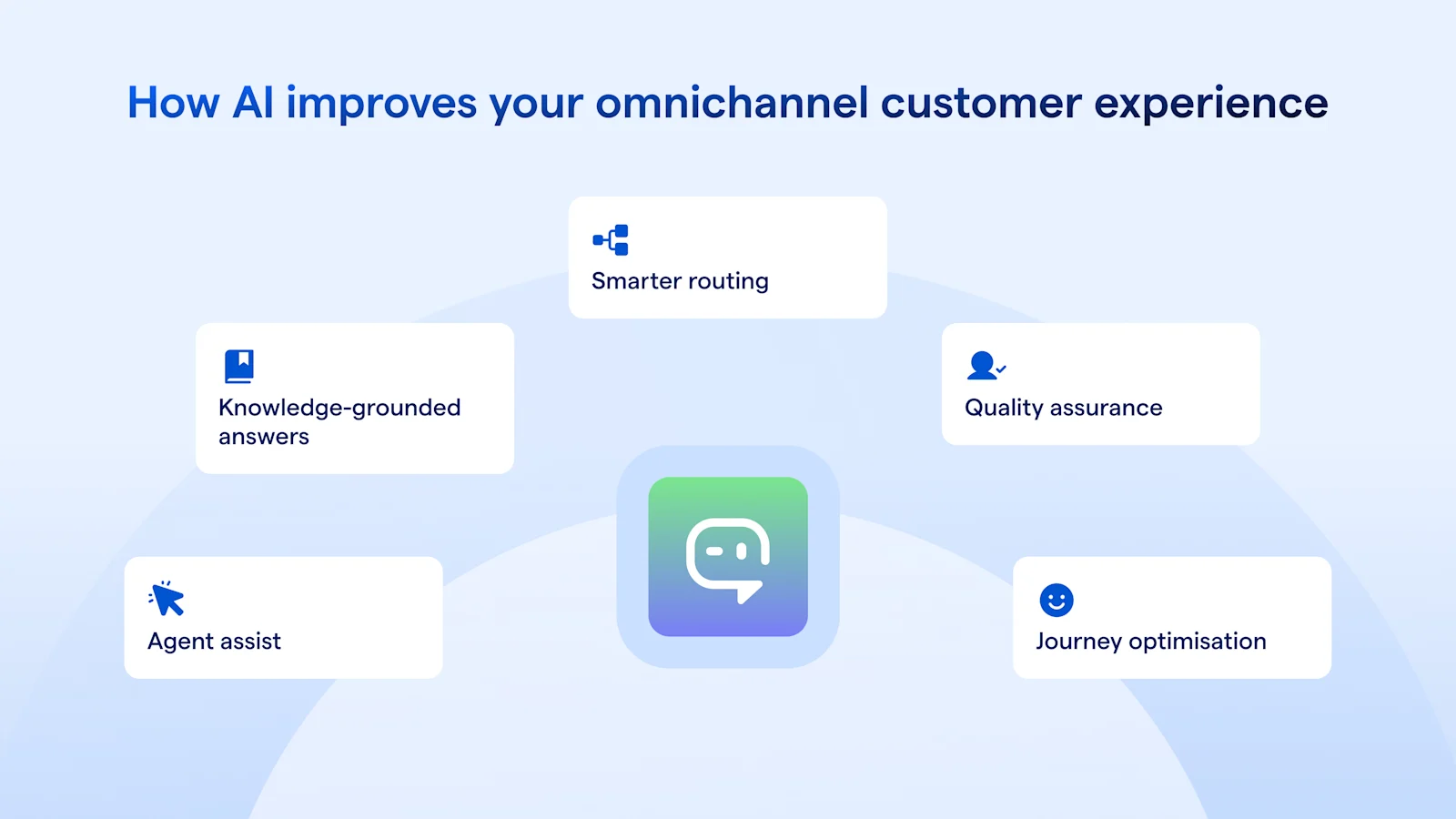
Used well, AI can reduce customer effort and agent admin while improving consistency across channels. The key is to treat AI as an “assist layer” with clear boundaries, rather than an unsupervised decision-maker.
Adoption is moving quickly. Gartner reports that 91% of customer service leaders feel pressure from executive leadership to implement AI. McKinsey also estimates that generative AI could lift productivity in customer care by 30–45% of current function costs (depending on how it’s applied).
Where AI creates the most value in omnichannel CX
Agent assist: suggested replies, tone/brand rewrites, translation, conversation summarisation
Knowledge-grounded answers: responses generated from your approved policies, FAQs, and product documentation (not guesswork)
Smarter routing: classify intent and urgency, then route to the right queue/owner
Quality assurance: flag missing steps, risky wording, or inconsistent guidance against your standards
Journey optimisation: identify drop-offs and repeat-contact drivers, then recommend fixes (e.g. clearer data capture or better routing)
How SleekFlow improves your omnichannel customer experience
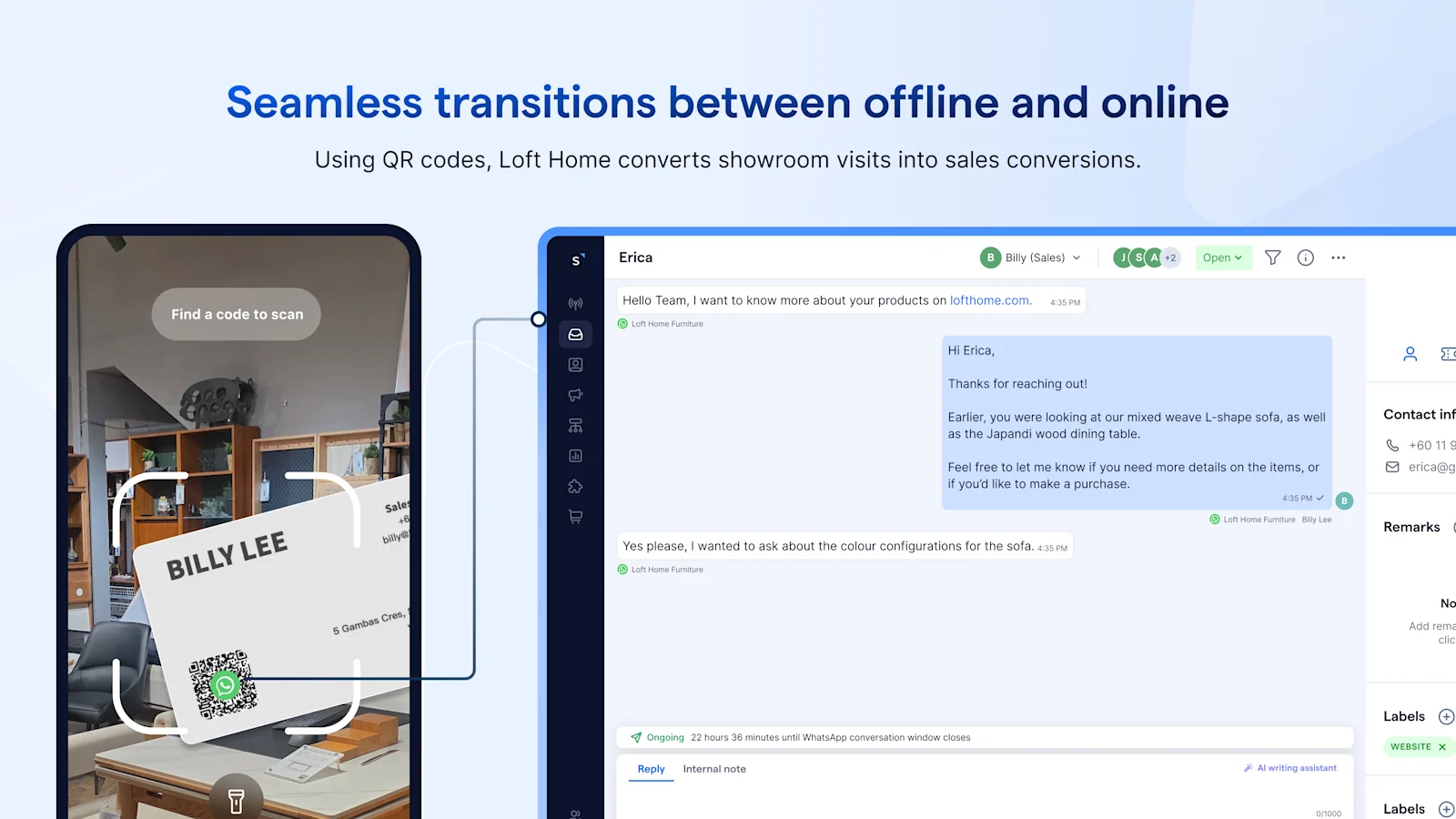
SleekFlow is an omnichannel conversational AI suite that unifies messaging channels (e.g., WhatsApp, Instagram, live chat) into one workspace and automates journeys across marketing, sales, and support.
1) A unified inbox that teams actually use
Build your omnichannel customer experience around a single operational view—so handovers don’t break context.
2) Automate follow-ups, routing, and data capture
SleekFlow’s Flow Builder is designed for event-driven journeys (auto replies, assignment, triggered follow-ups) across touchpoints. It also supports integration-triggered workflows (e.g., CRM events) and structured data capture.
3) AI that’s grounded in your content
For teams that want more than “suggested replies”, AI agents can handle defined workflows like qualification, information gathering, and guided next steps before escalating to humans to close the deal.
4) Improve support operations with ticketing
Omnichannel breaks down when service requests get buried in long chat threads. SleekFlow’s ticketing turns conversations into structured work so teams can track, prioritise, and collaborate without losing sight of the issue.
Start for free!
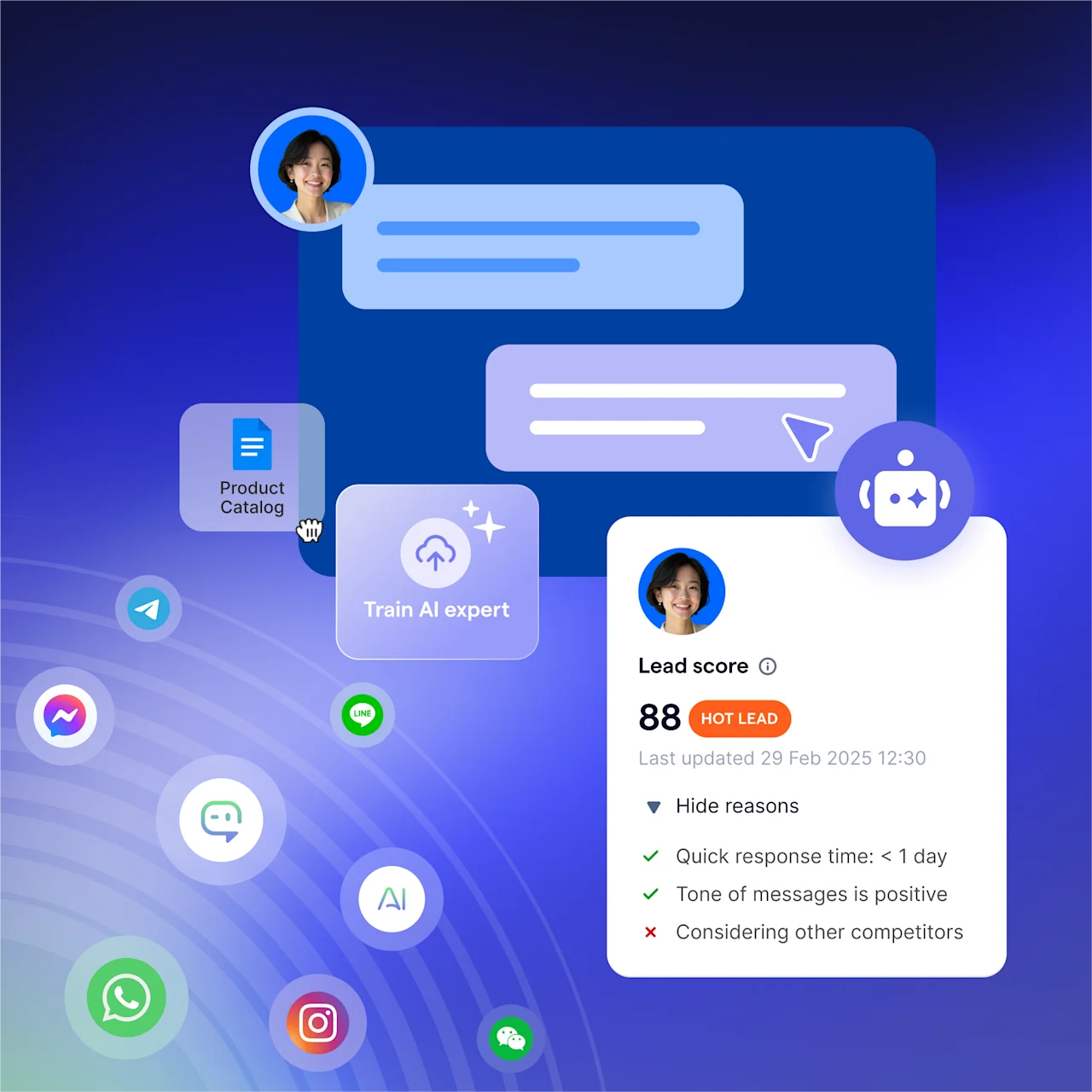
Grow your revenue and turn chats into conversions with AI agents. Try SleekFlow for free, forever.
Frequently Asked Questions
What if the same customer shows up as different people across channels?
Does a CRM count as part of omnichannel, even though customers don’t message you there?
How do we handle omnichannel when our CRM and messaging data don’t match?
What if one channel has strict rules, like templates or a 24-hour window, and another doesn’t?
What’s the hardest metric to get right in omnichannel?
Recommended for you


