The 7 best Respond.io alternatives in 2026


TL;DR: Quick Summary
- The 7 worth considering in 2026 are Wati, Manychat, SleekFlow, Gorgias, Trengo, Intercom, and Zendesk.
- Teams leave Respond.io over three things on its own published pages. Users and contacts are adjusted separately, AI credits pause at a ceiling, and AI Agents, Salesforce, and SSO sit above the entry plan.
- The tools split three ways. Support desks built around the queue, broadcast-led tools built for outbound first, and platforms that carry one customer across sales, marketing, and support.
- Channels rule vendors out fast. Only 4 of the 8 publish TikTok messaging, and 3 cover WeChat and LINE.
- Most tools here add a charge once AI passes an allowance, per resolution or per outcome. Ask what that costs before you sign.
Author's note: this roundup reflects SleekFlow's assessment; product details are accurate as of publication and may change, so verify with each provider. Full note below.
You're a growing B2C business running customer conversations on Respond.io. Your sales, marketing, and support teams are stretched by rising volumes and competitors who're now AI-enabled. Meta says more than a million businesses already run an AI agent on WhatsApp and Messenger.
Changing vendors is stressful, whatever your reason may be. Imagine migrating your WhatsApp Business Account, rebuilding your automations, and retraining the team... just to end up regretting that decision? What a nightmare!
So, to help you on your quest, below are 7 Respond.io alternatives your growing B2C brand should consider in 2026.
What separates these service providers is how much of the job each one does, and they answer that differently. Some are built around the support queue, some around outbound campaigns, some around carrying one customer across sales, marketing, and support.
Check 'em out and happy exploring!
What are the best Respond.io alternatives?
In our assessment the strongest options in 2026 are Wati, Manychat, SleekFlow, Gorgias, Trengo, Intercom, and Zendesk. Wati and Manychat suit small messaging-led teams, SleekFlow and Trengo suit growing mid-market brands, Gorgias suits Shopify merchants, and Intercom and Zendesk suit larger service organizations.
Why teams switch away from Respond.io
Three things come up most, and all three sit on Respond.io's own published pages. They're choices about how the product is built and priced, and a structure that fits a 5-person team scales differently for a 40-person one.
Users and contacts are adjusted separately. Respond.io's own pricing explainer describes monthly active contacts and user seats as two levers you adjust independently, and its billing help page lets you change each without changing your plan. Its help center counts a contact as active when they send or receive a message, or make or take a call, with broadcasts excluded. Their entry Starter plan is listed with unlimited contacts, so this starts to matter from Growth up. In our experience it's the part growing teams miss, because it rises without anyone choosing to spend more.
AI runs on credits, and pauses at a ceiling. Per Respond.io's AI credits documentation, your allowance scales with both your plan and your contact tier, and you can't buy credits on their own. Go past the allowance and on-demand credits are billed automatically in blocks, and the same page says AI features pause until the next billing cycle once you reach 200% of it. Worth modelling if AI is going to write most of your first replies.
Some integrations and AI features sit above the entry plan. Its documentation puts AI Agents on the Growth tier and higher, and caps how many Workflows you get by tier. Its own pricing explainer puts AI Voice Agents, Salesforce, SSO, and custom channels on Advanced and above. If your company runs on Salesforce, price that tier out early.
Now the other side. Respond.io lists 24/7 support on every plan, publishes ISO 27001 certification on its trust center, and holds the highest G2 rating in the table below. In June 2026 it raised US$62.5 million. If the plans fit how you're growing and support has been good to you, moving buys you a migration and weeks of rebuild work for very little. Stay put.
Respond.io alternatives compared at a glance
Factual entries below are drawn from each vendor's published pages as of Aug 2026. The "Best for" row is our assessment. Respond.io is the baseline.
Have a look at each to see which best fits your team and your business needs.
1. Wati, best for small teams that need WhatsApp broadcasts this week
Wati is a WhatsApp-first tool for small and mid-sized businesses, calling itself "the #1 WhatsApp growth platform" on its own homepage. It's the fastest here to get from signing up to sending an approved broadcast, and analytics come on every plan, including the entry tier.
Pros
Quickest setup here if broadcasts are what you need
Wide integration list, including HubSpot, Shopify, Zapier, and Salesforce on the top tier
Analytics on every plan
Cons
The entry plan gives you one channel and won't let you add users
Webhooks are limited below the top plan
Cost comes up repeatedly in its G2 reviews
How it charges
A plan tier with a set number of seats included
Extra seats priced per user above the entry tier
AI runs on co-pilot credits, with automation triggers capped per tier
What this means for you: costs are easy to predict, but three things move them, the tier, the seats, and the credits. Check the included seat count and the trigger cap on the tier you're eyeing, and ask what a seat costs above it.
2. Manychat, best for creator-led brands automating Instagram and TikTok DMs
Manychat automates social DMs, built around Instagram, TikTok, and Messenger. Auto-replies to comments and story replies go deeper here than anywhere else on this list.
Pros
Easy to forecast, since you only pay for contacts
Best comment and story automation here
The lowest-commitment way to test whether social DM automation moves your numbers
Cons
WhatsApp, SMS, and email all need the Pro plan
Several AI features work on Instagram only, and are still in beta
How it charges
Per active contact a month, so the bill tracks how many people message you
Extra contacts bill automatically once you pass your allowance
As of 23 Aug 2026 their AI page calls AI a paid add-on and their pricing page says it's included
What this means for you: forecasting is simple if you know your monthly contact volume. Get the AI position in writing before you sign, check that WhatsApp sits on the tier you're pricing, and note that Pro connects three channels, not all of them.
3. SleekFlow, best for growing B2C brands running AI agents across the customer journey
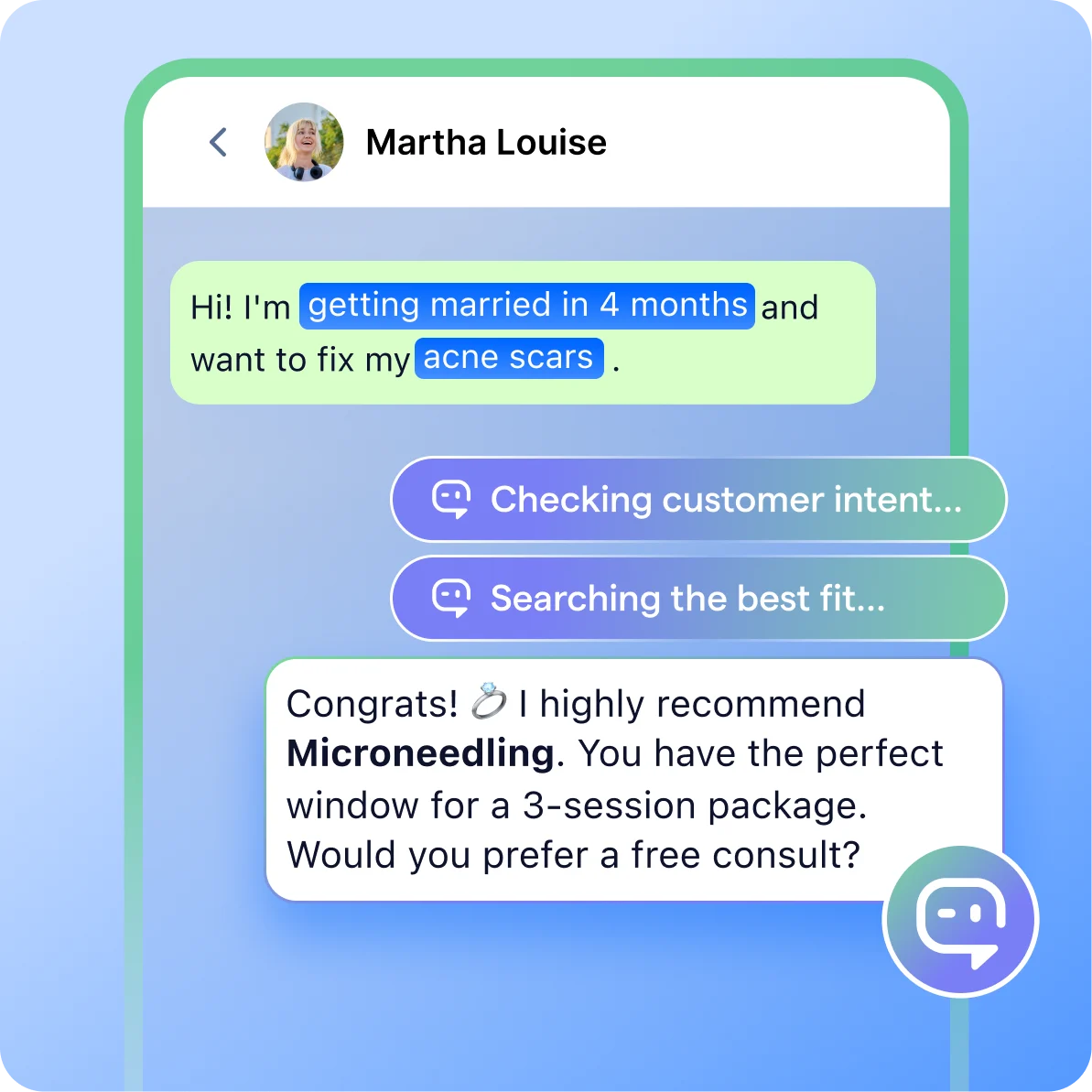
SleekFlow calls itself the AI suite for revenue-driving conversations, built for B2C brands selling, marketing, and supporting across WhatsApp, Instagram, and the other channels their customers use. Its customized AI agents work the same customer across the journey rather than only after the sale. The context stays with the customer, so founders, sales, marketing, and support all work from the same history. Around that sit a shared inbox, broadcast campaigns, ticketing, payment links, and a Social CRM holding every order against the contact. Email and VoIP are listed as coming soon.
Taylor's University ran student inquiries across 4 channels with no shared history, then reached more than 10,000 conversations in peak season. With one inbox, Salesforce connected, and AI qualifying and routing, they saw 4x higher lead-to-enrollment and cut first response 79%. Read the full case study →
Pros
AI included on paid plans under a fair use policy, with no per-resolution or per-outcome charge
WeChat, LINE, Viber, and TikTok all live, a combination only Respond.io also publishes
Conversation history, orders, and campaign membership on one contact record, shared across teams
SOC 2 Type II, ISO 27001, and ISO 42001 for AI management, all published on the trust center
Cons
Email and VoIP are listed as coming soon, so both are channels Respond.io and Trengo already run
Analytics dashboards sit on the higher tiers, not the entry one
Salesforce and custom integrations are Enterprise only
How it charges
Each plan includes a set number of users, with more as an add-on
A contact counts when you exchange messages, not when you only store or broadcast to them without a reply
AI is included on paid plans under a fair use policy, and pricing varies by market
What this means for you: handing more work to AI doesn't add a per-answer charge, which is the opposite of the tools here that bill per resolution. Your contact count still moves as you reach more people, so model that, read the fair use policy, and if your company runs on Salesforce, price out Enterprise early.
Start your free trial today
See what your workspace looks like with Pro running from day one.
4. Gorgias, best for Shopify merchants tying support to revenue
Gorgias is an e-commerce helpdesk that calls itself "the #1 Helpdesk + AI Agent built to drive sales." Its AI Agent needs a connected Shopify store to run at all, which tells you who it's built for. One half answers pre-purchase questions, the other handles order tracking, returns, and cancellations.
Pros
Deepest Shopify integration here
Genuinely helps people buy, rather than only answering questions
Guided Zendesk migration, covering macros, users, tags, and ticket fields
Cons
The AI Agent won't run without a Shopify store connected
Its security page lists SOC 2 Type II and HIPAA, not ISO 27001 or ISO 42001
How it charges
Per support ticket your team touches
Then again for every conversation the AI resolves on its own
A conversation counts as automated once 72 hours pass with no human stepping in
What this means for you: two charges running at once, both tied to order volume, so a busy quarter moves both. Ask them to model a peak month rather than an average one, and get the automation definition in writing.
5. Trengo, best for European teams that want voice and email in one inbox
Trengo is a multichannel platform out of Utrecht that puts "WhatsApp Business, email, social media, voice calls, and live chat in one inbox shared by your team." Phone is a proper channel rather than a paid extra, which is rare here.
Pros
Phone, email, and chat in one place, with phone included
Publishes how it counts a conversation, so you can plan around it
A generous block of seats is included before you pay per user
Cons
No sales pipeline product, and broadcasting is a paid add-on
Its security page lists AWS hosting and TLS, and its security document refers to ISO 27001 practices without stating certification
How it charges
Per conversation, with a set number of seats included and extra seats sold separately
AI conversations charged separately once you pass a bundled allowance
A conversation resets after 7 days, and a later message starts a new one
What this means for you: seats are generous here and conversation volume is the expensive part, which suits a small team handling a lot of long threads. The 7-day reset is the detail to model, because a slow-burning support case can count more than once.
6. Intercom, best for teams standardizing support on one AI agent
Intercom calls itself "the only helpdesk designed for the AI Agent era," built around Fin, its AI agent. You pay when the AI finishes something rather than when it tries, and the reporting is the strongest on this list. Intercom reports that Fin averages a 76% resolution rate across more than 12,000 customers, per its own published figures.
Pros
A conversation the AI can't resolve costs you nothing
Best reporting and analytics here
Long list of compliance documents, downloadable from its Trust Center
Cons
You pay per seat before AI costs anything, so hiring gets expensive fast
Add-ons are priced on top of the seat price, so total cost depends on which you take
How it charges
Per seat, before AI costs anything
Then per outcome Fin completes, one outcome maximum per conversation
Lead qualification counts as a pricier outcome than a support answer
What this means for you: a small team costs you less here, but a hard-working AI costs you more, so the better it performs the more you pay. Model it at the resolution rate you expect for your own mix of questions.
7. Zendesk, best for enterprise service organizations
Zendesk covers the whole service operation, with the most certifications and hosting regions here. Pick it when your hardest problem is procurement rather than the inbox. It publishes 9 AWS hosting regions, including Ireland, Frankfurt, and London, with a data center location add-on free on its mid tier and above.
Pros
Strongest compliance and data residency position here, by a distance
Deepest analytics and workforce planning tools
9 hosting regions, with EU and UK options
Cons
Seats and add-ons are both priced per agent, so cost rises with headcount
TikTok isn't listed among its channels
The AI rate sits on a blog post rather than the pricing page, so budgeting still means a sales call
How it charges
Per agent seat, with AI drawing from a monthly allowance that grows with seat count
Past the allowance you pay per resolution, at a rate published on their blog only
The contact center is a per-agent add-on, and so is Copilot below the top plan
What this means for you: you can estimate the AI cost from the published rate, but confirm your allowance with sales. Add up the per-agent add-ons before you compare, because the entry figure covers seats only.
What Respond.io alternatives cost, and what you're paying for
These 8 tools charge for 5 different things. Two vendors can quote you similar monthly figures and still cost very differently once your volume grows, depending on whether you grew by hiring or by winning more customers. AI is the line moving fastest: Meta counted over 1 million weekly conversations between people and business AIs on its platforms in Q4 2025.
Why this article has no prices in it. Published list prices are the least reliable number in this category. Zendesk runs separate US dollar and pound lists, Trengo lets you switch currencies, and Manychat says outright that "the price is determined by the user's billing country." SleekFlow's own pricing varies by market too. Annual and monthly rates differ, discounts stack, and every one of these pages changed within the last year. How each tool charges changes far more slowly, and that's what this article compares.
How to get a real number. Ask each vendor these four things, in writing:
What counts as one unit, exactly
What makes a contact or conversation count as active
What happens when you go over your allowance
What AI costs on top
Then give all of them the same volumes and compare the quotes. "Conversation" and "active contact" mean different things at every vendor here, and those definitions shape your invoice more than any headline price.
Which Respond.io alternative is right for you?
Start with the outcome you want this year. More qualified leads, faster first response, fewer people per thousand conversations. Each points to a different tool. Then check the channels your customers actually use, because a missing one rules a vendor out however good the rest looks. Only then look at how it charges.
Small team sending WhatsApp campaigns. Wati, for the fastest way to get a broadcast live.
Creator-led or DTC brand living in Instagram and TikTok DMs. Manychat, for the deepest comment and story
automation here.
Growing B2C brand with more conversations than the team can handle. SleekFlow, for AI agents selling and supporting across the whole customer journey, on WeChat, LINE, Viber, and TikTok, with no per-answer AI charge.
Shopify merchant. Gorgias, for the tightest link between pre-purchase questions and orders.
European mid-market where phone matters. Trengo, for built-in phone and a cap that holds seat costs flat.
Online-first, stable headcount, big queue. Intercom, to pay for answers rather than for staff.
50-plus agents with a procurement process. Zendesk, for residency, certifications, and workforce tools.
Growing by customer volume, current plans still fit, support has been good. Stay put. Moving is real work for a small gain.
If you've narrowed it to two, our SleekFlow and Respond.io head-to-head goes deeper on AI agents and CRM integration than a roundup can.
If AI is going to answer your customers first, see how an inbound AI agent handles a conversation end to end before it reaches your team.
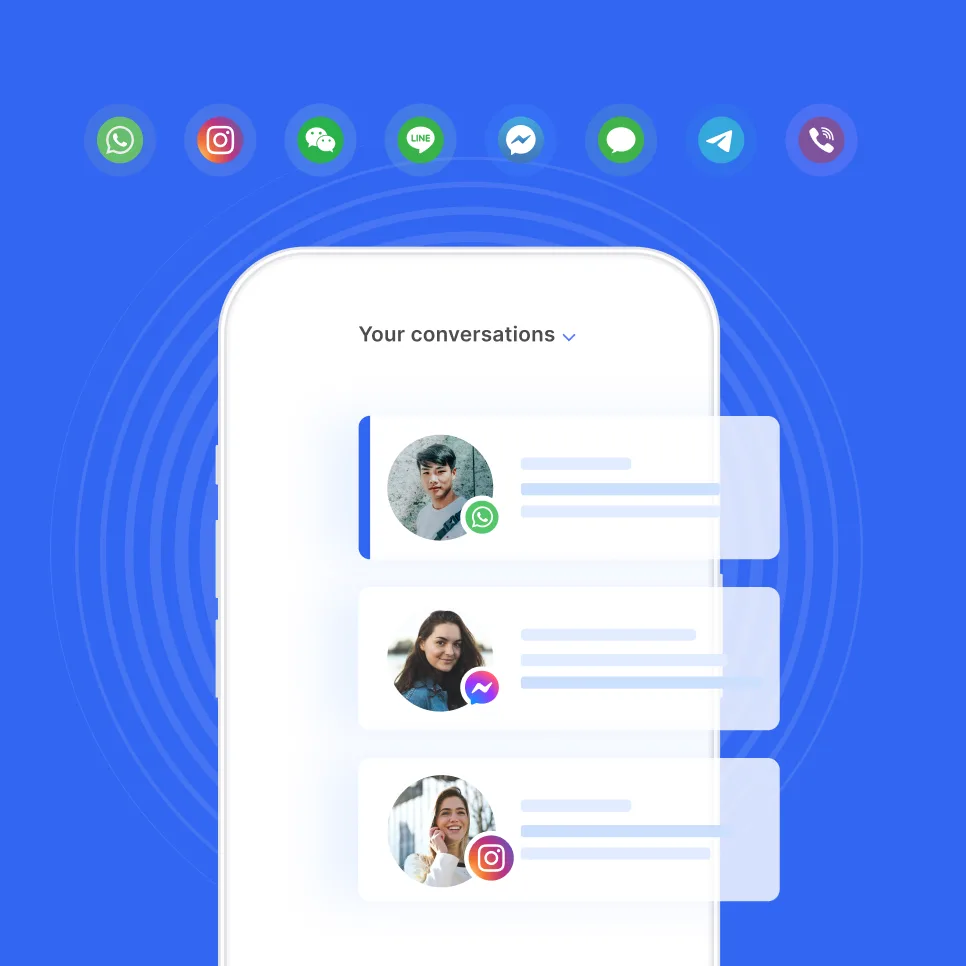
Want to outcompete your peers with SleekFlow's help?
Book your personalised demo with SleekFlow today and unlock the potential of seamless communication
Author's note: This roundup reflects SleekFlow's assessment and is for general information. Product details are accurate to the best of our knowledge at the time of publishing, drawn from each provider's public information, and change often, so verify the latest with each provider directly. We may update this article from time to time. Opinions are our own. Think we've got something wrong? Contact us and we will review and correct it promptly.
Frequently Asked Questions
What is the best Respond.io alternative?
Which Respond.io alternative is best for a mid-market team?
Is Respond.io priced per user or per contact?
Which platforms include AI instead of charging per reply?
Which platforms support TikTok messaging?
How hard is it to move off Respond.io?
Recommended for you


