SleekFlow vs Respond.io: which is better for B2C brands that want to run on AI?


TL;DR: Quick Summary
- SleekFlow is a better fit for brands turning chats into carts with in-chat recommendations and payment links. Respond.io is a better fit for brands needing the widest channel list and inbound voice AI.
- SleekFlow goes deeper on turning conversations into revenue: an AI agent that recommends products, builds carts, and shares payment links in chat, plus an Optimization Hub that improves the AI over time.
- SleekFlow keeps native Shopify commerce and two-way sync with Salesforce, HubSpot, and Zoho in-platform; Respond.io routes e-commerce and CRM write-back through tools like Zapier, Make, or n8n.
- Respond.io covers the most ground: the widest channel list, unlimited contacts on its entry Starter plan, mature inbound voice AI, and 24/7 human and AI support on every plan, per its own pages.
- It often comes down to where your conversations end: in a cart, or on a call.
Author's note: this comparison reflects SleekFlow's assessment; details and pricing are accurate as of 10 Jul 2026 and change often, so verify with each provider. Full note below.
If you're a B2C brand deciding where to run your customer conversations on AI, SleekFlow and Respond.io will probably have made your shortlist. They're both AI-driven customer conversation platforms, and in our view, the biggest difference between them is depth vs reach.
Both brands describe themselves in their own words. Respond.io calls itself an AI-powered customer conversation management platform for fast-growing B2Cs; SleekFlow calls itself the AI suite for revenue-driving conversations. Both bring WhatsApp, Instagram, and other channels into one team inbox and add automation and AI agents so you can capture, qualify, and convert customers in one place. In our view, the honest way to choose is by focus.
SleekFlow's built to turn conversations into revenue with AI. It's a WhatsApp-first commerce platform with native Shopify (and VTEX) support: an AI agent that recommends products and closes the sale in chat, two-way sync with Salesforce, HubSpot, and Zoho, and a loop that audits and improves the AI. For a B2C brand that wants to run on AI to sell, that's the point, and it's also strong across APAC channels like LINE, WeChat, and Viber.
Respond.io's built for the broadest reach: the widest channel list (including WhatsApp and Messenger calls), a mature inbox, unlimited contacts on the entry plan, and round-the-clock live support.
SleekFlow vs Respond.io: side-by-side comparison
Which platform's AI agents can drive more revenue?
In our view, SleekFlow's AI agents do more for commerce and Respond.io's do more for voice. Both ground answers in retrieval over your approved knowledge sources, take native actions like assigning conversations and updating contact fields, make HTTP requests to outside systems, and process images, PDFs, voice notes, and audio. The difference is what each one's built to close.
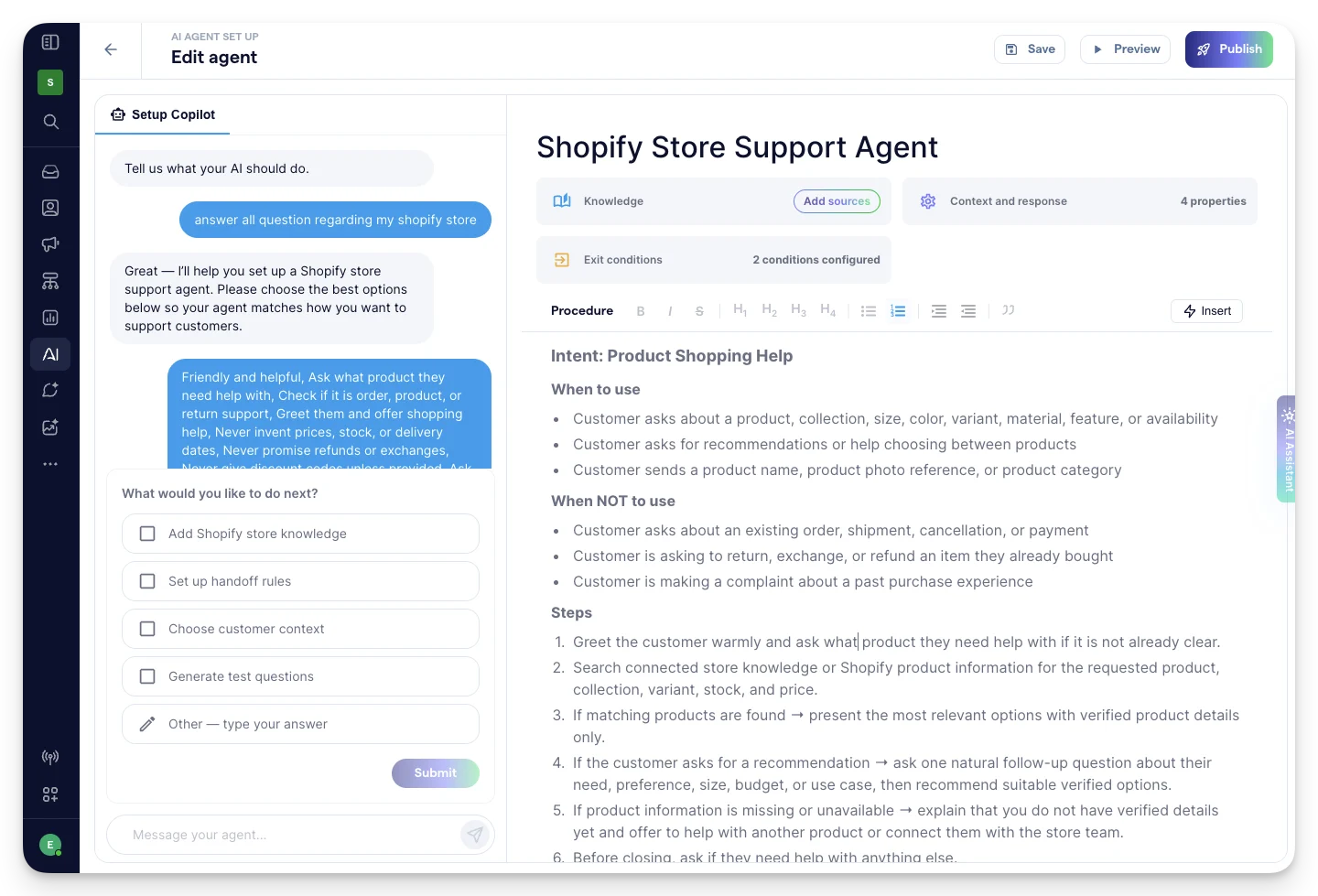
SleekFlow's agents lean into commerce. In AgentFlow, an agent connects to your Shopify store, pulls live catalog and order data, and recommends products mid-conversation. Lead scoring is a native action, and the same agent can build a cart and share a payment link inside the chat.
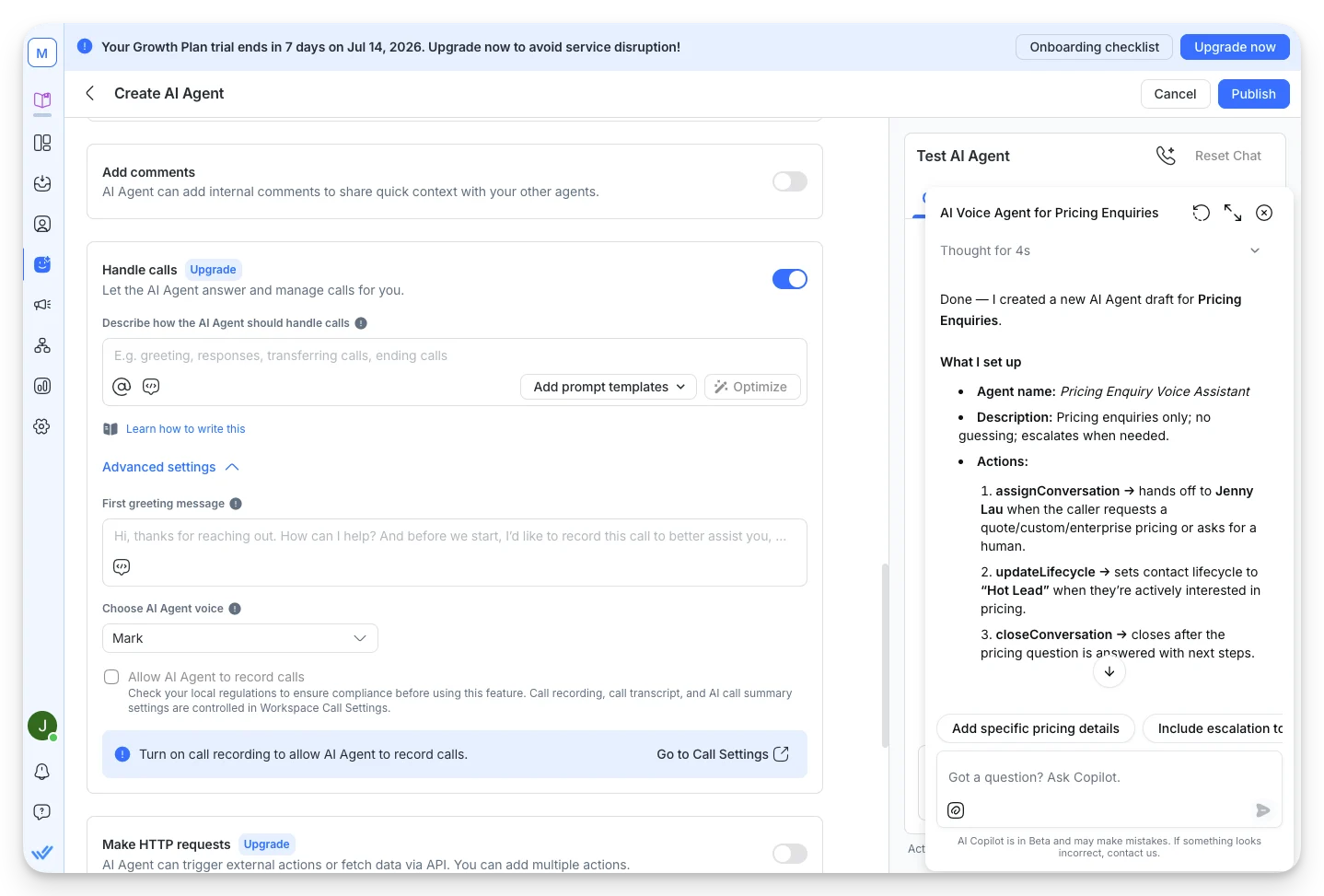
Respond.io's agents lean into voice. Its Handle Calls action answers inbound WhatsApp, Messenger, and VoIP calls in 32 languages, produces transcripts and summaries, and can transfer to a human mid-call. Per Respond.io's Handle Calls help doc, live call handling needs the Advanced plan or above, works on inbound calls only, and caps each call at 3 minutes. Those limits matter if voice is your main use case, but the capability is real and, in our view, further along than SleekFlow's on voice.
So these agents are strong in opposite directions. If your conversations end in a purchase, SleekFlow's commerce actions do more; if they happen on a call, Respond.io's do.
Which platform is easier to test AI agents on?
Both let you test an agent before it goes live, and SleekFlow adds automatic test-case generation. Each gives you a testing chat window and structured debugging, so you can see the information source and the actions the agent took.

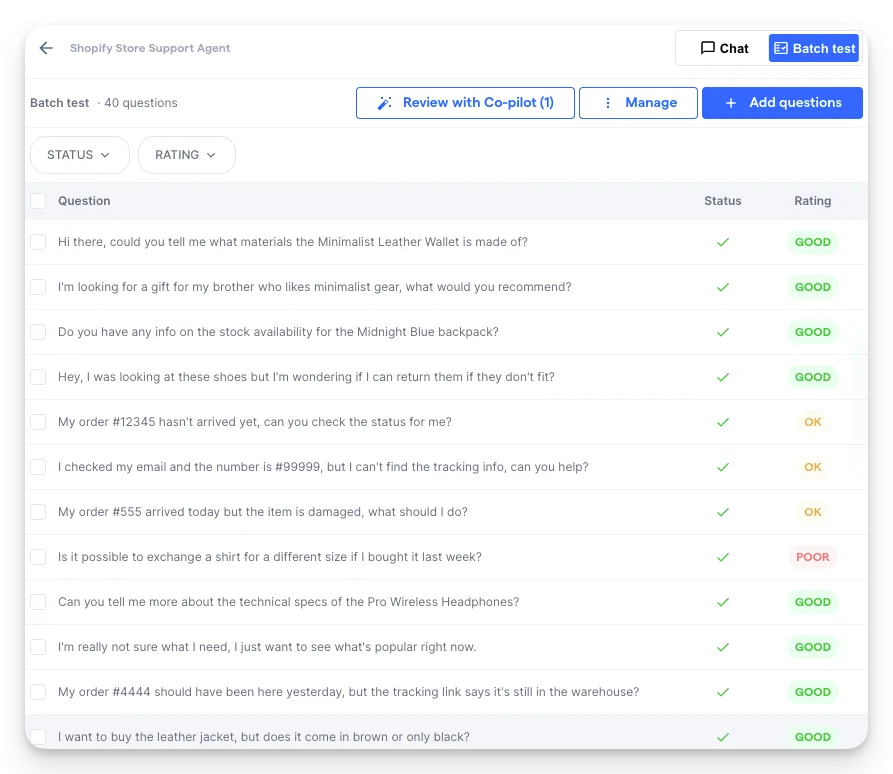
For a large customer base with a wide range of inquiries, SleekFlow auto-generates a batch of test questions you can run together, instead of writing test cases one at a time. It's a small thing that matters more the messier your real traffic is.
Which platform is easier to improve AI agents on over time?
SleekFlow has a built-in audit loop; Respond.io, in our view, leans on you to build one. The cost of running an AI agent isn't only building it. It's the audit loop: why did it say that, and how do we stop it from saying that again?
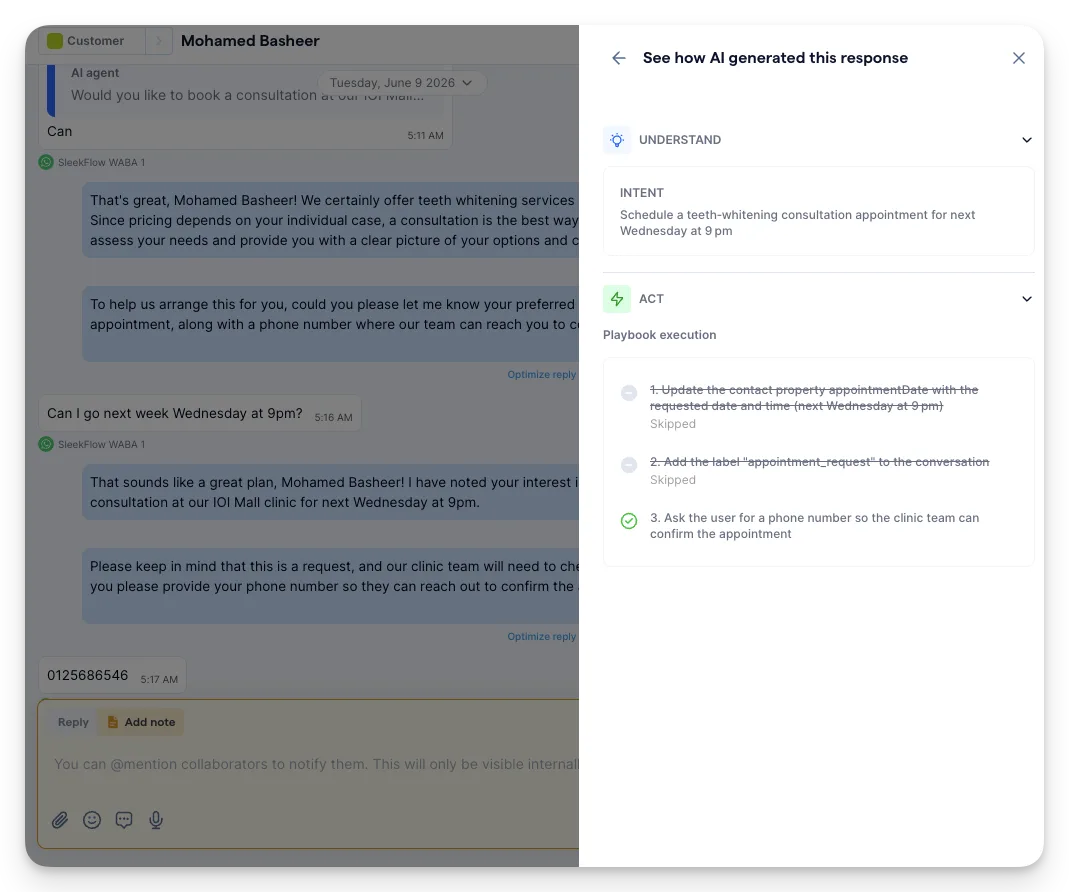
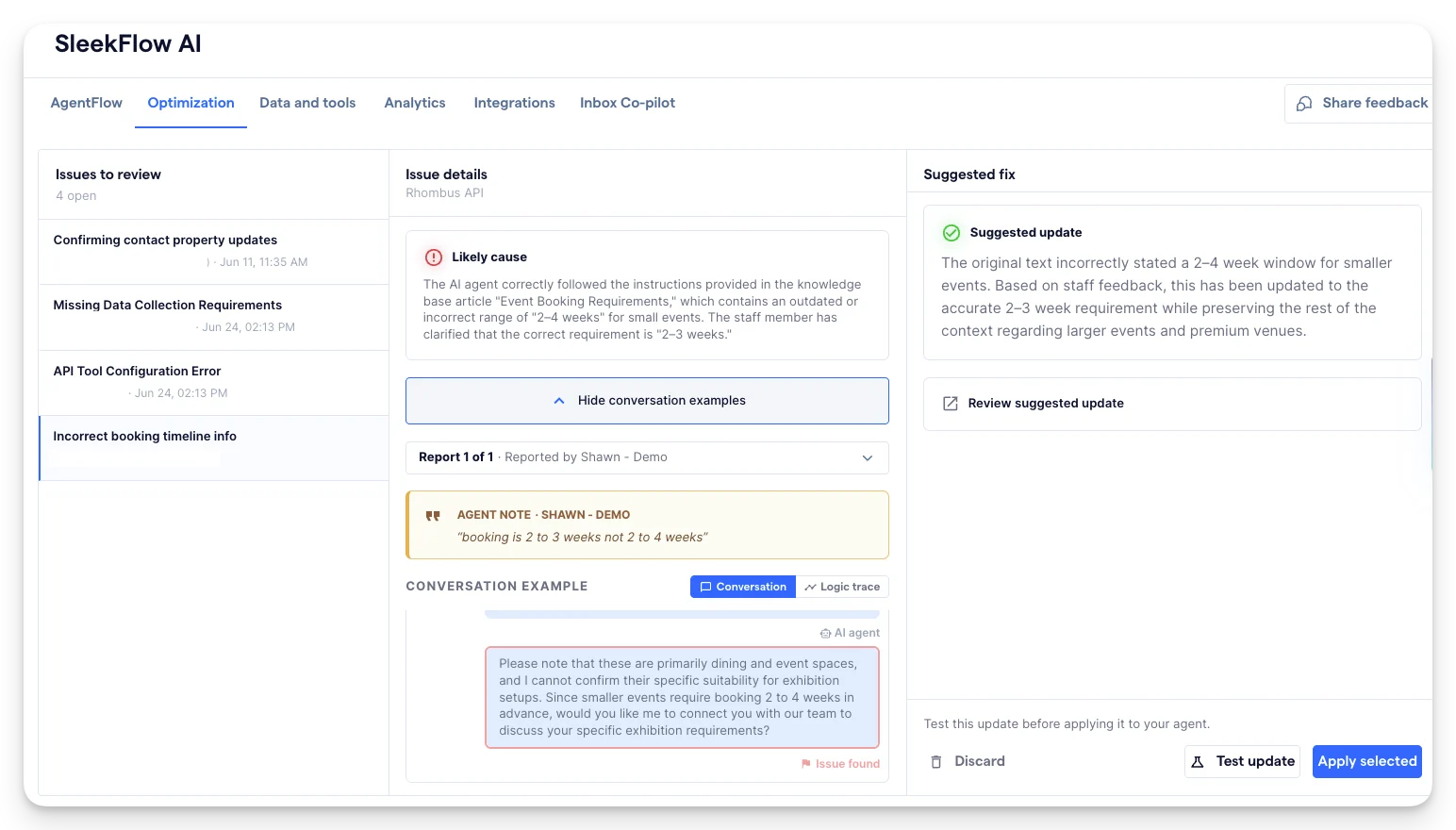
SleekFlow's answer is the Optimization Hub. Every AI response shows its trail: the knowledge article it referenced, the playbook step it followed, and how it read the customer's intent. When an answer's wrong, you can see which knowledge or setup caused it. The system analyzes conversations across the workspace, flags knowledge gaps and misunderstandings, and surfaces the fix as a one-click update for a human to approve. Good human replies feed back into the agent's memory as examples.
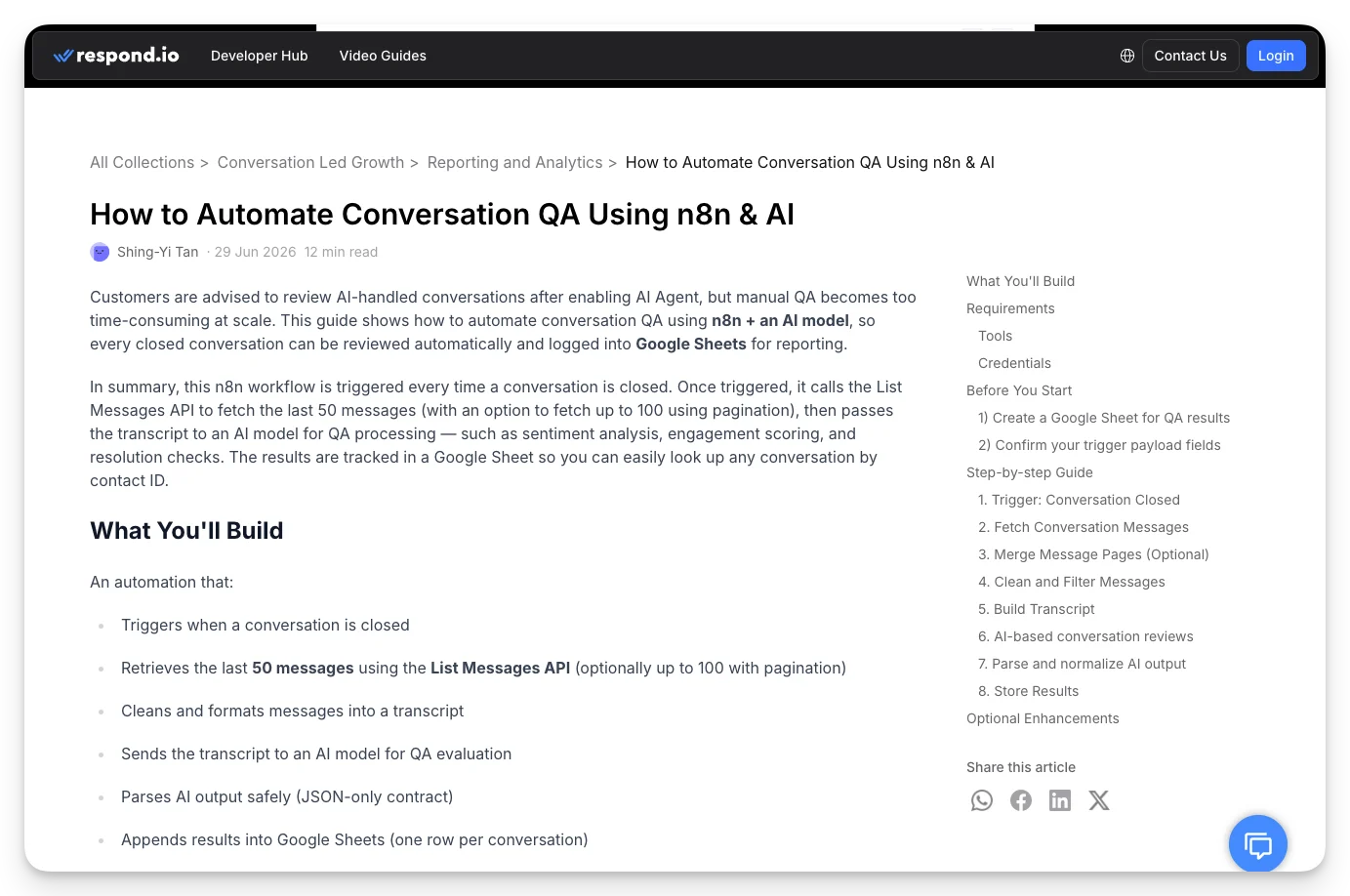
Respond.io's own guide to reviewing AI conversations at scale recommends building a QA pipeline with n8n and an AI model that pulls the transcript and scores it. That works, and it's flexible. The trade-off is that the audit loop becomes a small internal project rather than a feature you switch on, and the insight lives outside the platform.
Which platform offers better analytics?
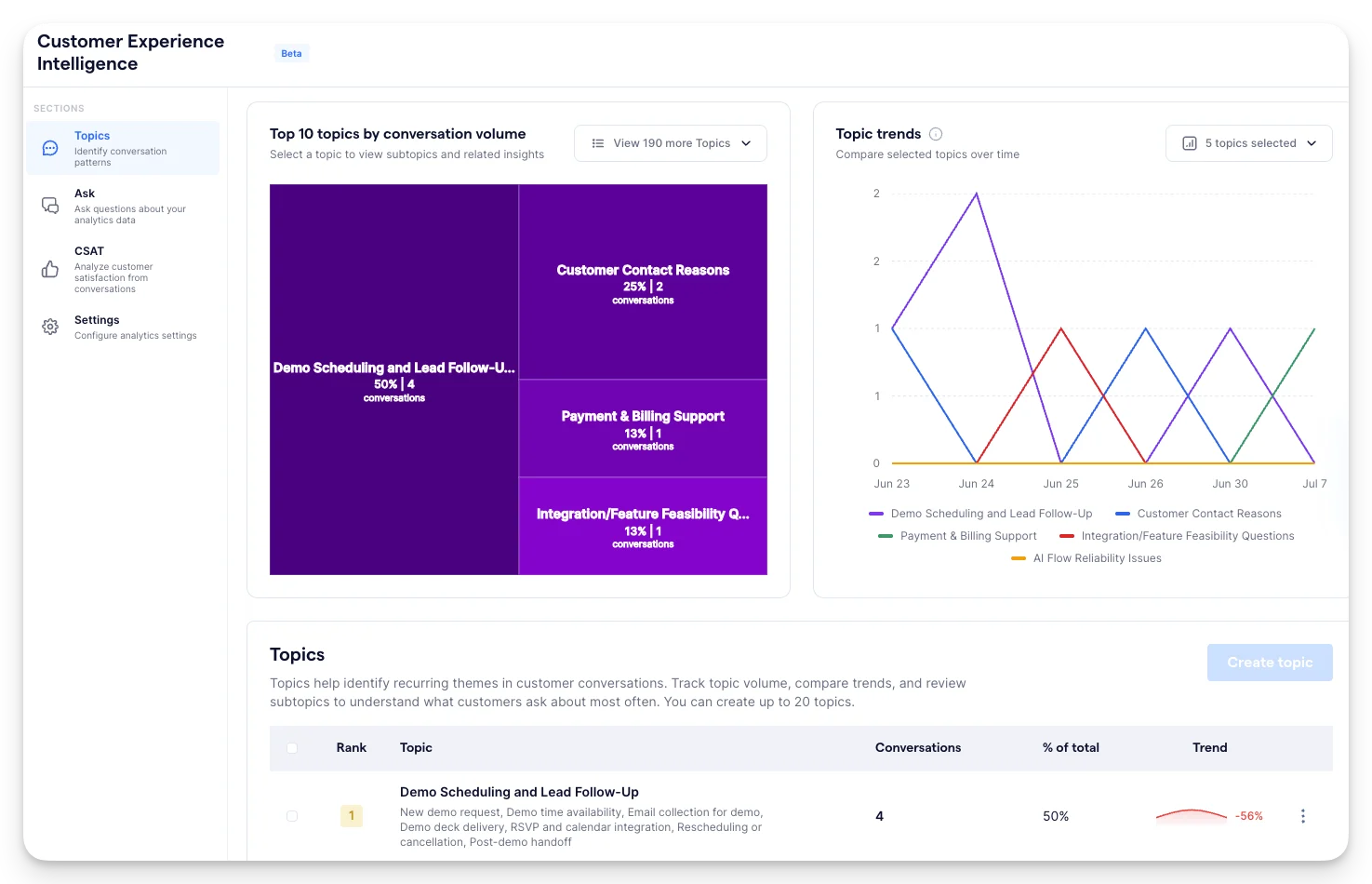
In our view, the two lean in different directions: SleekFlow toward reading what was said, Respond.io toward reporting what happened. SleekFlow applies AI CX Intelligence to every conversation across the workspace instead of only counting them. The Topic dashboard detects recurring themes on its own and flags the ones gaining frequency, so a rising trend surfaces before it shows up in sales numbers.
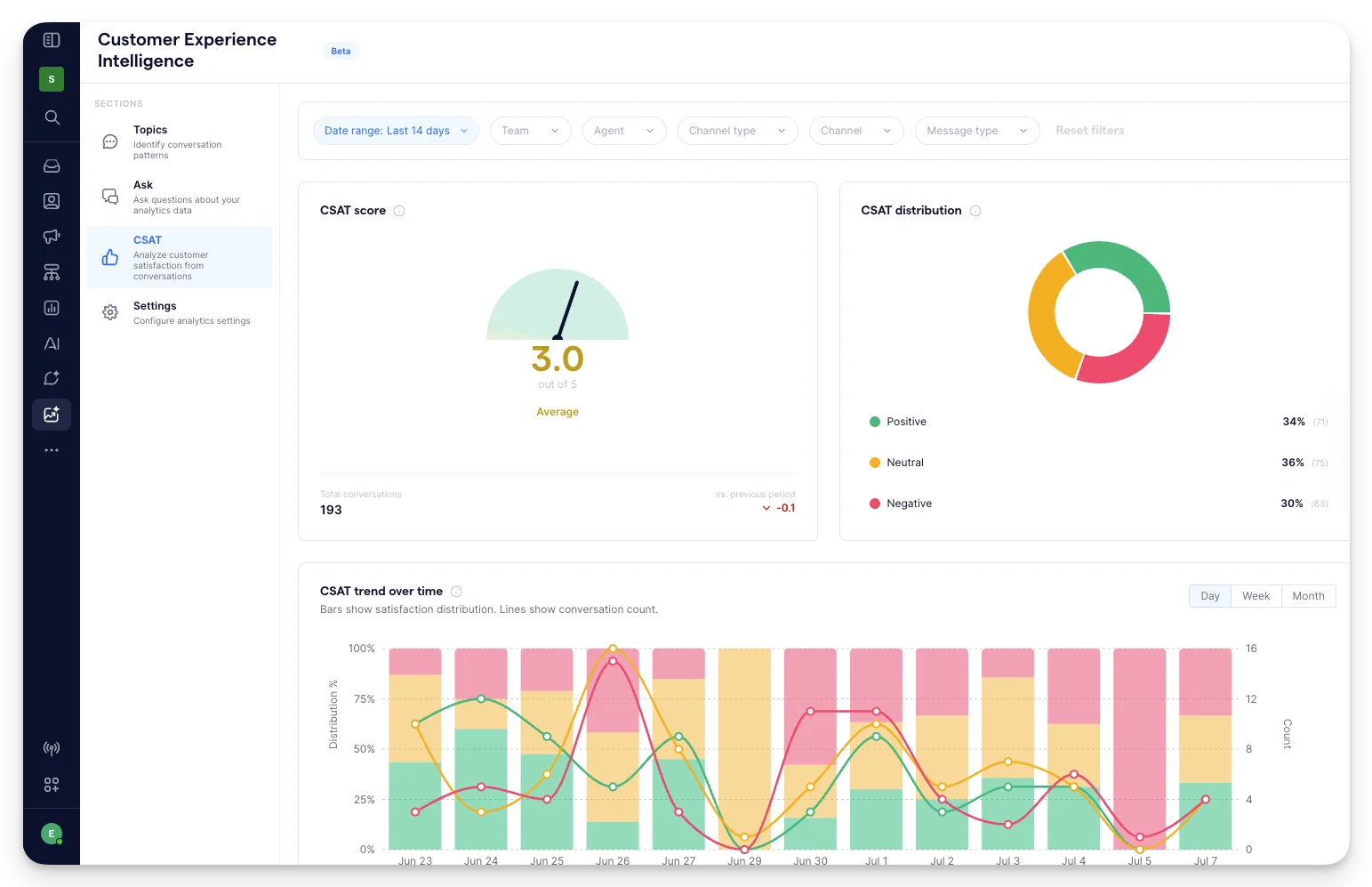
The CSAT dashboard scores satisfaction on every conversation with AI and no survey, so you read sentiment across all customers rather than the few who fill in a form.
An Ask AI feature lets anyone ask, in plain language, where deals drop off or which complaints are climbing, and get back charts without building a report by hand.
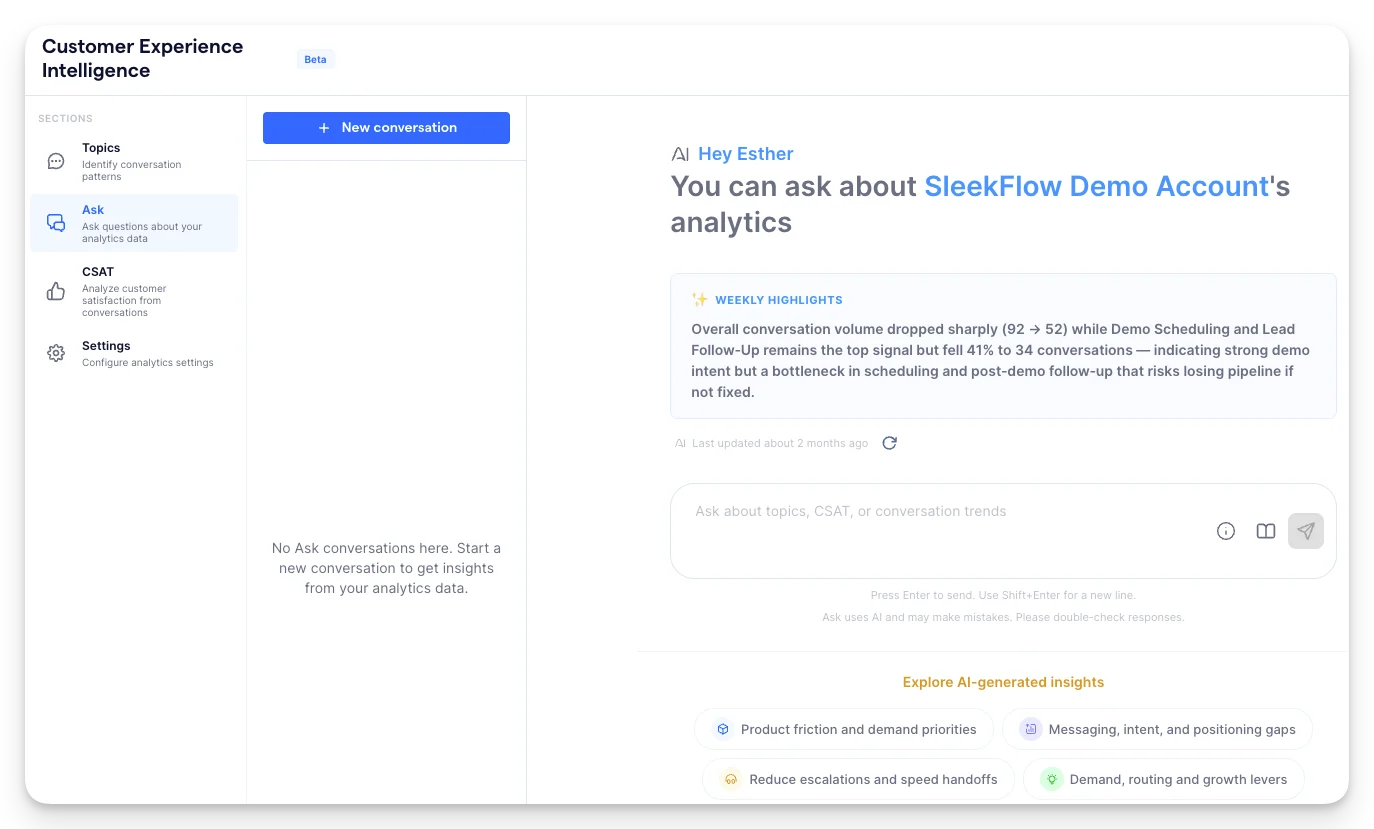
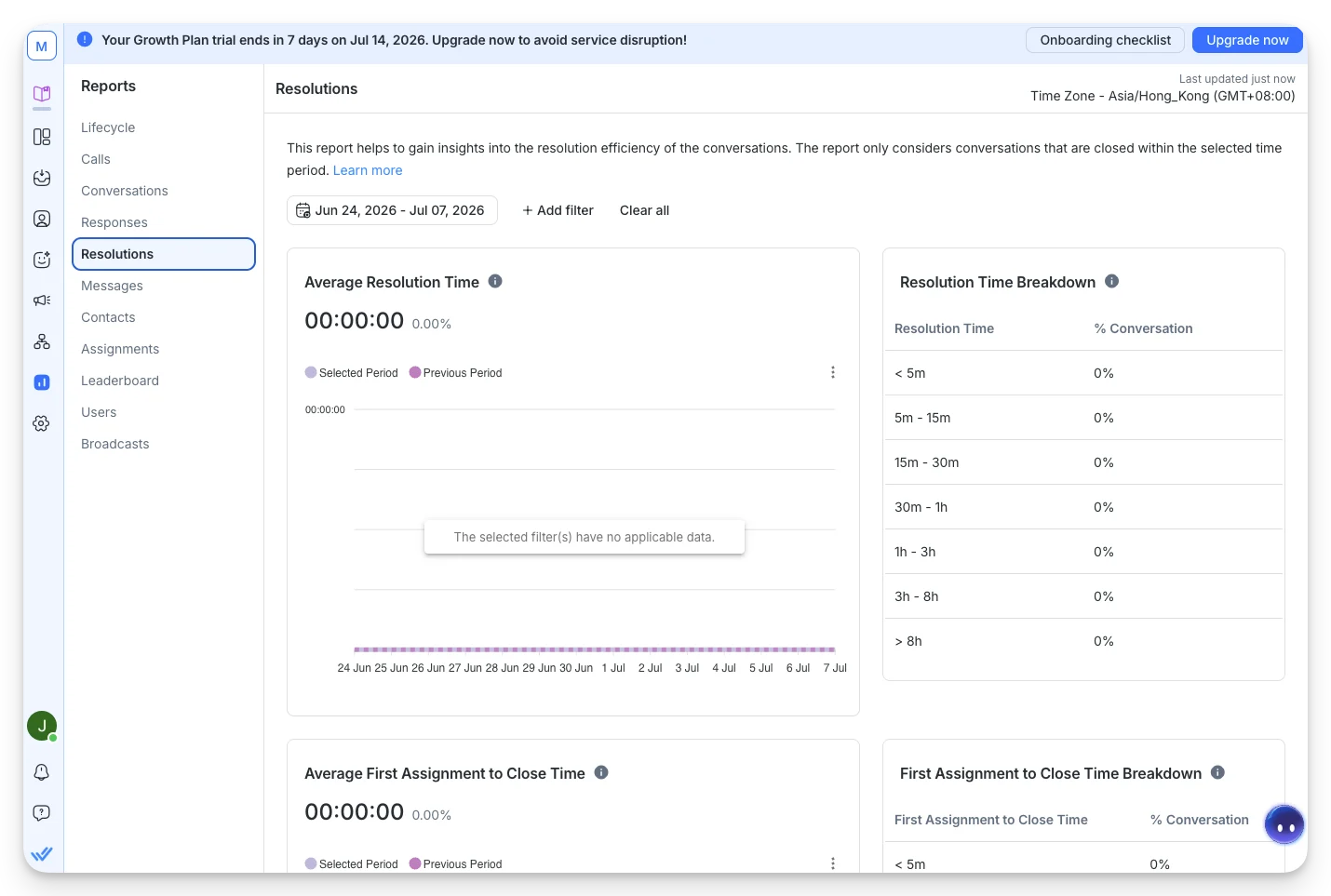
Respond.io has a mature reporting module: it tracks response times, ad and broadcast performance, conversions, and lifecycle stages, and for many teams, that's enough. As we see it, reporting counts conversations and intelligence reads them; both are useful.
Which platform captures website leads more flexibly?
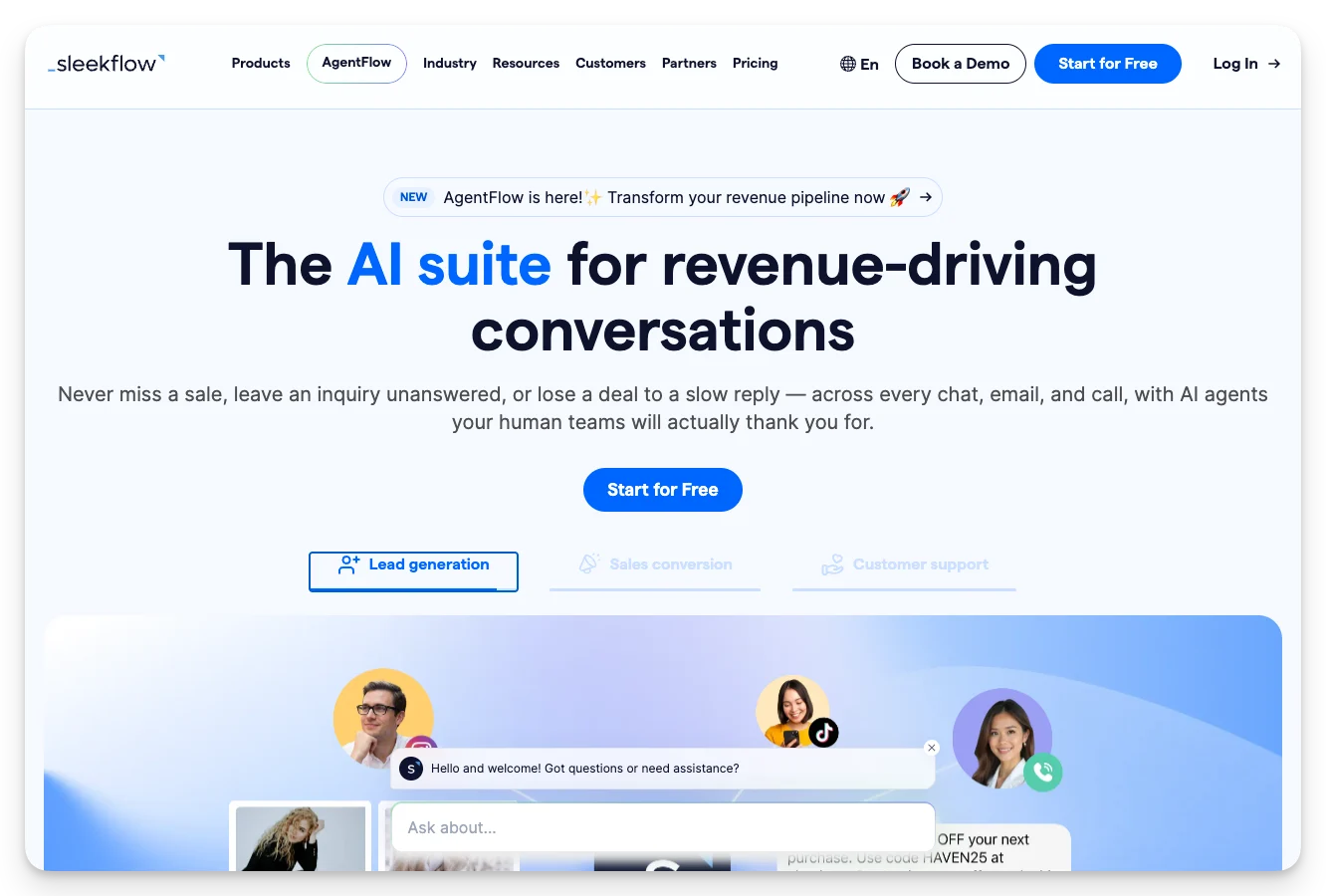
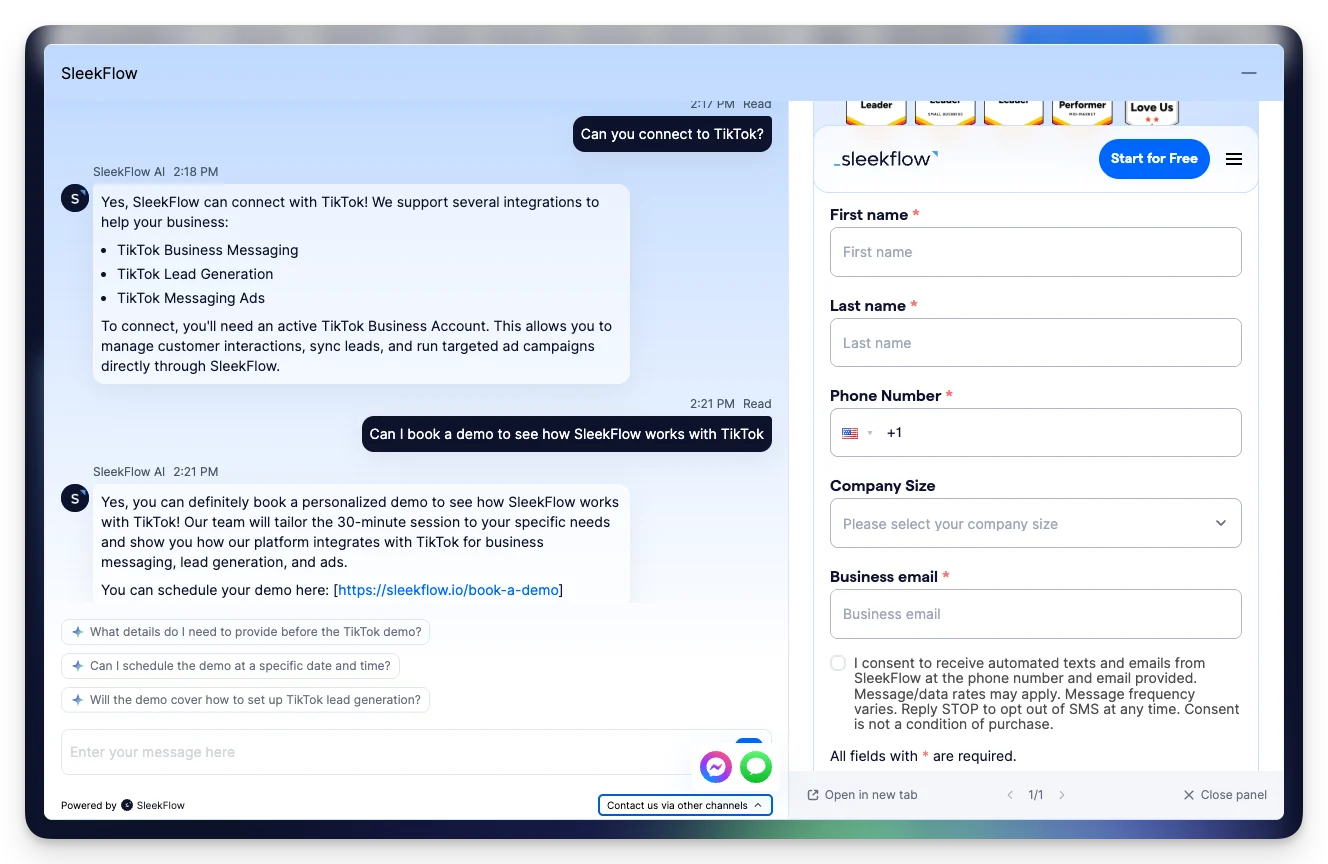
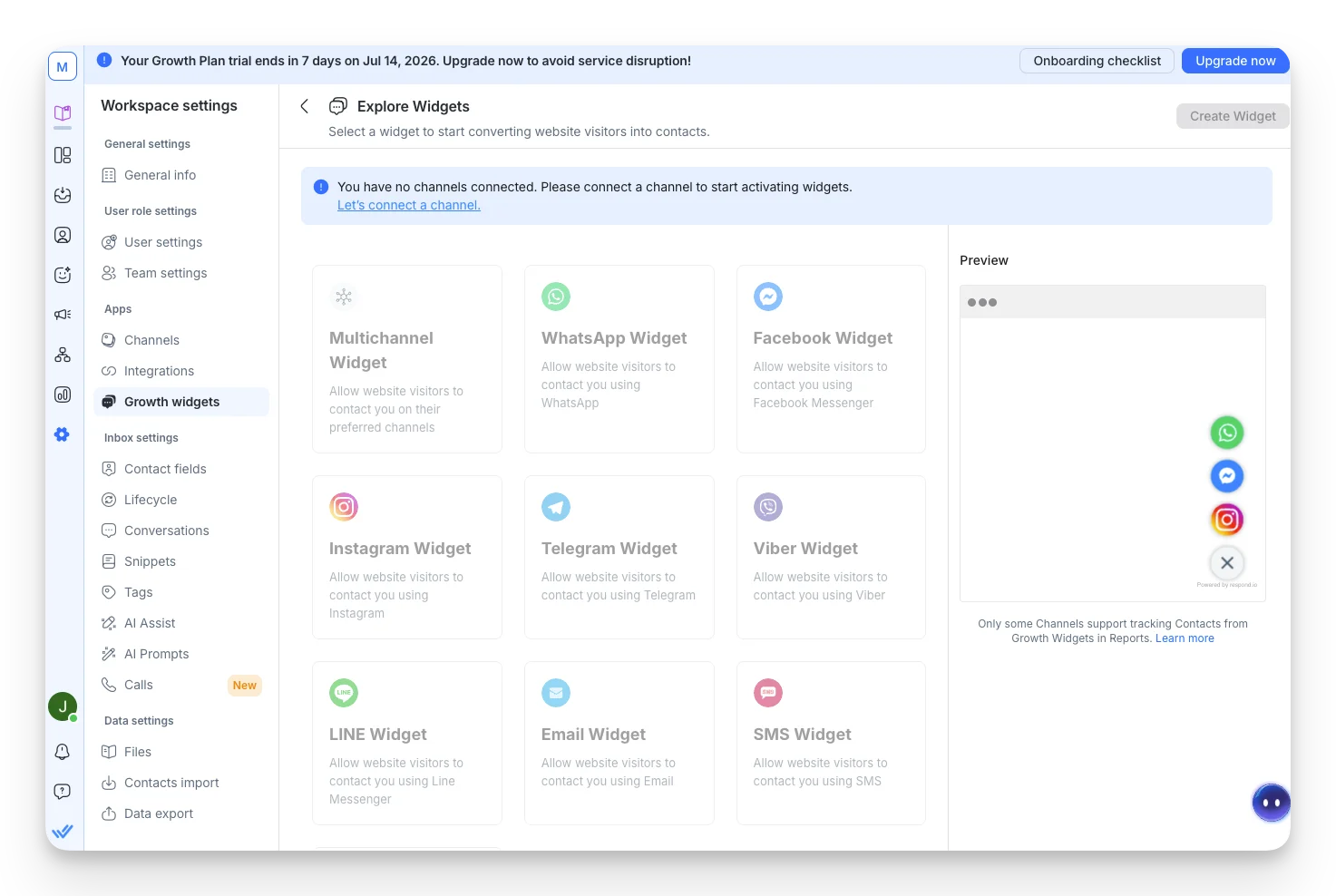
Both widgets can proactively prompt visitors, so the real difference, in our view, is what happens next. SleekFlow's AI Growth Widget can sit in the corner as a familiar widget, or run in a navigator mode that behaves like an AI shopping assistant, greeting and guiding visitors as they browse.
That navigator mode does two things that turn a browser into a lead. First, the AI moves people through the site: visitors chat with the agent on the page, and it surfaces links in a side panel so it can send someone straight to the right product. Second, a visitor can switch to their preferred messaging app mid-chat, and because the whole thread lives in one contact profile, the history carries over.
Respond.io's Growth Widget embeds a multi-channel widget so visitors can reach you through their preferred messaging app, and it can show a pop-up greeting a few seconds after the page loads to prompt a conversation. Where it stops, in our view, is acting as an AI assistant that walks a shopper through the site; it's light and easy to install.
Which platform integrates with your CRM more seamlessly?
SleekFlow syncs more objects, in both directions, across more platforms. It syncs, views, and edits external CRM properties across Salesforce, HubSpot, and Zoho.
Respond.io's native CRM integrations center on the contact record: you view contact fields inside Respond.io and can edit them, with changes pushing back to the CRM, and new CRM contacts are created in Respond.io automatically. Sending a new Respond.io contact the other way, into the CRM, relies on Zapier or Make.
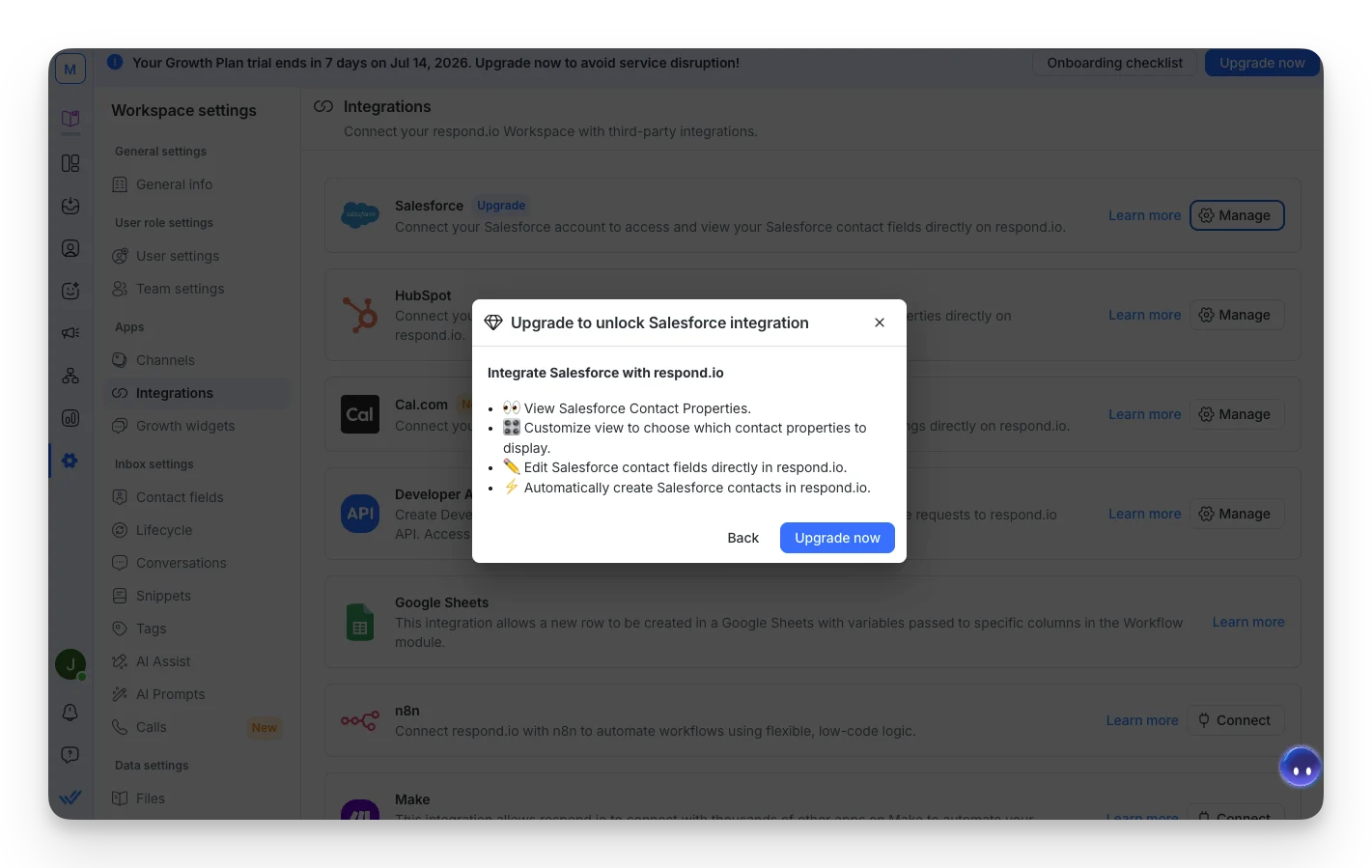
Here's the shape of the difference.
The last row matters most, and it deserves its own section.
Which platform scales better with automation?
SleekFlow reaches CRMs with pre-built nodes; Respond.io uses hand-built webhooks. The point of a CRM sync is rarely the sync itself. It's the automation you build on top of it: when a new lead appears in Salesforce, send a WhatsApp message. That's where SleekFlow's Flow Builder and Respond.io's Workflows diverge.
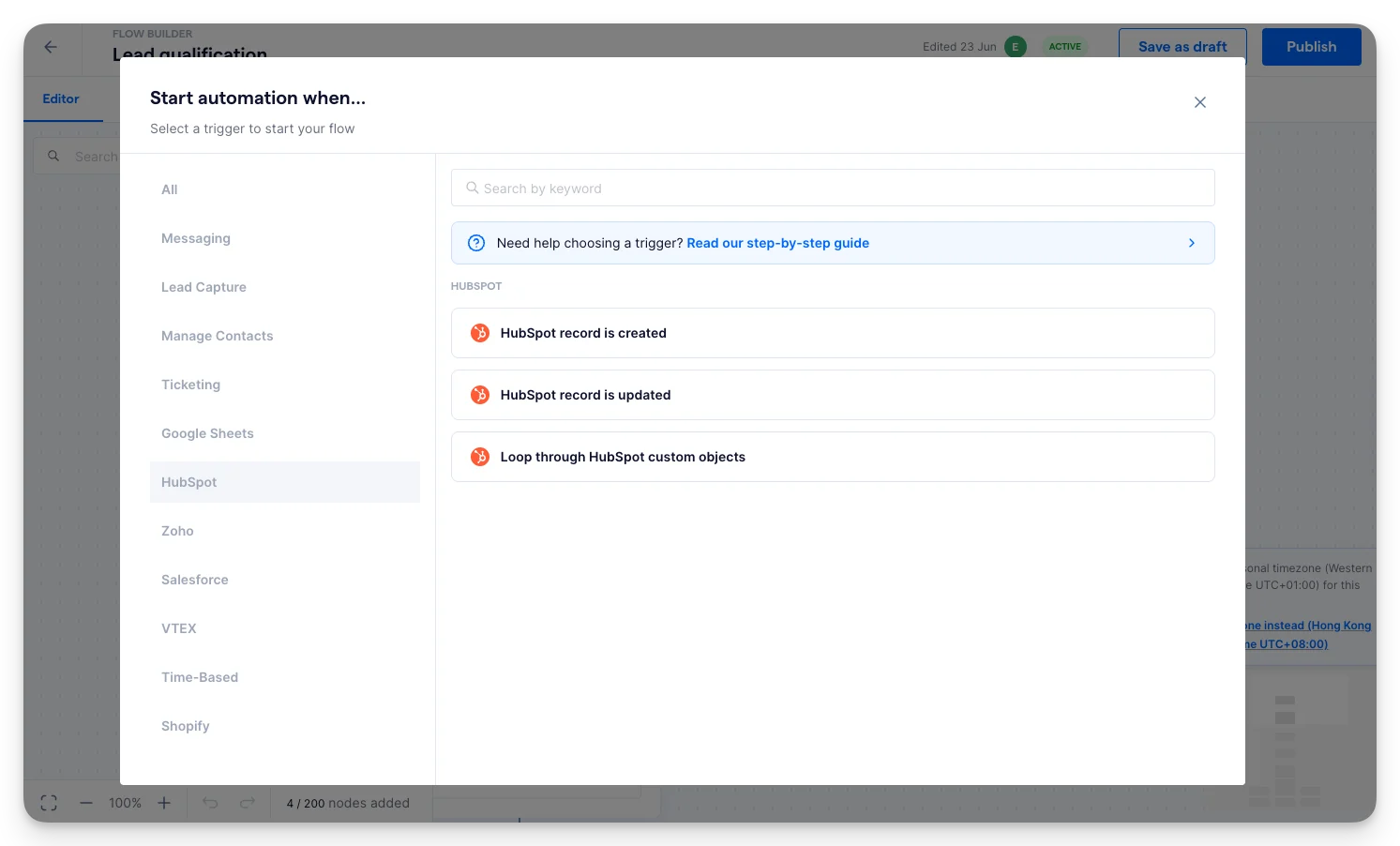
In SleekFlow's Flow Builder, a trigger like "a new record is created in Salesforce" is an item you pick from a list, and writing back is a node to search, create, or update a record, without a hand-built API call.
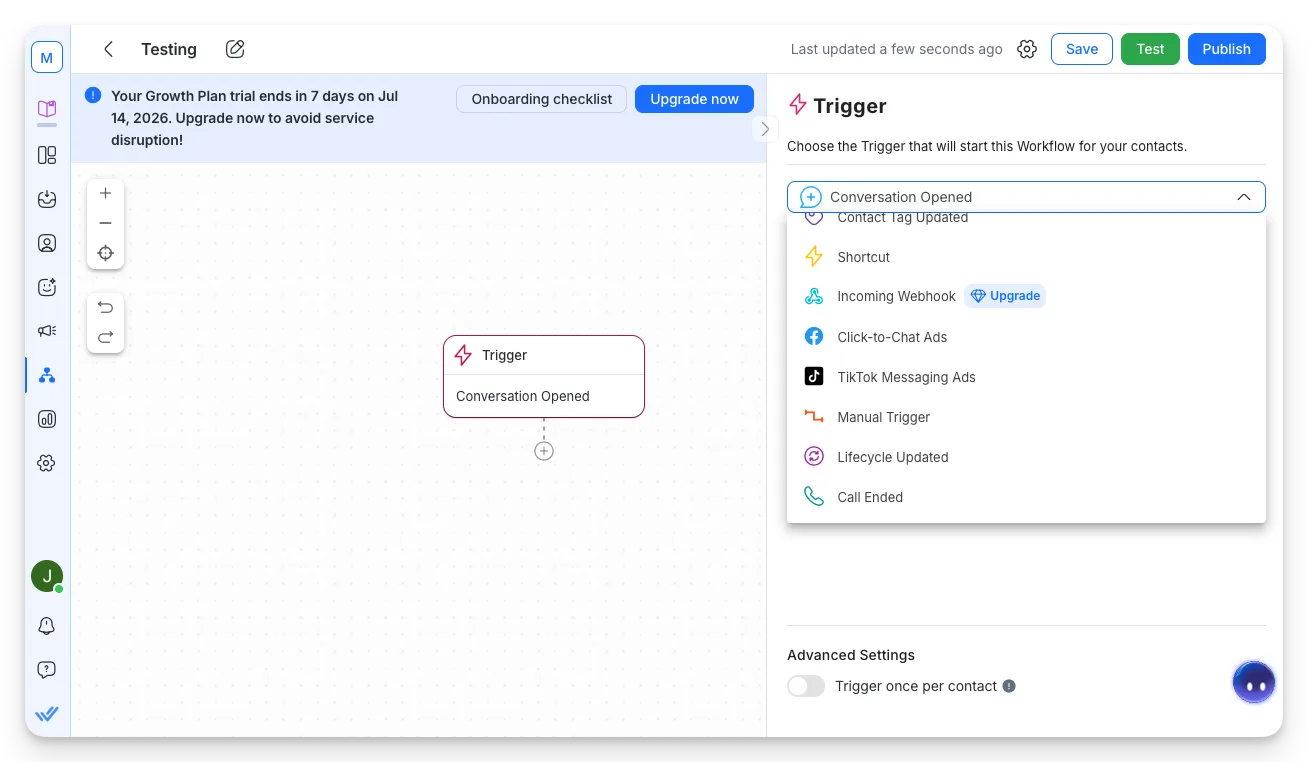
Respond.io connects generically: you use the incoming webhook trigger (Respond.io generates a URL, you point your CRM at it, then map the payload), and to write back, you build the HTTP request yourself. It works when your CRM supports outgoing webhooks, but it takes webhook and API knowledge to set up and maintain. Both reach the same systems; the difference is whether a marketer can build it this afternoon or has to file a ticket for a developer.
Which platform is better for e-commerce?
SleekFlow has native Shopify; Respond.io routes commerce through middleware. For e-commerce teams, the platform should touch the catalog and the order, not only the conversation.
SleekFlow has a native Shopify integration (plus VTEX). Your catalog syncs automatically, human agents see order history alongside the conversation, and AI agents can build carts and send payment links in chat. That makes a clean loop possible end-to-end: a customer abandons a cart, SleekFlow triggers a WhatsApp follow-up, and the payment link lands in the same thread with the order data already in view.
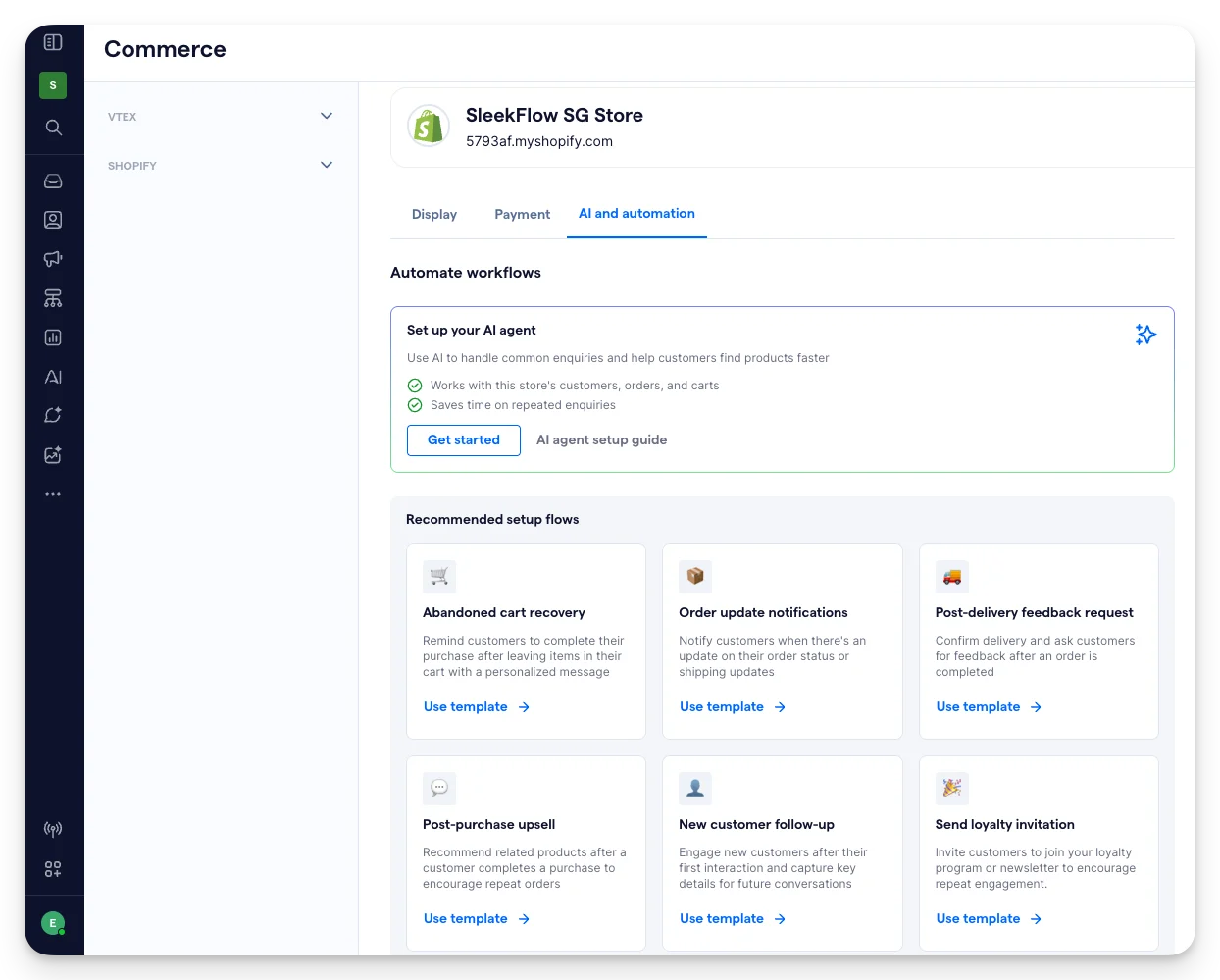
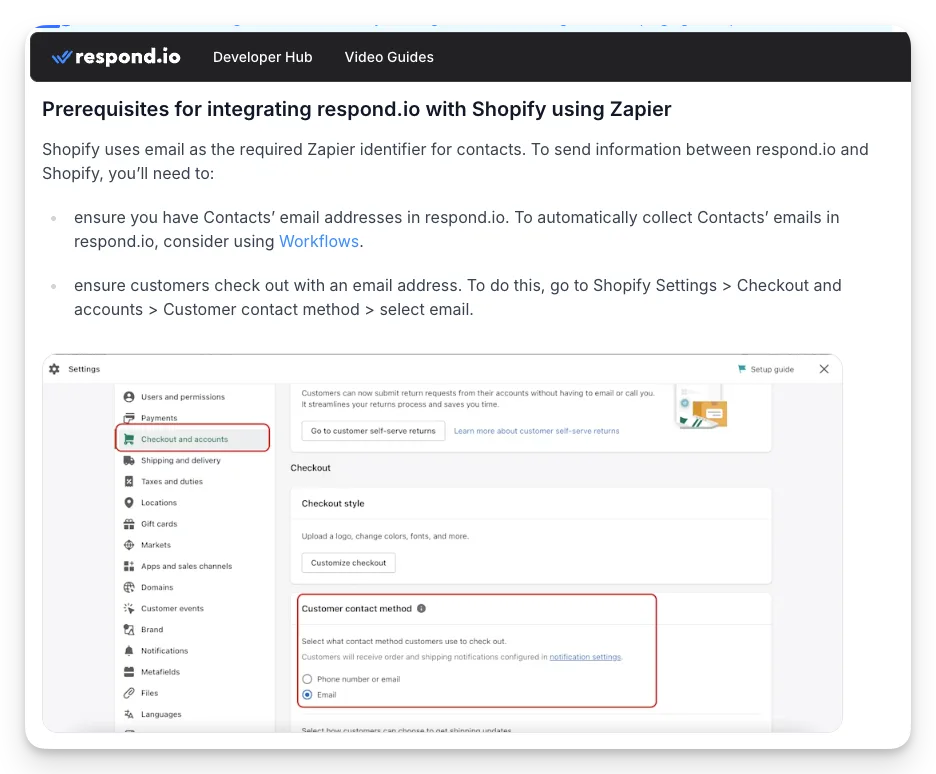
Respond.io has no native Shopify integration; its docs route e-commerce through Zapier, so order sync, contact data, and abandoned-cart events depend on middleware you build and maintain. It works, and many teams run it that way, but it adds a setup layer and cost between the store and the conversation. This is the sharpest line between the two: if you sell on Shopify, SleekFlow keeps commerce native, and Respond.io doesn't.
Which platform makes WhatsApp Business API onboarding easier for mid-sized teams?
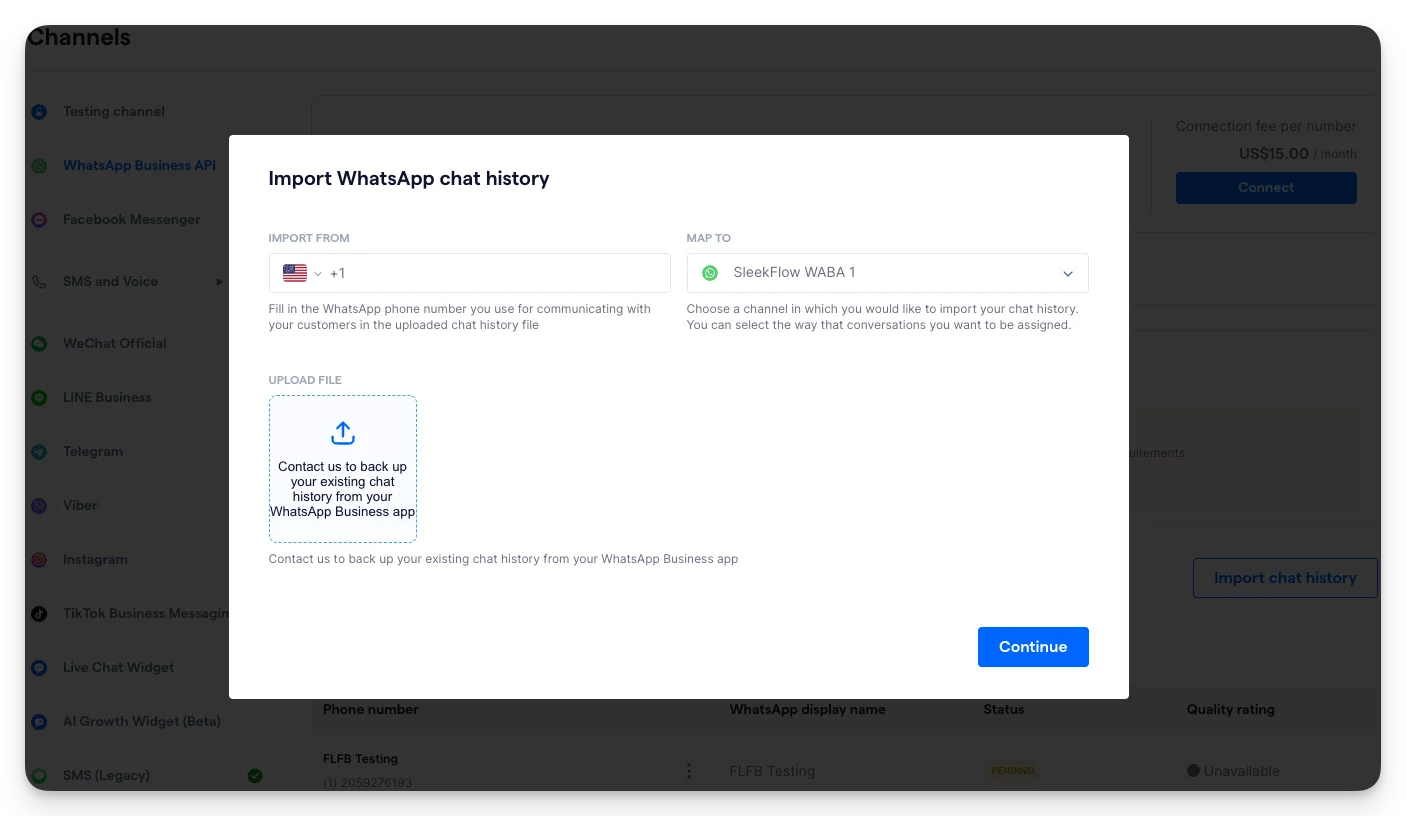
SleekFlow can import past WhatsApp chats into the API; Respond.io can't. SleekFlow documents a backup-and-import path that softens the transition for businesses moving from the personal WhatsApp app or the WhatsApp Business App to the WhatsApp Business API. For businesses onboarding through the Coexistence method, SleekFlow can migrate all contacts and up to 6 months of chats into the API.
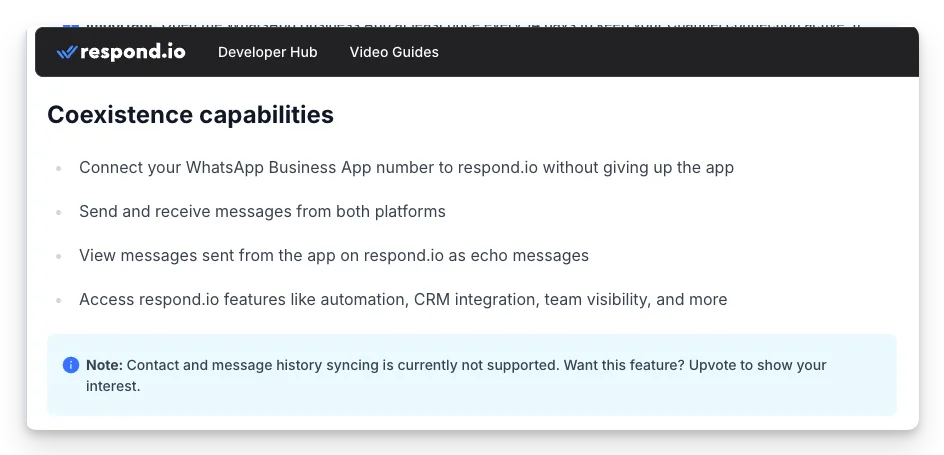
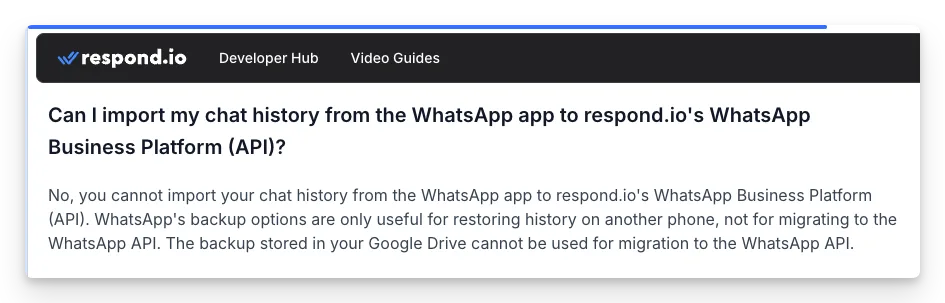
Respond.io's documentation is clear that you can't import chat history from the WhatsApp app into the WhatsApp Business API, whether you migrate from the personal app or use Coexistence. In fairness, this is partly a WhatsApp Business API constraint that affects WhatsApp Business Solution Partners broadly; still, the old history doesn't come with you when you upgrade.
Which platform makes it easier to maintain customer data?
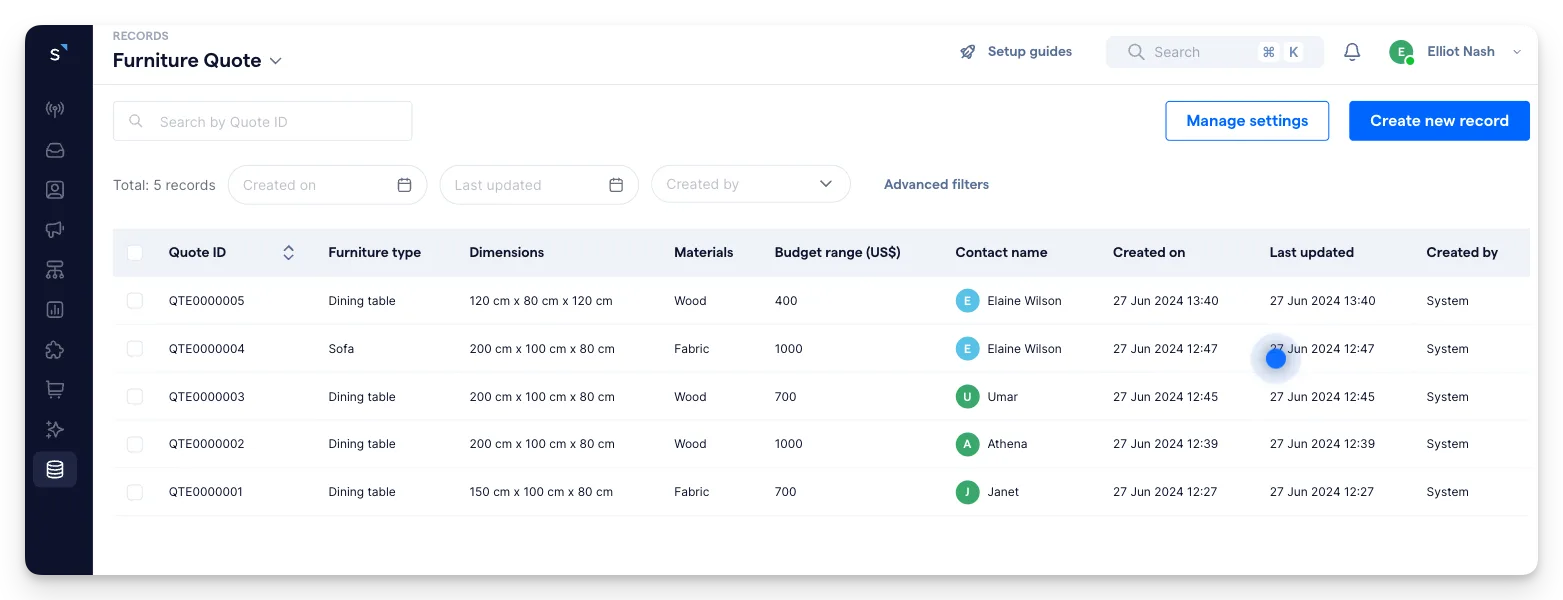
SleekFlow supports custom objects; Respond.io's data model centers on contact fields (standard and custom fields). SleekFlow lets you model data that doesn't fit a standard contact record, like bookings, policies, or subscriptions, and reference it in conversations and automations.
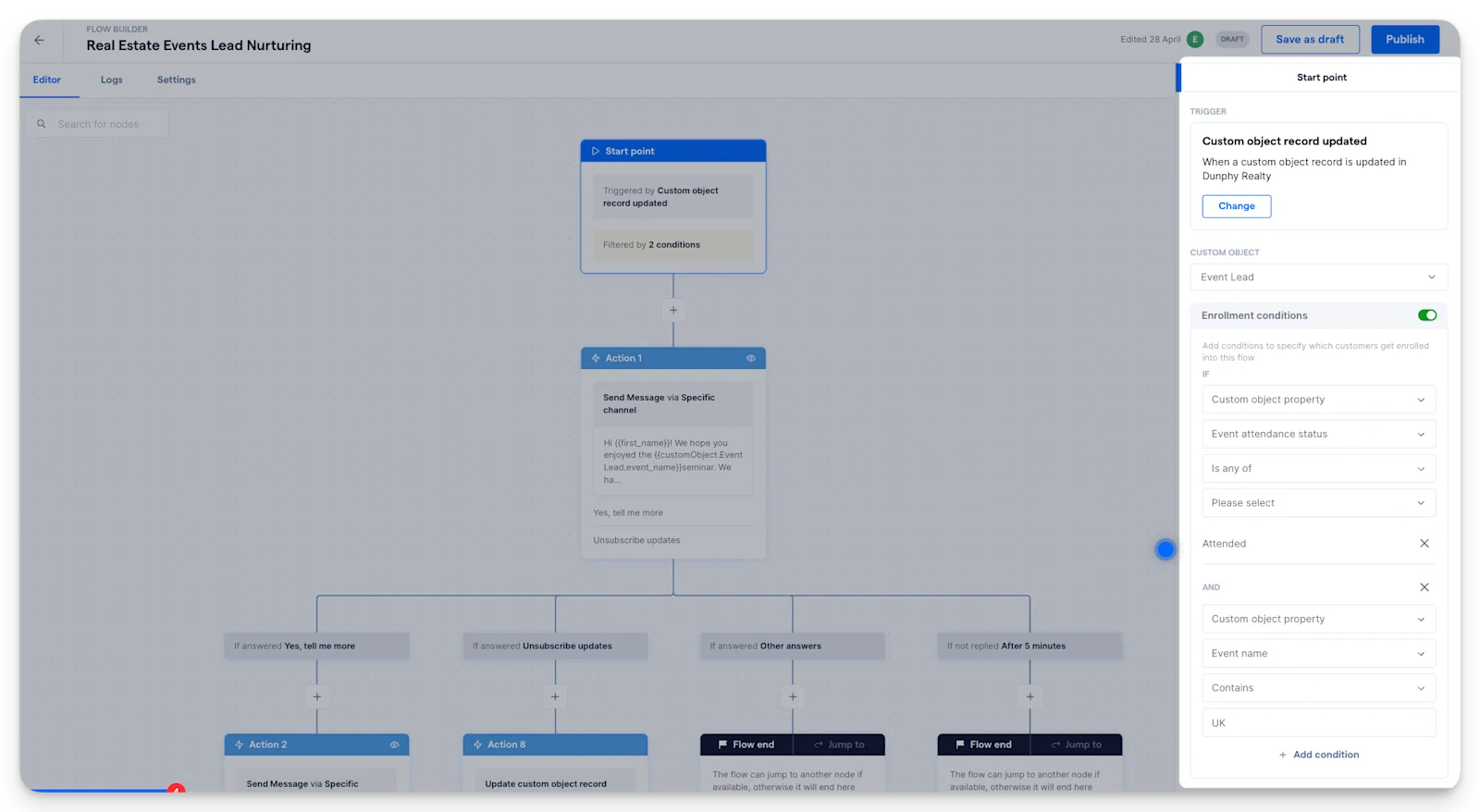
If your business logic relies on objects rather than flat contact fields, that flexibility matters; if your data fits a contact record, Respond.io's simpler model is one less thing to configure.
Which platform has better security?
Both cover the enterprise baseline; SleekFlow adds two attestations Respond.io doesn't list publicly. Both offer role-based access control, multiple workspaces, single sign-on (SSO), and masking of personal data like phone numbers and email. A few differences matter once you reach enterprise procurement.
On access control, SleekFlow supports customizable roles, so you can limit who reaches sensitive tools like the Flow Builder, Broadcasts, or Analytics.
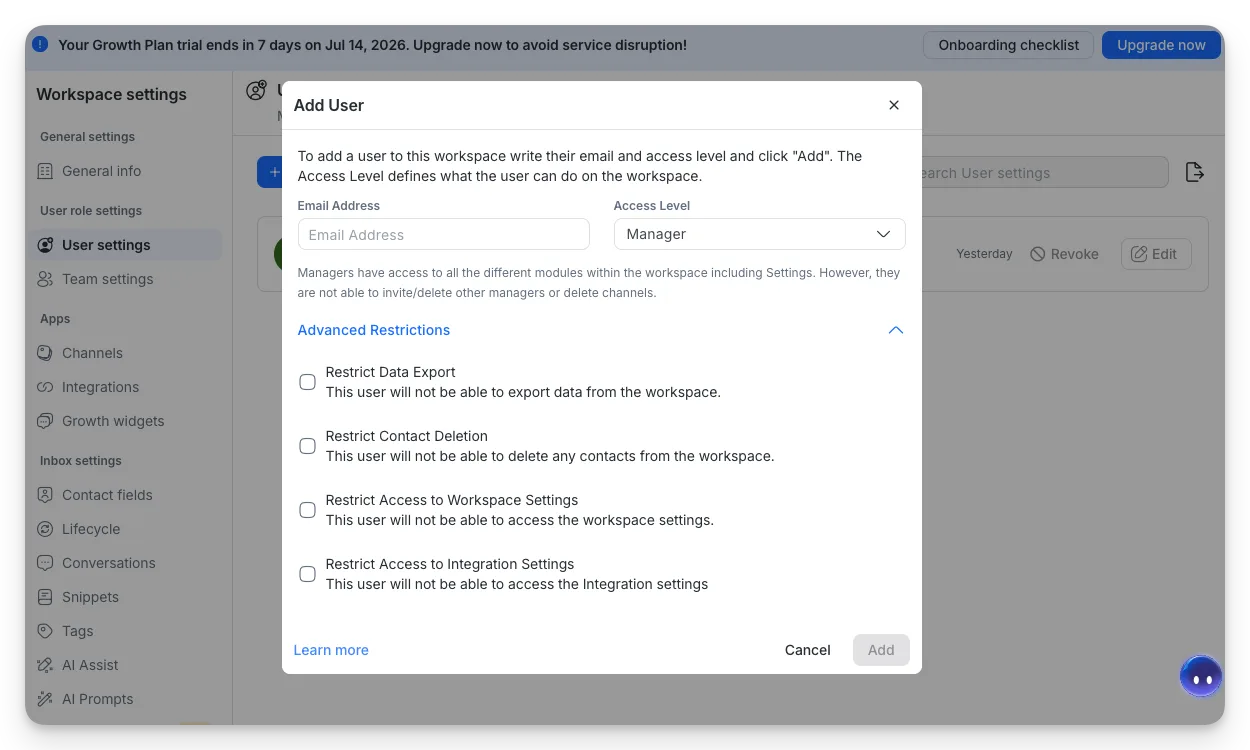
Respond.io uses a fixed set of predefined roles, Owner, Manager, and Agent, with toggleable restrictions on top, rather than fully custom roles.
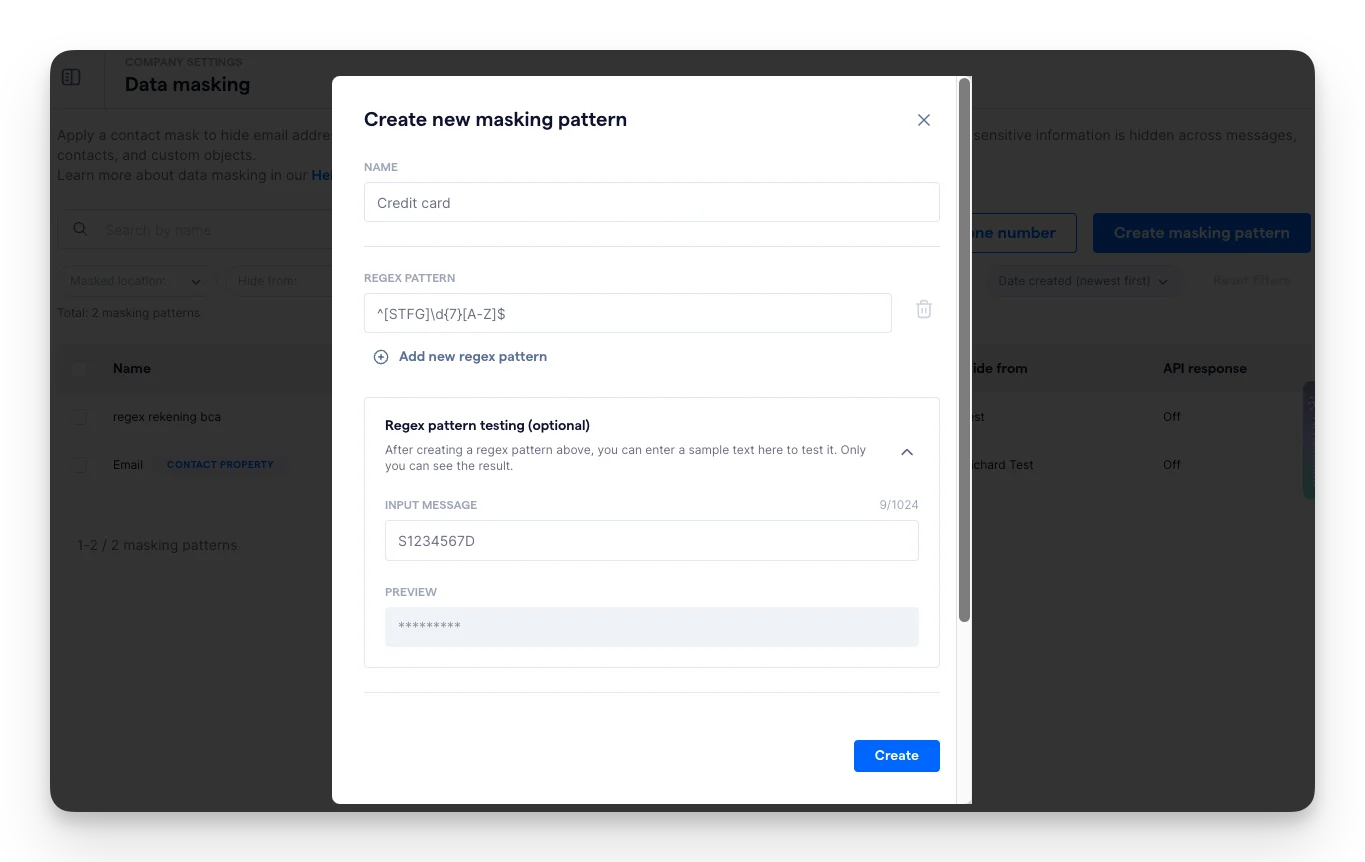
On masking, both hide standard PII, and SleekFlow adds custom pattern masking for fields like ID numbers and card details, plus IP whitelisting.
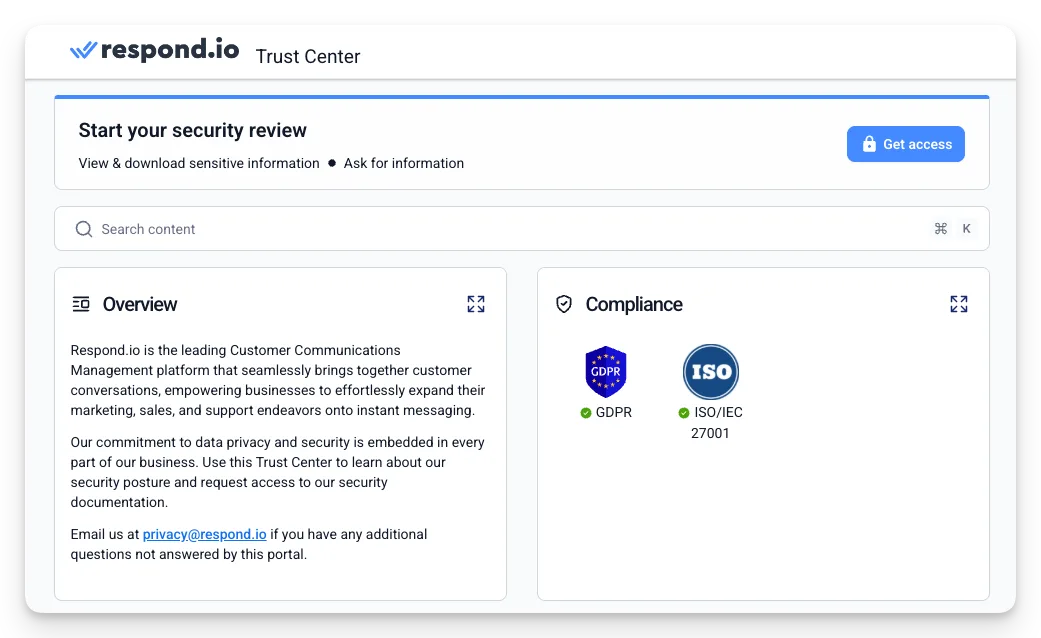
On certifications, the baseline is shared: both are ISO 27001 certified and GDPR-ready, with data encrypted in transit and at rest.
SleekFlow adds two attestations that Respond.io's public materials don't list: a SOC 2 Type II audit, which reports on how data security controls operate over time, and ISO 42001, the standard for responsible AI management.

As of Jul 2026, Respond.io's public security page and footer list ISO 27001 and GDPR only.
Which platform's pricing offers the best value as you scale?
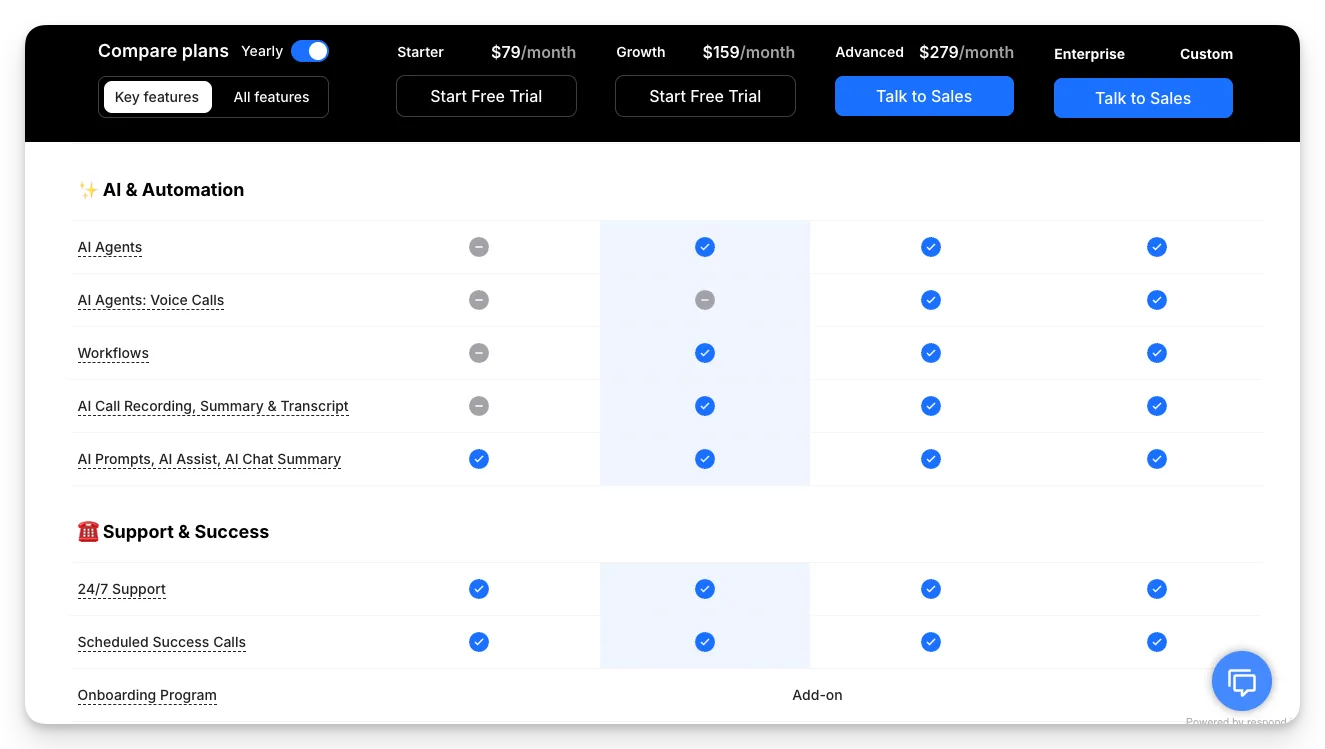
SleekFlow bundles AI earlier and keeps commerce native; Respond.io is cheaper to start and includes unlimited contacts on entry. Both price on a monthly active contact (MAC) model, so you pay for the contacts you actually talk to. Here's how the paid tiers line up (annual billing, as of July 2026).
SleekFlow's AI entry is its Pro plan, which bundles AgentFlow with AI usage included under our Fair Use Policy. Pro includes a set number of monthly active contacts and users, with more of each available as an add-on, and messaging channels are billed separately. Pricing varies by market, so ask for a quote on your own volumes.
On Respond.io, the thing to check is where the AI sits. Its pricing explainer lists Starter as a shared inbox with unlimited contacts, and its documentation puts AI Agents, workflows, and broadcasts on Growth and higher, with voice AI one tier up on Advanced.
So it depends on your shape. Respond.io can be cheaper for a large, lightly-engaged contact base on a shared inbox. SleekFlow can be a better value once AI and Shopify are doing the selling, because AI is bundled with its first paid AI plan, and commerce and multi-object sync are native. Model the cost against your own contact volume and how much of the work the AI is doing.
Which platform has better support?
SleekFlow includes more onboarding at no extra cost; Respond.io offers more live hours. Both back the product with live chat and AI-assisted help. Every paid SleekFlow plan includes onboarding at no extra cost: Pro customers can book group sessions, Premium customers get a dedicated onboarding specialist through the first 60 days, and Enterprise customers also get a dedicated Customer Success Manager. On Respond.io, the structured onboarding program is a paid add-on, though Advanced and Enterprise customers get access to Customer Success Managers.
On live hours, Respond.io's ahead: 24/5 live expert chat and 24/7 AI support, even on the entry plan. SleekFlow's AI support also runs 24/7, and its live expert chat runs business hours, weekdays 9 AM to 6 PM across its APAC, EMEA, and LATAM time zones. In short, SleekFlow gives you more hands-on setup without an extra line on the invoice; Respond.io gives you more hours to reach a live agent.
SleekFlow vs Respond.io: the verdict
Pick SleekFlow if you want depth: you're a B2C brand that wants to run on AI to convert. It's the WhatsApp-first commerce platform for Shopify (and VTEX) merchants, with live store data in the AI agent, in-chat carts and payment links, two-way sync with Salesforce, HubSpot, and Zoho, custom objects, a proactive website assistant, and an Optimization Hub that improves the AI over time. For teams selling across APAC channels like LINE, WeChat, and Viber, it's the stronger fit, in our view.
Pick Respond.io if you want reach: your conversations happen on calls, you want the widest channel list, or you need unlimited contacts and 24/5 live support on an affordable entry plan. It's the more mature multi-channel inbox, and its voice AI is further along, as long as the Advanced plan and the inbound-only, 3-minute-per-call limits fit your use case.
Best for, at a glance
Best for B2C brands that want to run on AI to convert: SleekFlow. An AI agent that recommends products, builds carts, and shares payment links in chat.
Best for Shopify and WhatsApp commerce: SleekFlow. Native Shopify, in-chat carts, and payment links; Respond.io needs middleware.
Best for two-way CRM depth: SleekFlow. Salesforce, HubSpot, and Zoho, across contact and custom objects, both ways.
Best for APAC channel coverage: SleekFlow. LINE, WeChat, and Viber alongside WhatsApp and Instagram.
Best for voice and calls: Respond.io. Inbound voice AI in 32 languages on the Advanced plan.
Best for the widest channel reach: Respond.io. The longest channel list here, plus unlimited contacts on its entry Starter plan.

See it for yourself
See how SleekFlow's AI agents turn conversations into revenue with AgentFlow.
Author's note: this comparison reflects SleekFlow's assessment and is for general information. Product details and pricing are accurate to the best of our knowledge at publishing, drawn from each provider's public information, and change often, so verify with each provider directly. Opinions are our own. Think we've got something wrong? Tell us and we'll fix it.


