The 6 best Sinch alternatives in 2026


TL;DR: Quick Summary
- The 6 best Sinch alternatives are Twilio, Avochato, SleekFlow, WATI, Bird, and Intercom. Each suits a different team size, channel mix, and use case.
- The core decision: do you need a developer-controlled messaging API, or a ready-to-use business platform? Every tool here sits differently on that axis.
- Sinch starts at $49/month for its Engage messaging product, but WhatsApp requires a separate add-on and AI is only available via Sinch Chatlayer, a separate product starting at $499/month.
- WhatsApp messages achieve open rates of 95 to 98%, compared to roughly 20% for email. That gap is pushing teams with messaging-heavy workflows to re-evaluate SMS-first platforms.
Sinch does two things well: SMS campaigns and voice infrastructure. Bulk campaigns, drip sequences, two-way texting, and HubSpot and Salesforce integrations work without much setup. For teams running SMS or carrier-grade voice at scale, the platform is genuinely capable.
WhatsApp is where the architecture starts to show. It isn't part of the base platform. AI requires a separate product. If your channel mix has moved beyond SMS, the costs and complexity stack up fast.
Why look for a Sinch alternative?
Three problems show up consistently.
1. WhatsApp is a paid add-on, not a core channel
The platform was designed around SMS. WhatsApp was added afterward and sits outside the base subscription. You pay for it separately on top of your monthly plan. That distinction matters more than it sounds. When WhatsApp is bolted onto an SMS tool rather than built into it, the automation logic, inbox experience, and contact data are all shaped by a platform that wasn't designed for it. For teams where WhatsApp drives most of their revenue, that's not a cosmetic problem.
2. AI requires a separate $499+/month contract
Conversational AI on Sinch means Sinch Chatlayer, a separate product with its own pricing and its own contract. Third-party analysis puts the starting cost at $499/month. Stack that onto the Pro plan at $249/month and a team is already at $748/month before a single message goes out, in a contract that reportedly charges 45% of the remaining value to exit early. Over 200 million businesses now use WhatsApp Business monthly worldwide. A platform that charges nearly $500/month extra to automate conversations on the world's most-used business messaging channel is a structural mismatch for most teams.
3. Voice is a separate product entirely.
Sinch's messaging product has no VoIP calling. Voice sits in Sinch's CPaaS infrastructure, a developer-facing product on a separate contract. The messaging product and the CPaaS share a parent company, not a shared inbox. A customer's call history and their WhatsApp thread exist in separate systems, with no unified contact view between them.
When Sinch is still the right call
If SMS is your primary channel and WhatsApp isn't part of the workflow, there's no compelling reason to switch. Sinch's campaign tools, HubSpot integration, and Salesforce sync work well, and for regulated industries like healthcare or finance its GDPR and ISO 27001 certification and TCPA tooling are harder to replicate quickly on a newer platform. The alternatives below are for teams where the channel mix has moved on.
Sinch alternatives compared at a glance
All pricing reflects publicly listed rates as of June 2026. Verify directly with each vendor before purchasing.
The 6 best Sinch alternatives
1. Twilio: best for developers building custom communication workflows
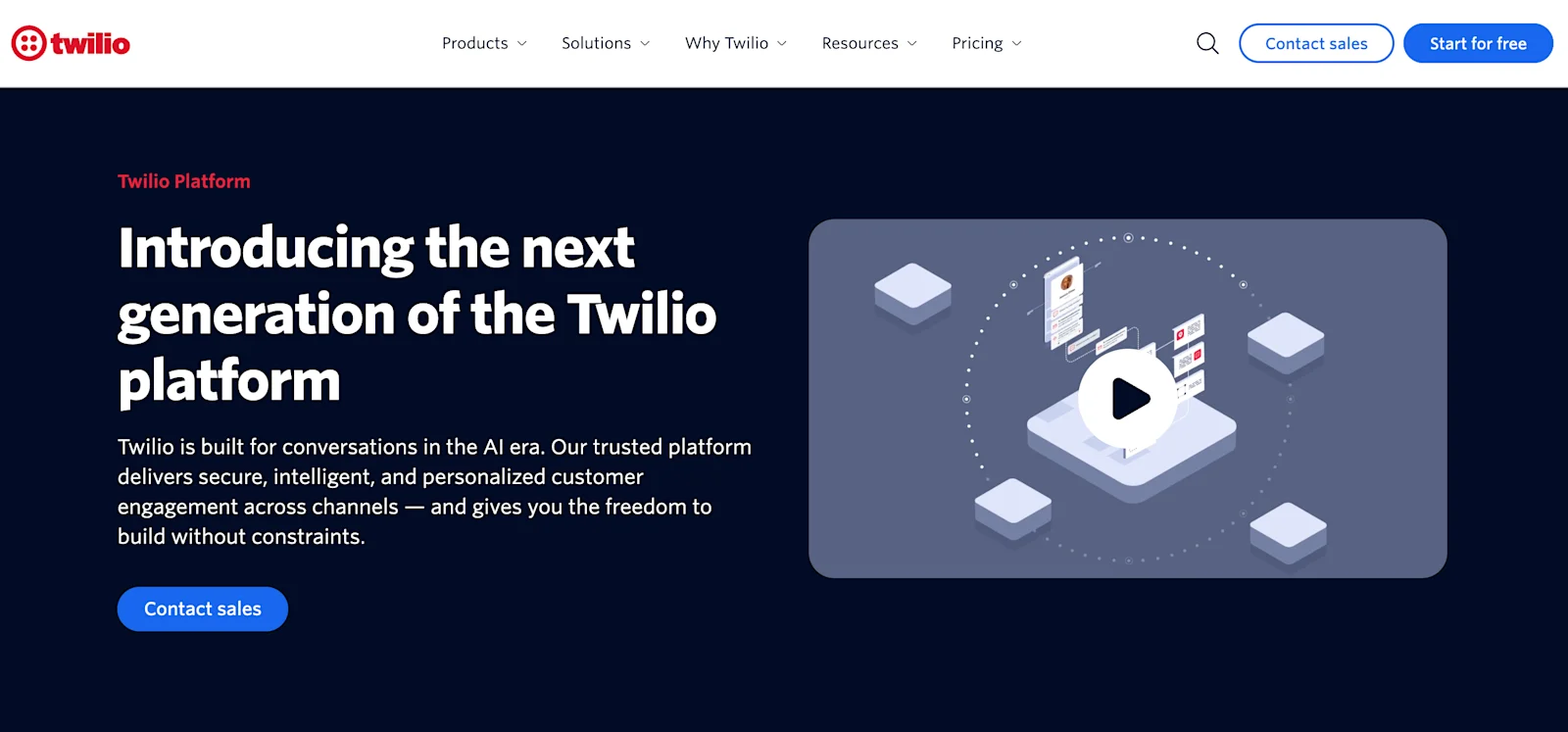
Twilio is the largest CPaaS (Communications Platform as a Service) provider in the market. Founded in 2008, it gives development teams API access to SMS, voice, WhatsApp, email, and video, with SDKs across most major programming languages and a no-code workflow builder called Twilio Studio.
Key features:
SMS, MMS, voice, WhatsApp, email, and video APIs
Twilio Studio: visual no-code workflow builder
Twilio Flex: cloud contact center for enterprise calling operations
Serverless functions for running communication logic without managing infrastructure
Extensive documentation and an active developer community
Pricing: Pay-as-you-go. SMS starts at $0.0075 per message; voice from $0.013 per minute. WhatsApp adds $0.005 per message on top of Meta's per-message rates. Free trial credits are available to test the platform.
Pros: The documentation and developer community are the strongest in this category. Scales to virtually any message volume. Covers more channels than any other tool in this comparison.
Cons: Not built for non-technical users. A marketing manager cannot run a Twilio campaign without engineering support. Each new workflow or channel requires dedicated build time.
Best for: Engineering teams at mid-size to large companies who need full control over communication logic and are comfortable owning the build.
2. Avochato: best for small US teams running SMS and text-first support
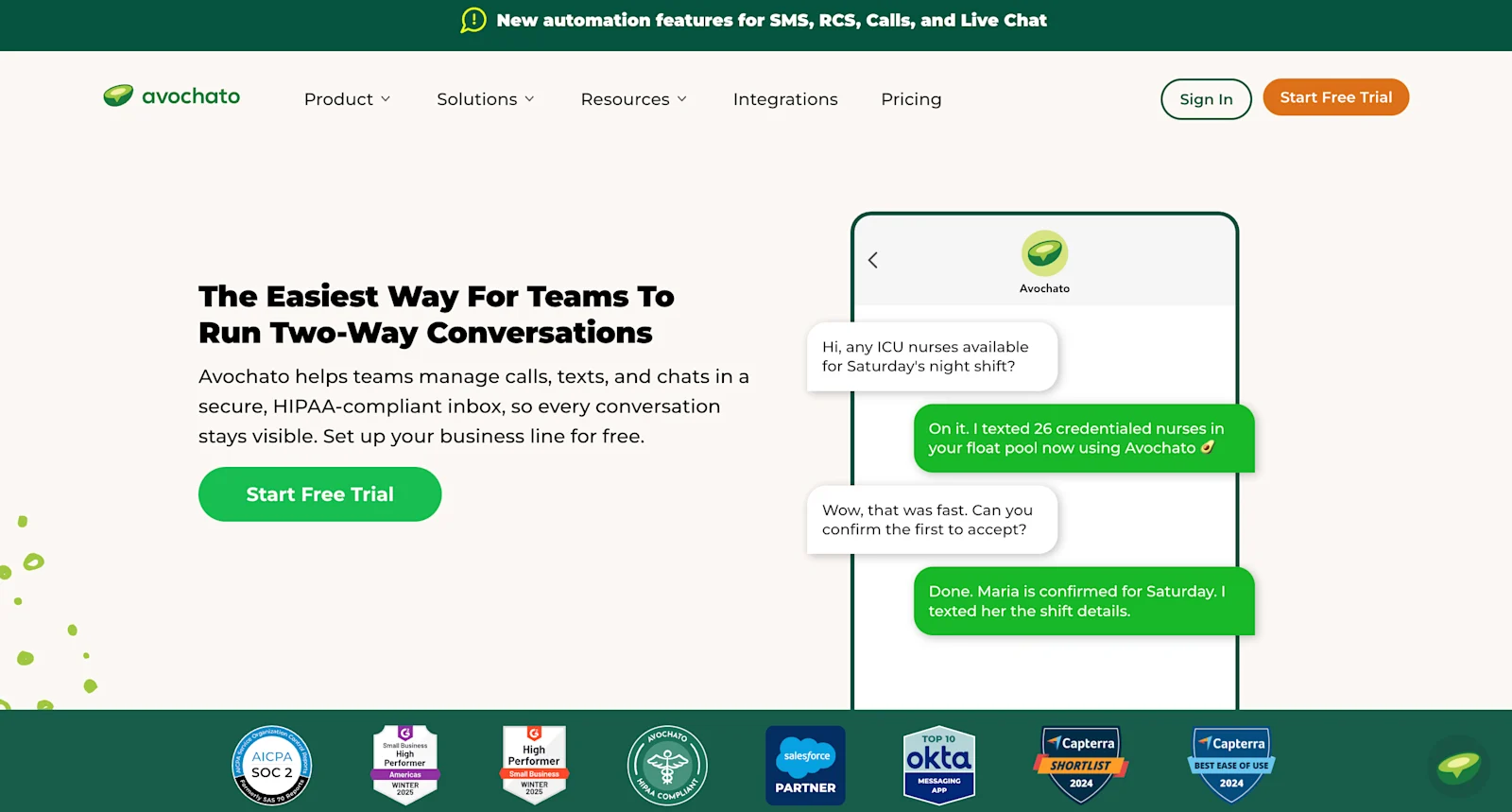
Avochato is a US-focused SMS and live chat platform for sales, support, and operations teams. It handles two-way texting, a shared team inbox, calling, and basic broadcast campaigns without any technical setup. It works well in real estate, home services, logistics, and healthcare: industries that need reliable text communication without complex automation.
Key features:
Shared team inbox with assignment and escalation
Broadcast messaging and scheduled campaigns
Inbound and outbound calling on dedicated numbers
Salesforce, Slack, Microsoft Teams, and Zapier integrations
Keyword-triggered autoresponses and contact segmentation
Pricing: Lite plan at $19/user/month for basic texting and shared inbox. Standard plan at $35/user/month plus a $175/month platform fee. The jump from Lite to Standard is steep for smaller teams.
Pros: Quick to set up with no engineering required. Customer support quality comes up repeatedly in G2 and Capterra reviews. SMS and calling run from the same dashboard.
Cons: Lite plan caps automation. The Standard platform fee makes the product expensive for teams under 5 agents. WhatsApp is supported but isn't the focus.
Best for: Small to mid-size US service businesses running SMS-first support that want a shared inbox with calling included.
3. SleekFlow: best for WhatsApp-first sales and support with built-in AI and VoIP
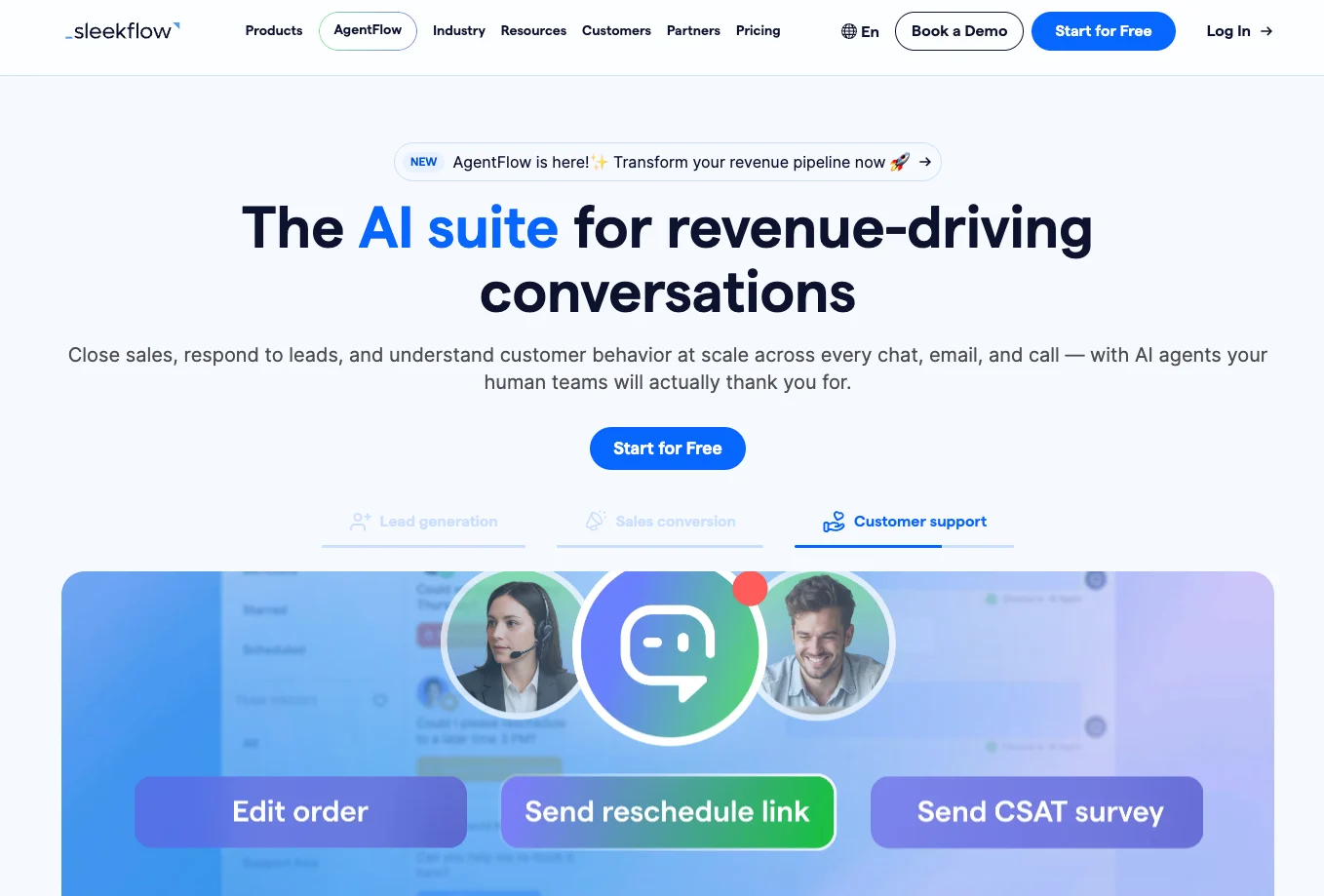
SleekFlow is an AI suite for businesses that run sales and support through WhatsApp. It brings WhatsApp Business API, SMS, VoIP calls, email, Instagram, and Messenger into a single team inbox, giving agents a full view of the full interaction history with a contact regardless of which channel that conversation started on.
The practical difference from Sinch: WhatsApp is SleekFlow's primary channel, not an add-on. Automation, AI agents, broadcasts, and workflow tools all run natively on WhatsApp from day one.
Key features:
Unified inbox for WhatsApp, SMS, VoIP calls, email, Instagram, and Messenger
VoIP calling with team assignment, automatic routing, and full customer contact history visible during each call
AgentFlow: AI agents for automated sales and support, bundled on paid plans (no separate $499+/month contract required)
Broadcast campaigns for WhatsApp and SMS
No-code automation workflows triggered by message content, contact data, or pipeline stage
Native integrations with Shopify, HubSpot, and Salesforce
Pricing: Subscription tiers (Free, Pro AI, Premium AI, Enterprise AI) based on monthly active contacts: a contact counts toward billing only when they exchange a two-way message with your team, not just by being stored. AI usage is bundled on paid plans. WhatsApp number hosting and Meta pass-through messaging fees apply separately.
Pros: The only tool in this comparison where voice calls, WhatsApp threads, and AI responses appear on the same contact record in the same inbox. AI is part of the subscription rather than a separate enterprise contract. Pricing scales on actual two-way engagement rather than seat count, which tends to match sales-led team usage more closely.
Cons: Call analytics dashboard is in development. Pricing is contact-based rather than publicly listed, so budgeting upfront requires a sales conversation.
Best for: Sales and support teams in the US that use WhatsApp as their primary channel, want voice calls tracked alongside messaging, and need AI that doesn't require a separate enterprise contract.
4. WATI: best for WhatsApp-only SMBs
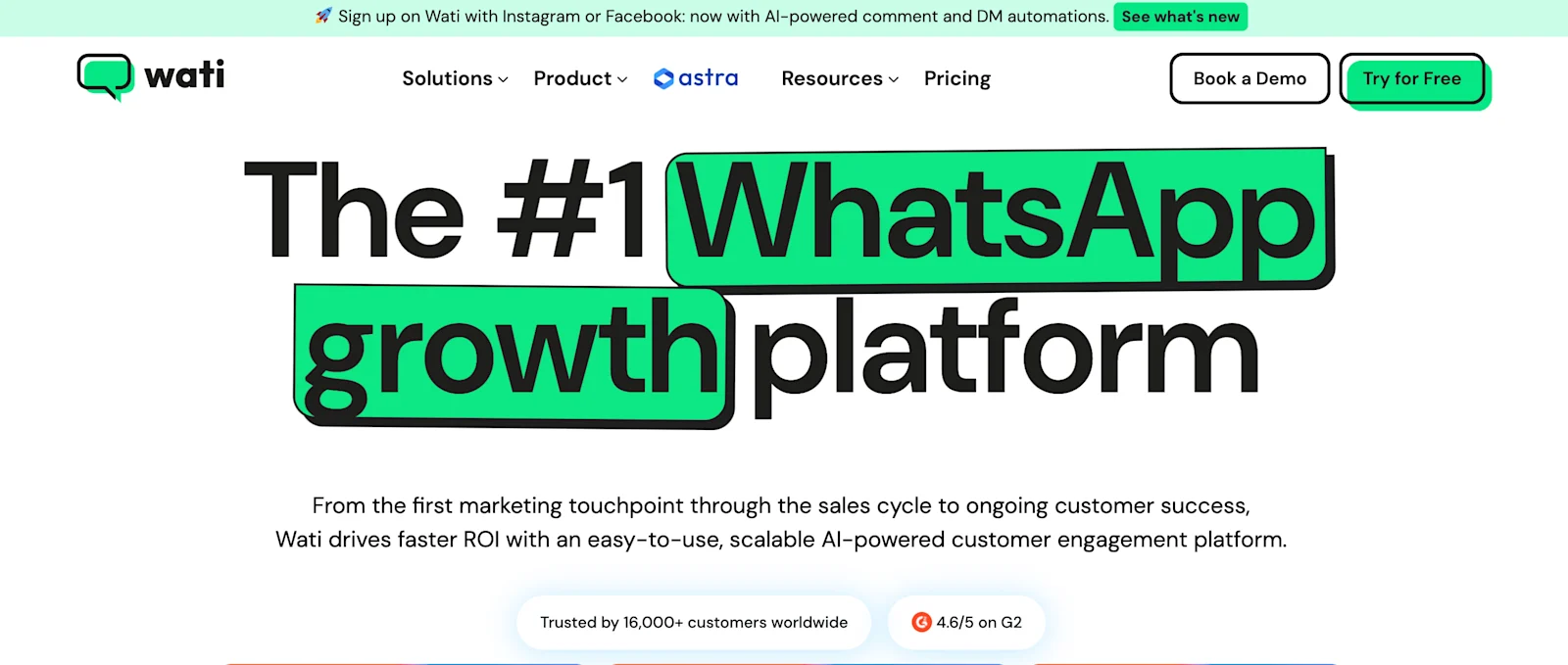
WATI is one of the most widely used WhatsApp Business API platforms for small and mid-size businesses. Setup is fast. Most teams get running on WhatsApp within a day without developer help. The product handles team inbox, broadcast campaigns, a no-code flow builder, and template management. For a business that only needs WhatsApp and nothing else, it covers the basics well.
Key features:
Shared team inbox with assignment and collision detection
No-code chatbot and automation builder
Broadcast campaigns with audience segmentation
AI KnowBot for handling routine queries
Zapier, Google Sheets, and CRM integrations
Pricing: Growth plan at $59/month [annual billing, 3 users (hard cap; cannot be increased without upgrading)]. Pro plan at $119/month (annual, 5 users, $24/user/month for additional agents). WATI adds a 20% markup on Meta's per-message fees on top of the subscription price.
Pros: Fast to set up without developer help. Handles WhatsApp well for teams under 15 people. No-code builder is accessible to non-technical users.
Cons: WhatsApp only: no SMS, voice, or email. The Growth plan's 3-user hard cap forces an upgrade the moment a fourth agent joins. The 20% message markup adds up at higher volumes.
Best for: Small businesses running WhatsApp-only support or sales, under 10 agents, with no need for other channels.
5. Bird: best for enterprise multi-channel communication
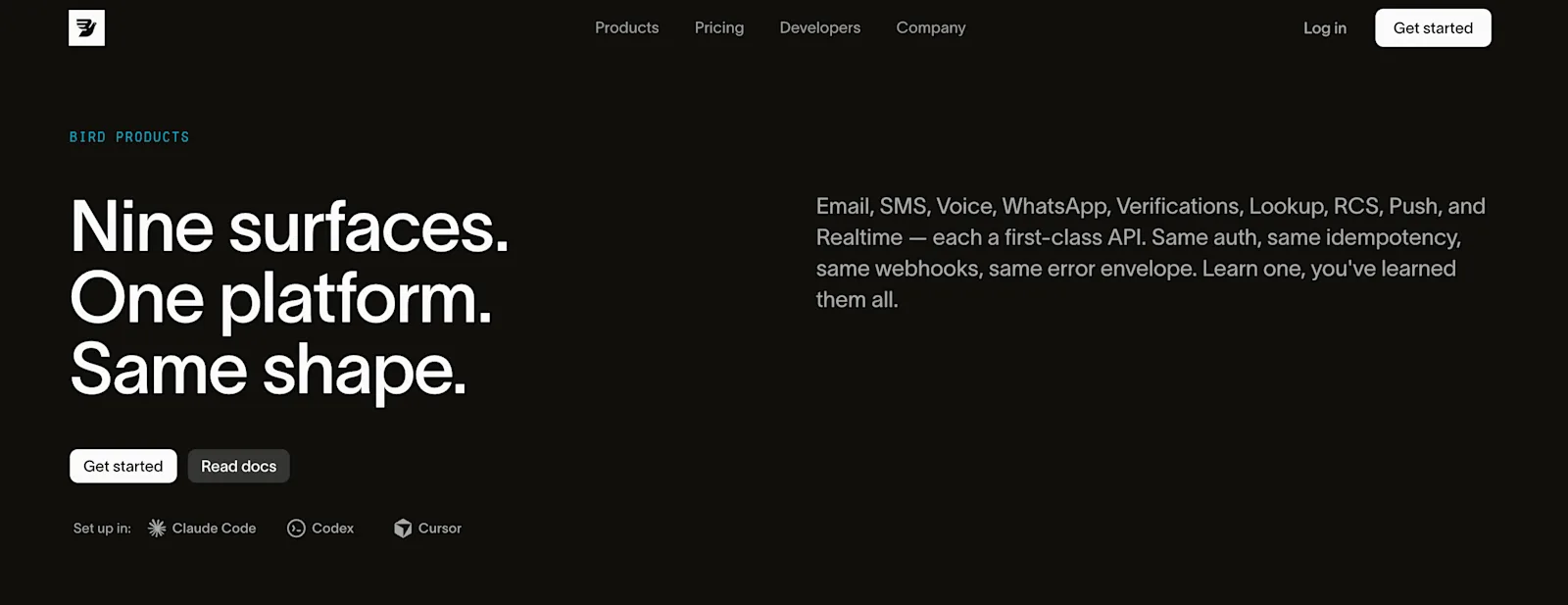
Bird (formerly MessageBird) is an enterprise multi-channel platform covering SMS, WhatsApp, email, and voice alongside a Customer Data Platform and marketing automation layer. It serves brands like Uber, Heineken, and Booking.com, and positions itself as a full-stack customer communication platform.
Key features:
SMS, WhatsApp, email, and voice APIs across 150+ countries
Customer Data Platform with audience segmentation
Marketing automation and campaign orchestration
Conversational AI capabilities
Direct carrier connections in major markets
Pricing: Free tier available (5 SMS/day, 10 emails/day, 15 AI agent messages/day). Pro plan from $49/month. Enterprise is a custom; procurement platform Vendr reports the median Bird enterprise deal at $38,146/year based on 38 actual contracts. The gap between list price and contract value is significant.
Pros: Carrier-grade global reach. Full multi-channel coverage. Strong for enterprise teams running marketing and service operations at scale across many countries.
Cons: Complexity scales fast. Multiple cost layers (contact bundle, per-message usage, carrier fees) make budgeting unpredictable. Not designed for the 5 to 50 person team evaluating Sinch alternatives.
Best for: Enterprise marketing and communications teams needing multi-channel reach at scale, with development resources allocated for setup and ongoing management.
6. Intercom: best for SaaS and product-led customer support
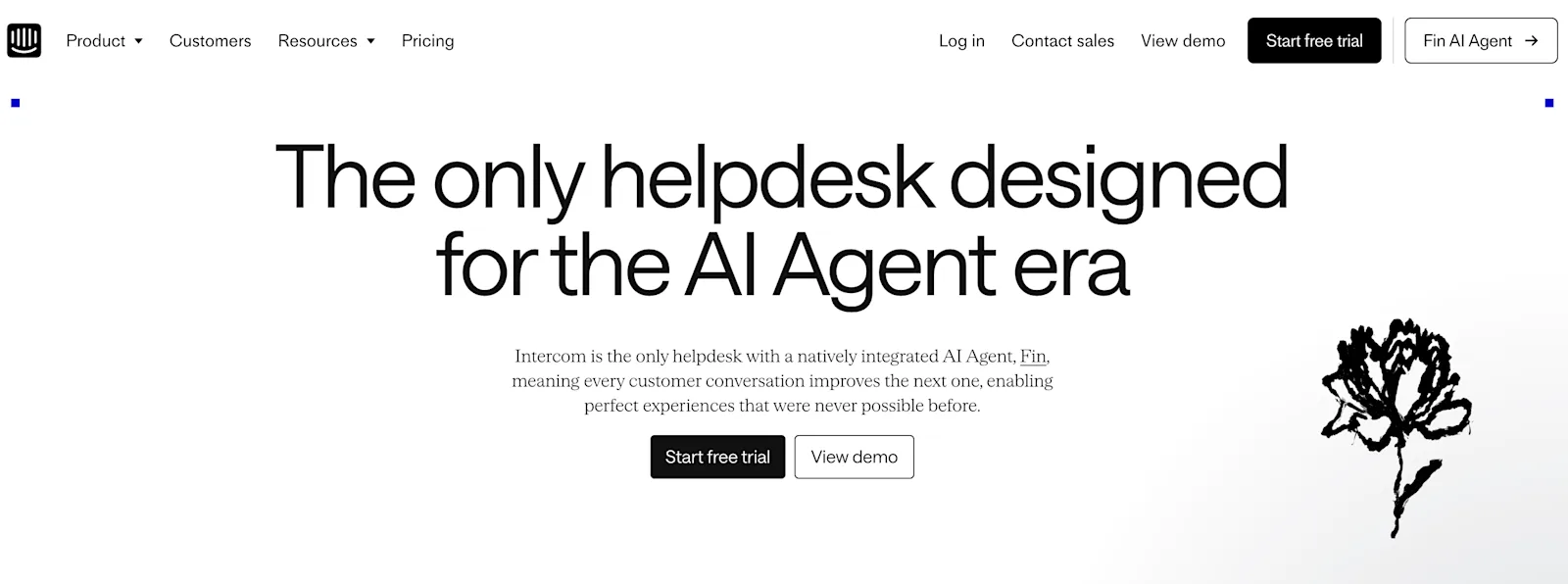
Intercom is a customer support platform built around live chat, email, and an AI agent called Fin. It handles customer conversations across web chat, WhatsApp, and email from a shared team inbox, and is particularly strong for companies embedding support directly into their product. WhatsApp is a supported channel, but it's one of several rather than the core focus.
Key features:
Shared inbox for chat, email, and WhatsApp
Fin AI agent for automated support resolution
Knowledge base and self-service tools
Product tours and in-app messaging
Integrations with SaaS tooling
Pricing: Essential plan from $29/seat/month (annual billing) or $39/seat/month (monthly). Fin AI Agent costs $0.99 per resolution on top of the seat fee. WhatsApp is a usage-based add-on charged separately. Costs compound quickly with team size and resolution volume.
Pros: Fin is one of the stronger out-of-the-box AI support agents in this category. Deep product integrations. Strong self-service tools for reducing agent volume.
Cons: Pricing scales steeply with seat count and AI resolution volume. WhatsApp is a supported channel but isn't native to Intercom's architecture. Not suited to teams where WhatsApp or SMS is the primary revenue channel.
Best for: SaaS companies and product-led businesses that need an AI-capable support platform with in-product messaging.
Sinch alternatives pricing comparison
Pricing models are where the real decision lives. Sticker prices look closer than they are.
All pricing reflects publicly listed rates as of June 2026. Verify directly with each vendor before purchasing.
Two pricing structures catch teams off guard most often. Sinch's add-on architecture means WhatsApp and AI each cost extra beyond the base subscription. WATI's 20% markup on Meta's per-message fees means messaging costs run higher than Meta's published rates even on the basic plan.
SleekFlow's monthly active contact model charges only when a contact exchanges a message with your team in a given period, not just by being stored. For sales-led teams with large contact lists but focused active conversations, that tends to track actual usage more closely than per-seat pricing.
How to choose the right Sinch alternative
You need a developer-controlled communication infrastructure: Twilio. Nothing else here gives you the same programmable API surface.
You're a small US team running SMS-first support, under 5 agents: Avochato's Lite plan is the lowest-friction entry point. It limits out on automation quickly, so know that before committing.
WhatsApp is your primary revenue channel and you want voice calls tracked in the same place: SleekFlow. It's the only platform in this comparison where a rep can see a customer's WhatsApp thread and call log on the same contact record, and where AI is part of the subscription rather than a separate enterprise contract. Particularly relevant for US-based teams given the current VoIP availability.
You're a WhatsApp-only SMB, under 10 people, no other channels needed: WATI. Fast setup, covers the basics. Watch the message markup as volume grows.
Enterprise team running campaigns across SMS, WhatsApp, and email at scale: Bird, with a real setup budget and development resources allocated upfront.
SaaS or product-led company, in-product support, AI resolution is the priority: Intercom. WhatsApp is supported, but Fin's AI and the in-product messaging tools are the real reason to be there.
Which Sinch alternative is right for you?
Sinch's platform does SMS and voice well, but in separate products. Adding WhatsApp costs extra. AI requires a separate contract. A customer's call history and their WhatsApp thread never share the same inbox.
If SMS and voice are your primary channels, that structure holds. Once WhatsApp, AI, and calls need to work together from one place, the fragmentation becomes the actual cost.
Book a demo with SleekFlow to see how WhatsApp, voice, and AI sit together in one inbox.
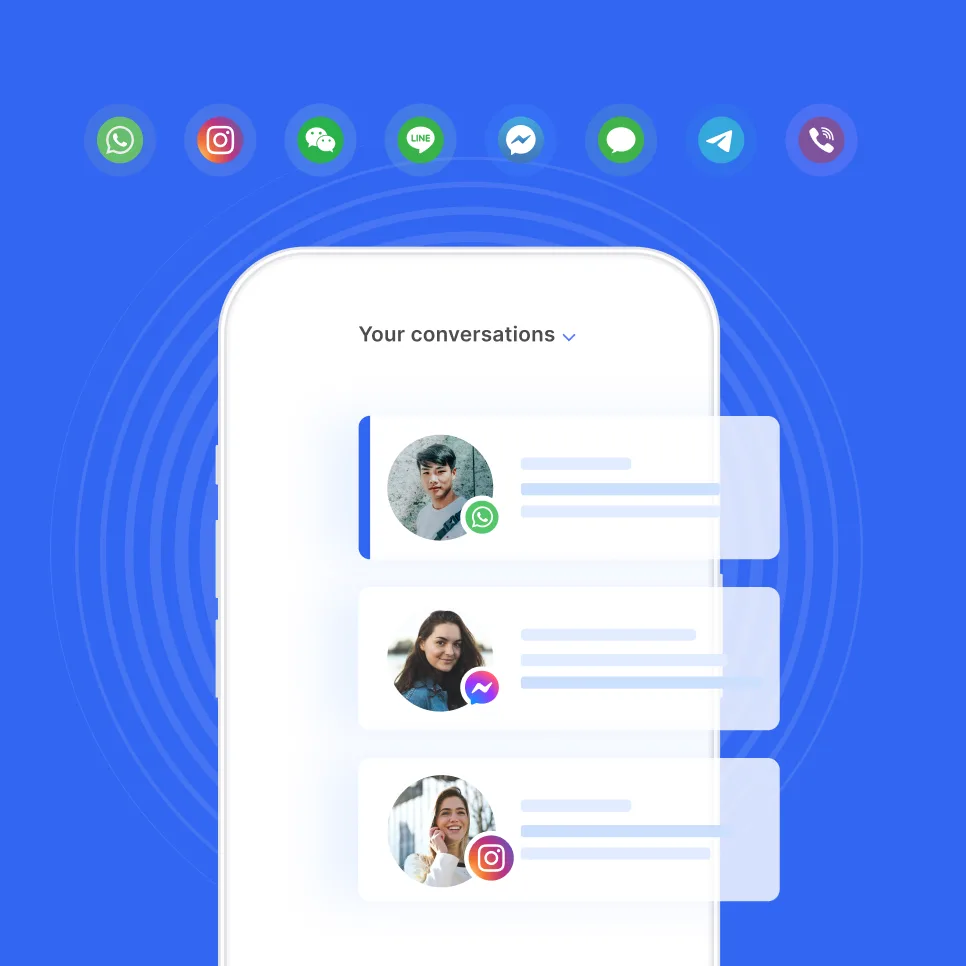
Want to outcompete your peers with SleekFlow's help?
Book your personalised demo with SleekFlow today and unlock the potential of seamless communication


