Meta Business Agent pricing changes from 1 October 2026


TL; DR: Quick Summary
- Meta Business Agent pricing changes most on 1 October 2026, when every WhatsApp service message gets billed individually, with no volume discount.
- Meta Business Agent itself has charged US$2.00 per million tokens since 1 August 2026, about 4 to 5 US cents a message.
- Without a payment method in Billing Hub by 30 September 2026, Meta suspends service message delivery entirely.
- Consolidating messages and routing traffic through the free entry point window, which may remain open for up to 7 days, are two of 8 ways to soften the hit.
- Regulated businesses locked out of Meta Business Agent altogether need a different plan, not just a bigger budget.
Meta Business Agent pricing changes are a set of WhatsApp billing updates that take effect on 1 October 2026, when Meta starts charging per message for every service message sent by a human agent or AI, on top of the token charges Meta Business Agent has billed since 1 August 2026.
Maybe Meta Business Agent has been running free for months, or your own AI agent has been handling support and you haven't checked whether WhatsApp's charges caught up with it. Either way, 1 October 2026 is the date that matters. Here's exactly what changes, what it costs, and 8 concrete moves to protect your budget before it lands.
What changes on 1 October 2026?
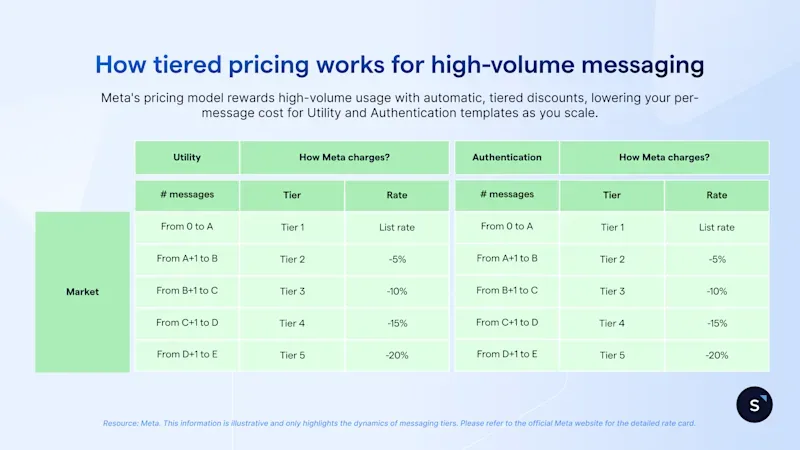
From 1 October 2026, Meta charges per message for every WhatsApp service message, whether a human agent or a third-party AI sends it, at the same rates as utility and authentication messages, with no volume tiers. Utility messages sent inside the 24-hour customer service window also become billable for the first time, having been free since 1 July 2025.
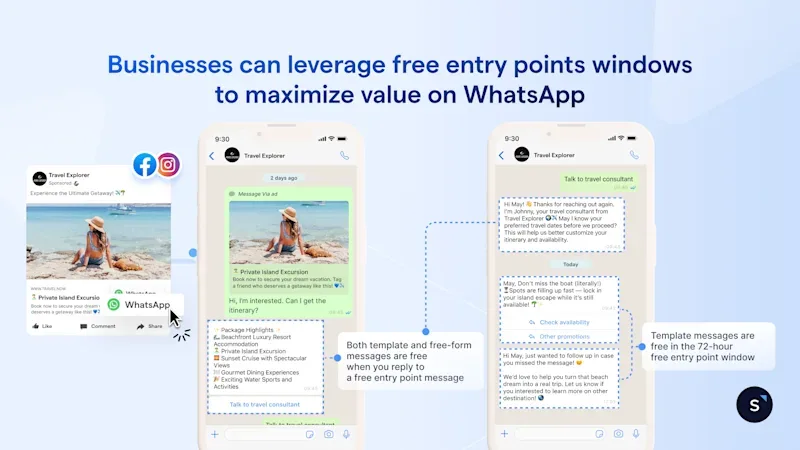
None of this touches the free entry point window that opens from a Click-to-WhatsApp ad or a Facebook page button, which still delivers messages for free and may remain open for up to 7 days. It does touch almost everything else, and it stacks on top of Meta Business Agent's own token charges, which have applied since 1 August 2026.
What does Meta Business Agent already cost?
Meta Business Agent has charged US$2.00 per million tokens since 1 August 2026, one line covering both AI generation and delivery. A typical reply runs 20,000 to 25,000 tokens, roughly 4 to 5 US cents, and Meta won't deliver a single reply without a payment method in Billing Hub.
Meta launched Business Agent globally on 3 June 2026, after nearly two years of testing it in India and Mexico. For scale, Meta's own example puts 1,000 AI-generated replies in Brazil at US$40 to US$50 on Meta Business Agent, against US$27 for a lighter third-party setup and US$97 for a heavier one. Whether a third-party agent beats that price depends on how complex your conversations are, not the vendor.
That's the short version. For the full breakdown of Meta Business Agent versus a third-party AI agent, including who's eligible and how handover works, see Meta WhatsApp Business AI vs. AI Agents.
Who's still affected even if they've never used Meta Business Agent?
Everyone sending WhatsApp service messages, not just Meta Business Agent users. Meta Business Agent itself stays closed to 7 regulated verticals: finance, government, health, alcohol, gambling, over-the-counter drugs, and matrimony services, which rules it out for a large share of Singapore and Malaysia's banks, insurers, clinics, and diagnostic labs regardless of budget.
But the 1 October change applies to service messages sent by anyone, human agents and third-party AI included. A regulated business that could never touch Meta Business Agent still pays more from 1 October; it just pays a different meter.
8 ways to protect your WhatsApp budget before 1 October 2026
Protecting your WhatsApp budget after 1 October 2026 means controlling three things: which messages you send, which AI model answers them, and whether you've met Meta's billing requirements before the deadline. The 8 moves below cover setup, message design, and vendor choice, roughly in the order most businesses should tackle them.
Attach a payment method before 30 September
Without one in Billing Hub, Meta suspends service message delivery from 1 October 2026, and there's no grace period once the switch flips. Add a card in Billing Hub inside WhatsApp Manager now, even if you're not actively running Meta Business Agent yet.
Consolidate multi-part replies into one message
Service messages carry no volume discount from 1 October, so 5 short bubbles cost 5 times what one reply costs. Rework any flow that splits a greeting, an answer, and a follow-up into 3 separate sends, and reply once instead.
Push routine questions through the free entry point window
Delivery stays free from a Click-to-WhatsApp ad or Facebook page button, though Meta Business Agent's token charge still applies inside it. FAQs, order status checks, and other high-volume questions are the best candidates to route through this window before they hit the paid meter.
Do the complexity maths before picking a model
Meta's own numbers put a lower-complexity third-party setup below Meta Business Agent and a higher-complexity one above it. Run a short trial against your real conversation volume before committing, since the cheaper option on paper doesn't always hold on your actual traffic.
Budget for a third-party agent from day one if you're regulated
Finance, health, government, and 4 other sectors can never use Meta Business Agent, so re-platforming later costs more than planning for it now. Put the third-party AI line item into next year's budget alongside the new service-message charges, not as an afterthought once Meta forces the issue.
Tighten your AI's handover threshold
An agent looping on a low-confidence answer burns tokens or message charges without resolving anything. Set the threshold so the AI hands off to a human after 2 unclear replies rather than 5, since every extra loop is billed the same as a resolved conversation.
Move utility and authentication sends outside the service-message meter
Those categories keep volume-tier discounts after 1 October; service messages do not. Audit your templates now and reclassify anything mislabelled as a service message that should carry a utility or authentication template instead.
Track cost per resolved conversation, not cost per message
A pricier AI that resolves a query in one exchange can beat a cheaper one needing 5 messages. Pull this number monthly, per channel, so you catch a model that's cheap per message but expensive per outcome.
Where does SleekFlow fit when Meta Business Agent won't work?
SleekFlow is the AI suite for revenue-driving conversations, built for exactly the businesses this pricing change squeezes hardest. AgentFlow, its AI agent for WhatsApp, Instagram, and live chat, bills on its own terms rather than Meta's per-message rate, and it stays open to every business Meta Business Agent locks out, including finance and health.
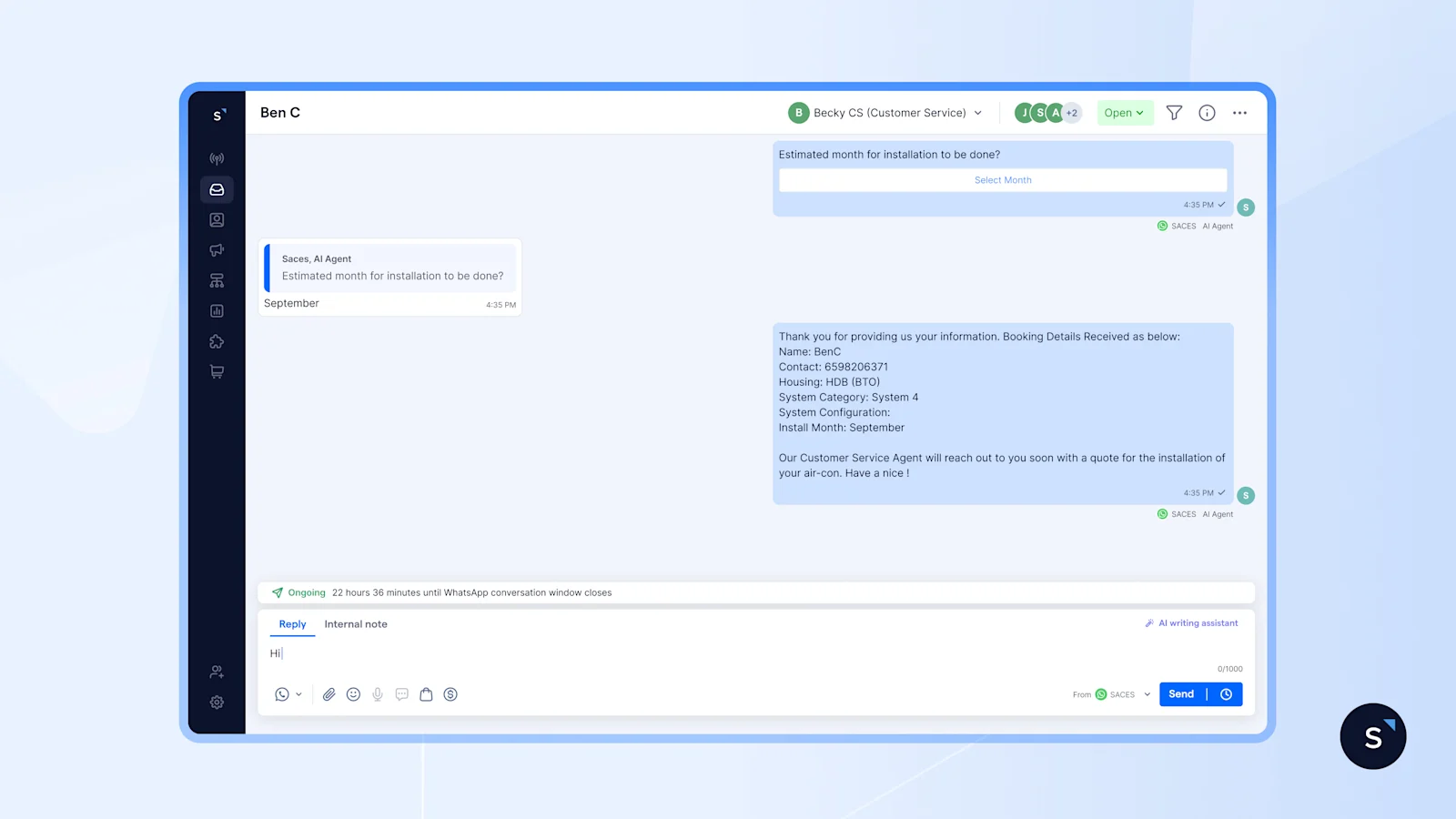
SACES, a Singapore air-conditioning services company, was fielding the same enquiries by hand across WhatsApp, Facebook, and Instagram, which slowed every response down. Its AgentFlow AI agent now handles over 60% of incoming enquiries and converts 75% of AI-qualified leads into bookings, at a cost that runs independently of Meta's per-message meter.
How to get ready before 1 Oct
The 1 October changes don't punish AI, they punish sending more messages than a conversation needs, on the wrong model for your business. Get a payment method into Billing Hub, run the complexity maths on your own conversations, and work through the 8 moves above before the bill changes shape. If you want a second opinion on the cost maths, talk to SleekFlow about setting up AgentFlow before the deadline.
Want to outcompete your peers with SleekFlow's help?
Book your personalised demo with SleekFlow today and unlock the potential of seamless communication


