Telegram vs WhatsApp: which is better for business, marketing, and customer communication?


TL; DR: Quick Summary
- WhatsApp vs Telegram comes down to use case, not which is “better”. WhatsApp dominates for 1:1 conversations, sales, and support, while Telegram excels at large-scale, one-to-many communication and communities.
- WhatsApp is the default choice for businesses in Singapore. With high local adoption and strong business tools from Meta, it is better suited for lead nurturing, customer support, and closing sales.
- Telegram is strongest for scale and flexibility. It supports massive groups, unlimited channels, and more open bot automation, making it ideal for communities, updates, and custom workflows.
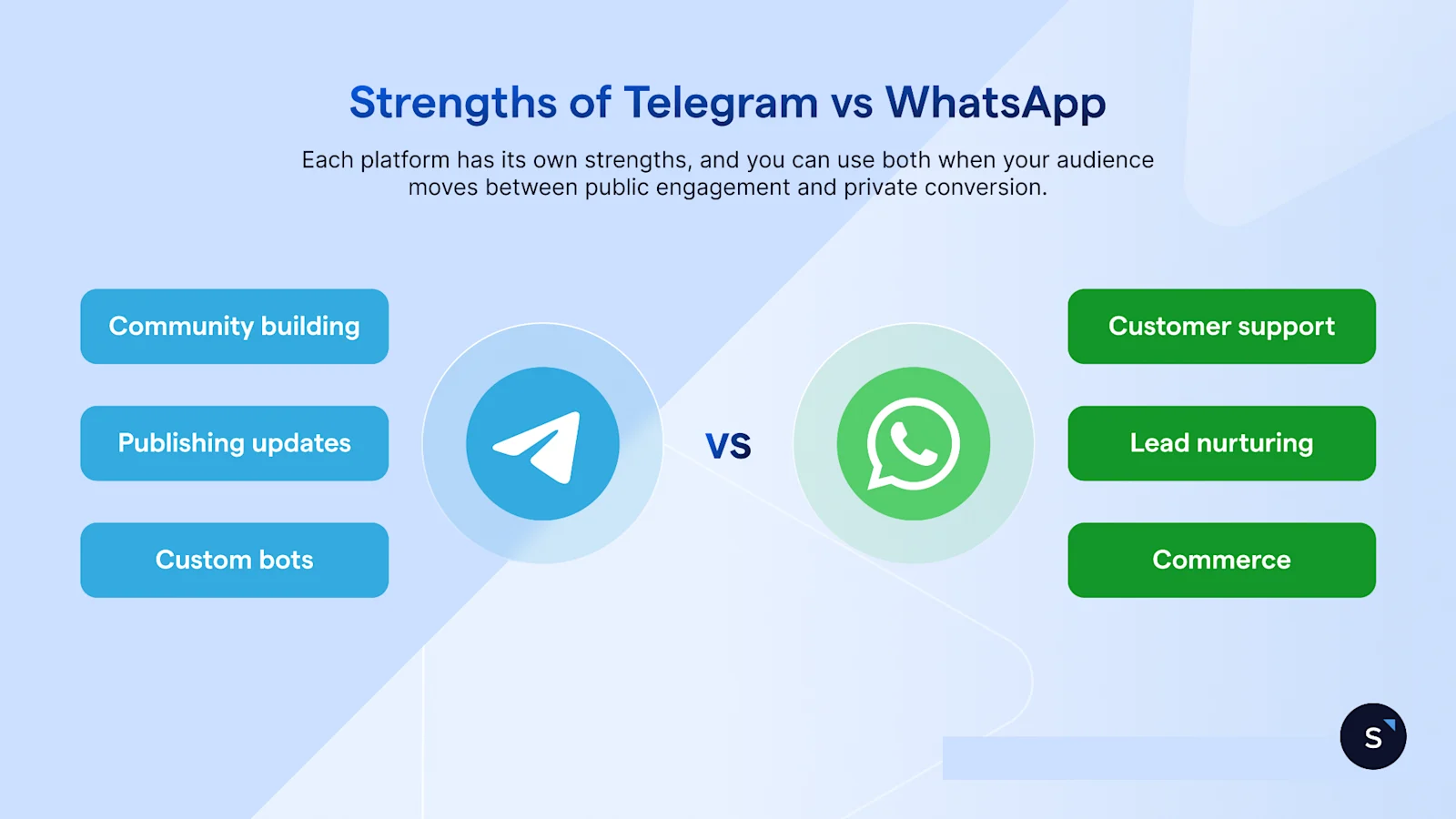
- WhatsApp wins in support, lead nurturing, and commerce, while Telegram wins in community building, publishing updates, and bot customisation.
- Best strategy is not choosing one, but using both together. Use Telegram for awareness and engagement, then move high-intent users to WhatsApp for conversion, ideally managed through an omnichannel system.
If you need a clear verdict first, here it is: Telegram is better for large communities, broadcast-style engagement, bots, and flexibility. WhatsApp is better for direct customer conversations, business messaging, reach, and conversion-focused communication. For most businesses in Singapore, WhatsApp should be the primary channel, while Telegram works best as a complementary channel for community and updates. That recommendation is especially strong because WhatsApp is the most-used social platform in Singapore, with 80.1% monthly usage, and Meta positions WhatsApp Business for marketing, sales, and support at scale.
In short
Choose Telegram when your priority is:
running a large community
publishing updates to followers at scale
building custom bot experiences
supporting power users across many devices
Choose WhatsApp when your priority is:
handling enquiries and support
nurturing leads
sending opt-in business messages
closing sales in 1:1 conversations
What is Telegram best for?
Large communities and broadcast-style communication
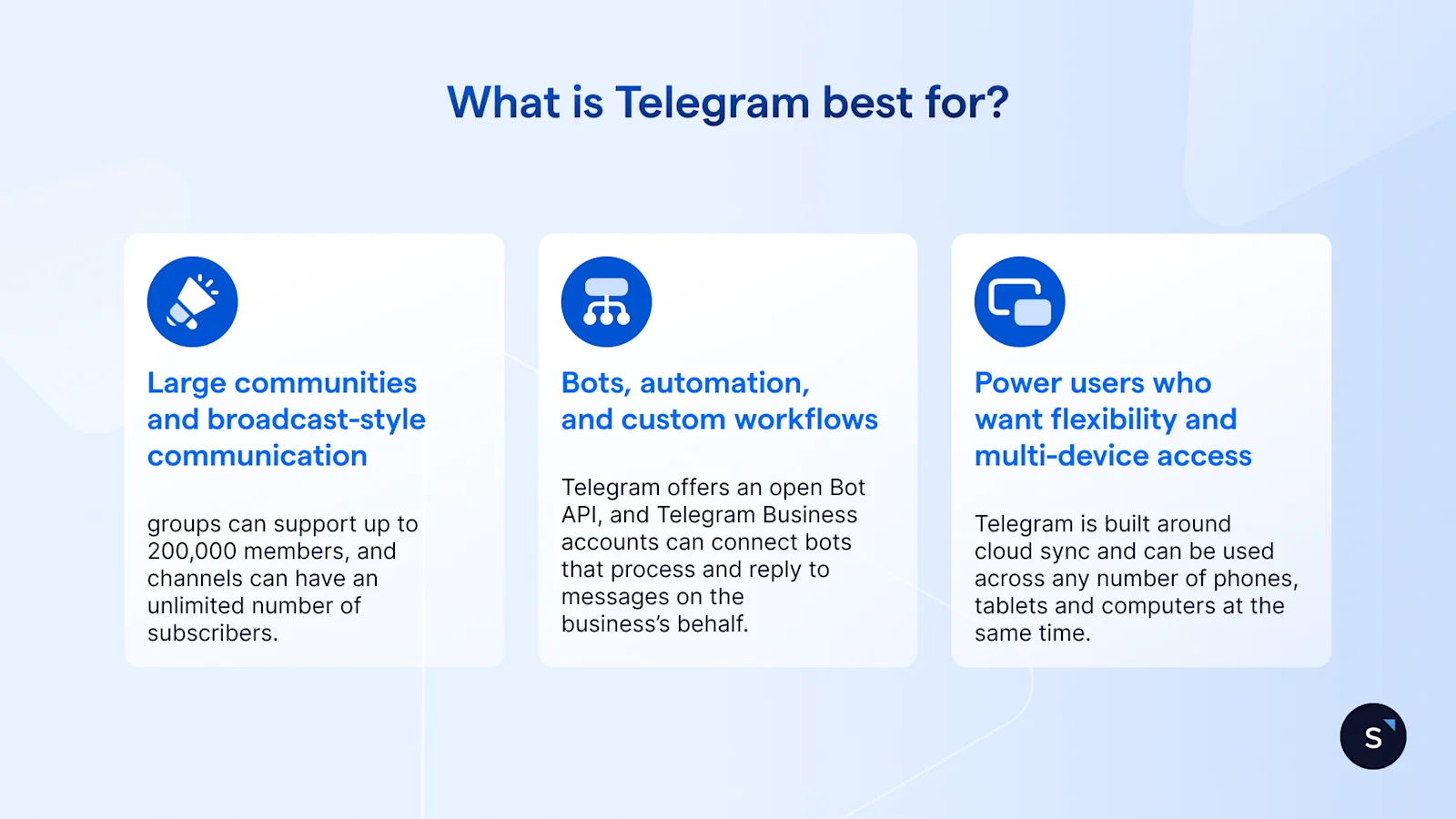
This is where Telegram is strongest. Its groups can support up to 200,000 members, and channels can have an unlimited number of subscribers, which makes it a natural fit for announcements, communities, education cohorts, fan bases, and product update feeds. If your business model depends more on one-to-many communication than on one-to-one conversion, Telegram has the edge.
Bots, automation, and custom workflows
Telegram’s bot ecosystem is more flexible than WhatsApp’s. The platform offers an open Bot API, and Telegram Business accounts can connect bots that process and reply to messages on the business’s behalf. That makes Telegram attractive for brands that want highly customised experiences, lightweight self-service tools, or developer-led automation.
Power users who want flexibility and multi-device access
Telegram is built around cloud sync and can be used on any number of phones, tablets, and computers simultaneously. For teams or founders who work across devices all day, it feels more flexible than WhatsApp’s linked-device model.
Telegram vs WhatsApp for business: which one should companies choose?
Customer support
For customer support, WhatsApp wins. In Singapore, customers already use it heavily, and Meta’s business tooling is built for sales, support, and lifecycle messaging.
Community building
For community building, Telegram wins. Channels and very large groups make it a better fit for product communities, investor updates, education groups, and follower-based content distribution.
Lead nurturing
For lead nurturing, WhatsApp wins. Meta explicitly supports marketing and utility messaging categories, and the platform is designed to carry customers from discovery to conversion through interactive CTAs, reminders, and follow-ups. In Singapore, that matters because the channel already has habitual usage.
Publishing updates
For product updates to large follower bases, Telegram wins. Its channels are better suited to publishing updates to very large audiences, without making every interaction a private customer service thread.
Commerce
For commerce and high-intent conversations, WhatsApp wins. WhatsApp Business Platform supports interactive CTAs, dynamic product lists, and structured business messaging, which makes it more commercially practical for enquiries, quotes, reminders, and purchase journeys.
For custom bots
For audience ownership and flexible bot experiences, Telegram wins. If your team wants fewer platform constraints and more freedom to build custom bot logic, Telegram is a more open environment.
Telegram vs WhatsApp pricing
At the entry level, both can look inexpensive. WhatsApp Business App is free to start, while Telegram’s core app is free and Telegram Business adds extra business features through a subscription model.
The difference appears when you scale. WhatsApp Business Platform uses a paid business messaging model where charges depend on the message category and destination market, and software partners may add platform fees. In practice, that means WhatsApp often becomes more expensive as volume rises, especially for outbound campaigns and larger support operations.
Telegram can be cheaper on platform fees, but “free” is not the same as “fully operational”. Serious business use often needs bot development, a shared inbox, workflow automation, analytics, or a third-party platform to manage conversations properly. That cost is less visible upfront, but it is still real.
Which one is right for you?
If you run an SME in Singapore and need one channel to start with, choose WhatsApp. It is the better default for customer communication, sales follow-up, support, and conversion. If your brand depends on communities, announcement-led engagement, or highly customised bots, add Telegram as a second channel instead of treating it as a full replacement.
A useful rule of thumb is this:
Use WhatsApp for leads, support, reminders, renewals, and revenue
Use Telegram for communities, follower updates, and bot-led experiences
Use both when your audience moves between public engagement and private conversion
How to manage Telegram and WhatsApp together in one workflow

This is where an omnichannel setup matters more than choosing a single winner.
With SleekFlow, businesses can connect Telegram and WhatsApp into a single shared workspace, route conversations, automate replies, sync CRM data, and hand off from AI to human agents without losing context. That is the better operating model for teams that market on one channel and close on another.
A practical workflow looks like this:
attract and update communities on Telegram integration
move high-intent conversations into WhatsApp Business API
manage both in one omnichannel inbox
automate qualification and handover with AgentFlow
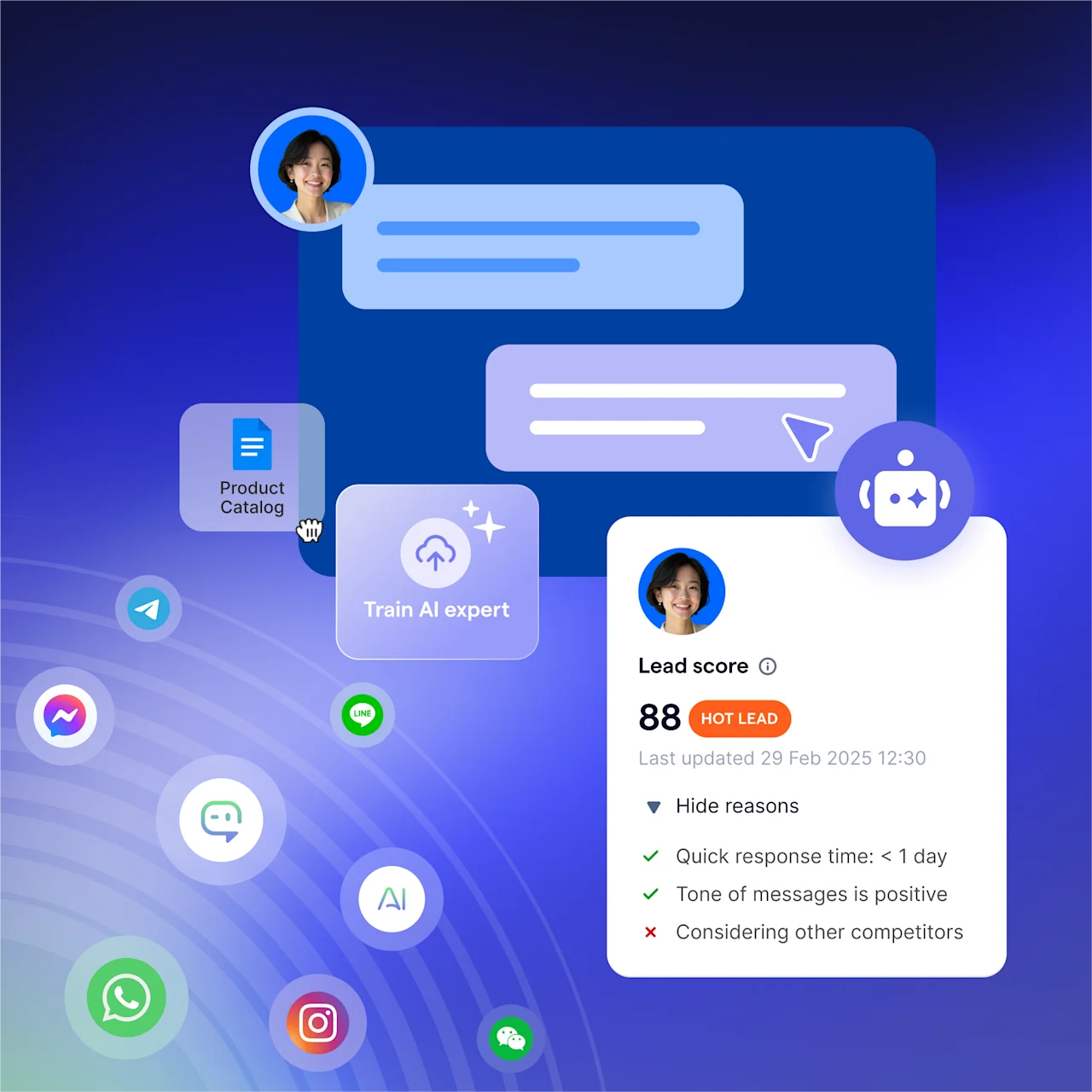
Ready to transform your WhatsApp strategy into a high-converting channel?
Book a free demo with SleekFlow today to see how our AI-native omnichannel solution can be customized for your business.


