Facebook Messenger CRM: How it works and why businesses use it


TL;DR: Quick Summary
- Facebook Messenger CRM connects Messenger to a centralized system for managing chats, contacts, and automation at scale.
- Compared with native Meta tools, it gives you automatic lead tracking, smarter routing, and stronger team collaboration.
- It helps businesses qualify leads faster with AI, guided handoffs, and unified inbox workflows across channels.
- It turns comments, ads, and public engagement into private Messenger conversations that are easier to convert.
- It also improves personalization and reporting, with examples in the article showing faster replies, lower cost per lead, and more revenue.
With billions of people logging into Facebook Messenger every month, the platform has become a powerful resource for business growth, extending far beyond social chatting. Instant messaging is now central to customer service, and with 93% of customers likely to return to companies offering great support, Messenger is a critical channel for building strong relationships fuelled by meaningful customer interactions.
Integrating a Facebook Messenger CRM into your workflow can help you:
Connect with a vast audience.
Streamline conversations.
Nurture leads effectively.
Create lasting customer loyalty.
What is a Facebook Messenger CRM?
A Facebook Messenger CRM (Customer Relationship Management) is a dedicated system that links your business’s Messenger API to a centralized dashboard. Because the native Messenger app isn’t designed for large-scale operations, a CRM is needed to bridge that gap.
With CRM and Facebook Messenger integration, you can:
Manage all Facebook Messenger conversations.
Unify channels.
Automate responses from a single hub.
Instead of juggling every direct message on your Facebook Page, your CRM organizes communications, syncs contacts, and automates processes to help you manage inquiries efficiently—all in one platform.
Native social media tools vs. unified CRM integration
Managing conversations with just native social platform tools is manageable if you're working solo, but can become overwhelming as your business expands. Here’s a breakdown of why a dedicated CRM outperforms native features:
Advantages of integrating CRM with Facebook Messenger
Connecting Facebook Messenger to a Customer Relationship Management (CRM) system can transform your communication strategy. This integration empowers you to build stronger relationships with leads and loyal customers while optimizing your sales pipeline. Here are the key advantages:
Enhance team collaboration and productivity
If you manage customer messages solely through Facebook, it’s easy to lose track—especially as your team grows. Integrating with a CRM creates a unified inbox, streamlines conversation routing, and makes teamwork more efficient for all your Facebook Messenger chats.
Intelligent routing: Automatically assign incoming chats to the right staff, so nothing slips through the cracks.
Omnichannel support: Your team can manage messages from Facebook, Instagram, and WhatsApp together—no more constant tab-switching.
Centralizing communication with a unified messaging inbox
A unified inbox addresses these challenges by consolidating all conversations into a single CRM dashboard. This allows your team to:
Receive automated chat assignments.
Access full contact profiles built from the moment a customer reaches out.
Avoid scrambling to find chat histories.
As a result, prospects get prompt and relevant replies, helping you score more conversions.
Qualify leads more efficiently
Bringing Messenger into your omnichannel AI system can make qualifying and nurturing leads almost effortless.
AI agents: Replace repetitive tasks with AI agents that guide conversations, score leads, suggest products, and set appointments, all day and night.
Lead handoffs: When a lead is seriously interested, AI hands them off—along with a summarized chat history—to a human agent, so sales can focus on closing.
How Kumon Thailand boosted lead generation with Click-to-Messenger ads
Kumon Thailand, which runs hundreds of after-school centers, wanted more student enrollments. They recognized that parents in their market were comfortable with Facebook’s click-to-message ads.
To reach more families and turn interest into solid leads, they retooled their ads for lead generation. Instead of broad campaigns, they targeted parents who’d interacted with their Facebook page. The ads included offers—like free testing and a school bag—plus a “Send message” call-to-action to gather contact details immediately in Messenger.
A head-to-head test of this strategy versus traditional engagement-focused ads delivered standout results:
Cost per lead dropped by 88%.
They reached more parents.
Lead volume soared.
Turning public engagement into private leads
Not every sales conversation starts in a private chat. Often, a customer signals intent by commenting on your posts or interacting with your paid ads.
A CRM that connects directly to your social feeds lets you respond quickly and move public engagement into private Messenger threads.
Instead of checking every comment manually, your team can reply within the CRM.
Use quick-reply shortcuts to save time.
Route high-potential leads straight into your sales and marketing process.
LABX clinic revolutionized lead flow with optimized Messenger campaigns
LABX Clinic, a top beauty clinic in Thailand, needed a fresh way to get qualified leads and convert them into appointments.
Their earlier strategy drew attention but didn’t turn enough prospects into conversations. Using Meta’s Click-to-Messenger ads, they offered a seamless chat experience where interested clients could ask questions and book appointments—no more web forms or landing pages.
This targeted, conversational strategy produced powerful results:
4.6X more high-quality leads.
76% drop in cost per lead compared to their old tactics.
Conversion rates shot up, speeding appointment bookings.
First-contact trust and responsiveness improved with new clients.
Deliver personalized customer experiences
Customers have come to expect personal attention. With Facebook Messenger CRM, you can track every interaction—purchases, messages, preferences—in real time, making it possible to tailor every touchpoint.
Smarter segmentation and targeted broadcasts: Automatically break your audience into custom groups by lifecycle stage, and create campaigns that resonate when it matters most.
In-chat payments and AI recommendations: AI can recommend products during chats, generate instant payment links, and help customers buy without ever leaving Messenger.
Track performance with advanced reporting
Growth relies on understanding what works. By syncing Messenger with your CRM, you gain deep insights into key metrics, allowing you to make data-driven adjustments that enhance performance.
Campaign effectiveness: See which campaigns are actually boosting orders.
Customer satisfaction: Track how happy your customers are.
Market trends: Identify emerging trends to target in future campaigns.
These insights allow you to sharpen your campaigns, improve customer retention, and maintain high service quality.
How to connect Facebook Messenger to a CRM?
Connecting Facebook Messenger to your CRM doesn't have to be a headache. Thanks to modern omnichannel platforms, the integration is surprisingly simple. Here's a general guide to what the setup process looks like:
Prepare your assets: Make sure you have a Facebook account, an active Business Page, and admin access.
Access your CRM integration settings: Go to the integration or channels section within your CRM.
Add Facebook Messenger: Select and add Facebook Messenger as an integration.
Grant permissions: Sign into Facebook, pick your Business Page, and authorize access so your CRM can oversee messages.
Complete the setup: Hit “Done” and confirm; the systems will connect.
Sync history: Import prior contacts and chat history so your team is fully up to speed from the first message.
Supercharging sales with agentic AI and smart workflows
A high volume of messages can easily overwhelm your sales team, leading to missed opportunities and slow response times. Integrating agentic AI into your Facebook Messenger workflow gives your business the ability to scale effectively. You can handle more conversations without losing the human touch that ultimately closes deals.
Qualify and prioritize leads: Deploy customized AI agents trained on your brand’s knowledge to qualify leads, answer questions, and hand off real prospects to human reps.
Arm your team: When it’s time for a human to step in, your team receives concise chat summaries, lead scoring, and AI insights.
Scale with a personal touch: Features like Inbox Co-Pilot let reps send on-brand, accurate replies with a single click—making it easy to scale up outreach, close new business, and maintain a personal feel.
Real-world examples: SleekFlow in action
Here are two examples of businesses using SleekFlow to manage customer conversations more efficiently and improve outcomes across Facebook.
1. How2design4u uses SleekFlow to capture, qualify, and convert more Facebook leads
How2design4u was managing enquiries across multiple channels and manually updating customer details, which made follow-up slower and less consistent. With SleekFlow, the team used Facebook Lead Ads integration to automatically map lead data into the customer profile, mark the lead source, and follow up with prospects through automated chat flows. SleekFlow also helped the team route enquiries based on customer needs and manage Facebook Messenger, Instagram DM, and WhatsApp conversations in one shared inbox.
This made it easier for the team to respond faster, keep customer data organized, and convert more enquiries into revenue. As a result:
2X more leads
91% reply rate, up from 55%
SG$450,000 in revenue generated from Click to WhatsApp and Facebook Lead Ads campaigns in 2 months
I would recommend SleekFlow Automation to others. When the leads come in from Facebook, the auto replies can resolve their enquiries and our sales team can reach out to them instantly.

Timothy Poh
Marketing Director of How2design4u
2. Kipinä uses SleekFlow to centralize Facebook and Instagram DMs and respond faster
Kipinä, an early childhood school, needs a better way to manage incoming enquiries, organize lead data, and keep up with parent communications across branches. With SleekFlow, the team brought Facebook DMs and Instagram messages into one dashboards, used automation to route chats to the correct branch or team, and relied on reporting to monitor message volume, lead flow, and response times more closely.
With communication more centralized and structured, Kipinä was able to reply more quickly and run more measurable outreach campaigns during key enrollment periods. As a result:
10x faster response rate from prospective parents
Stronger engagement and higher enrollment momentum through more structured follow-up and campaigns
SleekFlow makes database management easier, ensuring no leads go unmanaged. With SleekFlow, we are also able to increase brand engagement and awareness more quickly, while making sure all incoming data is measured and processed accurately and efficiently.

Ms. Ria Arini
Director Of Marketing
SleekFlow: Best CRM for Facebook Messenger
When tapping into the vast world of social commerce, SleekFlow sets itself apart. As an all-in-one omnichannel solution, SleekFlow amps up your social selling and customer support, particularly through Facebook Messenger.
By integrating SleekFlow, you gain access to tools like Flow Builder, Broadcasts, Analytics, and more.
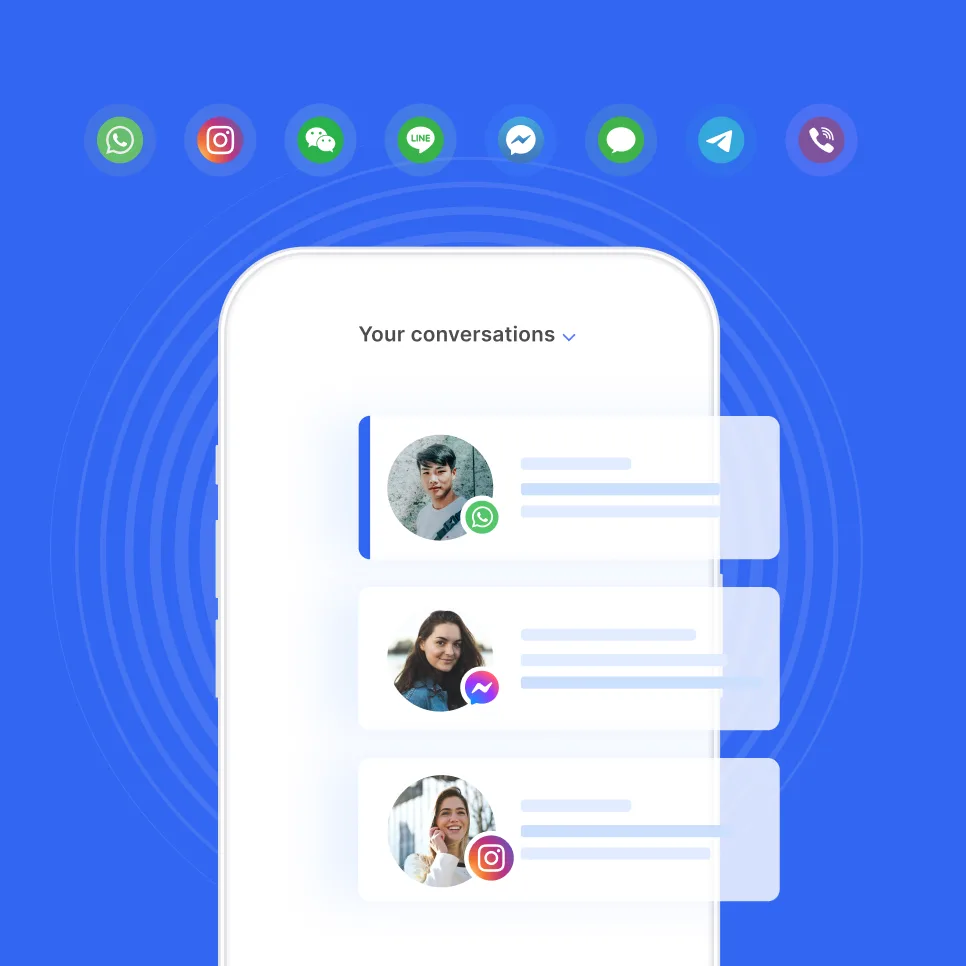
Check out this snapshot of how SleekFlow outshines traditional methods:
Looking to optimize every Messenger sale? SleekFlow empowers your team to deliver seamless, high-value experiences that drive revenue.
Want to outcompete your peers with SleekFlow's help?
Book your personalised demo with SleekFlow today and unlock the potential of seamless communication
Frequently Asked Questions
Does Facebook have a built-in CRM?
Why should I connect Messenger to a CRM?
How does a CRM help manage conversations?
Can I automate replies on Messenger with a CRM?
Recommended for you


