The 6 best Fin alternatives in 2026


TL;DR: Quick Summary
- SleekFlow fits B2C brands running sales, marketing and support over WhatsApp and Instagram, while Fin fits teams resolving support tickets on a helpdesk.
- Meta reported more than one billion active threads with businesses on WhatsApp, Messenger and Instagram every day in June 2026.
- Fin invests in resolving helpdesk conversations customers start, while SleekFlow invests in two-way sales, marketing and support messaging.
- Before shortlisting Fin alternatives, tally last quarter's revenue conversations by channel and by who started them.
- When most revenue conversations ran on WhatsApp or Instagram, SleekFlow fits, and heavy email volume points to Zendesk.
Author's note: this roundup reflects SleekFlow's assessment; product details are accurate as of publication and may change, so verify with each provider. Full note below.
Somewhere in the last year, the job changed. Your AI agent is now the first thing a customer talks to before they buy, and the last thing they talk to before they reorder.
If your questions are still mostly after the sale, and they still arrive by email or web chat, the setup you have may keep doing its job.
Or your customers reply to WhatsApp ads, ask about stock on Instagram, and expect one chat to carry them to checkout and back. Your team sells and runs campaigns in the same threads where it answers questions.
Moving means rebuilding knowledge sources, reconnecting a WhatsApp number and retraining your team, work that no pricing page shows.
Below are 6 Fin alternatives, and the kind of team each one suits best.
Why look for a Fin alternative?
Teams look for a Fin alternative when their conversations move from inbound support tickets toward sales and marketing on messaging apps, when per-outcome billing gets hard to forecast, or when Fin's sale to Salesforce prompts a contract review.
First, a naming point that trips up most shortlists. Fin is the company that was called Intercom until May 2026, and Intercom is still the name of its helpdesk product.
Fin the AI agent always sits on top of a helpdesk. That can be Intercom's own helpdesk, or one you already run.
As of Oct 2026, Fin's capabilities page says the agent responds "in 45+ languages," and Fin runs on Intercom, Salesforce, HubSpot, Freshdesk and Zendesk. Its certifications include SOC 2 Type II, ISO 27001 and HIPAA.
If most of your volume is email and web chat, staying put can make sense.
The usual reasons to compare:
Your conversations start on your side too
Fin for Sales "handles inbound sales end to end," per fin.ai. If revenue also comes from broadcasts, win-backs and ad-driven journeys you start, you'll want those beside your AI agent.
Your customers live on messaging apps
Meta reported more than one billion active threads with businesses on WhatsApp, Messenger and Instagram every day in June 2026.
You want a bill that's easier to forecast
As of Oct 2026, Fin's pricing page bills per outcome, one per conversation, with qualified leads priced higher than resolutions and a 50-outcome monthly minimum on helpdesks other than Intercom's. A busy month, or an AI that handles more, means more outcomes billed.
The ownership changed.
Salesforce announced on 10 Sep 2026 that it had completed its acquisition of Fin, formerly Intercom. The announcement says Fin "will continue to serve its customers," and for teams nearing renewal it's a natural point to compare options.
Fin alternatives compared at a glance
These options are listed in no particular order. Have a look at each to see which best fits your team and your business needs.
1. Decagon, best for enterprise support teams that want agent logic in plain language
Decagon calls itself "the AI concierge for every customer." Its agents follow Agent Operating Procedures (AOPs), workflows written in natural language, across chat, email and voice, with SMS and WhatsApp also named.
It connects to the support stack you already run, such as Salesforce, Zendesk and Kustomer.
Pros
AOPs let your team write agent workflows in plain language
Simulations test agent behavior before launch, Experiments runs live A/B tests, and Watchtower runs always-on QA afterwards
Proactive Agents added user memory and outbound voice in Mar 2026, and Campaign Composer added multi-touch outbound in Sep 2026
Cons
No public pricing or self-serve trial; you start with a demo
Connects to your existing helpdesk or contact center, so it adds a platform rather than replacing one
Its product overview lists chat, email and voice, so Instagram and Messenger coverage isn't published
How it charges
Decagon's pricing post describes two models, a fixed rate for every incoming conversation, or a higher rate for each fully resolved one with no charge for escalations
Decagon says most customers choose per-conversation pricing, and prices aren't published
What this means for you: per-conversation billing tracks volume rather than results, which is easy to budget but also bills the conversations that still reach a person.
2. SleekFlow, best for B2C brands that sell, market and support over messaging apps
SleekFlow describes itself as "the AI suite for revenue-driving conversations." For a team leaving Fin, AI agents, a shared inbox and broadcast campaigns sit in one platform across the WhatsApp Business API, Instagram, Messenger, SMS and more, so one thread carries a lead, a sale and a reorder.
Pros
AgentFlow's Inbound Agent handles sales inquiries and support end to end, from qualifying leads to resolving issues
Broadcast campaigns on WhatsApp, Messenger, WeChat, Telegram, SMS, Viber and LINE, plus automated follow-up after Click to WhatsApp Ads
Agents learn from your website and documents, connect to Shopify, HubSpot and Salesforce, and run workflows such as payments
Cons
Built around messaging apps first, so a team whose volume is mostly email or phone calls has a narrower fit
The Outbound Agent and Copilot Agent are listed as coming soon
There's no free plan, and new users get a 7-day Pro trial
How it charges
Plans are priced by monthly active contacts, anyone who messages you or gets a message from you, excluding unanswered one-way broadcasts
Pro and Premium include 10 user accounts, and AI replies draw on a monthly credit allowance set by contact tier in the Fair Use Policy
Meta charges a fee for each WhatsApp template message, SleekFlow bills conversation rates on its own rate card, and number hosting is a separate monthly fee
What this means for you: inside the allowance, more AI work adds no per-answer charge, and heavier use moves you up a contact tier rather than adding a per-reply fee.
How SACES turned 75% of AI-qualified leads into bookings
SACES, an air-conditioning installation and servicing business in Singapore, had conversations split across WhatsApp, Facebook and Instagram, and slow manual replies were costing it leads. It trained AgentFlow AI agents on its FAQs, service rate sheets and manufacturer brochures, then added lead scoring and human routing.
Results:
75% enquiry-to-booking conversion from AI-qualified leads
More than 60% of incoming enquiries managed by AI agents
90% faster response time, from multiple days to within 24 hours
3. Gorgias AI Agent, best for Shopify brands that want AI inside their helpdesk
Gorgias describes its platform as built for "conversations that drive revenue, not just resolutions," and AI Agent is the AI inside that e-commerce helpdesk. As of Oct 2026, its docs list email, chat, SMS, Instagram DMs, Messenger and WhatsApp as AI Agent channels, and AI Agent itself runs on Shopify stores.
Pros
Shopping Assistant recommends products from browsing and cart data and can surface Shopify discounts
Takes real order actions, such as canceling an order, processing a return or updating a shipping address
Replies in over 80 languages, per Gorgias docs, even when your knowledge base isn't translated
Cons
AI Agent is supported on Shopify stores, so BigCommerce, Magento and WooCommerce shops get the other automation features only
AI Agent runs inside the Gorgias helpdesk, so adopting it means adopting Gorgias for ticketing too
Voice is a separate helpdesk add-on
How it charges
A helpdesk plan sized by monthly billable tickets, which Gorgias says is "never priced per agent"
A fee for each conversation AI Agent resolves
A ticket AI Agent resolves on its own, with no human involved, carries both the ticket fee and the automation fee, per Gorgias billing docs
What this means for you: a busy season raises your ticket count and your AI count together, so the bill moves on both lines.
4. Zendesk AI agents, best for support teams with high email, messaging and voice volume
Zendesk describes them as "self-improving AI agents built for resolution." They work across messaging, email and voice in 80 languages, and in Mar 2026 Zendesk announced it would drop the split between Essential and Advanced AI agents.
Pros
One AI agent covers messaging, email (including web forms) and voice call flows
Agentic reasoning, multi-step procedures and API integrations come with every Suite and Support plan, per the Mar 2026 announcement
Certifications cover ISO 27001, ISO 42001, SOC 2 Type II, PCI-DSS and HIPAA, with FedRAMP authorization at Low Impact SaaS
Cons
AI agents come with Zendesk Suite and Support plans, so they arrive with Zendesk's ticketing
On social messaging channels including WhatsApp, Zendesk documents differences in what its AI agents can do
Zendesk says AI agents Essential and legacy AI agent functionality will no longer be available on 10 Dec 2026, so older setups need moving
How it charges
Agent seats on a Suite or Support plan
A set number of automated resolutions included per agent each month, depending on plan
Extra automated resolutions billed per resolution, counted only when the AI resolves a request without escalation
What this means for you: your included AI volume grows with headcount, so a small team that wants the AI to do more will buy resolutions on top.
5. Ada, best for enterprises that want one AI agent across voice, messaging and email
Ada calls itself "the agentic customer experience platform." In Feb 2026, Ada launched a single Reasoning Engine that runs across voice, messaging, social and email.
Ada lists chat, Messenger, WhatsApp, SMS, Instagram and in-app among its channels, and Playbooks let the agent follow multi-step procedures using real-time data.
Pros
One Reasoning Engine shared across voice, messaging, social and email
Supports 60 languages, with knowledge ingestion in each, per Ada's docs
Integrates with Salesforce, Zendesk, ServiceNow, Genesys and Amazon Connect
Cons
No public pricing or trial; you start with a demo
Hands conversations to people in your helpdesk or contact center, so you'll keep one alongside it
Built for enterprise-scale deployments, which may be more than a small team needs
How it charges
Pricing isn't published, and quotes come through Ada's sales team
What this means for you: with no published unit, the first real number arrives inside a sales process, so the budgeting happens after the shortlisting rather than before it.
6. Sierra, best for large enterprises running customer service at scale
Sierra's homepage line is "Better outcomes. Built on Sierra." Its agents work across voice, chat, email, WhatsApp and SMS in 59 languages, and teams build them by describing the behavior they want.
Pros
Ghostwriter builds and updates agents from plain-language descriptions, and Agent Studio is the no-code place to manage them
Covers inbound and outbound voice alongside chat, email, SMS and WhatsApp
Lists SOC 2, ISO 27001, ISO 42001, HIPAA, PCI and FedRAMP High among its certifications
Cons
No public pricing or trial; you start with a demo
Built for large-enterprise partnerships, which may be more than a small team needs
Integrations aren't published as a named list
How it charges
Outcome-based, so you pay when the agent achieves an agreed result, per Sierra's pricing post
Some uses, such as routing, can be priced per conversation
What this means for you: outcome pricing only works in your favor when the definition of an outcome is narrow, and Sierra's own post says routing can be billed per conversation instead.
Fin alternatives pricing: what each platform bills for
Billing units differ across these platforms, so compare what each one counts. SleekFlow bills per monthly active contact, Fin per outcome, Gorgias per resolved conversation on top of tickets, Zendesk per agent seat with included resolutions, Decagon per conversation or resolution, and Sierra per outcome.
Two questions matter most:
Does the bill grow as you grow? Seat-based plans grow with headcount, ticket-based plans with support volume, and contact-based plans with the number of customers you talk to each month.
Does the bill grow when the AI does more? Per-outcome and per-resolution pricing rises with each conversation the AI handles. SleekFlow's AI usage sits inside a credit allowance by contact tier, so heavier use moves you up a tier rather than adding a per-answer charge.
SleekFlow's prices vary by market, so check each live pricing page for your figure, and see what an AI agent costs for more.
How to choose the right Fin alternative
The right Fin alternative depends first on the outcome you need from AI this year, such as more qualified leads or faster resolution. Next is whether it covers your customers' channels, which the table above lays out.
How it charges comes last, so a low price never picks a platform built for a different job.
Match the outcome:
More qualified leads and repeat sales from chat: SleekFlow, or Gorgias if you sell only on Shopify
Faster resolution on a large support desk: Zendesk AI agents, Decagon or Ada
Enterprise-scale service with voice: Sierra, Ada or Decagon
Finally, run last quarter's volume through each pricing model. The one that grows slowest with your busiest channel usually makes the strongest business case.
The best Fin alternative for messaging-led sales, marketing and support
Fin remains a strong fit if your support runs on a helpdesk and most conversations arrive by email and web chat. Zendesk AI agents suit that team at a larger ticket load, and Decagon, Ada and Sierra suit enterprises building service agents at scale.
If your customers buy, ask and come back over WhatsApp, Instagram and other messaging apps, SleekFlow puts AI agents, your team's inbox and your campaigns in one place, so sales, marketing and support work from the same thread.
See how AgentFlow handles a real conversation.
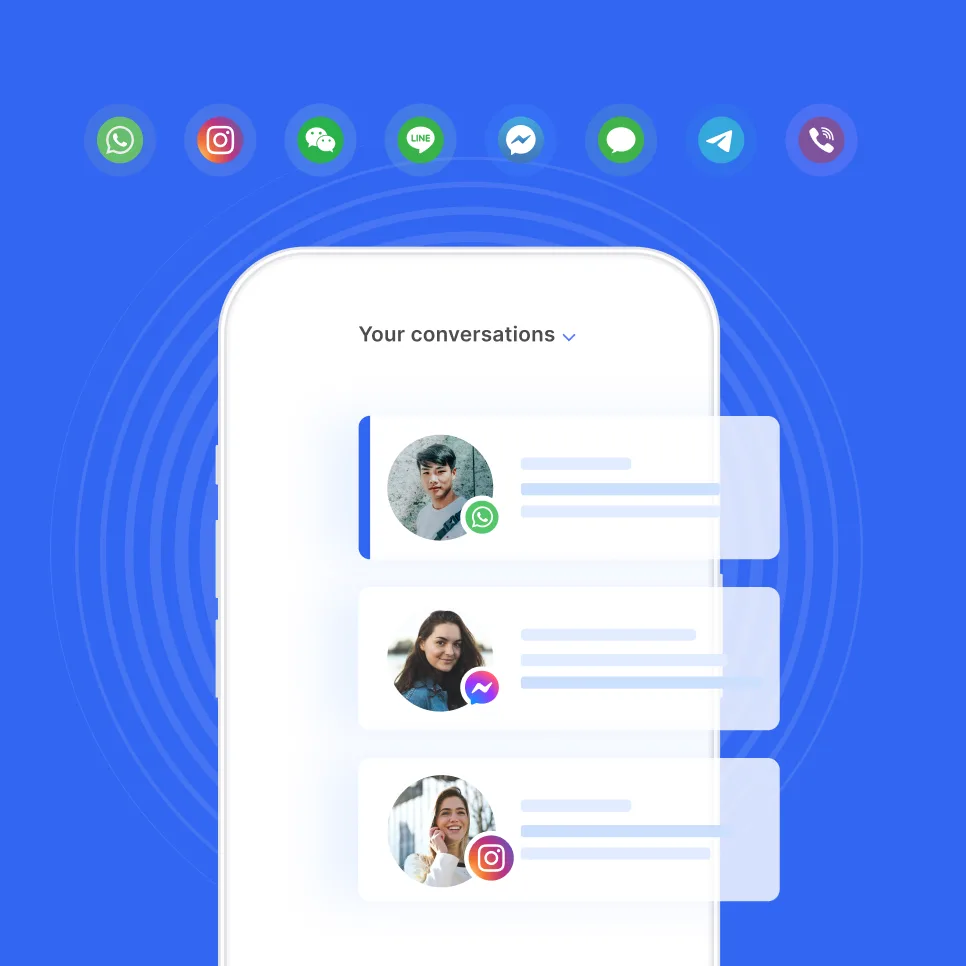
Want to outcompete your peers with SleekFlow's help?
Book your personalised demo with SleekFlow today and unlock the potential of seamless communication
Author's note: This roundup reflects SleekFlow's assessment and is for general information. Product details are accurate to the best of our knowledge at the time of publishing, drawn from each provider's public information, and change often, so verify the latest with each provider directly. Each provider's published pages were checked on 7 Oct 2026. We may update this article from time to time. Opinions are our own. Think we've got something wrong? Contact us and we will review and correct it promptly.


