AI platforms for detecting buying intent: How they work and which type fits your team


TL; DR: Quick Summary
- Buying intent signals fall into two broad categories: third-party (upstream) signals gathered before a prospect contacts you, and first-party (in-conversation) signals gathered once they do.
- AI platforms for detecting buying intent generally work by tracking web and firmographic activity, or by analysing live conversations for readiness cues; the two approaches are complementary rather than competing.
- Third-party signal-tracking platforms suit outbound, account-based marketing (ABM), and cold-account discovery, while in-conversation AI agents suit inbound-led, high-message-volume businesses.
- Singapore’s e-commerce, retail, education, and home services sectors tend to generate strong conversational buying intent, since customers message businesses directly on WhatsApp, Instagram, and live chat.
- Many growing teams don’t need to pick only one lane; pairing an upstream intent platform with an in-conversation AI agent covers both early discovery and active conversion.
- Response speed still matters: businesses that reply to enquiries quickly convert meaningfully more leads than those that take hours or days to respond.
Singapore sales and customer experience teams are under constant pressure to respond faster and prioritise the right leads, especially as more of the buying journey moves into digital and conversational channels. Gartner projects that up to 80% of B2B sales interactions will occur through digital channels, and Southeast Asia’s digital economy has grown from roughly US$40 billion to more than US$300 billion in gross merchandise value over the past decade. In this environment, the businesses that can spot genuine buying intent early, rather than chasing cold leads, are the ones winning deals.
This guide explains what buying intent signals are, how AI platforms for detecting buying intent actually work, how five widely used tools compare, and how to choose (or combine) the right type for your sales motion.
Speed matters here too. A widely cited study published in the Harvard Business Review found that only 37% of companies responded to a new sales lead within an hour, and 23% never responded at all. AI-driven intent detection helps close that gap by flagging high-intent conversations the moment they happen, rather than hours or days later.
What are buying intent signals?
Buying intent signals are the behavioural, contextual, and conversational clues that show how close a prospect is to making a purchase. Some are explicit, such as a customer asking for pricing or requesting a demo. Others are implicit, such as repeated visits to a pricing page or a spike in enquiries during a promotion.
Sales and marketing teams used to rely on manual signals: a phone call, a form submission, or a rep’s instinct. Today, AI platforms for detecting buying intent analyse these signals automatically and at scale, whether that means tracking anonymous web activity across a product category or reading a live chat conversation, so teams can prioritise the prospects most likely to convert.
How AI platforms detect buying intent
Most tools on the market today take one of two approaches.
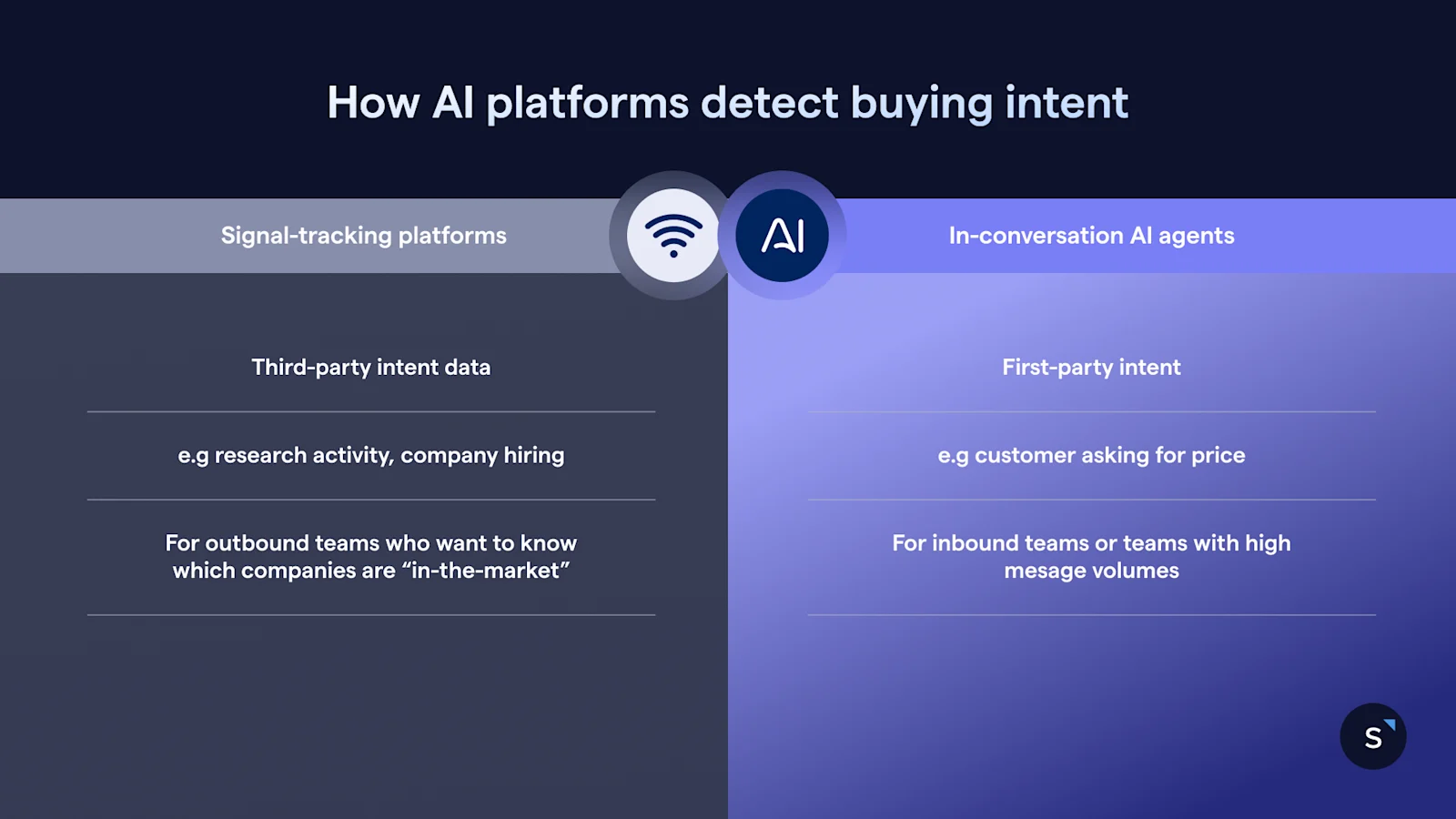
Signal-tracking platforms (third-party intent data)
These platforms monitor web activity, content consumption, and firmographic or technographic changes, for example a company hiring for a relevant role, or research activity on review sites, then score accounts against your ideal customer profile (ICP). They are built for outbound and teams who want to know which companies are “in-market” before a rep ever picks up the phone.
In-conversation AI agents (first-party intent)
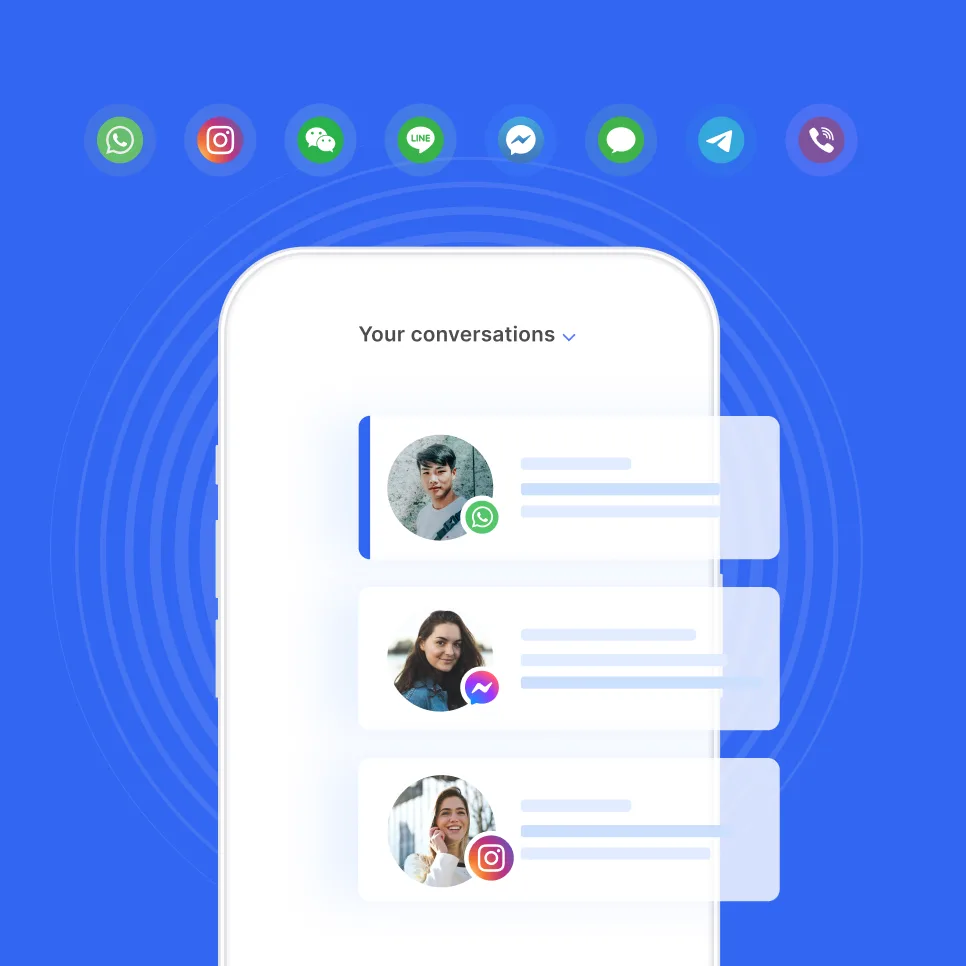
These tools read intent from what a customer says, asks, and does inside a live conversation, on WhatsApp, Instagram, Messenger, or a website chat widget, and qualify that intent in real time. Rather than waiting for a data refresh, an in-conversation AI agent can act immediately: booking a call, routing a hot lead to a human rep, or enriching the CRM record with details the customer has just shared.
The two lanes of intent detection
It helps to think of buying intent detection as two lanes that serve different stages and sales motions.
Lane 2 is arguably the highest-intent moment available to a business, because the customer has already initiated contact. SleekFlow’s AgentFlow is a practical example of this lane in action: it reads what a customer types or asks inside a chat and flags how ready they are to buy, without needing a separate third-party data contract. This is not a claim that conversational intent replaces upstream data; rather, it captures a different, often higher-confidence, part of the journey.
AI platforms for detecting buying intent: A comparison
Here is how five widely used AI platforms for detecting buying intent compare, ordered from conversational-first to upstream-data-first:
Each has an honest limitation worth knowing. SleekFlow’s AgentFlow reads intent within conversations you are already having, so it will not surface anonymous accounts researching you before they reach out. 6sense and Demandbase typically require a data contract and longer onboarding, which can be heavy for smaller teams. ZoomInfo’s intent scores are based on inferred third-party activity rather than a customer’s direct statements. Gong focuses on voice and video conversations, so it will not capture chat-based or anonymous web signals.
Which type of platform should you choose?
The right choice depends on your sales motion, not on which platform has the most features.
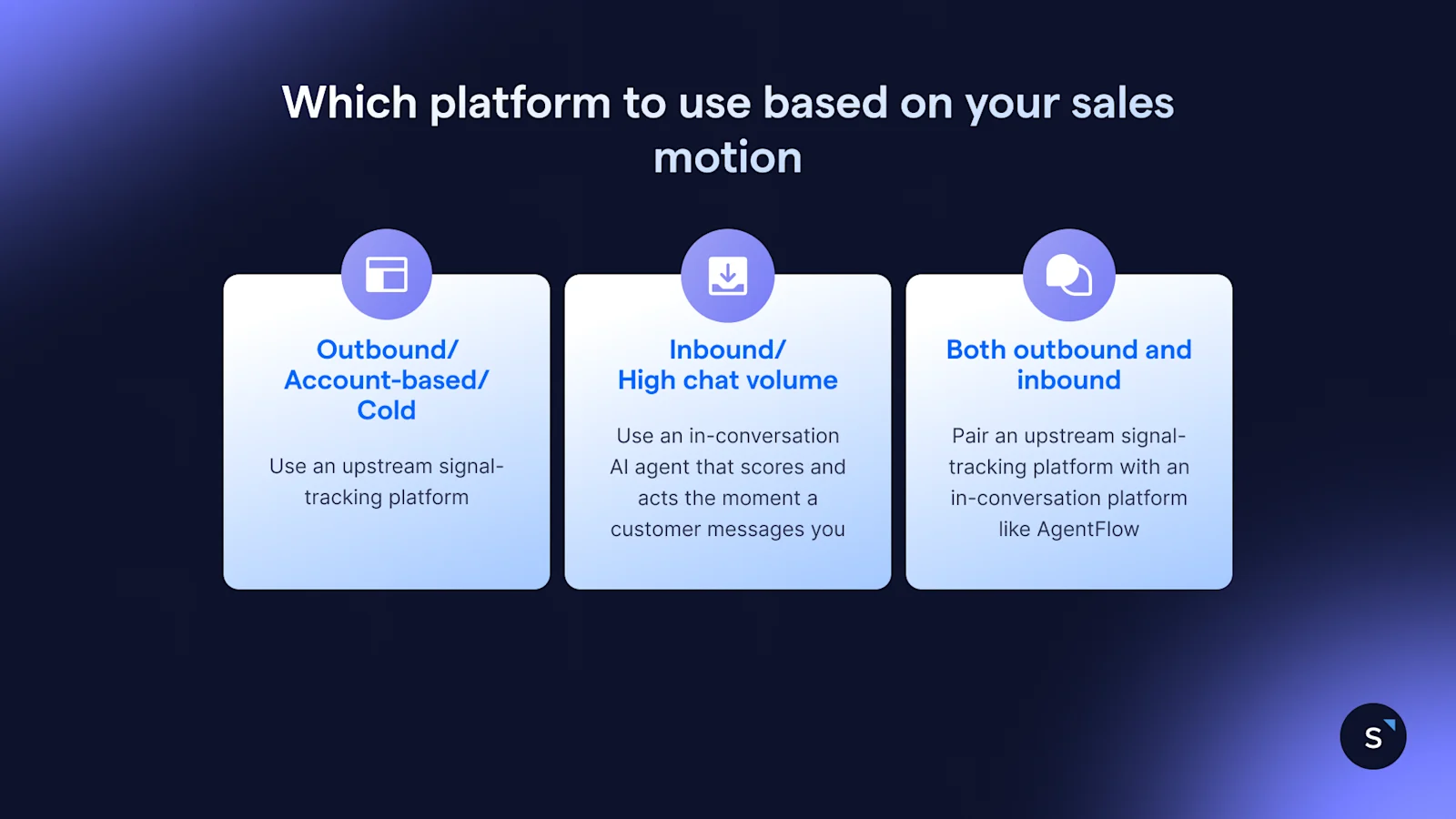
Honestly, you may need both. If your team runs outbound campaigns and also fields a high volume of inbound enquiries on WhatsApp or Instagram, relying on a single lane will leave a gap: either missed accounts before they contact you, or missed signals once they do. For most teams, the fastest way to close the inbound half of that gap is with an in-conversation AI agent that turns qualified conversations into booked calls the same day it’s switched on.
How SleekFlow AI helps you detect and act on buying intent
SleekFlow's Inbound AI Agent reads the content, specificity, and urgency of a customer's message across WhatsApp, Instagram, Messenger, and live chat, and scores how close they are to buying. Taylor's University runs this same scoring on its admissions enquiries, sorting routine questions from prospects who need a real conversation with a counsellor.
Real-life case study: turning chat signals into enrolments at Taylor's University
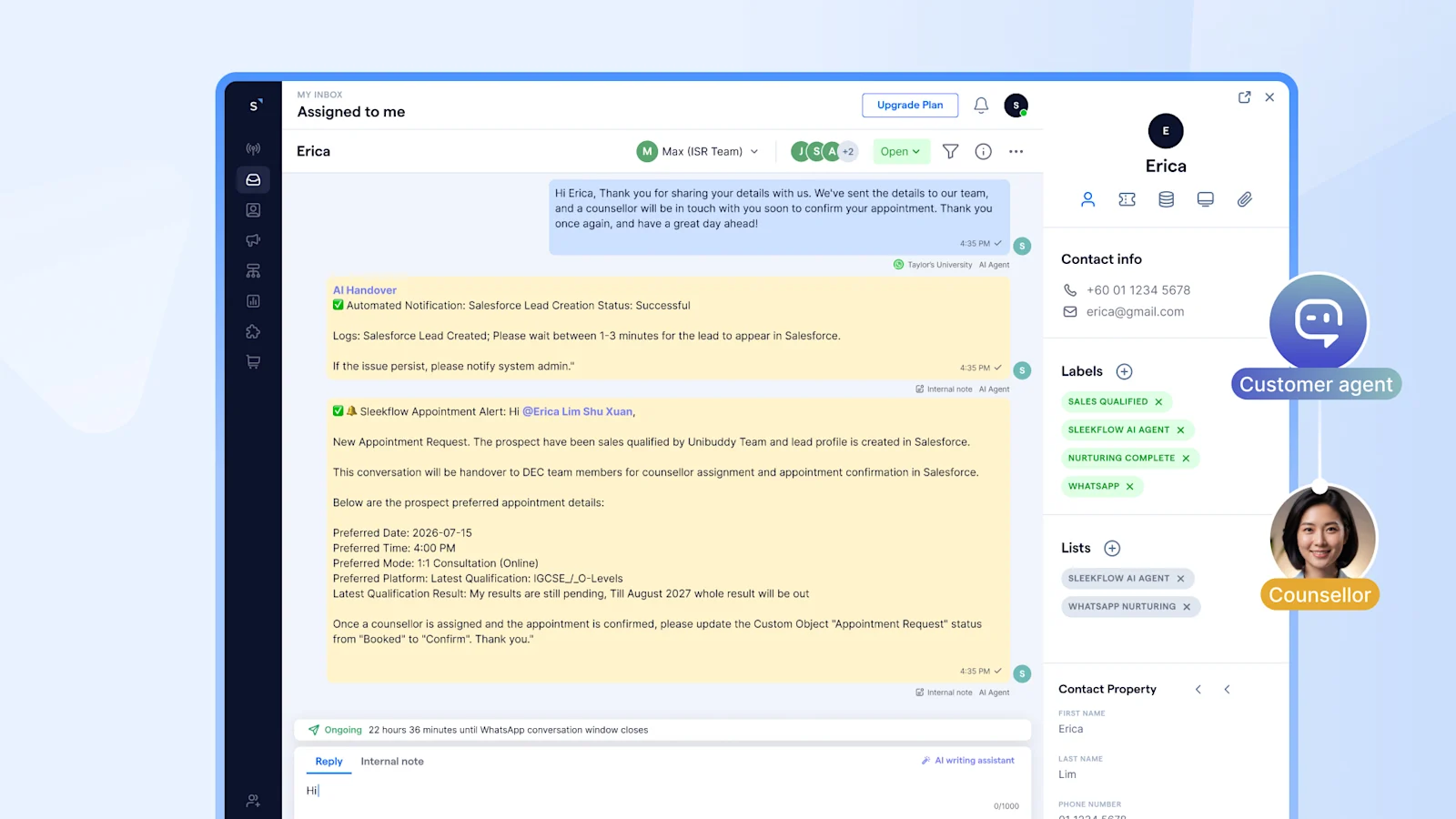
Taylor's University, one of Malaysia's leading private universities, engages thousands of prospective students and parents across WhatsApp, Facebook, Instagram, and TikTok. With three major recruitment cycles a year, enquiry volume can surge past 10,000 conversations during peak periods, and the team faced a familiar problem: channels were siloed, context was lost during handovers, and average first response time sat at 1 hour and 20 minutes.
Taylor's deployed SleekFlow to unify its channels, connect conversation data to its Salesforce CRM, and put AgentFlow in as the first layer of engagement. Enquiries from Click-to-WhatsApp campaigns are captured in WhatsApp, assessed by AgentFlow, categorised by intent, synced into Salesforce, and routed to the right team when a human counsellor is needed. Routine admissions questions get answered immediately; higher-intent prospects are prioritised for personal guidance.
The results:
4x higher lead-to-enrolment: enquiries through SleekFlow's conversational channels hit an 11% lead-to-enrolment rate, compared to 2.7% across the university's broader online lead base.
79% faster first response: average first response time dropped from 1 hour 20 minutes to 17 minutes year-over-year, with reply rates rising from 71.5% to 79.3%.
Scale without added headcount: across 2025, the team handled more than 60,000 contacts and close to 36,000 conversations from a single platform.
From signal to action
Buying intent no longer lives only in anonymous web data; increasingly, it shows up in real time, inside the conversations your business is already having. Whether you invest in upstream signal tracking, an in-conversation AI agent, or both, the goal is the same: spend your team’s time on the prospects most likely to buy.
Detecting intent is only useful if something happens next.
SleekFlow’s AI agents can book appointments directly in a customer’s calendar, route high-scoring leads to the right human rep with a full conversation summary, and enrich CRM records automatically, so no one has to re-ask a question the customer already answered.
Detecting intent is only useful if something happens next.
SleekFlow’s AI agents can book appointments directly in a customer’s calendar, route high-scoring leads to the right human rep with a full conversation summary, and enrich CRM records automatically, so no one has to re-ask a question the customer already answered.


