Automated lead qualification: How it works and how to set it up


TL; DR: Quick Summary
- Automated lead qualification uses software or AI to score incoming leads against your ideal customer profile and buying-intent signals, then routes the best-fit leads to a rep automatically.
- It typically follows five steps: capture, enrich, score, route, and trigger follow-up.
- Common frameworks include BANT, CHAMP, and the MQL vs SQL distinction.
- Look for real-time scoring, CRM integration, customisable rules, fallback logic, and analytics when choosing a tool.
- Singapore SME SACES saw 75% of AI-qualified leads convert to bookings after automating lead qualification with SleekFlow's AgentFlow.
What is automated lead qualification?
Automated lead qualification is the use of software to evaluate incoming leads against set criteria, scoring their fit and buying intent and routing them to the right rep, without a human reviewing every submission. It analyses signals such as company size, job title, source, and behaviour to decide in real time which enquiries deserve immediate attention.
For Singapore businesses fielding enquiries across WhatsApp, web chat, and forms simultaneously, this matters because buyers rarely wait. A prospect comparing three vendors will usually book with whoever replies first with a relevant answer — not whoever replies most thoroughly two days later.
Why automated lead qualification matters for Singapore businesses
Three shifts make manual qualification increasingly risky for growing teams:
Lead quality is now the top marketing metric. HubSpot's 2026 State of Marketing data found that lead quality and MQL tracking is the single metric marketers care about most, ahead of ROI and cost per acquisition — yet 30% still cite lead generation as a top challenge.
AI-assisted buyers arrive later and better-informed, which means a generic first reply can lose a deal that a sharper, faster one would have won.
AI adoption in sales is now mainstream, not experimental. Salesforce's State of Sales research reports that nine in ten sales teams already use AI agents or plan to within two years.
For SMEs in particular, manual triage doesn't scale: a small admin team fielding enquiries across multiple channels will naturally prioritise whoever is closest to booking, leaving early-stage but genuinely interested leads to go cold.
How automated lead qualification works
Most automated lead qualification systems follow the same five-step sequence, whether the lead arrives via a form, live chat, or a WhatsApp message.
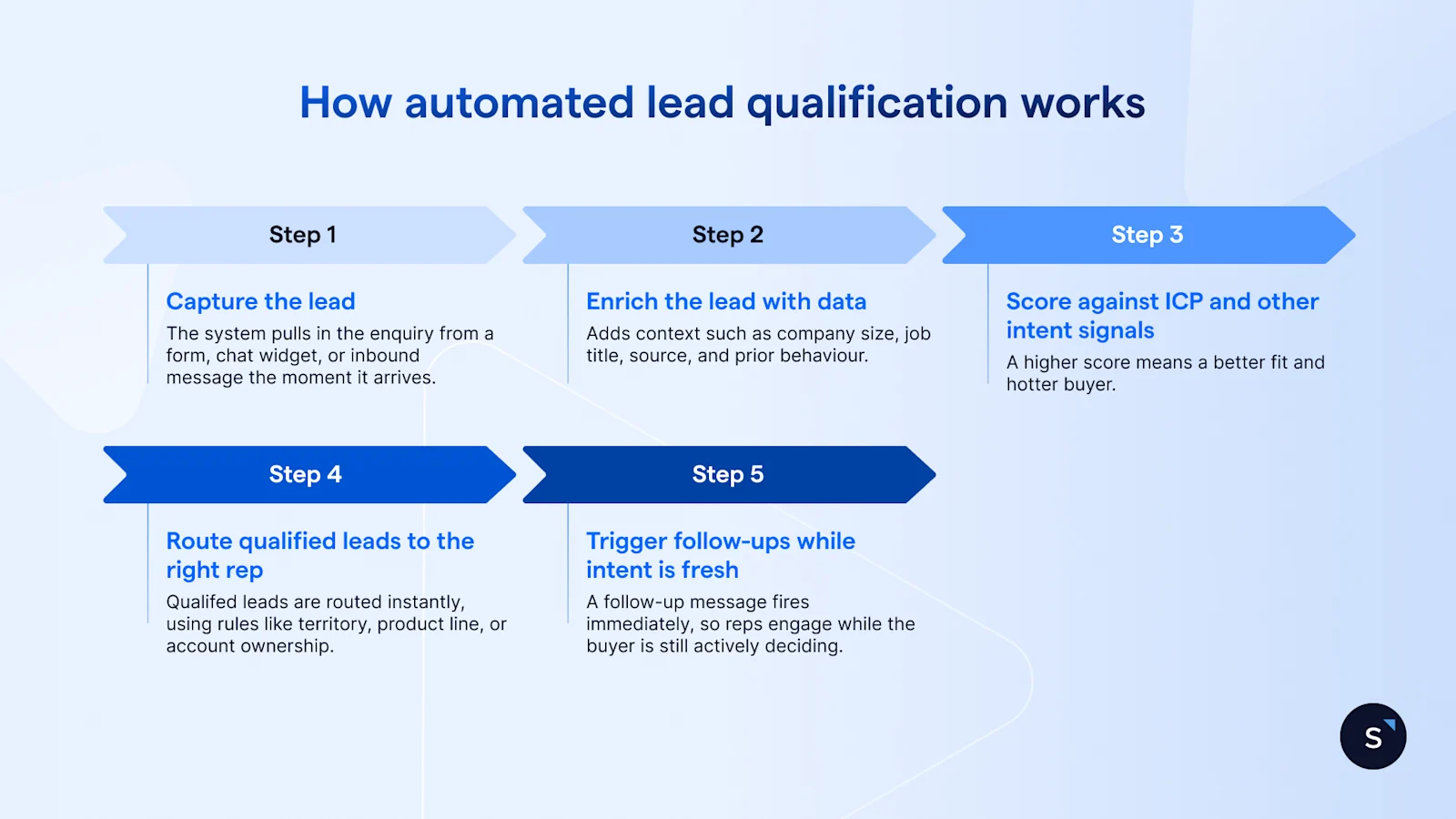
1. Capture the lead
The system pulls in the enquiry from a form, chat widget, or inbound message the moment it arrives.
2. Enrich lead with data
It adds context such as company size, job title, source, and prior behaviour, often by pulling from your CRM or a data enrichment tool.
3. Score against your ICP and intent signals
The lead is scored against your ideal customer profile (ICP) and buying-intent signals — a higher score means a better fit and hotter buyer.
4. Route qualified leads to the right rep
Leads that clear the threshold are routed instantly, using rules like territory, product line, or account ownership.
5. Trigger follow-ups while intent Is fresh
A follow-up message, booking link, or notification fires immediately, so reps engage while the buyer is still actively deciding.
How to set up automated lead qualification
Define your ICP and scoring criteria — agree internally on what "qualified" means before automating anything.
Connect your channels — link WhatsApp, web chat, and forms into one inbox so no enquiry is missed.
Build your scoring and routing rules — set thresholds and assign fallback owners for after-hours enquiries.
Train your AI agent's knowledge base — feed it FAQs, pricing logic, and service details so it can respond accurately.
Review and refine monthly — use analytics to adjust scoring criteria as conversion data comes in.
Lead qualification frameworks: BANT, CHAMP, and MQL vs SQL
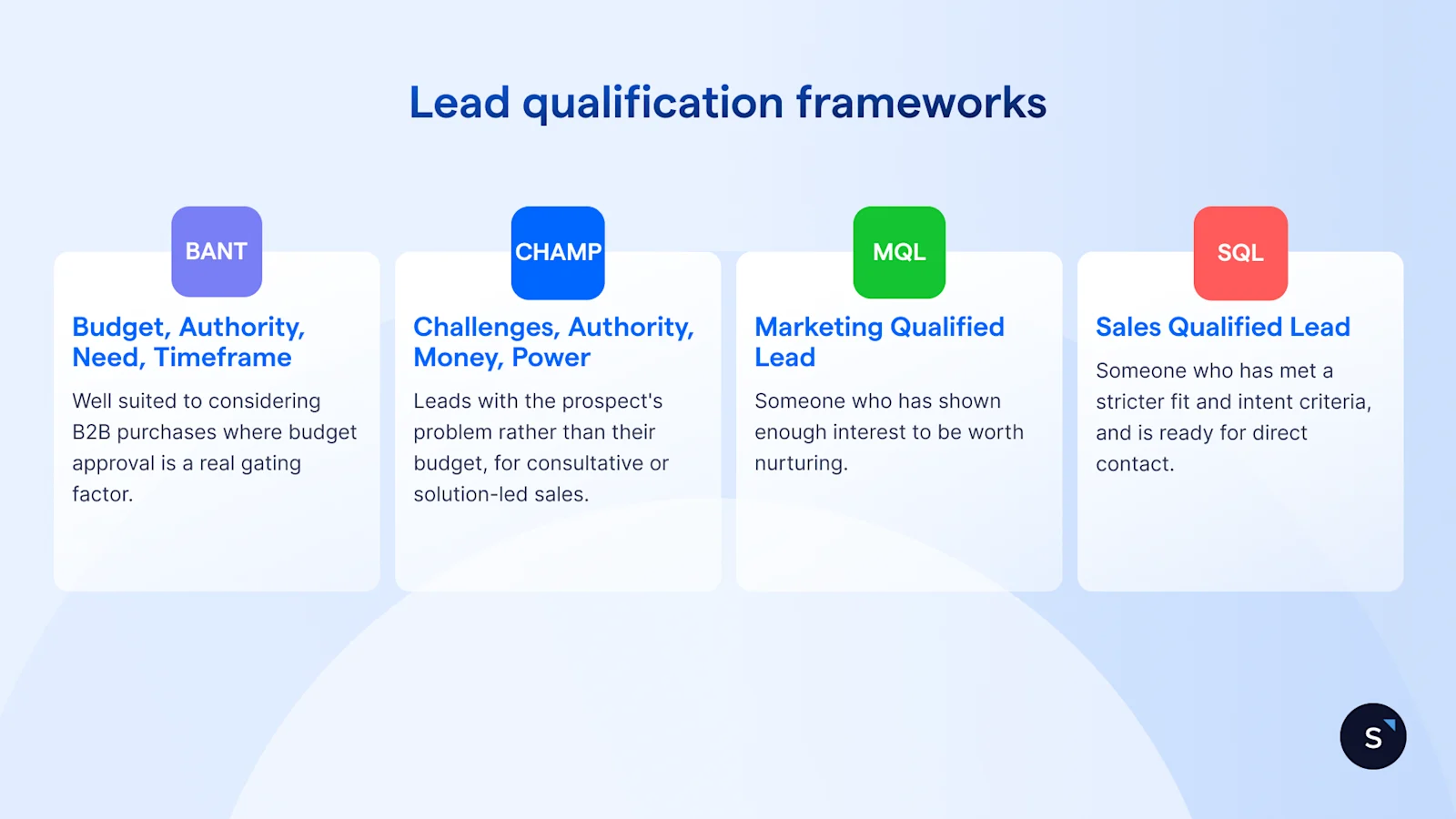
Automation still needs a framework to decide what "qualified" means. Two of the most widely used are:
BANT — evaluates Budget, Authority, Need, and Timeframe. It's a long-standing framework well suited to considering B2B purchases where budget approval is a real gating factor.
CHAMP — evaluates Challenges, Authority, Money, and Prioritisation, leading with the prospect's problem rather than their budget. It tends to suit consultative or solution-led sales motions.
Both frameworks help decide when a lead moves from a marketing qualified lead (MQL) — someone who has shown enough interest to be worth nurturing — to a sales qualified lead (SQL), who has met stricter fit and intent criteria and is ready for direct contact. Automated lead scoring applies either framework consistently, at any volume.
What to look for in an automated lead qualification tool
Not every platform offers the same depth. When evaluating options, prioritise:
Real-time scoring and routing — leads should be assessed and assigned in seconds, not batched overnight.
CRM integration — data should sync automatically with platforms like HubSpot or Salesforce so nothing needs re-entering.
Personalisation and dynamic rules — routing and messaging should adapt to who the buyer is and where they came from.
Fallback logic — no lead should get stuck unattended when a rep is unavailable.
Analytics — visibility into where drop-off happens and which reps convert qualified leads best.
How AI scores and qualifies leads in conversation
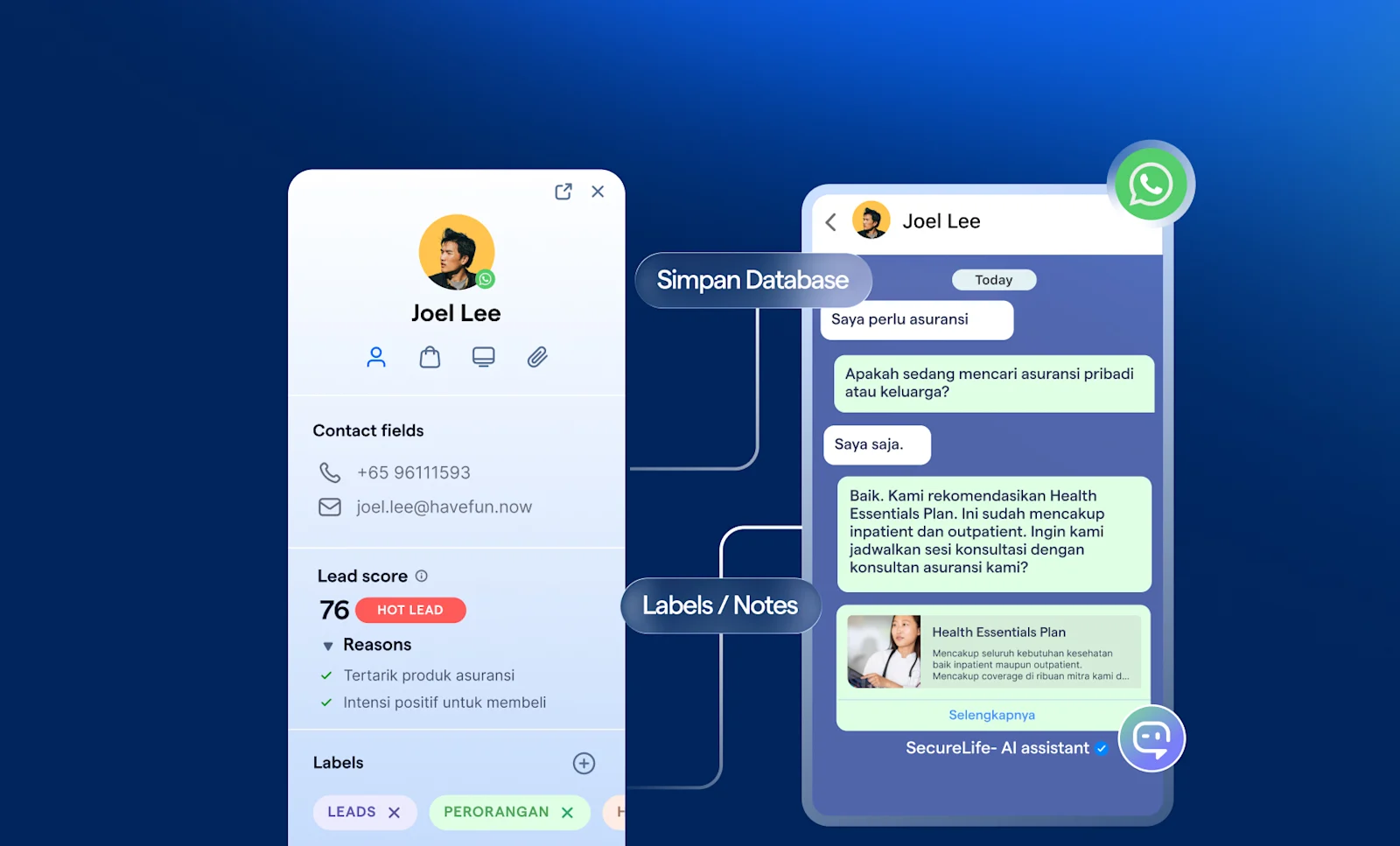
Increasingly, qualification doesn't happen through a form at all — it happens inside the conversation itself. Conversational AI agents can read buying intent as a customer messages, ask clarifying questions, assign a lead score based on the exchange, and route hot enquiries to a rep, all within channels like WhatsApp or web chat. This suits Singapore businesses particularly well, since inbound increasingly arrives as messages rather than form submissions.
SleekFlow's AgentFlow is built for exactly this: its Inbound Agent can qualify leads, book appointments, and hand off complex cases to a human without the customer having to repeat themselves. Businesses using AgentFlow report handling 80% of conversations fully with AI and doubling their qualified lead volume, alongside a 150% lift in sales conversion rate, based on SleekFlow's own customer data.
Real-life case study: SACES lifts qualified conversions to 75% using SleekFlow’s AI lead scoring
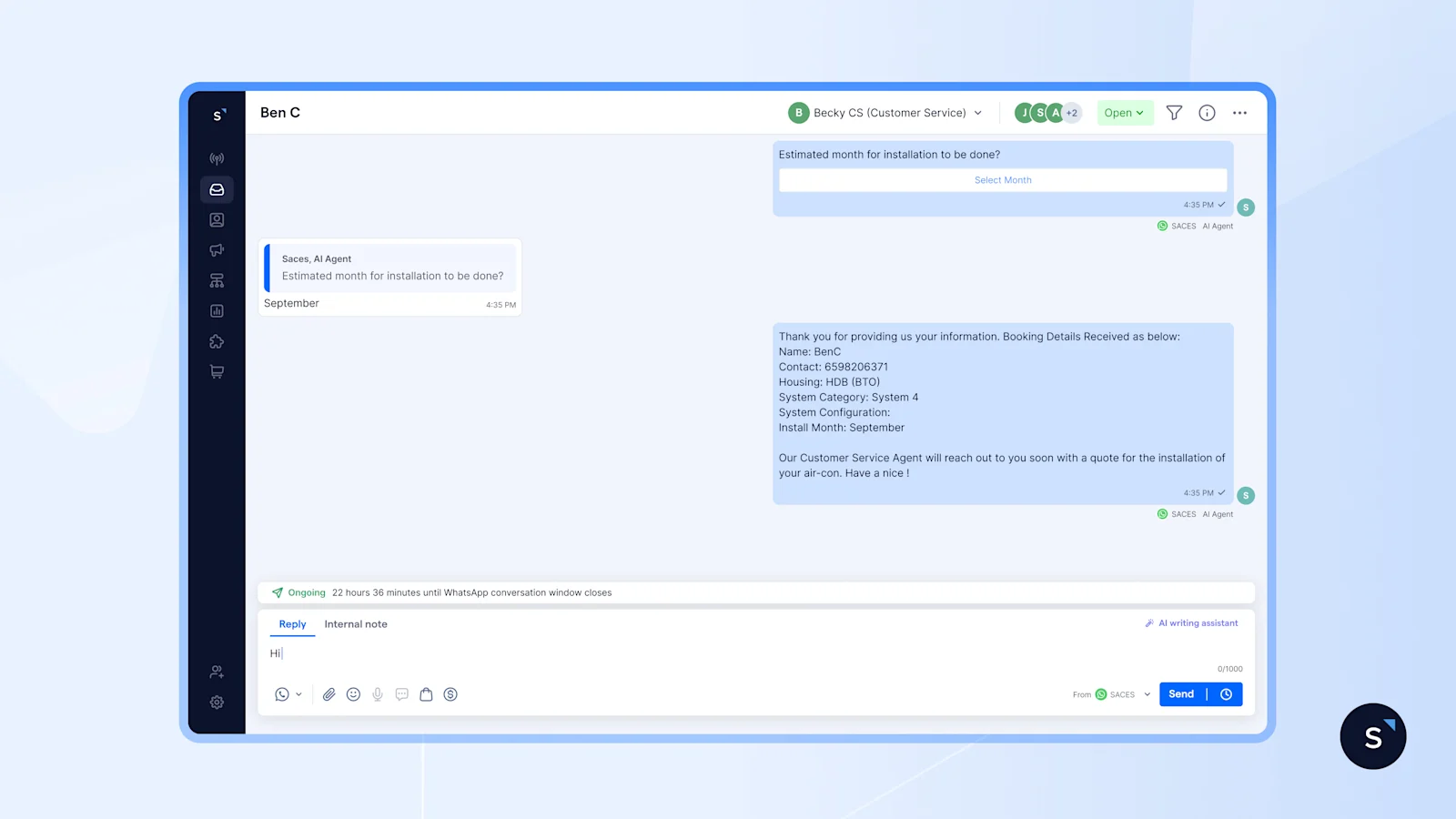
Solar Air-Conditioning & Electrical Services (SACES), a family-run Singapore home services business, struggled to manage enquiries spread across WhatsApp, Facebook, and Instagram with a small admin team. After deploying SleekFlow's AgentFlow — partly funded through Singapore's Productivity Solutions Grant (PSG) — SACES used AI-driven lead scoring based on service type, number of units, and urgency to prioritise high-intent enquiries.
The results: 75% of AI-qualified leads converted to bookings, response times improved by 90%, and over 60% of incoming enquiries are now handled entirely by AI agents, freeing the team to focus on site surveys and formal quotations.
Claim your digital edge today
Book your personalised demo with SleekFlow today to view our available pre-approved PSG packages. Limited slots.


