Personalised customer experience: what it is and how to deliver it


TL; DR: Quick Summary
- A personalised customer experience tailors each interaction to the individual using their history, preferences, and behaviour, not a segment average.
- Personalisation has been Singapore's top driver of customer experience for four years running, weighted at 19.8% of KPMG's score.
- 45% of Singapore consumers name being transferred between people as a top service frustration.
- Personalisation is won or lost at the handover, when whoever replies next either has the full thread or starts cold.
- Start with one touchpoint, usually support handovers, then expand once the context holds.
A customer messages your Instagram on Friday about a warranty claim. Nobody picks it up. On Sunday she tries WhatsApp, and a different person asks for her order number.
She already sent it. The information exists in your business. It just isn't in front of whoever is replying.
That gap is where most personalisation work falls apart, and it has little to do with the offers you send. Below: what a personalised customer experience is, why Singapore ranks it first, and the 6 steps to close that gap.
What is a personalised customer experience?
A personalised customer experience is an approach to serving customers that tailors every interaction to the individual, using their profile, purchase history, channel preference, and past conversations rather than a one-size-fits-all script. It runs across the full customer journey, from first enquiry to post-purchase support, and depends on a single shared view of the customer.
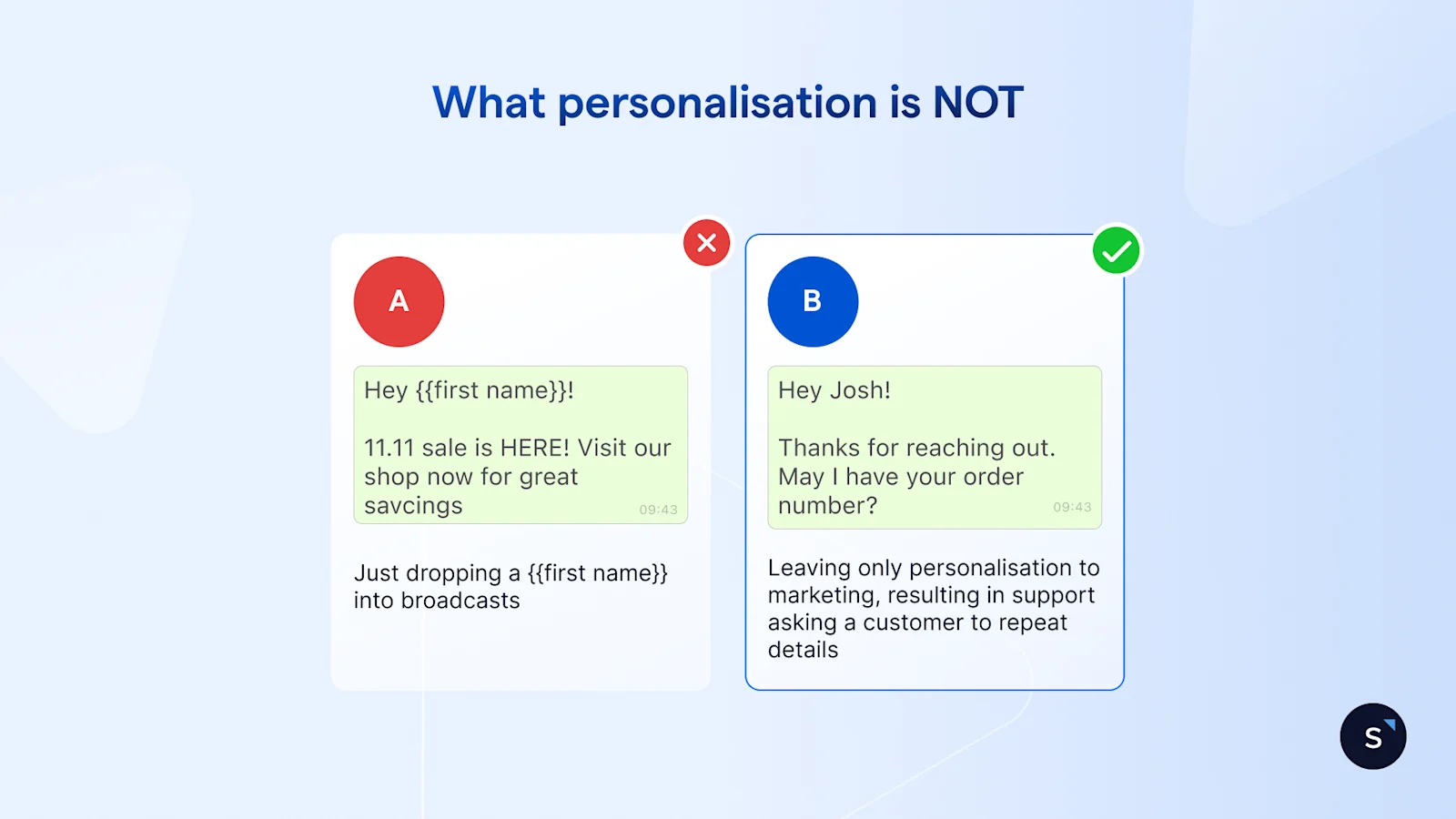
Two things get mistaken for it. The first is the merge field: a name dropped into a broadcast is formatting, and customers read the difference instantly. The second is treating personalisation as a marketing job, which leaves support running on generic replies.
Why does a personalised customer experience matter in Singapore?
Personalisation is the strongest single lever on customer experience in this market. KPMG's Customer Experience Excellence research weights it at 19.8% of the overall score and names it the top driver of experience, loyalty, and advocacy for the fourth consecutive year, ahead of integrity, expectations, resolution, time and effort, and empathy.
The demand is specific to messaging. Boston Consulting Group's research with Meta, based on Kantar fieldwork across 21 markets including Singapore, found 87% of consumers want personalised messages from businesses and 77% are frustrated by irrelevant ones. Meta commissioned it, so read it as directional.
McKinsey's 2021 analysis put the revenue lift at 10 to 15%, with top performers earning 40% more than average ones. The downside is sharper: 85% of Singapore consumers told ServiceNow they would switch to a competitor after poor service.
How to deliver a personalised customer experience: 6 steps
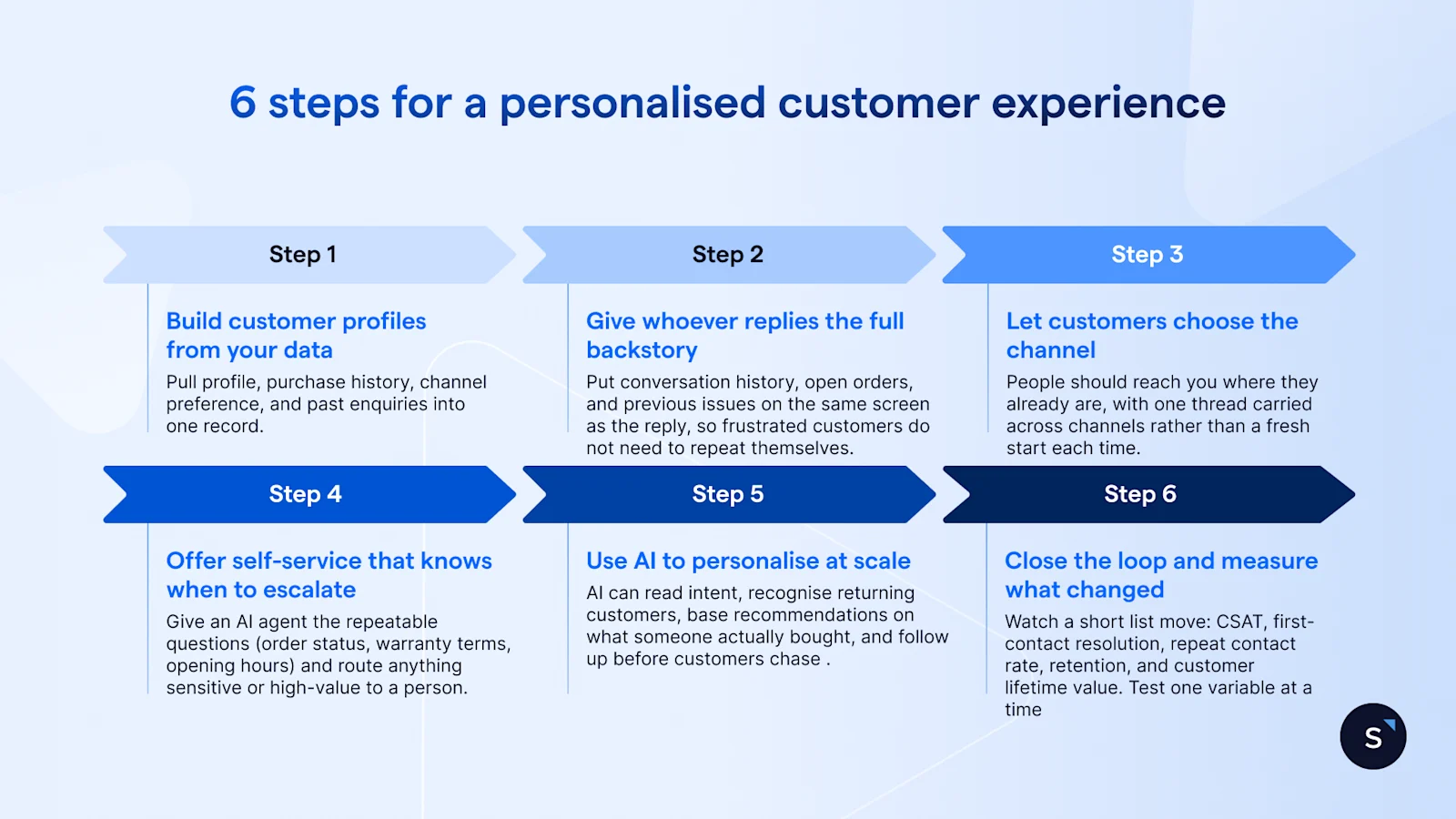
Build customer profiles from data you already hold, give whoever replies the full backstory, let customers pick their channel, offer self-service that escalates cleanly, use AI to personalise at scale, then measure and refine. Most teams skip the second step, which is exactly where customers judge whether the experience felt personal.
Step 1: Build customer profiles from data you already hold
Pull profile, purchase history, channel preference, and past enquiries into one record instead of separate tools, then group people by behaviour that changes what you would say to them. Our segmentation guide covers which segments to build first.
Step 2: Give whoever replies the full backstory
This step decides the rest, and most teams underinvest in it.
ServiceNow found only 56% of Singapore organisations have integrated systems, and agents log in to 3.3 systems on average to answer one query, while those agents estimated resolution at roughly 30 minutes against a customer-reported average of 4.9 days.
The fix is not more training. It is putting conversation history, open orders, and previous issues on the same screen as the reply, so a unified inbox removes the "can I get your order number again" moment.
Internal handovers follow the same rule. When a conversation moves from sales to support, or from an AI agent to a person, the context moves with it or the customer pays for the gap.
Step 3: Let customers choose the channel, and keep the thread with them
People should reach you where they already are, with one thread carried across channels rather than a fresh start each time. In Singapore that means messaging first: WhatsApp is the most-used social platform at 80.1% and the favourite of 30.4% of users. Our omnichannel guide covers joining them up.
Step 4: Offer self-service that knows when to escalate
Give an AI agent the repeatable questions (order status, warranty terms, opening hours) and route anything sensitive or high-value to a person. The escalation rule matters more than the automation rate: an agent resolving 60% of enquiries and handing over cleanly beats one resolving 80% and trapping the rest.
Step 5: Use AI to personalise at scale
With profiles unified, AI can read intent, recognise returning customers, base recommendations on what someone actually bought, and follow up before a customer chases you. IMDA recorded Singapore SME AI adoption rising from 4.2% to 14.5% between 2023 and 2024, against 62.5% for larger firms, so the gap is an opening.
Step 6: Close the loop and measure what changed
Watch a short list move: CSAT, first-contact resolution, repeat contact rate, retention, and customer lifetime value. Test one variable at a time rather than relaunching everything.
Personalised marketing vs personalised customer service: what is the difference?
Personalised marketing tailors the outreach: offers, campaigns, and recommendations aimed at a segment or an individual before and around a purchase. Personalised customer service tailors the interaction itself, so the person replying already knows your history and you never explain the problem twice. Both draw on the same data and are judged on different things.
Most businesses are further ahead on the left column. If you fix one first, fix service: a good campaign followed by a support conversation that starts from nothing reads as insincere.
What does Singapore's PDPA expect when you personalise?
Singapore's PDPA lets organisations use personal data to build personalisation and recommendation systems without fresh consent in defined circumstances, but it requires clear notification. The PDPC's guidance sets out what you must tell people: the product function needing the data, the types collected, and how the processing relates to that feature.
Those advisory guidelines on personal data in AI recommendation and decision systems allow layered notice through pop-ups, privacy policies, and model cards. In June 2026 the PDPC proposed further guidelines covering generative AI that treat broad notices as inadequate: a reference to "product improvement" in a privacy policy would not support valid consent for AI development.
General information, not legal advice. Check the current version and take qualified legal advice before you deploy.
How SleekFlow helps you deliver a personalised customer experience
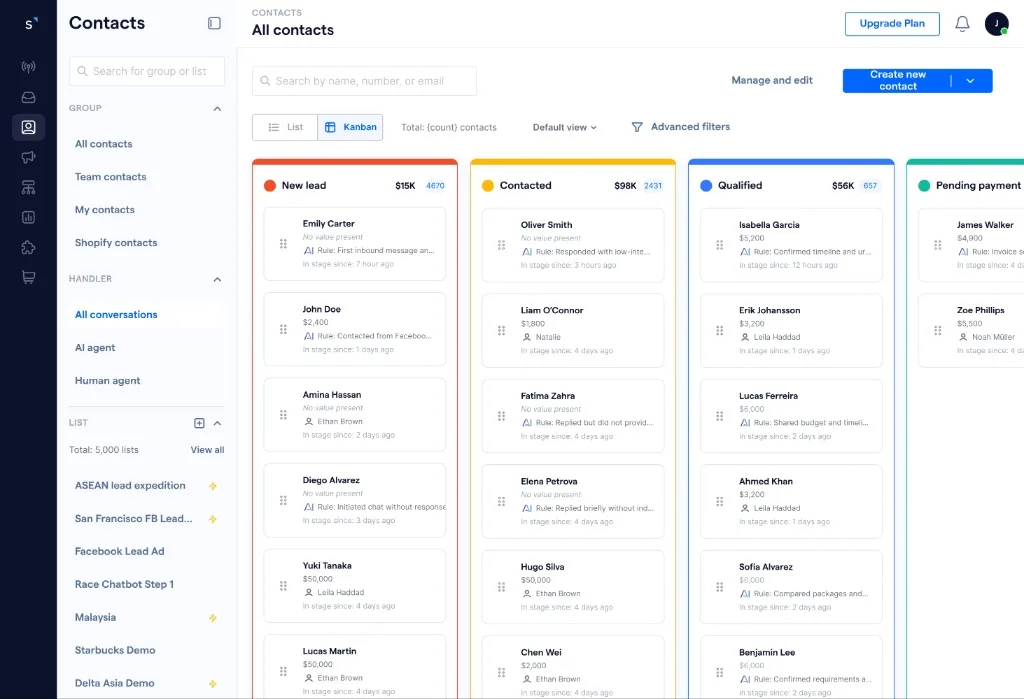
SleekFlow is the AI suite for revenue-driving conversations. For personalisation the part that matters is unglamorous: getting the right context in front of whoever replies next, whether that is a person or an AI agent, on whichever channel the customer chose.
Social CRM builds a 360-degree customer profile from conversations across WhatsApp, Instagram, Messenger, live chat, and email, then segments people by behaviour or preference.
AgentFlow handles the AI side: its inbound AI agent reads intent, answers from your own content, and escalates on sentiment, topic, or task completion. On handover, "your human agents receive a full summary so the customer never has to repeat themselves."
Personalised customer experience examples from SleekFlow customers
Personalisation looks different in each of these, and runs on the same thing underneath. A home services provider recognises returning callers, an e-commerce brand pulls in-store buyers into one profile, and a university routes enquiries by intent. All three work because the context reaches whoever responds next.
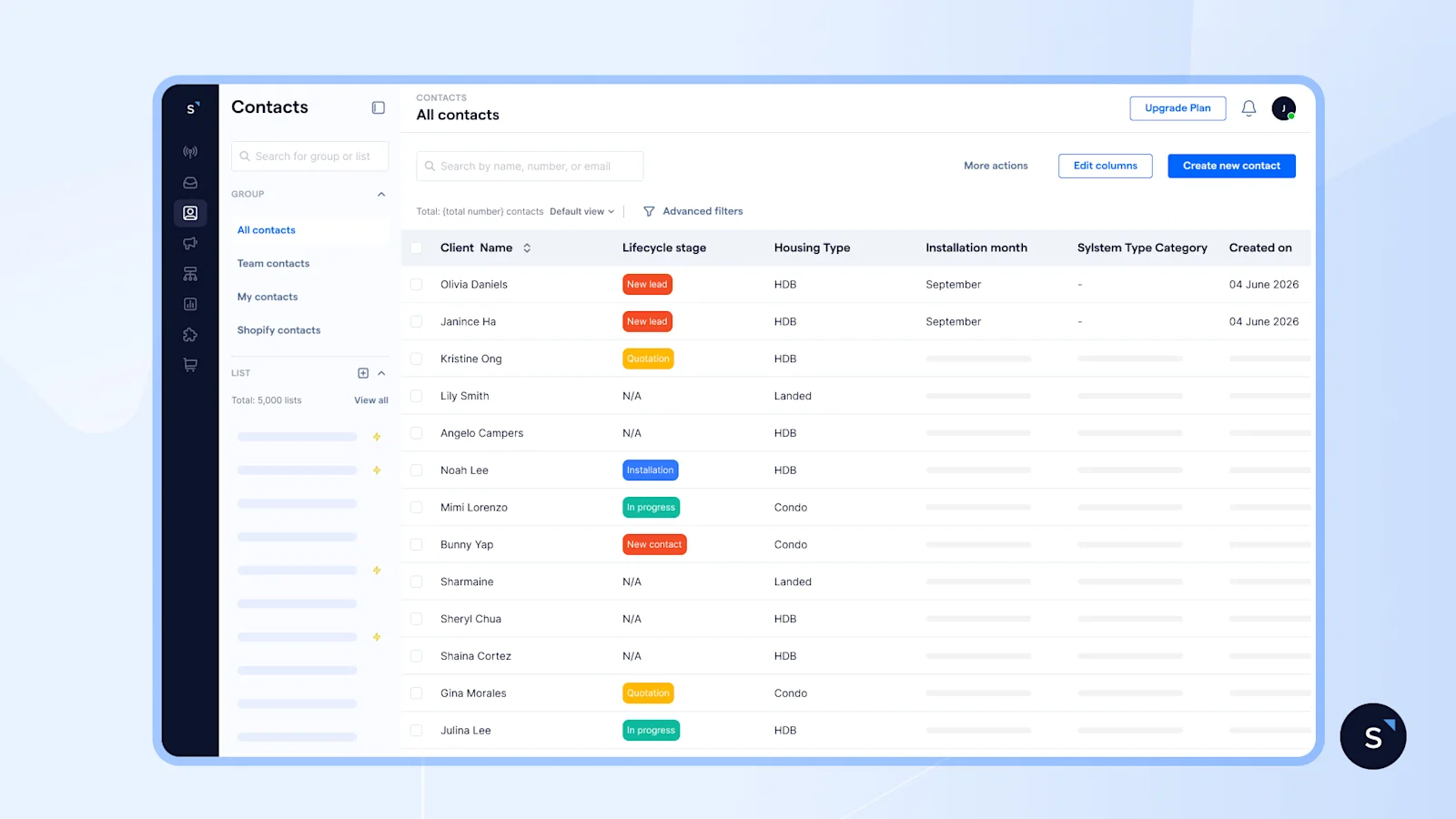
SACES (Solar Air-Conditioning and Electrical Services), a Singapore home services provider, had no shared visibility across WhatsApp, Facebook, and Instagram. Its AI agents now recognise whether a customer is new or returning, so returning ones skip what they answered last time, and complex cases route to a human who replies with the right context. Enquiry-to-booking conversion sits at 75%, response times are 90% faster, and AI agents handle over 60% of incoming enquiries.
NNIO, a Singapore e-commerce brand selling home appliances, had four teams answering enquiries separately. Every agent now sees purchase history, past interactions, and the last thing discussed in one profile, and in-store warranty registration over WhatsApp pulls offline buyers into that same record. Repurchase rate reached 2.6x, with 20% more completed checkouts.
Taylor's University in Malaysia had the problem this article opens with: a student who "started on Instagram and followed up on WhatsApp" met a counsellor with "no visibility into what had already been discussed." Its AI agent now separates admissions enquiries from general ones and routes each appropriately, so counsellors arrive with the prior conversation in view. First response time fell from 1 hour 20 minutes to 17 minutes, and lead-to-enrolment rose 4x.
Make your next conversation personalised
Most teams already hold the data that personalisation needs. What's missing is one profile per customer and an agent allowed to act on it. Book a demo and see how an inbound AI agent handles a live enquiry.
