Everything about WhatsApp CRM integration


TL; DR: Quick Summary
- WhatsApp CRM integrates sales, marketing, and customer support into a seamless platform, enabling businesses to engage customers quickly and efficiently across channels.
- Benefits include instant communication with leads, automated follow-ups, personalized marketing campaigns, and real-time customer support through chatbots and AI tools.
- SleekFlow simplifies WhatsApp CRM with AI chatbots, integration with CRM systems like Salesforce and HubSpot, and in-chat payments, enhancing customer satisfaction and boosting sales.
- WhatsApp CRM helps automate internal processes, track performance through analytics dashboards, and ensures smooth communication flow for better customer relationship management.
- Businesses can optimize operations, reduce manual work, and provide 24/7 support with automation, ultimately driving higher conversions and customer loyalty.
If you’re using a CRM solution that doesn’t integrate with messaging apps, this is something you can’t afford to ignore.
Here’s why:
Customer behavior has shifted, and messaging is now the default. People don’t want to wait on calls or dig through emails when a quick text gets the job done.
79.8% of consumers think messaging is a quick and easy way to communicate with a business.
66.8% of online adults feel frustrated when a business doesn’t offer messaging as a contact option.
That gap between what customers expect and what many businesses offer is exactly where opportunities are lost. So how do you close it?
In this article, we will walk you through integrating your CRM customer profiles into WhatsApp communication. The process comes down to two key steps:
Getting your WhatsApp API account ready.
Choosing a software solution that supports the integration of WhatsApp and popular CRM software like Salesforce and HubSpot.
What is WhatsApp CRM?
A WhatsApp CRM is a tool that connects your WhatsApp Business directly to your CRM, such as Salesforce or HubSpot.
As a result, customer profiles, purchase history, and past interactions are all accessible in a centralized platform, allowing your team to offer personalized service and stay on top of every conversation.
Simply put, with a WhatsApp CRM, you can:
Manage customer chats on WhatsApp
Track interactions and nurture relationships
Store customer information in a single platform
Benefits of using a WhatsApp CRM tool
Why bother with a WhatsApp CRM integration? Here’s why it’s a game-changer for your business:
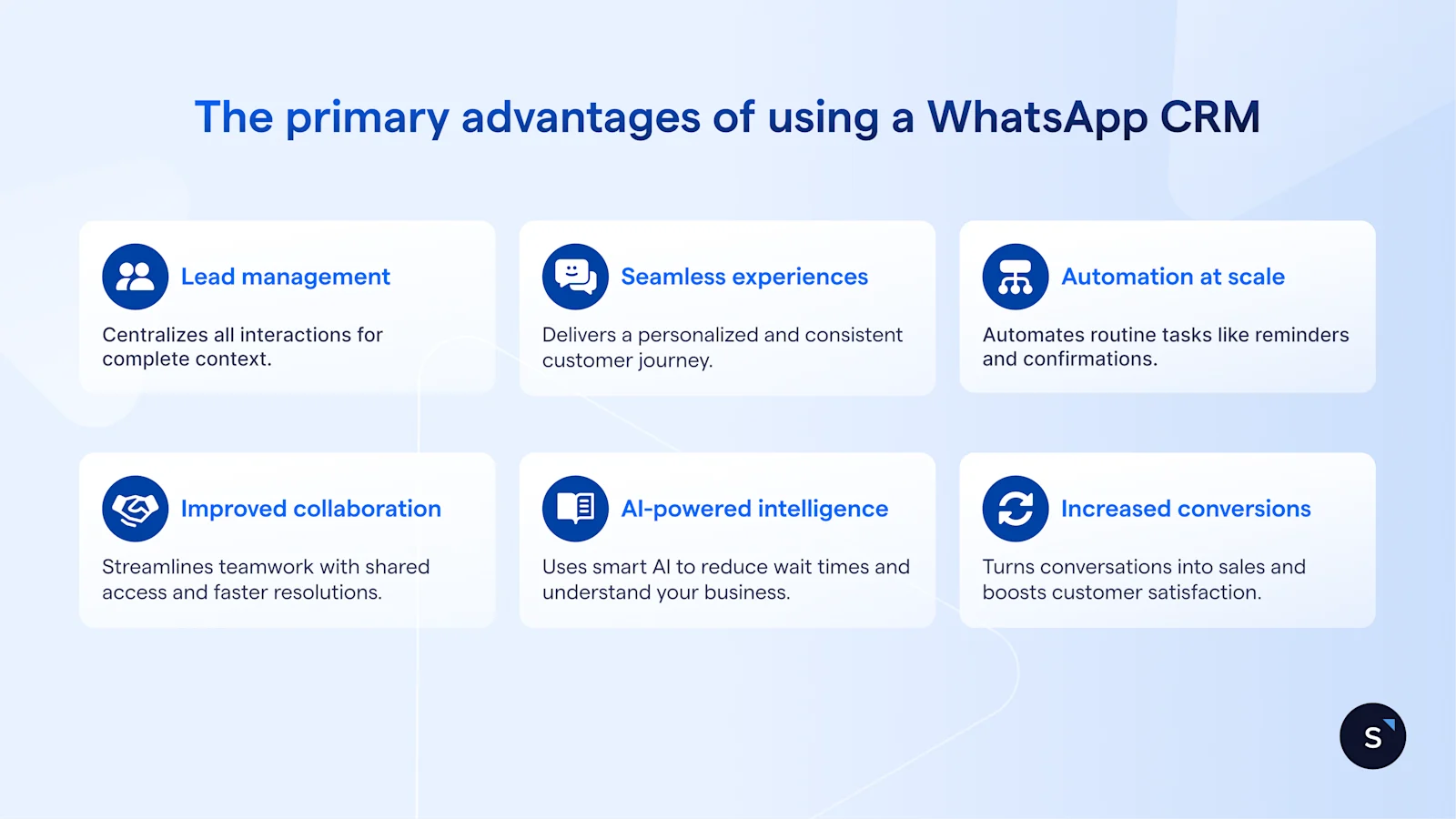
1. All-in-one customer data: Gather and store every customer interaction and contact details across platforms. Whether through WhatsApp or other instant messaging channels, all data is neatly organized in a unified platform. This means your team always has the full context for every conversation.
2. Seamless customer experience: Personalization is key to customer satisfaction. From customized conversation flows to automated follow-ups, a WhatsApp CRM tool ensures no lead falls through the cracks. As a result, customers enjoy a smoother and more consistent experience across every touchpoint.
3. Automation at scale: Imagine automatically sending appointment reminders, order confirmations, or satisfaction surveys without lifting a finger. With automation handling routine tasks, your team can focus on higher-value conversations.
4. Improved team collaboration: Your team members can now work on the same customer conversations without confusion. Shared access to customer profiles and chat histories ensures everyone is aligned, which leads to faster resolutions and a more streamlined workflow.
But that’s not all. You can take it a step further by integrating AI with WhatsApp CRM to turn conversations into conversions.
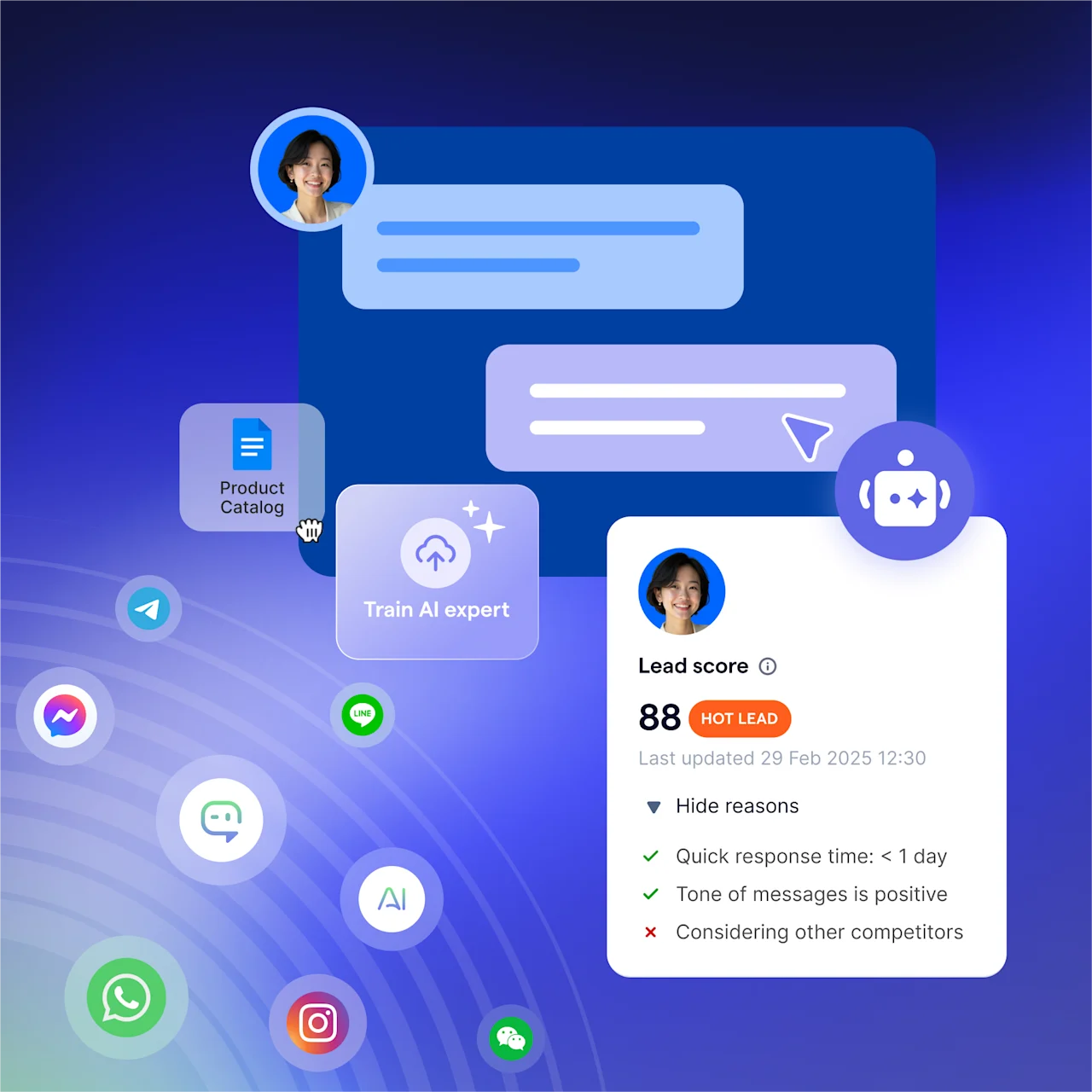
SleekFlow’s WhatsApp CRM tool includes built-in AI features. You can even train the AI agent with your own company documents, allowing you to “grow” a dedicated agent that truly understands your business. This could reduced customer wait times, freeing up your team to focus on high-value interactions and complex commercial queries.
See it for yourself
See how SleekFlow's AI agents turn conversations into revenue with AgentFlow.
How to use WhatsApp CRM for sales, marketing, support, and operations
Using WhatsApp CRM across your business can bring real benefits to your sales, marketing, support, and operations teams. Here’s how your team can make the most of it:
Marketing: Create conversational campaigns that connect
WhatsApp CRM makes it easy to automate your entire marketing flow—from lead generation to nurturing and retention.
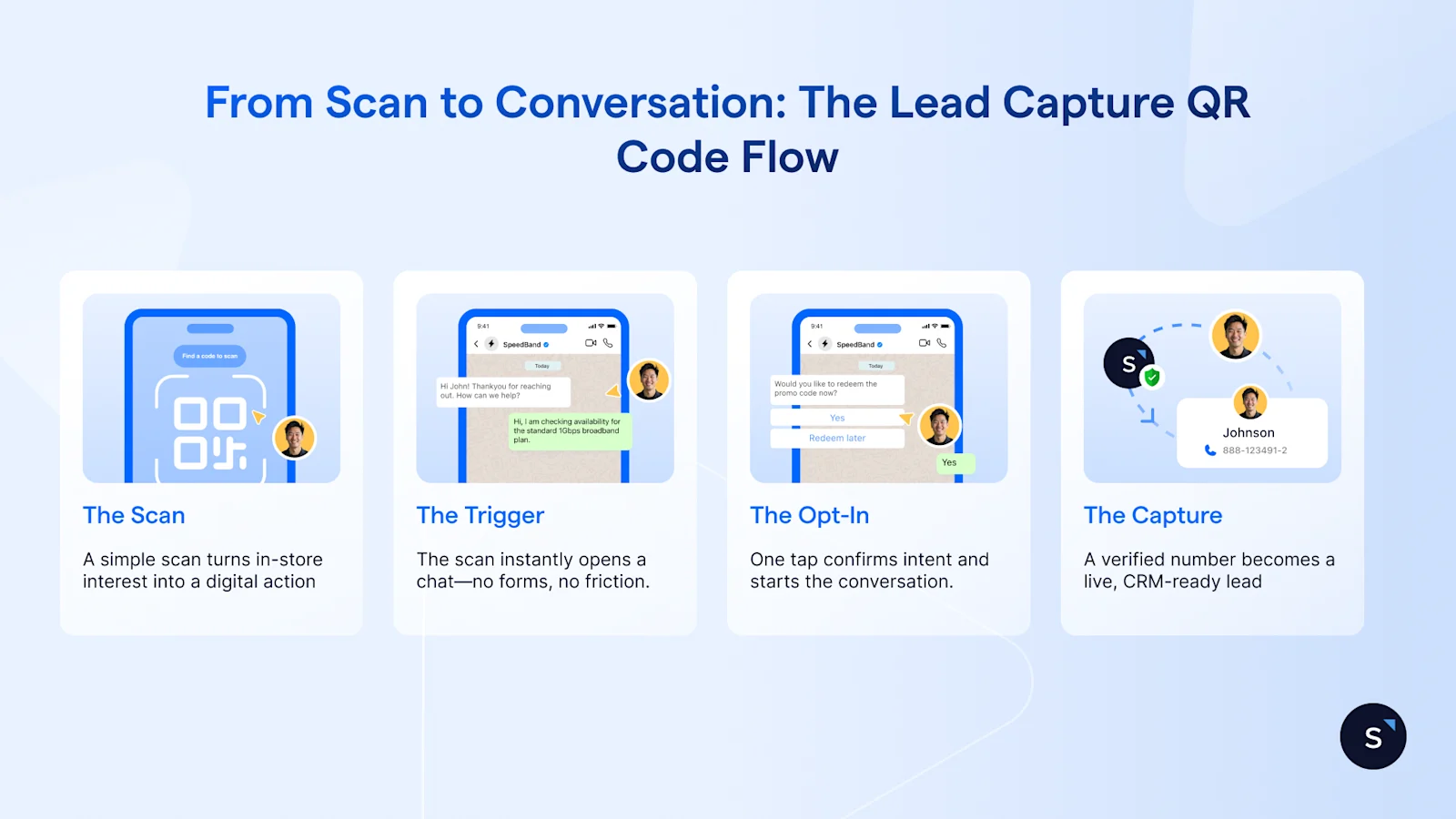
Capture leads: Gather leads from various touchpoints, including Facebook or Instagram ads, click-to-chat buttons, or even offline touchpoints with QR codes.
Nurture leads: Opt leads into your WhatsApp newsletter and send personalized, relevant bulk messages. Whether it’s targeted promotions, event invites, or special offers, these messages connect with customers on their favorite channel, making your campaigns feel more timely and tailored to their needs.
Automate follow-ups: Send automated messages based on customer behavior, such as sending a thank-you note after a purchase or reminding them about an abandoned cart.
Sales: Drive conversions with instant communication
With WhatsApp CRM, your sales team can instantly connect with leads and customers. But more importantly, it allows you to act at the exact moment intent is highest.
Here are a few ways it can help drive conversions:
Imagine a lead signs up for a demo or downloads your content. Instead of waiting, an automated WhatsApp message is sent immediately, starting the conversation while their interest is still fresh.
The messages are tailored based on each customer’s profile from your existing CRM, including their interests, budget, or past behavior. This means every interaction feels relevant, not generic.
And it doesn’t stop at the first touchpoint. With automated follow-ups running in the background, your team never misses the chance to nurture leads or move deals forward.
Once a customer replies, AI can take over the first layer of qualification by asking more relevant questions and capturing key details, so your team knows exactly who to prioritize.
All conversations are centralized in one place, creating a seamless flow between AI and human agents. This allows your team to step in with full context, collaborate more effectively, and focus on closing deals instead of catching up.
Support: Faster and better customer service
In customer support, speed and accuracy matter.
WhatsApp CRM helps your support team respond faster by automating answers to common questions using WhatsApp AI chatbots. This means customers get quick solutions, even outside business hours.
Route chats automatically: Assign conversations to the most available and capable agent.
Collaborate seamlessly: Team members or an AI agent can add a loop in other colleagues to a chat and leave internal notes. Thus, the agent who takes over the conversation knows the context well to better provide personalized help without having customers repeat themselves.
Operations: Streamline your internal processes
WhatsApp CRM doesn’t just help with customer-facing tasks—it also improves internal operations.
Automate key operations: Save time and ensure accuracy by automating tasks. For example, you can send a confirmation message to a customer via WhatsApp as soon as their order is shipped, or create records in your CRM when new appointments are scheduled.
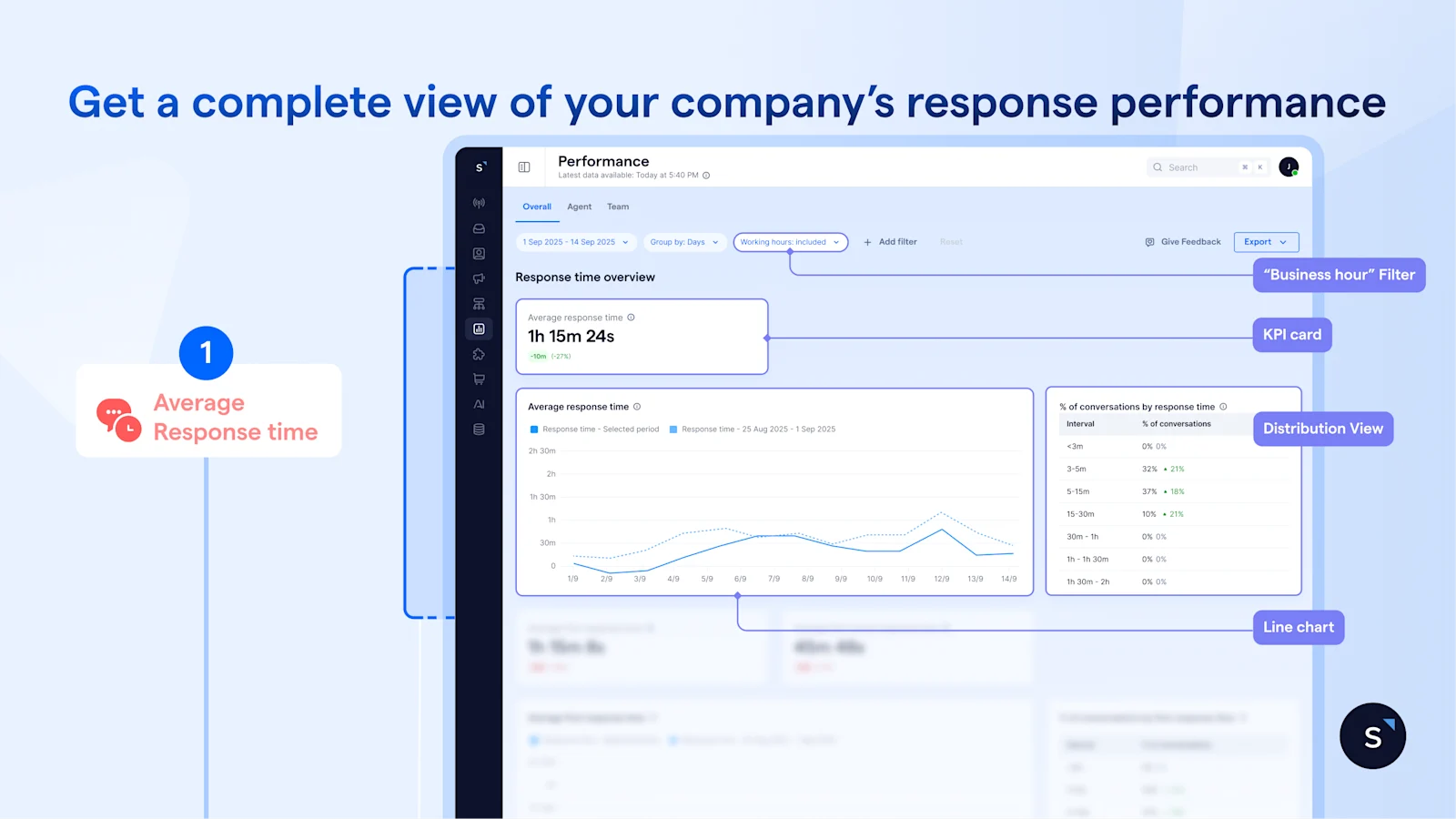
Monitor team performance: Use dashboards to get an at-a-glance overview of metrics like message response times and customer satisfaction scores. This helps you identify areas for improvement and allocate resources effectively.
Control channel access: Assign specific permissions to different teams so they can only access relevant data or customer conversations. This builds an organized team structure while maintaining data security.
How to choose a social CRM Platform for WhatsApp integration
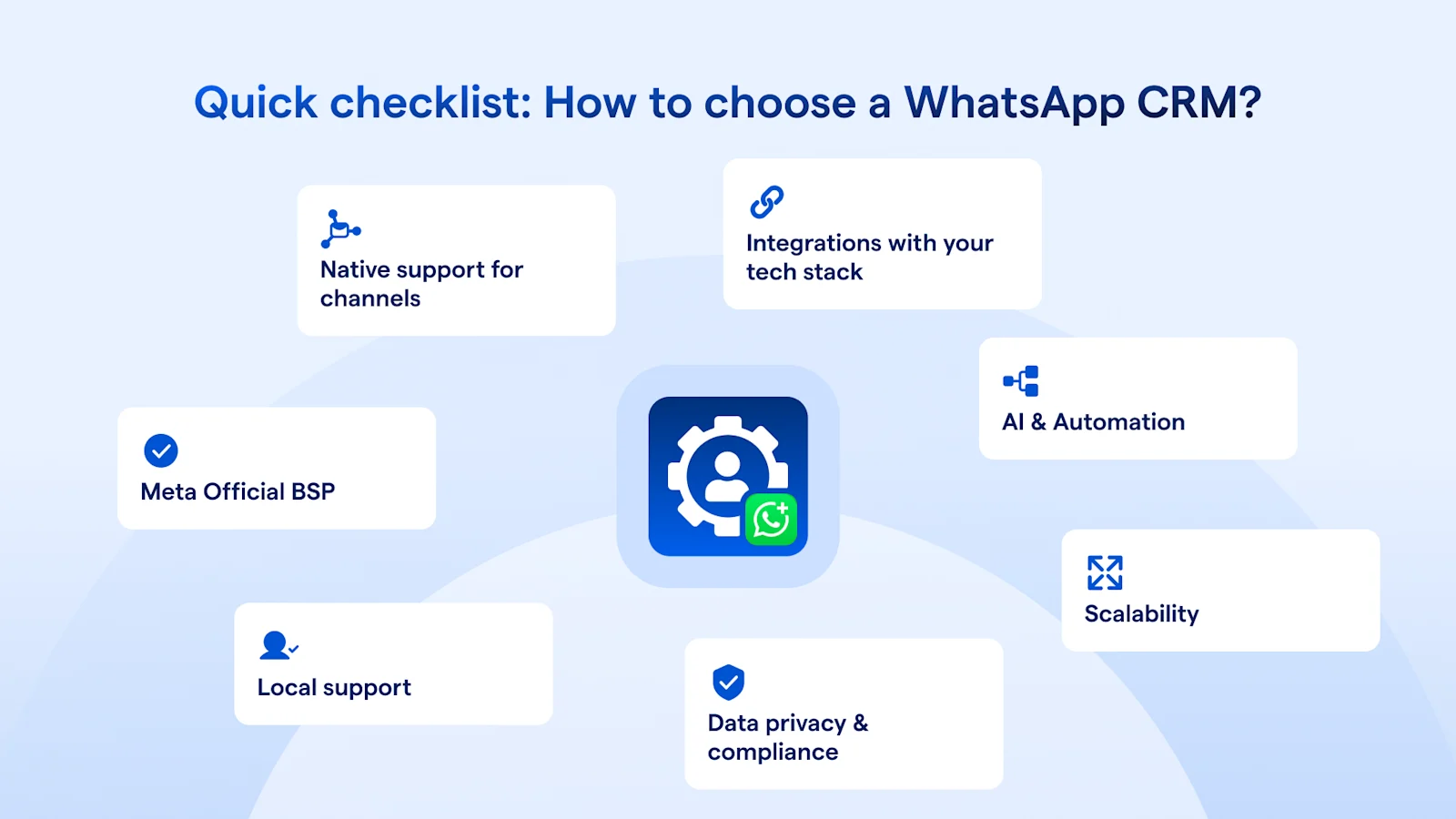
You should be meticulous in choosing a social CRM platform since the cost of switching platforms is high. It takes time to migrate and transfer all the precious data. Your team might also need some time to adapt to the new interface. Here are the factors of considerations:
Ability to integrate with popular CRM software, e-commerce platforms, scheduling tools, and other messaging apps: Salesforce, Hubspot, Zoho, Shopify, Magento 2, Calendly, Google Calendar, Facebook, Instagram, Telegram, WeChat, LINE, etc.
Level of convenience: Choose a cloud-based platform that users can access to the database anytime with mobile app and web app. Additionally, an official Meta Business Solution Provider (BSP) ensure you're getting the most up-to-date features of the WhatsApp Business.
Access to localized support: Request a demonstration, or sign up for a free trial to understand if the platform support your business
Scalability: As your business grows, your CRM should grow with you. Look for a platform that can handle increasing message volumes, support more users, and offer advanced features like AI chatbots and multi-channel support.
Automated workflows: Automation is essential for streamlining sales, marketing, and support processes. Ensure the platform enables you to automate key workflows such as lead generation, follow-up reminders, and personalized mess
aging based on customer behavior. This will save time and enhance engagement.
Data privacy and GDPR compliance: Your chosen tool should prioritize data protection, ensuring all customer information is stored securely and adheres to GDPR or other relevant data privacy regulations.
Other advanced features: Look for a tool that offers advanced capabilities, such as customizable data structures. This allows you to create a personalized data architecture tailored to your specific business requirements. For example, with features like custom objects, you can design unique data models to track customer information, interactions, or any specialized metrics essential to your operations.
👉 Want to learn more? Read the article to discover how custom objects can transform your data management strategy.
BateriHub used SleekFlow's WhatsApp CRM to reduce spam and retarget leads
BateriHub is a leading automotive battery retailer in Malaysia with over 130 branches. The company aimed to improve its customer engagement and lead management processes.
The brand struggled with fragmented communication channels, which led to a high volume of spam inquiries and a lack of visibility into marketing attribution. This inefficiency wasted the time of their customer service team and field technicians on non-converting traffic.
BateriHub integrated SleekFlow’s omnichannel platform to centralize its operations and automate lead qualification. They used an AI-driven system to filter inquiries and gather critical data before a human agent intervened.
With SleekFlow, we can track all conversations, ensure every customer is attended to, and monitor team performance. The internal feedback has been overwhelmingly positive.

Stanly Ng
General Manager, BateriHub
With the new system, BateriHub achieved significant improvements:
17X faster response speed: Automating lead qualification allowed the team to respond to genuine inquiries much more quickly.
Reduced spam to less than 1%: The AI-driven system effectively filtered out irrelevant messages, freeing up staff to concentrate on real customers.
22% boost in conversions: By using the Social CRM to build a customer database for strategic retargeting, BateriHub increased its conversion rate in just three months.
WhatsApp CRM compliance checklist
To get the best results from your WhatsApp CRM integration, you need to follow a few key rules. This keeps you compliant and, more importantly, prevents you from annoying your customers enough to have them block you.
How WhatsApp integration works
Before we get into how the integration works, it's important to note that WhatsApp Business has two versions: the native WhatsApp Business App and the WhatsApp Business API. To integrate your CRM into WhatsApp, you have to register a WhatsApp API account. What's the difference?
The WhatsApp Business App is designed for small to medium-sized businesses. It runs on a smartphone and offers basic features like business profiles, quick replies, greeting messages, and simple product catalogs. It’s a good starting point, but comes with limitations in automation, scalability, and multi-user access.
In contrast, the WhatsApp Business API is built for businesses handling a higher volume of conversations. It supports multiple users, deeper automation, and integrations with platforms such as Salesforce and HubSpot. However, it requires a Business Solution Provider to set up and manage, as it’s not a standalone app.
So which one should you choose? That depends on your business size, goals, and how advanced your customer communication needs are.
👉 For a detailed breakdown of features, use cases, and how to decide, read our full guide on WhatsApp Business API
How to register for a WhatsApp Business API account
Companies can obtain the WhatsApp Cloud API through an official BSP, like SleekFlow.
Each company (WhatsApp Business Account) can register for the Official WhatsApp Business API with more than one phone number. Register different numbers for each shop branch to better segment internal workflows while still allowing the management to see the full picture.
The entire approval process from start to end will take approximately one to two weeks. When your API account is provisioned, you need to complete the Facebook Business verification to increase the message sending limit.
👉 Looking for a step-by-step guide? Check our complete guide about how to apply for WhatsApp Business API with SleekFlow.
After setting up the WhatsApp API account, the next thing to do is to take care of the billing process. Please be aware that the message rate differs in the region, and WhatsApp determines your market operations based on the person receiving the messages and the recipient’s country code. There is also a daily limit to the number of people you can message. To increase your messaging limit, you must maintain a quality rating of High or Medium.
How you can integrate WhatsApp with your CRM
There are three primary ways to bring your WhatsApp conversations into your business workflow and turn them into trackable sales engines.
1. Native CRM Integration (Best for sales teams)
For teams using HubSpot, Salesforce, or Zoho, SleekFlow offers native deep-sync integrations. Unlike basic plugins, our 2-way sync keeps your sales data and chat history in sync.
Seamless Workflow: View CRM contact details, deal stages, and even custom objects (like loyalty points or membership status) directly inside your SleekFlow inbox.
Automated Triggers: Automatically send a WhatsApp message when a deal moves to "Closed-Won" or trigger a follow-up when a lead is created in your CRM.
No-Switching Efficiency: Update your CRM status without leaving the chat window, keeping your sales team focused on closing rather than data entry.
2. E-commerce & Social CRM Integration (Best for growth teams)
If your business lives on Shopify or social channels, SleekFlow acts as your centralized Social CRM. We bridge the gap between your storefront and your customer's favorite messaging apps.
Shopify Sync: Pull order history and tracking info into the chat. Recover abandoned carts automatically with personalized WhatsApp reminders.
Omnichannel Reach: Don't limit yourself to WhatsApp. Integrate Instagram, Facebook, and Telegram into the same CRM workflow so no lead is left behind.
In-Chat Payments: Connect Stripe to generate secure payment links directly within the WhatsApp conversation, turning "just browsing" into a completed sale.
3. Programmable API (Best for enterprise & custom setups)
For large enterprises or those with proprietary software, SleekFlow’s Developer API offers total flexibility. Build a tailored ecosystem that fits your specific security and data requirements.
Total Control: Pull real-time message status, chat transcripts, and engagement analytics into your internal BI tools or custom-built ERP.
High-volume Reliability: Leverage the Meta's official Marketing Messaging API (MM API) for industry-leading message deliverability.
WhatsApp Coexistence: Use the API features for automation while keeping the 1:1 "personal touch" of the WhatsApp Business App active on a mobile phone.
HubSpot, Salesforce, and Shopify CRM Integrations with WhatsApp
When you connect platforms like HubSpot CRM, Salesforce, and Shopify with WhatsApp Business API, you bridge the gap between your backend data and customer conversations. This means no more manual updates, and every interaction becomes timely, relevant, and actionable.
Here’s what that looks like in practice:
HubSpot: Turn conversations into qualified pipeline
Capture leads info automatically through WhatsApp and sync them into HubSpot in real time. As conversations happen, workflows can trigger follow-ups or updates without manual effort. This allows your team to focus on closing deals instead of managing data.
Salesforce: Keep every interaction aligned across teams
The Salesforce and WhatsApp integration brings all your customer conversations into one place. This turns simple messages into meaningful, two-way interactions. You can use native tools like Salesforce Marketing Cloud or third-party providers to get started without any coding. Sync leads, contacts, and opportunities seamlessly while routing conversations to the right account owner. As a result, every message stays connected to your broader sales and support strategy, not handled in isolation.
Shopify: Convert conversations into revenue
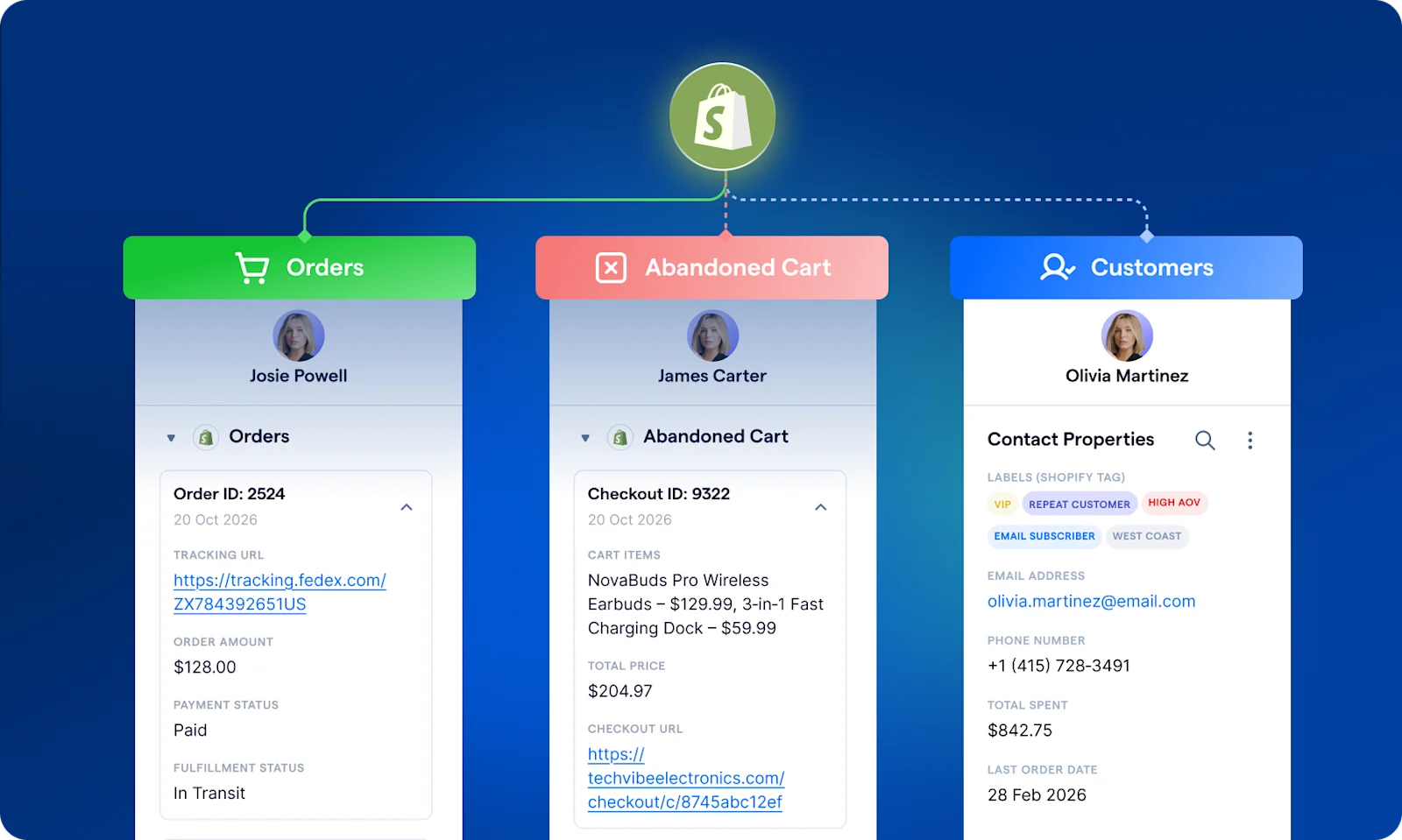
With real-time Shopify data synced into your inbox, you can send abandoned cart reminders, order updates, and personalized offers directly on WhatsApp. This shortens the path from interest to purchase and brings customers back when they drop off.
Why use SleekFlow as a WhatsApp CRM with advanced integration?
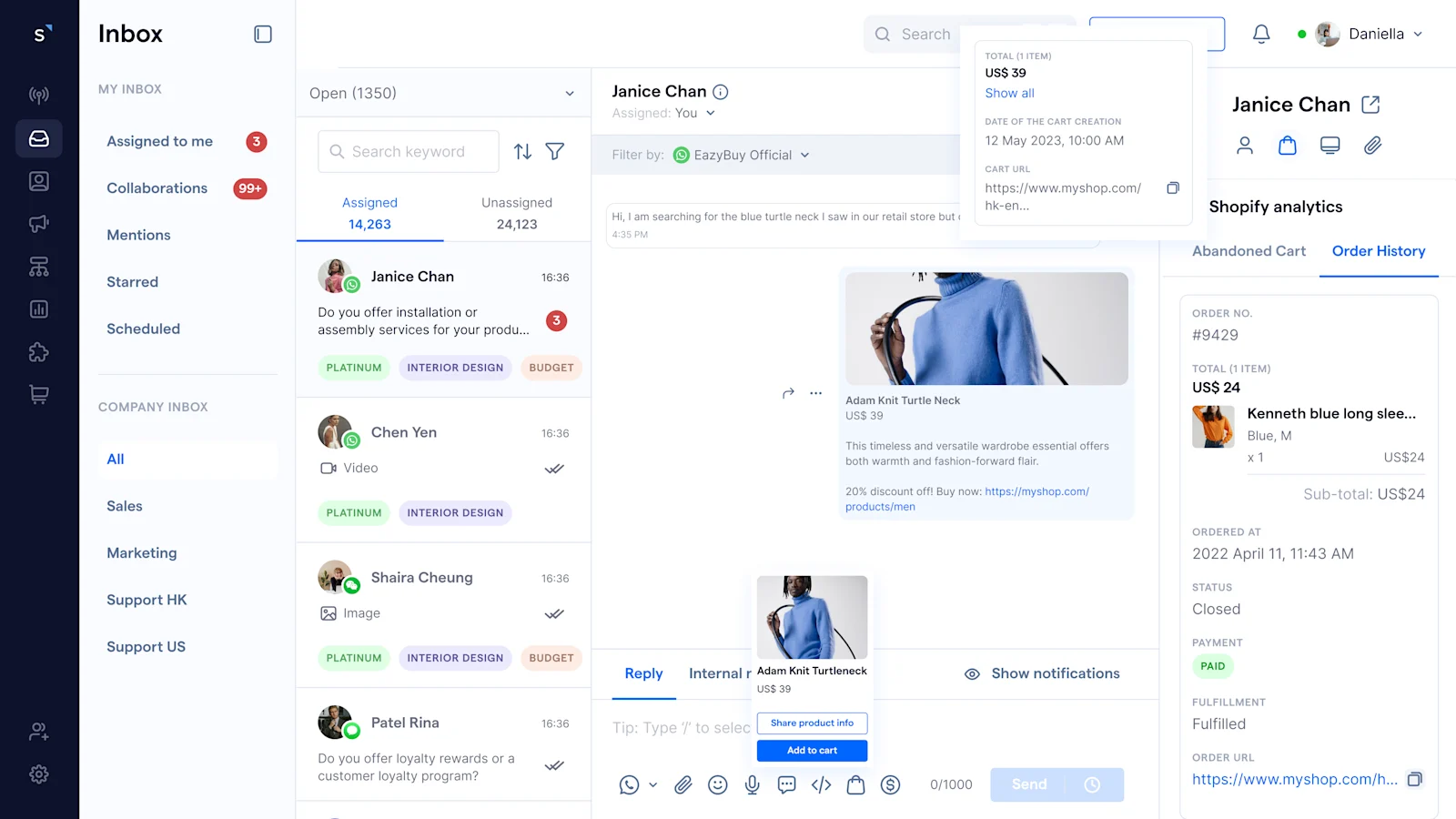
SleekFlow, an AI social CRM with WhatsApp integration, performs various functions to improve efficiency across marketing, sales, and customer service. We support your customers in every step of their request and purchase journey. Take a quick look at the list of some of the CRM features.
Native integrations with leading CRM and e-commerce platforms
AI chat automation and workflow builder
In-chat payments powered by Stripe
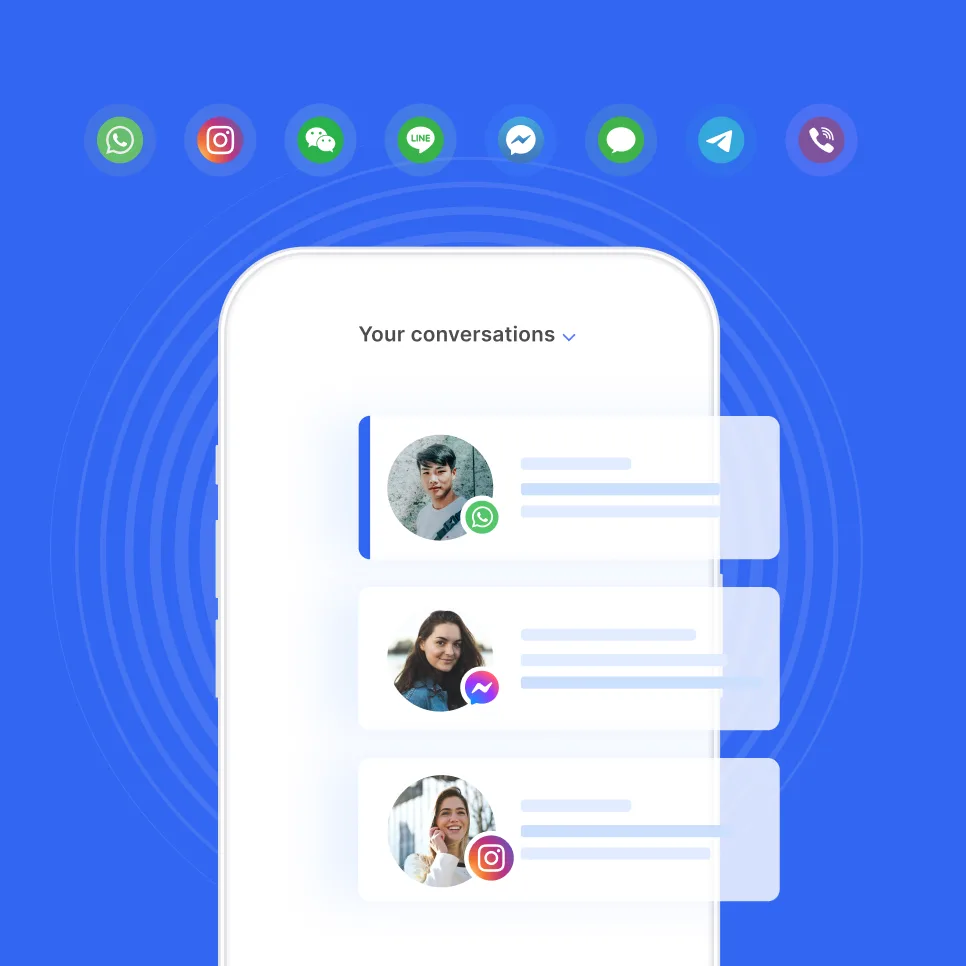
Omnichannel messaging across WhatsApp, Instagram, and more
Enterprise-grade security with global compliance standards
How Cellini drove sales with SleekFlow's context-rich CRM integrations
Cellini, a leading furniture brand in Singapore, aimed to elevate customer interactions beyond standard service. Their goal was to use existing customer data to create more meaningful, revenue-generating conversations across various channels.
The sales team's interactions were reactive because they lacked real-time customer history for personalized engagement. This disconnect between their CRM data and communication platforms hindered efficient sales conversions and the ability to build customer loyalty.
Cellini integrated its CRM with WhatsApp and other messaging channels using SleekFlow. This gave their team instant access to customer purchase history and past interactions, enabling proactive and context-rich conversations that guided customers from inquiry to purchase.
The integration transformed customer engagement by:
Generating over SGD10,000 from a single campaign.
Driving more than 1,000 monthly inquiries.
Want to outcompete your peers with SleekFlow's help?
Book your personalised demo with SleekFlow today and unlock the potential of seamless communication


