How to schedule WhatsApp messages on iPhone, Android, Web, and WhatsApp Business


TL; DR: Quick Summary
- WhatsApp message scheduling is possible on Android, iPhone, WhatsApp Web, and WhatsApp Business, but each method has different limits and workarounds.
- The WhatsApp Business App mainly supports scheduled away and greeting messages, not true one-off “send later” messages for individual customers.
- For businesses, manual tools are fine for simple reminders, but they are not ideal for scale, reliability, privacy, or compliance.
- Serious business use usually requires the WhatsApp Business Platform or an official solution like SleekFlow for reminders, broadcasts, and follow-ups at scale.
- Businesses must follow WhatsApp rules, including the 24-hour customer service window, approved templates outside that window, and customer opt-in before sending campaigns.
- AI automation goes beyond simple scheduling by sending personalized messages based on customer behavior, such as abandoned carts, appointments, renewals, and post-purchase follow-ups.
WhatsApp Business is now almost every business’ very first option for messaging, ranked among the top 3 business apps, and exceeded 1 billion total downloads on the Google Play Store. Even if you are not doing it, probably most of your competitors are already on board.
Can you schedule a message on WhatsApp Business?
Yes, you can schedule a WhatsApp message—but it depends on the use case.
You can schedule away- messages directly within the WhatsApp Business app. However, if you want to schedule a one-off message on your iPhone, Android, or on WhatsApp Web, you'll need to use a shortcut, extension, or another third-party tool. For businesses that need to send reminders, broadcasts, and follow-ups at scale, the best option is the WhatsApp Business Platform or a solution like SleekFlow.
While basic scheduling relies on manual, third-party apps, modern businesses often require more than a simple timer. With SleekFlow's AgentFlow, you can move beyond scheduling and embrace dynamic, AI-driven automation. Instead of you manually picking a date and time, our AI Agents can automatically send hyper-personalized messages based on real-time customer behavior, CRM data, and lifecycle stages.
What is a WhatsApp schedule message?
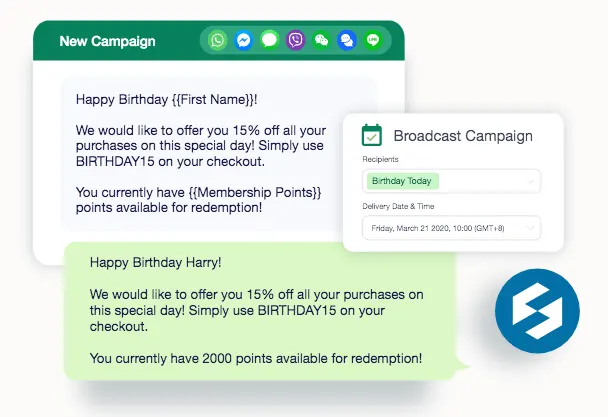
The schedule function for WhatsApp allows you to send a message at a selected date and time. Instead of running the app every time you want to send a message, you can set options to automatically send out a text on a daily, weekly, or even monthly basis.
The feature is not only capable of delivering a one-time message. Under the automation tab of WhatsApp, you can also create a message sent periodically, for example, birthday wishes, New Year greetings and reminders.
Understanding what it can be done, let’s see how it should be done.
Manual scheduling method for WhatsApp messages
Although it's the world's most popular messaging app, WhatsApp doesn't have a built-in "send later" feature. But what if you want to send a perfectly timed birthday wish or a client reminder without staying up late? Thankfully, effective workarounds exist. Depending on your device, you can use third-party tools and built-in automation to schedule your messages.
Here’s a look at the best manual scheduling methods for different platforms:
How to schedule WhatsApp messages on Android
Using Android automation, SKEDit lets you structure, schedule messages on WhatsApp, and plan up to 5 communication channels.
Open the Skedit app and sign up or log in if you already have an account.
On the Skedit home screen, tap on the "+" icon to add a new service.
Select "WhatsApp" from the list of available services.
Tap on "WhatsApp" to start scheduling a message.
Enter the recipient's name or phone number in the "To" field.
Type your message in the provided text box.
Choose the date and time you want the message to be sent.
You can also set the message to repeat daily, weekly, or monthly if needed.
Ensure the "Ask me before sending" toggle is turned off if you want the message to be sent automatically without confirmation.
Tap on the "Schedule" button to confirm and schedule the message.
If you want to check, recheck, and triple-check the content, you can choose the option “Ask me before sending.” This way, you will receive a notification seeking approval to complete the action on the scheduled day. If you think it is pretty redundant, you can choose not to be asked when sending the message.
Although it can make the delivery process faster and smoother, you first need to disable the phone’s screen lock and battery optimization. In other words, it can cause compromised privacy concerns, and this is not recommended.
How to schedule WhatsApp messages on iPhone
Unlike Android, iOS sadly does not have any third-party apps available to schedule messages on WhatsApp. If an iPhone user wishes to plan a WhatsApp schedule message earlier, he or she can do this process through Siri Shortcuts.
Simply type in “Shortcuts” and download it on the App Store.
Tap “Automation” and “Create Personal Automation.”
On the next screen, click “Time of Day” and select the dates and times you would like to schedule WhatsApp messages.
Tap “Add Action,” and type in “Text” in the search bar.
Enter your message in the pop-up text field.
Click the “+ icon” below the text field and search for “WhatsApp” in the search bar.
Select “Send Message via WhatsApp,” and choose to whom you want to send the message to.
At the pre-set time, you will receive a notification.
Click the notification and hit “Send.”
(Source: TechWiser)
How to schedule messages on WhatsApp web
Timely communication for businesses is crucial. However, as mentioned earlier, WhatsApp lacks a native feature for scheduling messages in advance. To address this gap, you can use the Chrome extension available on the Chrome Web Store to schedule messages for specific times, ensuring consistent engagement with clients, prospects, and teams without the risk of missed or delayed communication.
For instance:
1. Install the “Send Later for WhatsApp” extension from the Chrome Web Store.
2. Upon adding the extension, you will be redirected to WhatsApp Web in your browser.
3. Log in to your WhatsApp account by scanning the QR code.
4. Select the contact or group chat that you want to send a schedule message.
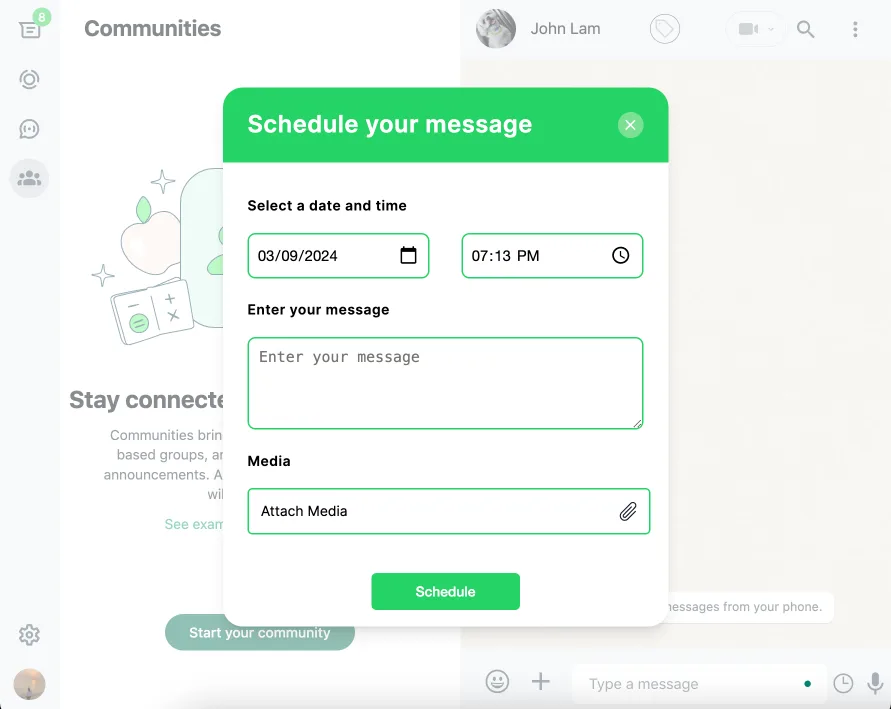
5. Click on the clock icon beside the textbox and write your message as well as choose a date and time for your message.
6. Confirm the scheduling, and your message will be sent automatically at the chosen time.
How to schedule away messages in WhatsApp Business App
For solopreneurs and small business owners, maintaining a work-life balance is crucial. You can't monitor your inbox 24/7, but leaving a hot lead hanging can cost you a sale. The WhatsApp Business App solves this with its "Away Message" feature, which acts as a friendly digital receptionist when you're off the clock.
Setting it up only takes a few taps and ensures your customers get a prompt, professional reply. Here’s how to set and schedule your away messages:
Find your Business Tools: Open the WhatsApp Business App, tap the three dots (or "Settings" on iOS), and go to Business tools > Away message.
Turn it on and write your message: Flip the Send away message switch on. Then, tap the text field to write a warm, informative reply. For example: "Hi there! We're closed for the day but have received your message. We'll get back to you when we open tomorrow at 9 AM!"
Set the schedule: Tap Schedule to choose when the message should activate. You have three options:
Always send: Best for when you're on vacation and completely unavailable.
Custom schedule: Use this for specific time blocks, like a two-hour team training.
Outside of business hours: This is the most popular option. It automatically syncs with the business hours you've set in your Business Profile.
Choose your recipients: Finally, decide who receives this message. You can send it to Everyone, Everyone except my contacts (great for ignoring personal friends who message your business number), or Only send to... specific people.
Schedule WhatsApp messages based on customer behavior with AI Agents
Manual reminders are a good start, but to scale a growing business, you'll need a more powerful, data-driven tool. Upgrading to the WhatsApp Business API and connecting it to an official WhatsApp Business Solution Provider (BSP) like SleekFlow lets you go beyond calendar-based reminders to unlock behavior-based automation.
Instead of guessing the best time to follow up, your system can react intelligently based on specific actions your customers take. With SleekFlow's AI, you can map out continuous, automated customer journeys. This allows you to automatically trigger personalized follow-ups for events like abandoned carts, upcoming renewals, or VIP milestones, letting AI agents handle the heavy lifting.
Here are a few ways you can automate messages based on customer behavior:
Abandoned Cart Recovery: A customer adds an item to their cart on your Shopify store but doesn't check out. 24 hours later, the system automatically sends them a personalized WhatsApp message, maybe with a small discount to encourage them to complete the purchase.
Appointment Follow-up: When someone books a consultation, the API sends an instant confirmation. It can then automatically schedule a reminder for 24 hours before the meeting, which helps cut down on no-shows.
Post-Purchase Drip Campaign: After a customer buys something, you can automate a whole series of messages. For instance, send a "How are you enjoying the product?" message three days after delivery, then suggest a related item two weeks later.
AI Handoffs: When a customer replies to an automated message, an AI agent can take over the conversation. The AI qualifies the lead by asking relevant questions and gathering information before seamlessly handing the conversation over to a human agent, ensuring a smooth and efficient customer experience.
By tying your scheduled messages directly to customer actions, you can turn WhatsApp from a simple support tool into a proactive way to drive revenue.
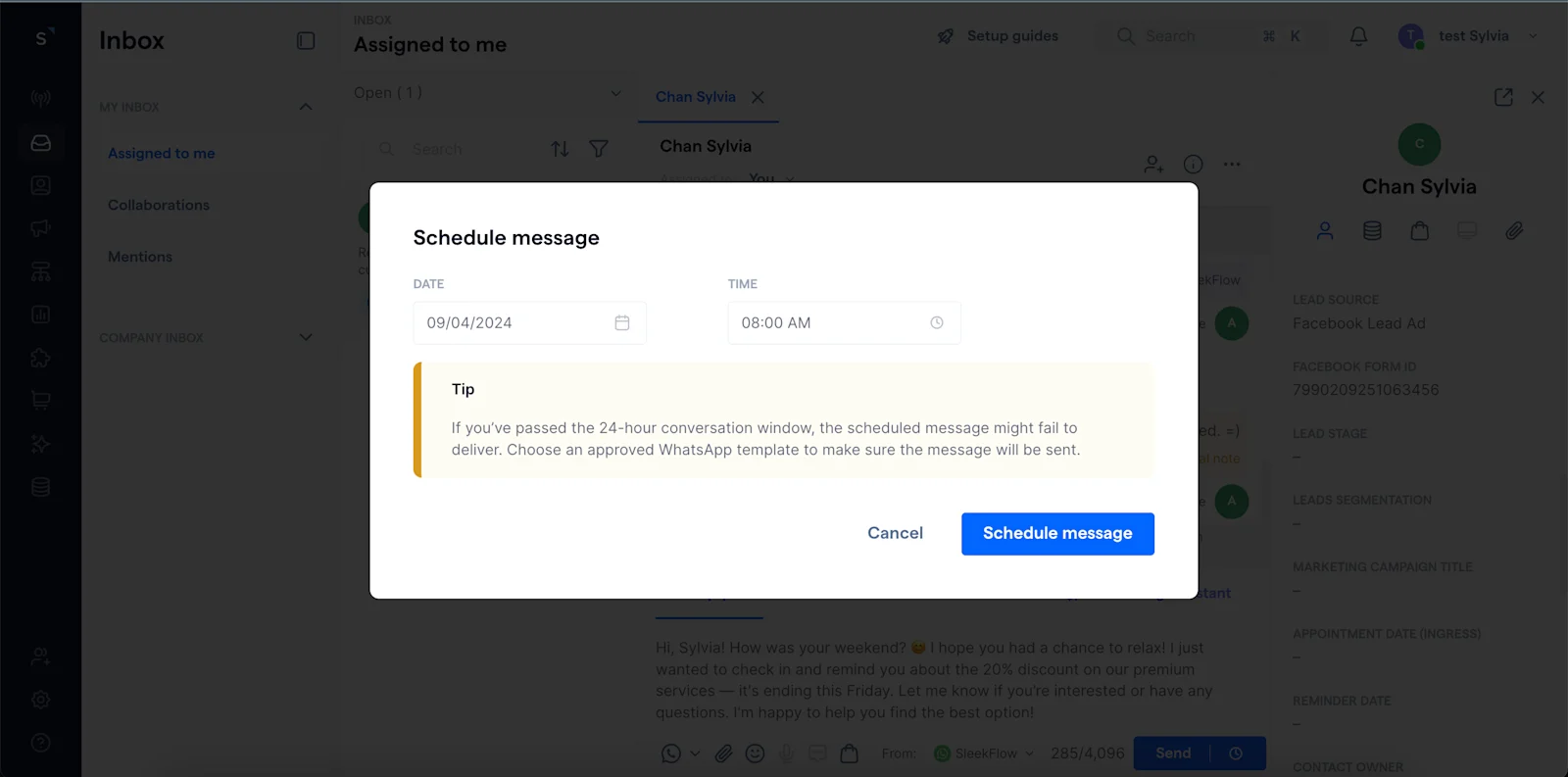
Want more control over your scheduled messages?
You can also personally schedule automated messages:
Choosing the preferred interval and time.
For birthdays or any festive greetings.
Booking and appointment reminders.
Or any other creative marketing initiatives you can think of.
In this case, even without a built-in automation tab of WhatsApp, you can send automated WhatsApp schedule messages effortlessly.
Instead of spending more time on repetitive operations, you can devote more energy to growing your business
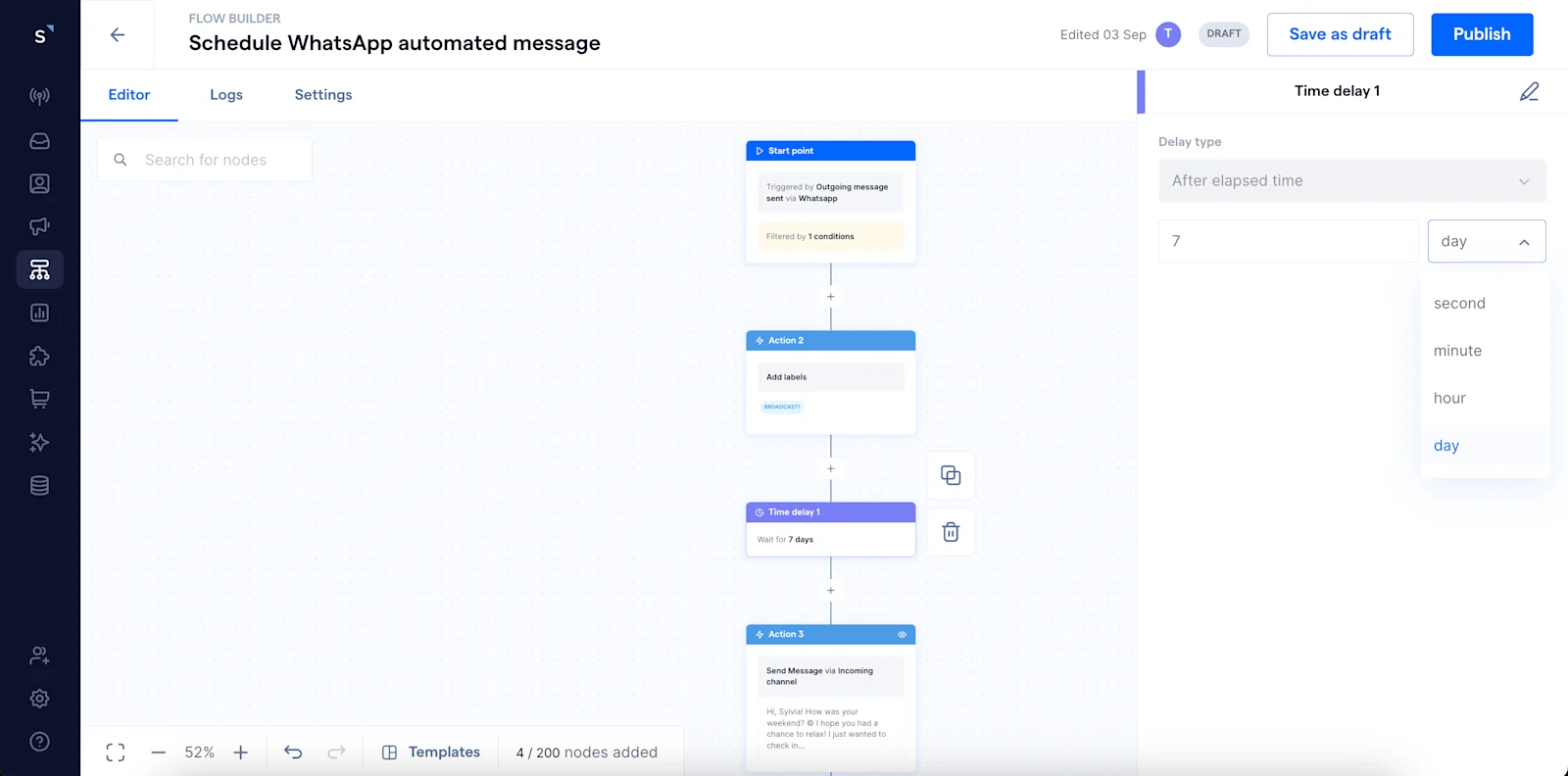
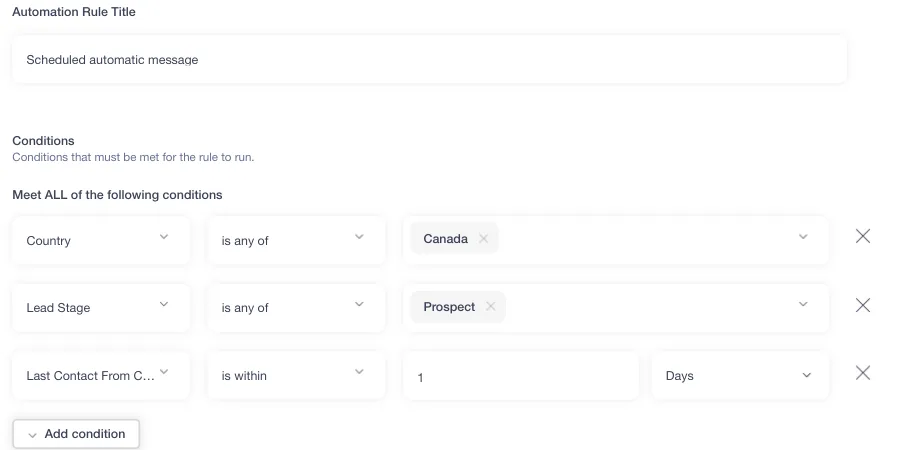
If the recipients do not get back to you within a certain amount of time, you can even schedule a follow-up message by setting up several conditions.
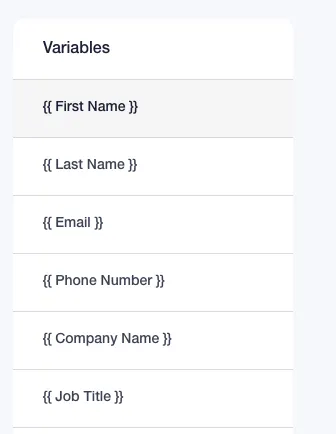
SleekFlow also allows you to send broadcast messages to customers under customized fields and segmentations in a single click. There will be a list of variables for you to tailor-make each message content.
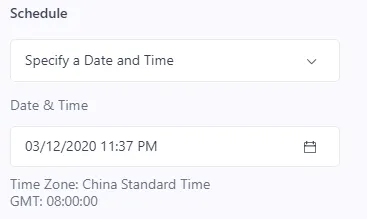
You can choose to send the message instantly or select a future date and time.
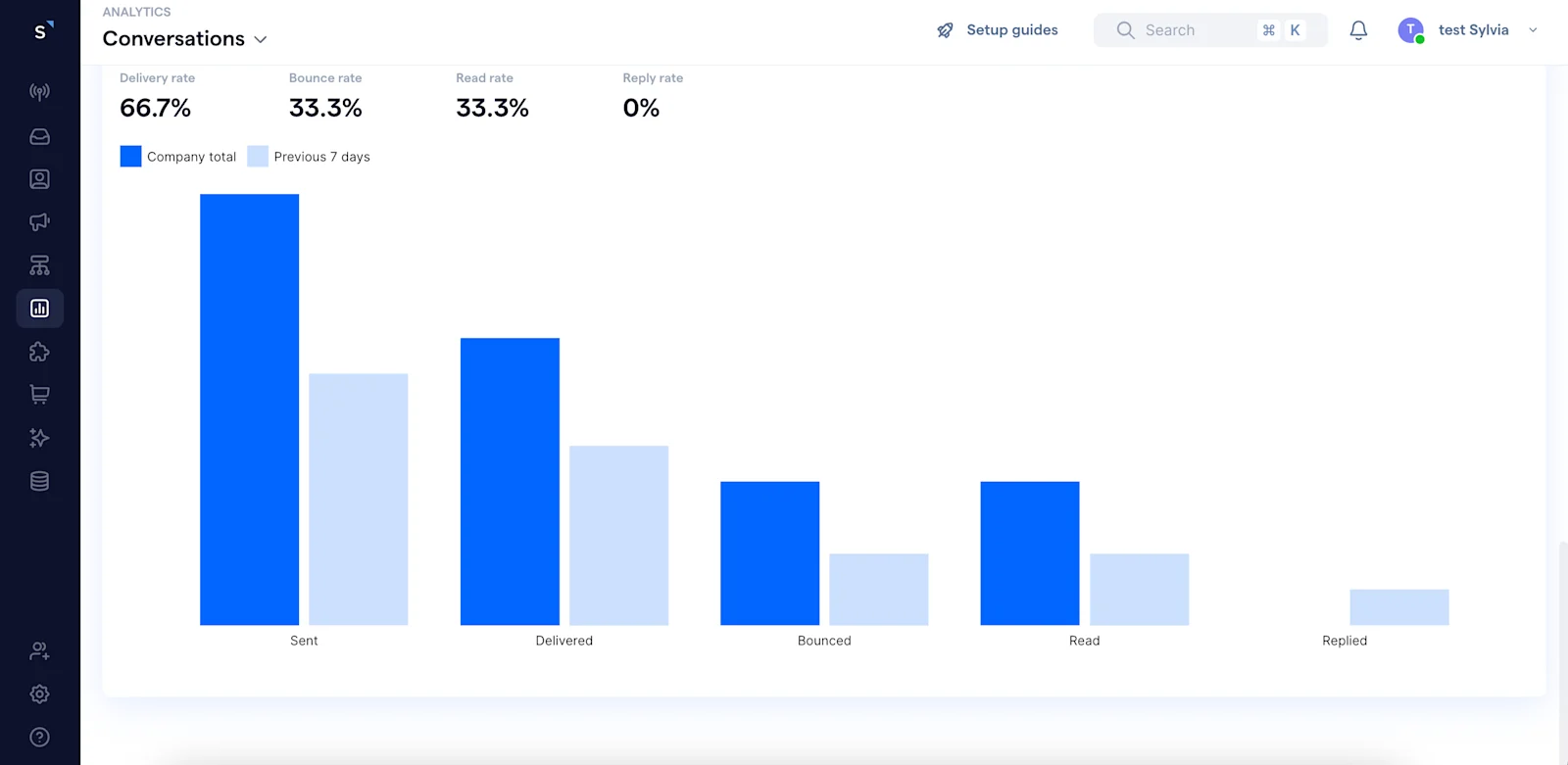
Upon delivery, there will be some metrics such as “Sent,” “Delivered,” “Read,” and “Replied” for you to keep track of the performance of each message.
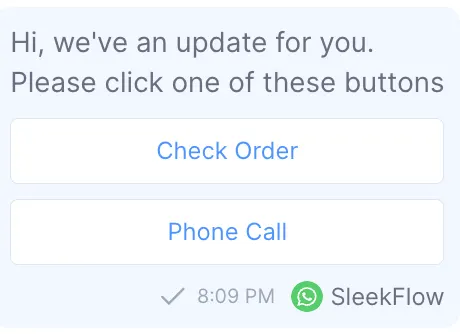
When the message is sent, there will be a single tick at the right corner.
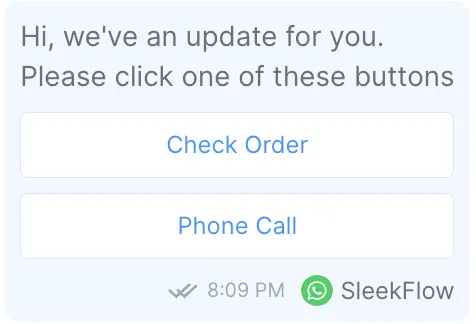
The symbol will change to a double tick when the message is well delivered.
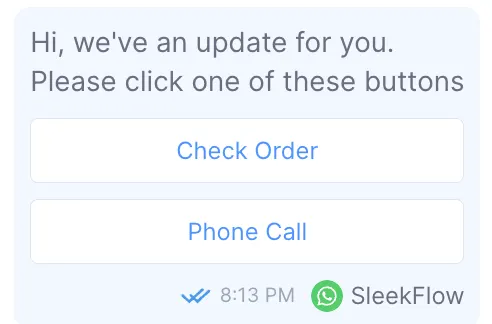
The double tick will become blue once the recipient has read the message.
Other statistics include response rate and open rate.
Beyond basic variables, SleekFlow's AI crafts personalized content for each recipient. And when a customer replies to your broadcast, our AI agent steps in. It reads their intent, answers questions, and guides them down the sales funnel. This all happens while you track advanced metrics and conversion rates from your dashboard.
AgentFlow use cases: How businesses optimize workflows and performance
1. AgentFlow's automation helped Checkmob cut response times and boost qualified demos
Checkmob, a logistics and field sales management software provider in Brazil, specializes in helping companies manage their field operations. As their market reach expanded, they needed to improve the operational excellence of their own Inside Sales team.
Checkmob’s lead qualification process was entirely manual, causing their Sales Development Representatives (SDRs) to spend excessive time on repetitive tasks like answering basic questions and scheduling demos. This manual workload led to slow response times and lower conversion rates, creating a clear need to scale lead engagement efficiently.
To modernize their strategy, Checkmob implemented SleekFlow’s AgentFlow to automate the early stages of their customer journey on WhatsApp. The AI instantly responded to new leads, qualified them, synced data to their CRM, and scheduled demos directly within the chat.
By automating these repetitive tasks, Checkmob saw significant improvements:
70% reduction in response time: Leads received faster initial replies, improving engagement.
20% increase in qualified demo bookings: More potential customers were successfully scheduled for demos.
30% of sales team time saved: This freed up the team to focus on high-value conversations and closing deals.
2. Colégio Cognos boosts scheduled visits and shortens service queues with AgentFlow
Colégio Cognos, a prestigious school, was experiencing rapid growth. This led to a high volume of inquiries during peak enrollment periods.
The school's small customer service team was overwhelmed, leading to long wait times and lost opportunities. Previous attempts at automation with rigid, menu-based chatbots failed to nurture leads effectively.
Colégio Cognos implemented SleekFlow's AgentFlow, an advanced AI solution. The AI was trained on the school's internal knowledge to handle conversations naturally, answer questions, and guide parents to schedule school tours.
Here's what Colégio Cognos achieved with SleekFlow's AgentFlow:
150% increase in scheduled visits.
50% reduction in its service queue.
Eliminated wait times by automating routine inquiries.
Freed up staff to focus on high-value interactions, successfully scaling enrollments.
WhatsApp scheduling rules businesses need to know
Scheduling a WhatsApp message is not just about picking a date and time. For businesses, it also depends on when you are allowed to message the customer, what type of message you are sending, and whether the customer has given consent. Meta’s official documentation is clear: outside the customer service window, businesses can only send approved template messages. Meta also requires businesses to obtain user opt-in before sending template messages, while Wati similarly highlights that broadcasts should only be sent to users who have explicitly consented to receive them.
The 24-hour customer service window comes first
When a customer messages your business, a 24-hour customer service window opens. During that window, your team can reply with normal free-form messages. Once the window closes, you can no longer send a regular message just because it was scheduled in advance. At that point, you must use an approved template instead. This is one of the most important rules businesses need to understand before setting up reminders, follow-ups, or campaigns.
Templates are required outside the 24-hour window
Meta states that template messages are the only message type that can be sent outside the customer service window. That means a scheduled appointment reminder, re-engagement message, payment reminder, or promotional follow-up may need a template depending on when it is due to go out. Templates also need approval before they can be used, so businesses should build this into their campaign planning instead of treating scheduling as a last-minute task.
Opt-in matters before you schedule broadcasts
A business should not schedule WhatsApp promotions or bulk broadcasts to people who have not clearly agreed to receive them. Meta requires businesses to obtain opt-in before messaging people on WhatsApp, and its policy says businesses may only contact people who have given their phone number and confirmed they want subsequent messages or calls. Wati also states that user consent is required before sending WhatsApp broadcasts via the Business API. In practice, this means your opt-in should clearly say who you are, what type of messages the customer will receive, and how they can opt out later. It is also smart to keep a record of that consent for compliance and internal governance.
Time zones should be part of your scheduling workflow
For businesses sending messages across cities, countries, or regions, the “best” send time should be based on the recipient’s local time zone, not just your team’s office hours. A reminder sent at 10:00 AM in your dashboard may land too early, too late, or outside business expectations for the customer. This becomes even more important for multi-market campaigns, recurring reminders, and promotional broadcasts. A good scheduling workflow should let you segment by region and review send times before launch. Meta also stores timezone settings at the WhatsApp Business Account level, which is another reason teams should treat scheduling as an operational setup issue, not just a messaging feature.
Browser extensions and accessibility-based tools can be risky for businesses
Browser extensions and accessibility-based schedulers may look convenient, but they are usually better suited to personal use than to serious business operations. Some rely on browser access, device permissions, or accessibility controls to trigger sending, while others may depend on the device staying active and properly configured. Your current draft already notes that certain Android-based methods may require changes such as disabling screen lock or battery optimization, which is not ideal from a privacy or security standpoint. For businesses, these workarounds also create audit, reliability, and compliance risks because they are not the same as running messaging through an official WhatsApp Business Platform workflow. Meta’s policy also warns that unauthorized messaging at scale can lead to limits or removal of access.
What businesses should do instead
For one-off personal reminders, manual tools may be enough. But for customer communication at scale, businesses should use an official WhatsApp Business Platform setup that supports approved templates, opt-in management, audience segmentation, analytics, and team governance. That is especially important for marketing teams, support teams, and sales teams that need to schedule messages reliably without creating policy or security issues.
Best practices for scheduling WhatsApp messages
Manually scheduling messages is a good first step, but incorporating AI can significantly boost your outbound messaging strategy. Here’s how to get the most out of your efforts.
Manual Scheduling Best Practices
To effectively schedule a WhatsApp message, follow these best practices to ensure reliability, security, and efficiency:
1. Schedule During Optimal Times
Plan your messages to be sent at times when your recipients are most likely to engage with them. This is especially important for marketing messages and reminders. Research indicates higher engagement rates during specific times of the day or week.
Example: For business messages, mid-morning and late afternoon are often the best times.
2. Test the Functionality
Before relying heavily on a scheduling app, test it by scheduling a few messages to yourself or a colleague. This helps ensure that the app works as expected and that messages are delivered on time.
3. Use Clear and Concise Messages
Ensure your scheduled messages are clear, concise, and relevant. Avoid overly long texts and ensure that the message gets straight to the point. This helps maintain recipient interest and engagement.
4. Monitor Scheduled Messages
Regularly check the app to ensure that your WhatsApp scheduled messages are being sent as planned. Some apps allow you to see the status of your scheduled messages, ensuring they have not failed or encountered issues.
5. Provide Value in Your Messages
Ensure your messages provide value to the recipient. Whether it's a reminder, promotional message, or update, the content should be meaningful and beneficial to them.
6. Follow Up if Necessary
If your scheduled message requires a follow-up, ensure you have a plan in place to respond to replies or further engage the recipient. Scheduling is just the first step in maintaining good communication.
7. Review and Adjust
Regularly review the effectiveness of your scheduled messages. Analyze engagement rates and adjust your scheduling strategy as needed to optimize results.
AI Outbound Messaging Best Practices
To get the most out of AI, consider the following best practices for your strategy:
Segment by lifecycle stage. Instead of guessing the "optimal time," use dynamic segmentation. This lets you send targeted broadcasts precisely when a lead's behavior shows they are ready to buy.
Use AI for replies. A scheduled message is just the beginning. Power your outbound campaigns with AI agents that can instantly handle replies, answer FAQs, and qualify leads 24/7.
Trigger messages based on behavior. Automatically launch messaging flows when a customer clicks an ad or browses a specific product. This makes manual scheduling a thing of the past.
Why SleekFlow is the best option for teams that need automation
WhatsApp Business also offers many other features besides schedule messages and broadcast messages:
Automate seamless and smooth business workflows and customer journeys with Flow Builder.
WhatsApp catalog to showcase your up-to-date products and services
WhatsApp chat labels to properly categorize the conversations with different customers
Detailed messaging statistics
Include WhatsApp as a channel on the live chat of your website to continue conversations even after they leave the page
If you were to upgrade your WhatsApp Business account from the free app to the WhatsApp Business Platform, you can get more benefits and additional functions to boost sales:
Multiple WhatsApp logins and users with a unified inbox on phones and electronic devices
WhatsApp Business blue tick verification for a reliable profile (customers can see your business name even without saving your number)
Interactive WhatsApp chat buttons for a higher reply rate
In-chat payment link in the WhatsApp chat box
Integration with major CRM platform such as Salesforce or HubSpot to display the customer profile and order history right next to the chat box
Native Shopify integration for you to draft orders in WhatsApp chat
Further reading:
A step-by-step guide to creating a free WhatsApp Business account
Automating WhatsApp for marketing and customer service: a WhatsApp chatbot guide
Want to outcompete your peers with SleekFlow's help?
Book your personalised demo with SleekFlow today and unlock the potential of seamless communication


