AI for small business: Best use cases, benefits, and how to start without wasting budget


TL; DR: Quick Summary
- AI for small businesses is most useful when it solves practical daily problems, such as slow replies, missed leads, manual follow-ups, repeated admin work, and customers dropping off before checkout.
- The strongest AI use cases are customer service, sales, marketing, ecommerce, and operations. Small businesses can use AI to answer FAQs, qualify leads, recover abandoned carts, draft campaigns, summarise conversations, and automate routine internal tasks.
- AI helps small businesses grow revenue, not just save time, by protecting key conversion moments. Faster lead response, smarter follow-ups, better personalisation, and 24/7 support can all improve sales opportunities.
- Small businesses should start with one clear bottleneck instead of using too many AI tools at once. A focused rollout, such as FAQ automation, lead qualification, appointment booking, or abandoned cart recovery, is easier to measure and improve.
- AI works best when it’s connected to the tools your business already runs on. Instead of managing chats separately, businesses can use AI to qualify leads, respond around the clock, and connect customer conversations across channels.
Singaporean small businesses are under pressure to serve faster, sell smarter and do more with lean teams. That is exactly where AI for small business is becoming practical.
According to IMDA’s Singapore Digital Economy Report, AI adoption among Singapore SMEs rose from 4.2% to 14.5%, while AI-using firms mostly rely on off-the-shelf generative AI tools, domain-specific AI-enabled solutions, and customised tools.
What is AI for small business?
Using AI for small business means using practical AI tools to automate repetitive work, improve customer experience, make better decisions, and grow revenue without needing enterprise-level resources.
The best starting points are usually customer support, lead response, marketing automation, and sales follow-up.
This matters because small businesses do not usually lose money from a single big problem. They lose money through many small leaks, such as slow replies, missed leads, manual copy-paste work, inconsistent follow-ups, and customers dropping off before checkout.
Why small businesses are adopting AI
Small businesses are not adopting AI because it sounds futuristic. They are adopting it because it solves daily operational problems.For Singapore SMEs, the business outcomes are clear:
Save time on repetitive work
Improve customer response speed
Reduce manual errors
Make better use of limited headcount
Personalise service without hiring a bigger team
Compete with larger businesses more effectively
A useful counterpoint: AI should not be treated as a magic fix. If your product information is messy, your customer data is scattered or your team has no clear process, AI will amplify that confusion. The strongest results come when AI is attached to a clear workflow.
Best AI use cases for small businesses
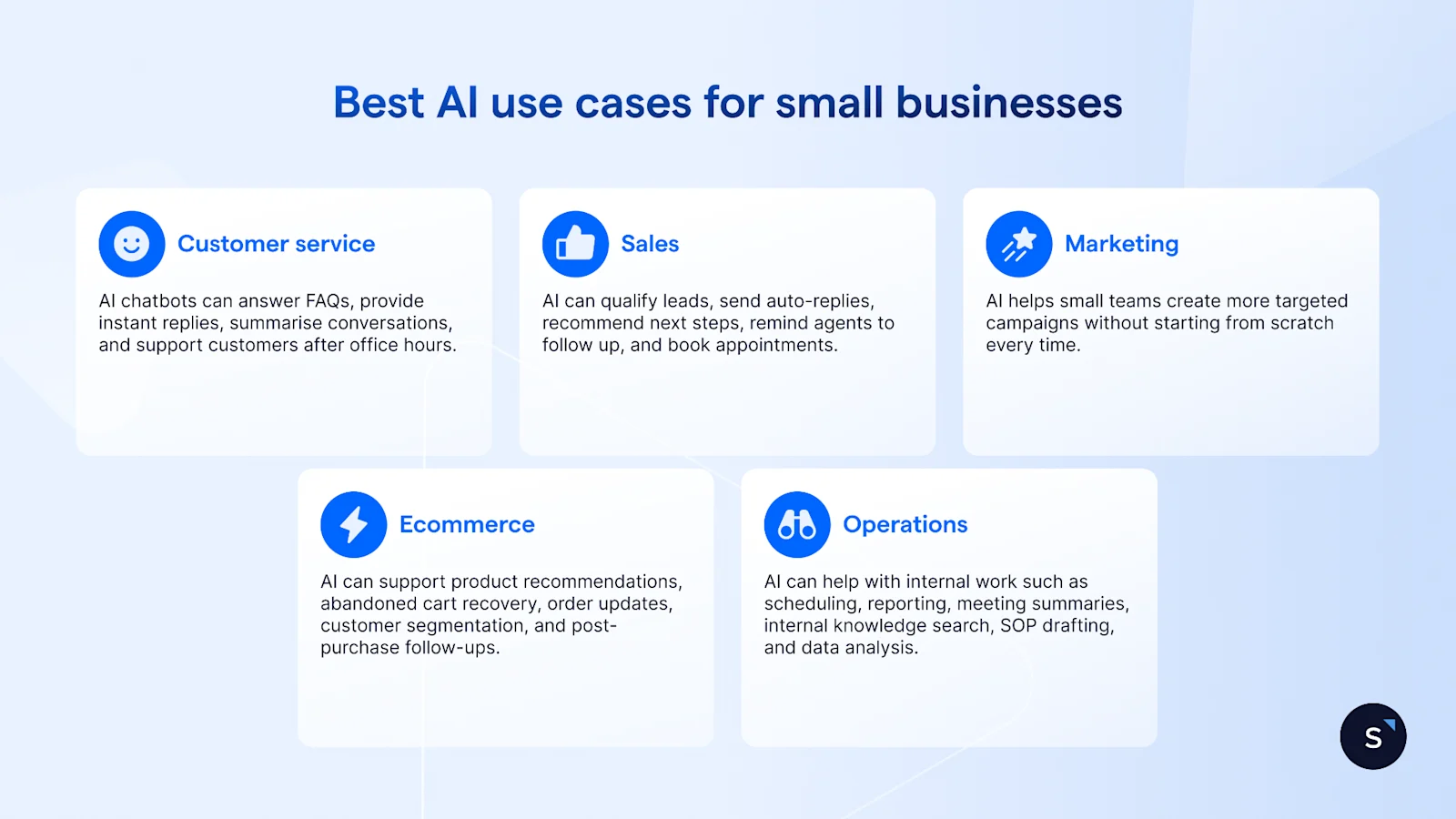
Customer service
Customer service is one of the fastest ways to see value from AI for small business. AI chatbots can answer FAQs, provide instant replies, summarise conversations, and support customers after office hours. This is why Salesforce expects AI to resolve 41% of customer service cases in Singapore by 2027, up from 30% today.
Small businesses can use AI to:
Answer opening hours, pricing and availability questions
Provide order, appointment or delivery updates
Summarise long conversations for human agents
Route enquiries to sales, support or operations
Support customers outside standard office hours
Sales
Sales teams lose revenue when leads wait too long. AI can qualify leads, send auto-replies, recommend next steps, remind agents to follow up, and book appointments.
With SleekFlow’s AI omnichannel CRM, AI agents can uncover customer needs, recommend products, schedule appointments, and route qualified leads across WhatsApp, Instagram, and live chat.
Marketing
AI helps small teams create more targeted campaigns without starting from scratch every time. Use it for email drafts, WhatsApp campaign copy, audience segmentation, product descriptions, and campaign reporting.
The key is not to publish AI-generated content blindly. Use AI to speed up drafting, then apply brand judgement, local context, and compliance checks.
Read more: How AI can help your sales and marketing strategies
Ecommerce
For Ecommerce businesses, AI can support product recommendations, abandoned cart recovery, order updates, customer segmentation, and post-purchase follow-ups. This reduces manual operation times and improves visibility into orders, purchase history, and customer conversations.
Operations
AI also helps with internal work. Small businesses can use it for scheduling, reporting, meeting summaries, internal knowledge search, SOP drafting, and data analysis.
This is especially useful for businesses where founders still handles sales, marketing, HR, and customer service.
How AI helps small businesses grow revenue, not just save time
The best AI tools for small businesses do more than reduce admin. They protect revenue moments.
How to choose the right AI tool for your small business
A good AI tool should not create another system your team forgets to use. It should fit into how customers already talk to you.
Choose an AI tool that:
Solves one clear problem
Is easy to use without heavy technical setup
Integrates with your current tools
Fits your budget
Gives measurable value quickly
Supports your team, not replaces judgement
Can scale as your business grows
How to implement AI in a small business step by step
Do not start with ten AI tools. Start with one bottleneck.
Identify one bottleneck
Find a recurring pain point, like slow WhatsApp response times or follow-ups that keep slipping through the cracks.Choose one use case
Start focused: FAQ automation, lead qualification, abandoned cart recovery, or appointment booking— you don’t need to solve everything at once.Pick one tool
Choose a tool that connects with your customer channels and existing systems.Set success metrics
Decide what you’re measuring and start tracking, such as response time, conversion rate, booked appointments, recovered carts or manual hours saved.Train the team
Make clear what AI handles, when humans step in, and how to review outputs.Launch small
Roll out with a single journey, channel, or campaign, and scale from there.Review and improve
Update replies, workflows, and escalation rules based on real conversations.Iterate from real data
Scale when the first use case is stable and measurable.
The mistake is buying tools by category instead of business outcomes. A writing tool may save time, but a customer conversation platform can directly influence lead conversion, support quality, and repeat purchases.
What good AI for small businesses looks like in customer conversations
Good AI should feel useful, fast, and connected. It should not feel like a disconnected chatbot that traps customers in irrelevant menus.
For small businesses, strong conversational AI should:
Reply across WhatsApp, Instagram, Messenger, and website chat
Qualify leads automatically
Answer common questions
Route conversations to the right team
Recover abandoned demand
Help turn conversations into sales and repeat business
Tian Wei Signature, a Singapore confinement meal provider, used SleekFlow for inbox, automation, and broadcasts, achieving 2X efficiency, a 20% improvement in customer satisfaction, and a 40% increase in response rate.
SleekFlow: The best AI suite for your small business
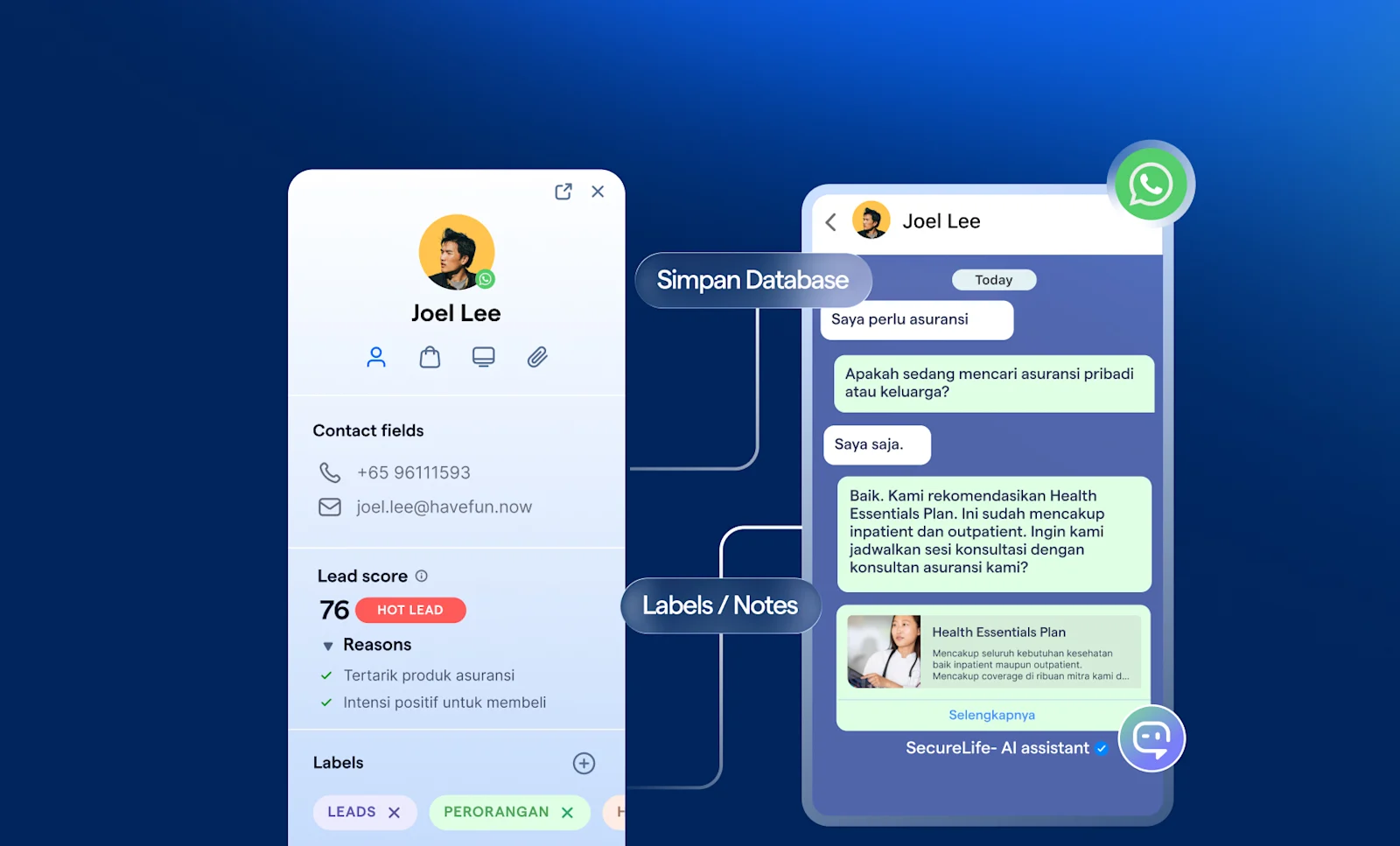
SleekFlow is built for small businesses that want AI to drive real customer outcomes, not just generate text.
With SleekFlow, your business can centralise WhatsApp, Instagram, and live chat, automate lead qualification, support customers 24/7, and connect AI agents to systems like Shopify, CRMs, and internal tools without code.
For small businesses, that means:
One inbox for customer conversations
AI agents for sales, support, and follow-up
Human handover when conversations need judgement
Broadcasts and segmentation for retention campaigns
Analytics to track performance
Integrations with tools such as Shopify, Google Sheets, Zapier, Make, Facebook Lead Ads and Stripe payment links
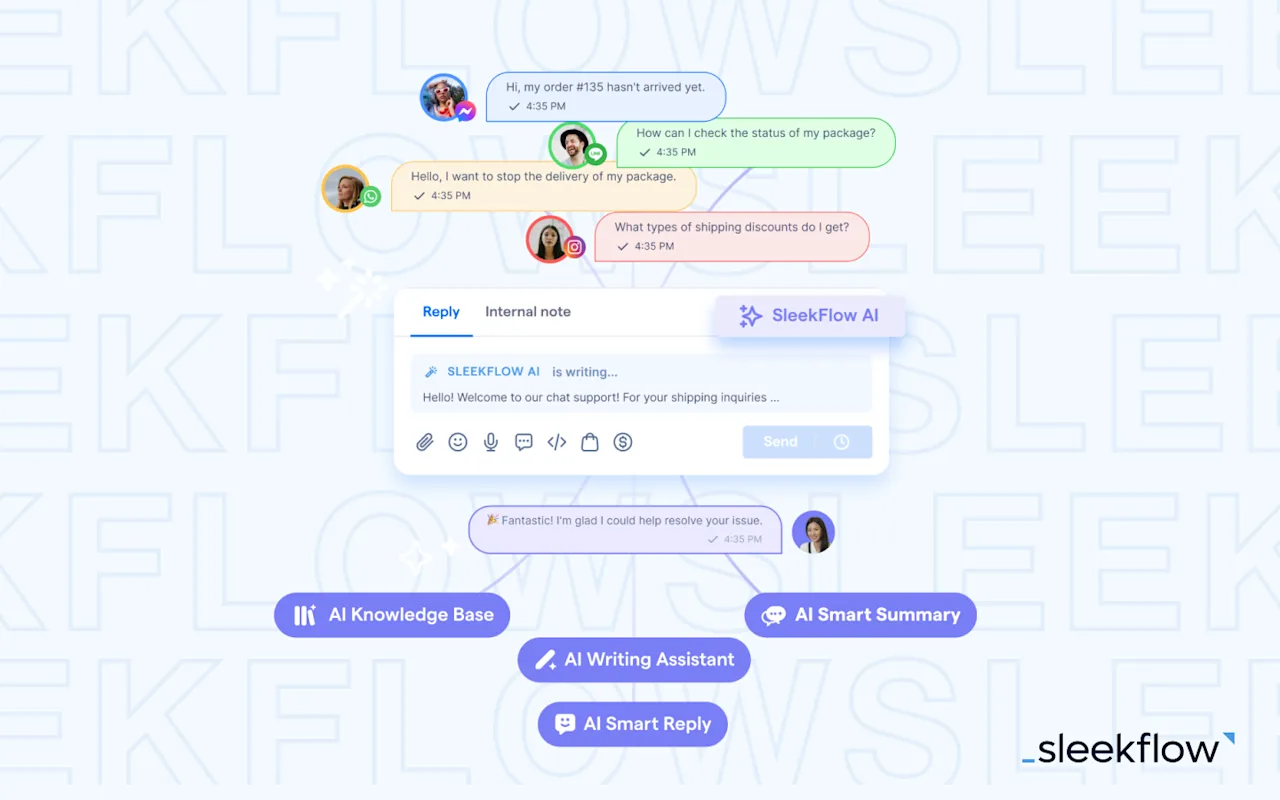
Want to see how SleekFlow can enhance your sales process?
Book a demo today and experience the power of AI-driven conversational intelligence firsthand.


