WhatsApp for luxury retail in Singapore: clienteling and client trust


TL; DR: Quick Summary
If your client relationships live on advisors' personal phones, they leave when the advisor does. The chat history, the size notes and the birthdays go with them.
WhatsApp for luxury retail works when the brand owns the conversation, through a shared business inbox where each client is assigned to an advisor. Clienteling stays personal, and the client book stays with the brand.
That fixes the internal problem. Clients have a different problem, which is telling your genuine message from a fake, and a Singapore boutique can build the answer in.
In this guide, you'll see how Singapore boutiques set up the inbox, run clienteling and private sales in chat, and give clients something to check, with the Singapore data protection and Meta rules that apply.
How can luxury and lifestyle retailers use WhatsApp?
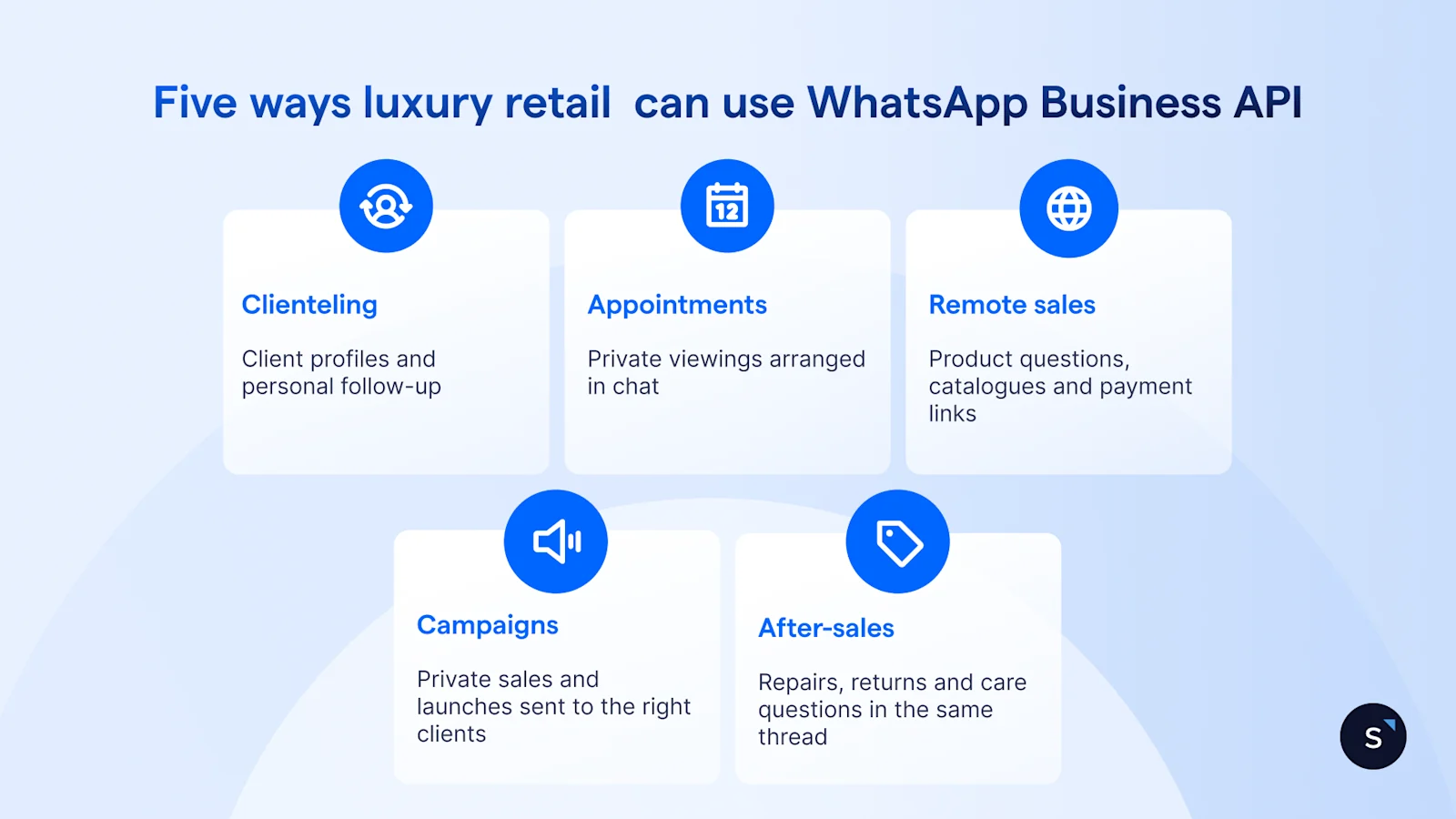
Luxury and lifestyle retailers use WhatsApp as one shared business inbox that replaces advisors' personal phones, spreadsheets and scattered direct messages. Luxury and lifestyle retail covers fashion, jewellery, watches, leather goods, beauty and lifestyle, and home. Clienteling means an advisor keeping a personal relationship with each client.
Singapore clients are already on the app, with four in five people using WhatsApp every month, according to We Are Social and Meltwater's Digital 2026 report.
The shared inbox does five jobs:
Clienteling: client profiles and personal follow-up
Appointments: private viewings arranged in chat
Remote sales: product questions, catalogues and payment links
Campaigns: private sales and launches sent to the right clients
After-sales: repairs, returns and care questions in the same thread
All of it runs on the WhatsApp Business API, which a business reaches through a Business Solution Provider.
How to keep the client book when a sales advisor leaves
Keep the client book by moving client conversations off advisors' personal phones and into a shared business inbox with clear contact ownership. When an advisor leaves, the brand assigns their clients to a colleague, who sees the conversation history, internal notes and order records beside the chat.
Three pieces carry the handover:
Contact owners. Each client in the shared inbox has one contact owner, and the contact can be assigned to someone else.
Notes and summaries. Internal notes and AI chat summaries give a new advisor context without reading the whole history.
Custom objects. Orders, subscriptions and memberships sit beside the chat, in contact and order records.
Chats that sit on personal phones are harder for a brand to control. Confirm what this means for your boutique with a Singapore compliance adviser.
If advisors already use a WhatsApp Business App number, check out our Help Center article on WhatsApp Coexistence for how to connect it. You can bring in up to six months of one-to-one chat history, and group chats aren't included.
How to run clienteling in chat without losing the personal touch
Run clienteling in chat by storing each client's details as contact properties, using triggers to schedule routine messages, and routing each conversation to the right advisor by skill or location. Automation handles the routine messages, and the advisor writes the ones that matter.
Three pieces do the work:
Profile fields. Store size, preferences, birthday, last purchase, preferred advisor and language as contact properties.
Triggers. A birthday, last contact date or last purchase date can schedule a message at the right time.
Routing. Match each client to an advisor by skill or location.
Messages from WhatsApp and Instagram DM arrive in the same inbox, so an advisor sees both without switching apps.
Build the triggers and routing in Flow Builder, and keep the wording of any personal message with the advisor.
How to turn an enquiry into a boutique visit or a remote sale
Turn an enquiry into a visit or a sale by answering product questions in chat, arranging a private viewing with the client's advisor, and sending a catalogue and payment link for remote purchases. Client data can sync with your own customer management software by webhook or API.
Product questions. Answer in the thread and share catalogue items as messages.
Private viewings. The advisor confirms the time and the boutique in the same chat.
Remote sales. Send a payment link in the chat so the client can pay without a trip to the boutique.
Your own systems. Connect customer management software by webhook or API. SleekFlow's solution page lists Salesforce and HubSpot as no-code integrations.
How clients can tell a genuine brand message from a scam
Clients can tell a genuine brand message from a scam by checking what the brand sets up in advance. That means a verified business profile where eligible, an official number list on the brand's website, a named advisor introduction, payment links on the brand's own domain, and a published list of what the brand never asks for.
What the brand sets up, and what the client can check
Table 1: what a boutique sets up, and what a client can check
Who can get the WhatsApp verified badge?
Eligibility for the WhatsApp verified badge is Meta's decision. The free Official Business Account route expects organic press coverage, and Meta Verified is a paid subscription whose availability varies, as our WhatsApp blue tick guide explains.
How to run launches and private sales without spamming clients
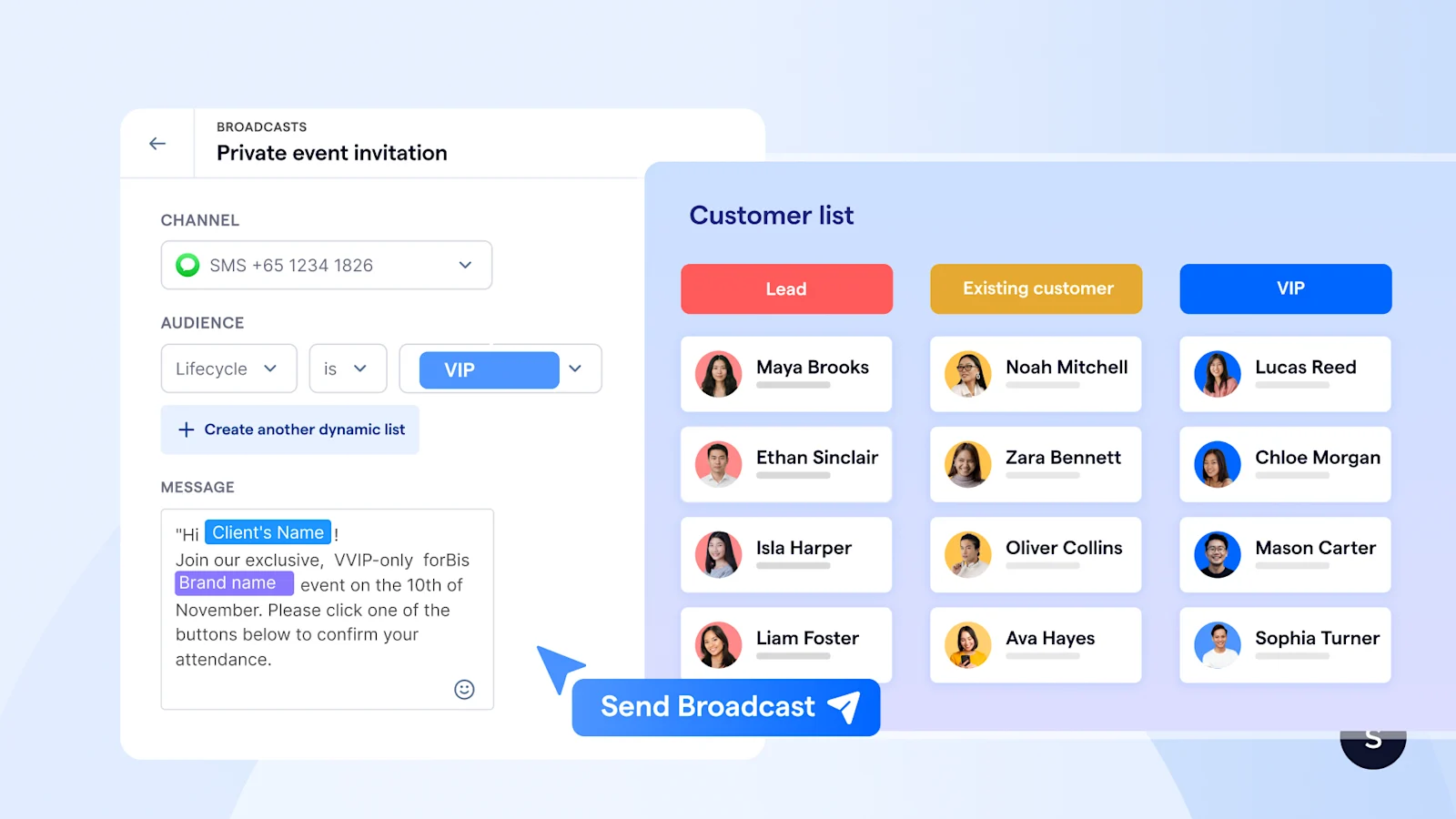
Run launches and private sales without spamming clients by segmenting the list, giving top-tier clients first access, personalising each message and capping how often anyone hears from you. Get consent at the first conversation, because Singapore's Do Not Call rules cover marketing messages sent to Singapore numbers on WhatsApp, and Meta requires opt-in.
How to segment, stagger and measure a campaign
Broadcast Campaigns handles the mechanics:
Segment and stagger. Filter clients by labels, lists or conditions, and send top-tier clients the invitation first.
Personalise and schedule. Add dynamic values and buttons, and time sends around a birthday or the last purchase date.
Cap frequency. A frequency cap is our recommended practice, and the brand sets the limit.
Measure. Track delivery, open and reply rates, and export to CSV to work out return on investment.
What PDPC and Meta require before the first send
The rule. PDPC's Do Not Call guide says the registry rules apply to marketing messages sent to Singapore numbers, even on WhatsApp and Telegram.
Consent. PDPC's business guidance says you need not check the registry when you hold the recipient's clear and unambiguous consent, so capture it at the first conversation.
Opt-outs. PDPC expects you to explain how to opt out in the same medium and to stop within 21 days of a request.
Existing clients. PDPC lists an exception for relevant products, services and memberships offered to people you have an ongoing relationship with, and says a series of one-off transactions does not count as one.
Meta. Meta's opt-in requirement says businesses must get opt-in before messaging people on WhatsApp and state which business the person is opting in to hear from.
This is general information, not legal advice. Confirm your consent wording, opt-out handling and any exception with your compliance adviser.
How to handle repairs, returns and after-sales
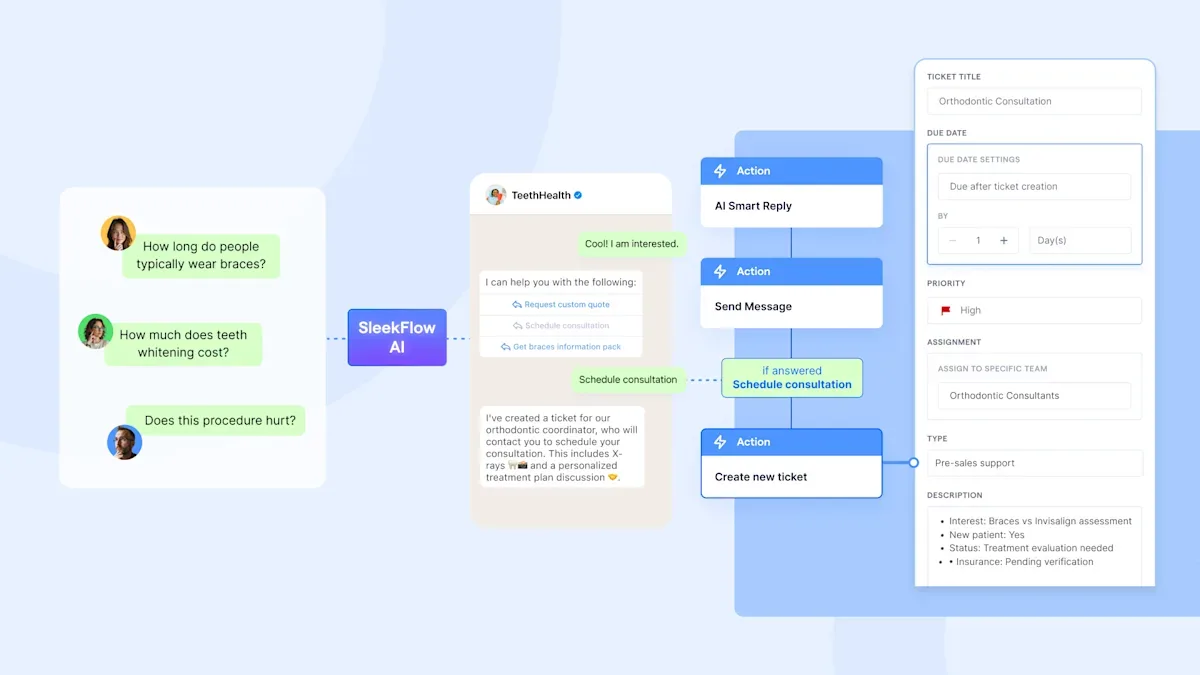
Handle repairs, returns and after-sales in the same WhatsApp thread as the original purchase, so the client deals with one team and the brand keeps the full history. Advisors share status updates, care instructions and warranty answers in chat, and open a ticket for each case.
An advisor creates a ticket in the ticketing system from the conversation. Check out our Help Center article on creating a ticket for the steps, and confirm ticketing is available on your plan, because the Help Center lists it as limited access.
Authenticity checks and valuations stay with your own specialists, and chat carries the status updates and the paperwork.
What an AI agent should and shouldn't do for luxury clients
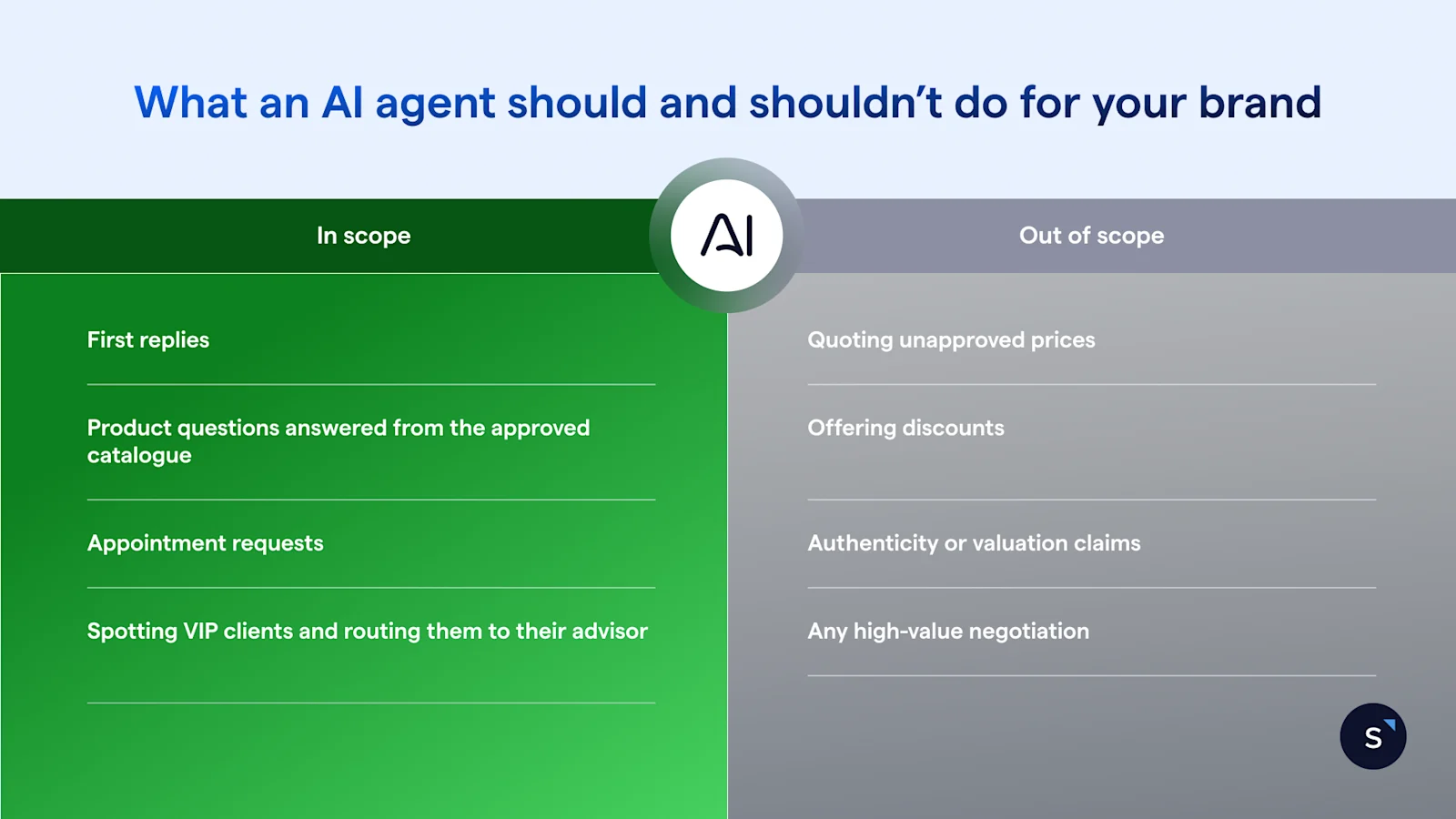
An AI agent for a luxury brand should handle the routine first contact and leave unapproved prices, discounts, authenticity claims and negotiation to people. Those limits belong in writing, and the client's own advisor takes over any conversation that matters.
In scope
First replies
Product questions answered from the approved catalogue
Appointment requests
Spotting VIP clients and routing them to their advisor
Out of scope
Quoting unapproved prices
Offering discounts
Authenticity or valuation claims
Any high-value negotiation
How to write tone rules with good and bad examples
Write tone rules as instructions with good and bad examples, the principle our brand strategy guide sets out. An instruction might read: reply in two sentences or fewer, use the client's name from their profile, and never state a price that isn't in the approved list.
Good: "Thank you for asking. I can send you the details of that piece now, and I'll ask your advisor to arrange a viewing."
Bad: "That piece is going fast, so I can offer you a discount if you buy today."
How to keep VIP client data private inside the team
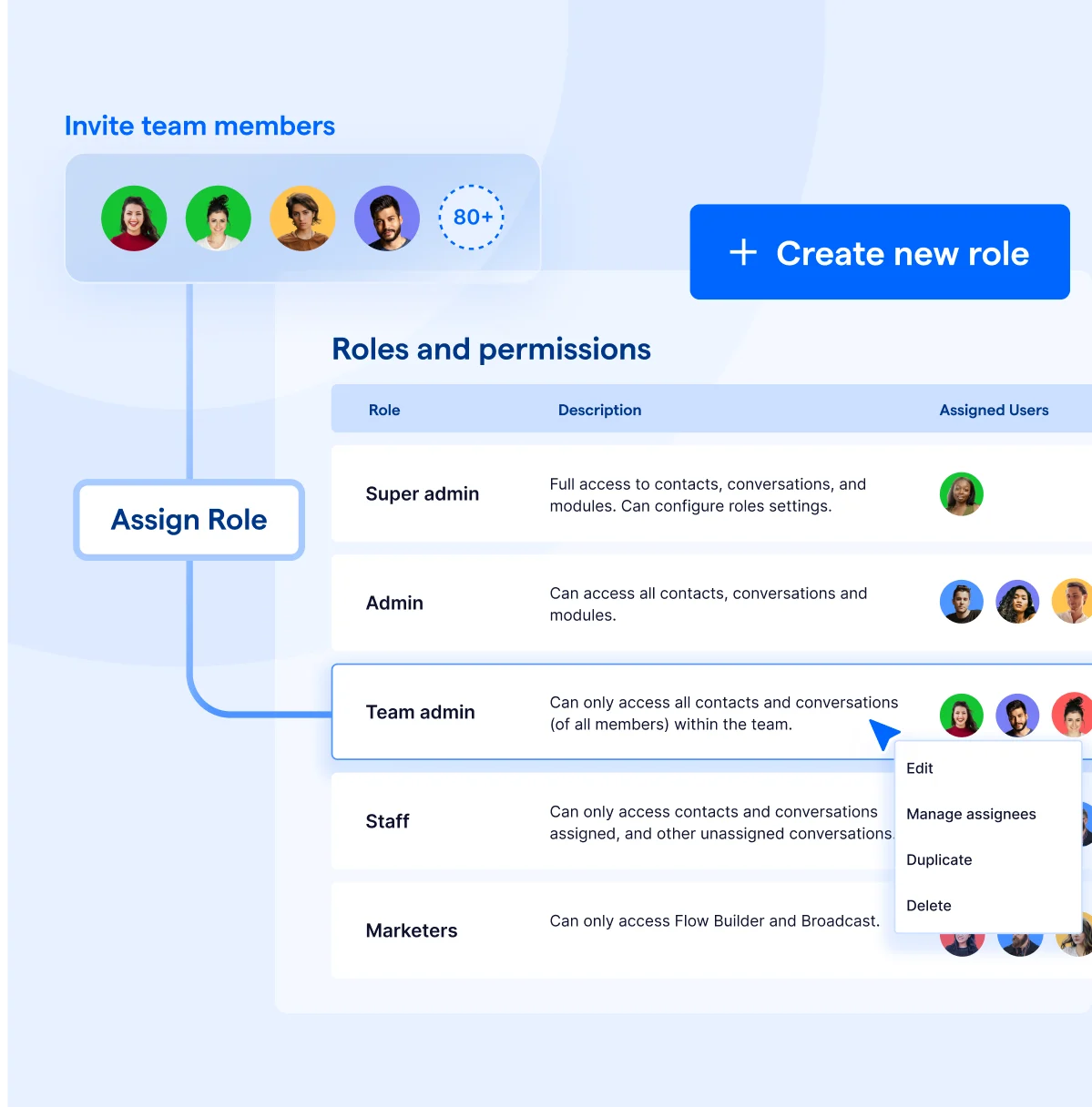
Keep VIP client data private inside the team with role-based access, masking patterns for sensitive details and access limited to trusted IP addresses. The Help Center lists roles and permissions as a limited-release module, so confirm what your plan includes before you build a process around it.
Role-based access. Control channel and conversation access by team or role.
Masking patterns. Hide sensitive details in incoming messages, contacts and custom objects.
IP address controls. Allow access from trusted IP addresses and block unauthorised users.
Check out SleekFlow's data security page for how these controls work, and the Trust Center for its security certifications.
How SleekFlow helps luxury brands keep client relationships with the brand
For a boutique, the job SleekFlow takes on is keeping the client relationship with the brand, through a shared inbox with contact owners, client profiles, scheduled campaigns and AI agents that work within limits you set.
Natural Signature, a Malaysian furniture brand with unmanned showrooms, had its customer service team sharing a single WhatsApp Business App account and device. It moved to the WhatsApp Business API in SleekFlow's shared inbox, with a verified business profile that shows the brand name even when a client hasn't saved the number.
Results:
5X WhatsApp contacts
98% increase in incoming enquiries, after adding click-to-WhatsApp ads and QR codes as entry points
70% read rate on its verified Ramadan broadcast
Track four numbers:
First response time
Enquiry-to-appointment rate
Repeat purchase rate
Clients retained after an advisor change
SleekFlow's conversation analytics cover response times, and the other numbers come from your own records.
Book a demo and walk through what happens to your client book the day an advisor leaves.
Want to outcompete your peers with SleekFlow's help?
Book your personalised demo with SleekFlow today and unlock the potential of seamless communication
Frequently Asked Questions
What is WhatsApp clienteling?
Can luxury brands sell and take payment on WhatsApp?
How do we keep client relationships if an advisor leaves?
Do we need consent to send private sale invitations on WhatsApp in Singapore?
Can an AI agent handle VIP clients?
How much does WhatsApp cost for a retail brand?
Recommended for you


