How to manage social CRM in Malaysia for business success?


TL;DR: Quick Summary
- Social CRM integrates social messaging platforms like WhatsApp, Messenger, and Instagram to streamline customer interactions, enhance sales, and build loyalty.
- AI chatbots handle repetitive tasks, qualifying leads and personalizing responses, saving time for your customer support team
- Benefits of social CRM: Automates customer service, boosts engagement, improves customer satisfaction, and provides valuable data insights for better decision-making.
- SleekFlow offers an omnichannel platform to manage all social CRM channels in one place, providing seamless communication and integrations for e-commerce and CRM systems.
- SleekFlow’s AI Agent personalizes responses and automates workflows to help businesses scale and maintain high-quality customer service efficiently.
There are 34.9 million internet users in Malaysia, and 25.1 million social media users. This makes social CRM no longer just a nice-to-have for digital-first brands in Malaysia. Customers now expect businesses to respond quickly, remember past interactions, and provide a seamless experience across WhatsApp, Instagram, Facebook Messenger, and website chat.
That expectation creates a challenge for growing teams. Messages come in from multiple channels, customer context gets scattered, and manual follow-ups slow down sales and support. A strong social CRM addresses this by bringing conversations, contact data, automation, and reporting into a single platform.
In this guide, we explain what social CRM means in practice, how Malaysian businesses use it, what features matter most, and how to choose the right platform for long-term growth.
What is social CRM?
Social CRM, also known as social media CRM, stands for Social Customer Relationship Management. It is the practice of managing customer relationships through social and messaging channels while keeping customer data, conversation history, and workflows connected. Instead of treating Instagram DMs, Facebook comments, WhatsApp chats, and website messages as separate touchpoints, social CRM brings them together so your team can respond with full context.
For Malaysian businesses, that usually means combining channels such as:
WhatsApp Business Platform
Instagram Direct Messages
Facebook Messenger
Live chat
SMS or other messaging apps, depending on your audience
The goal is simple: make every conversation easier to manage and more useful for sales, marketing, and support.
Why social CRM matters in Malaysia
Malaysia has one of the most digitally engaged populations in the region, and messaging plays a major role in how customers discover products, ask questions, and make purchase decisions. For many businesses, the customer journey no longer starts on a website and ends in a store. It moves across social posts, ad clicks, chats, checkout links, and support follow-ups. That creates pressure on teams to work faster without losing context.
A social CRM software helps by giving teams a shared system for:
replying across channels from one inbox
identifying high-intent leads earlier
reducing missed messages and duplicated work
tracking the full customer journey across touchpoints
keeping marketing, sales, and support aligned
This is especially valuable for retail, e-commerce, automotive, education, healthcare, property, and service businesses, where customers often ask pre-purchase questions via chat before committing.
If your team only receives a few enquiries per day on one channel, a basic setup may be enough. But once you need multiple agents, routing rules, campaign tracking, or CRM integration, a social CRM becomes the better long-term option.
What a good Social CRM platform should help you do
Unify customer conversations across channels
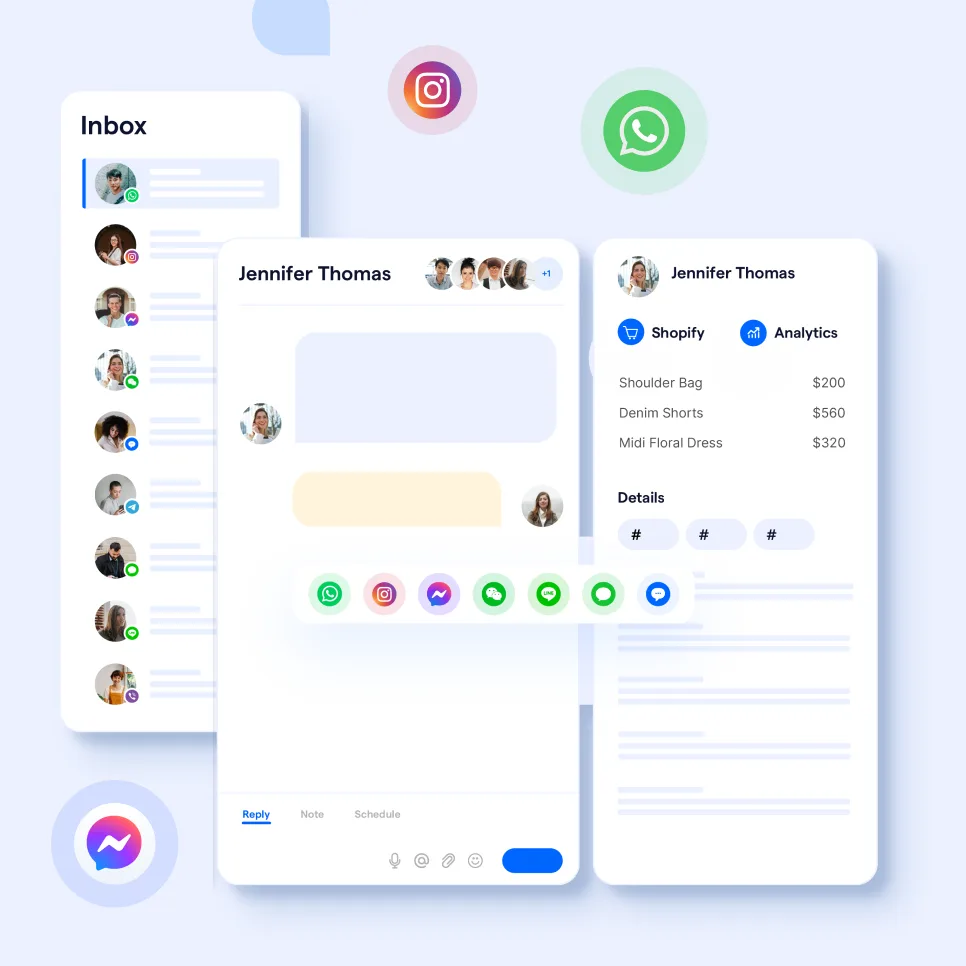
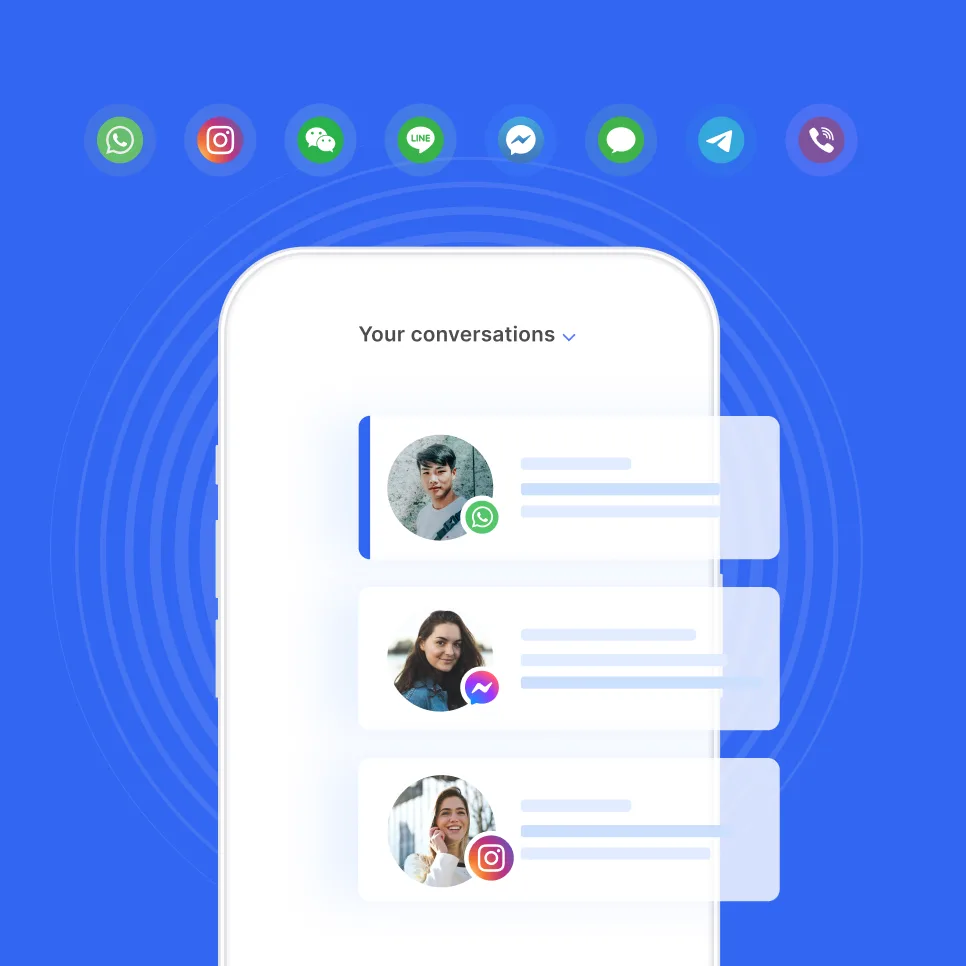
The first benefit is visibility. Your team should not have to switch tabs just to understand one customer. A strong social CRM centralises conversations from WhatsApp, Instagram, Messenger, and live chat, so agents can respond from a single workspace.
This reduces missed messages and gives teams a cleaner handover process when multiple people are involved.
Boost engagement and start quality conversations
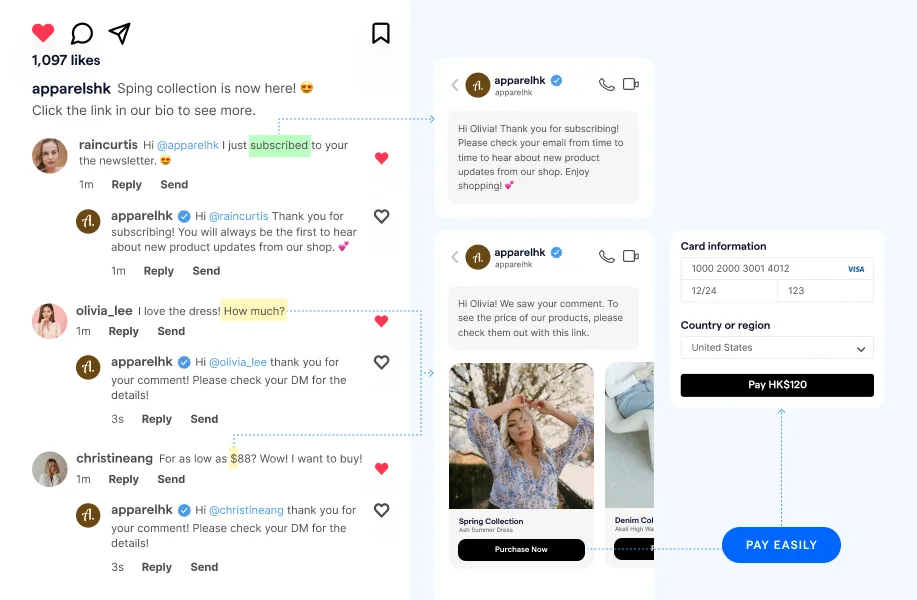
Brands can boost engagement and start conversations with a social CRM tool such as automated comment replies on Facebook or Instagram. Once the customer decides to purchase, a payment link can be sent via chat so they can pay instantly. Direct communication with customers and your online audience also improves engagement quality and makes the customer feel important.
Taking it a step further, AI-native platforms like SleekFlow’s AgentFlow add AI-driven intelligence onto this automation. Instead of just generic replies, AgentFlow can analyse intent, sentiment, and context, then craft personalized responses that feel human. For example, if someone comments asking about product availability, the AI can instantly provide stock updates, suggest alternatives, or even route the query to the right team member if human intervention is needed.
Track customer journey with context
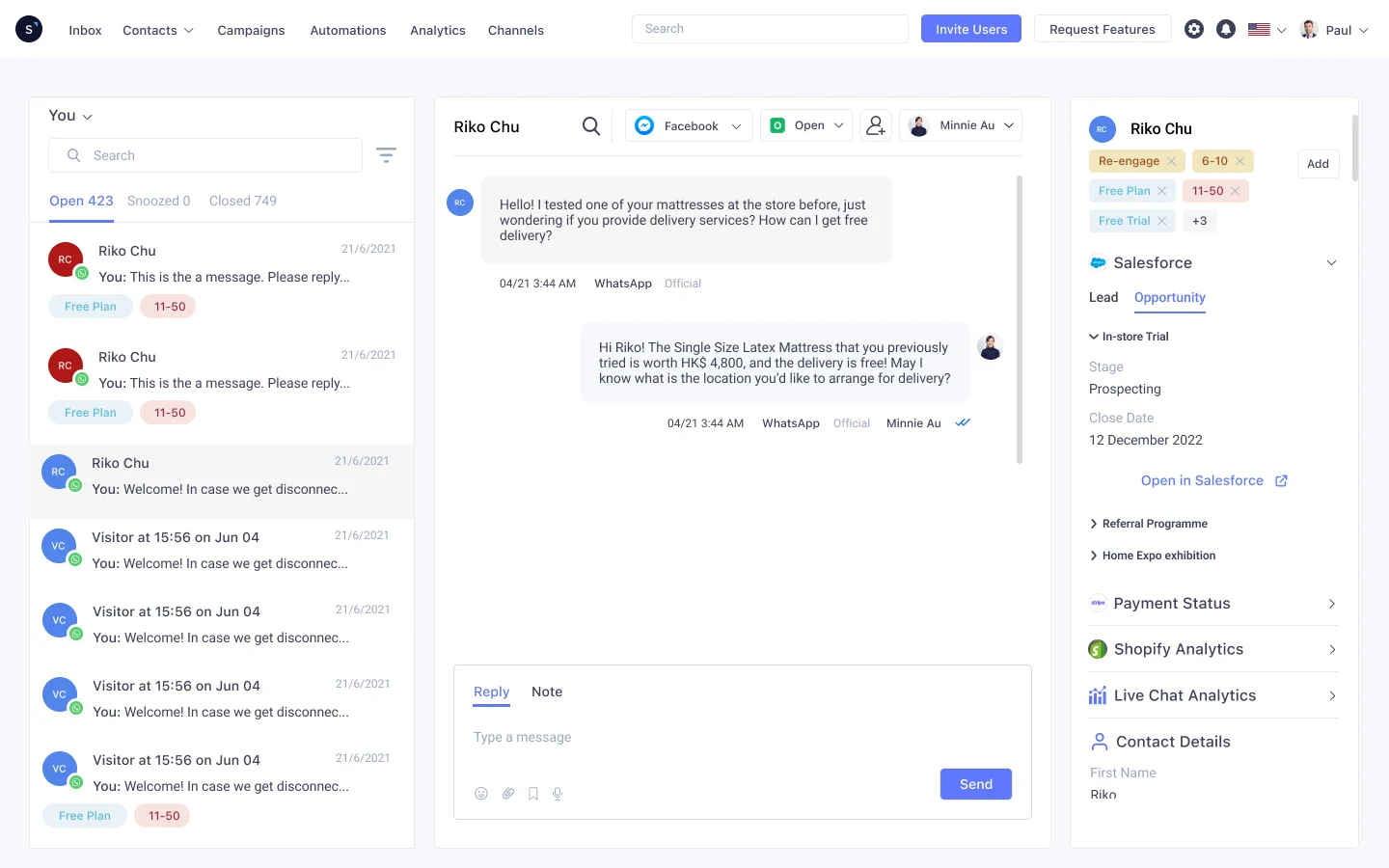
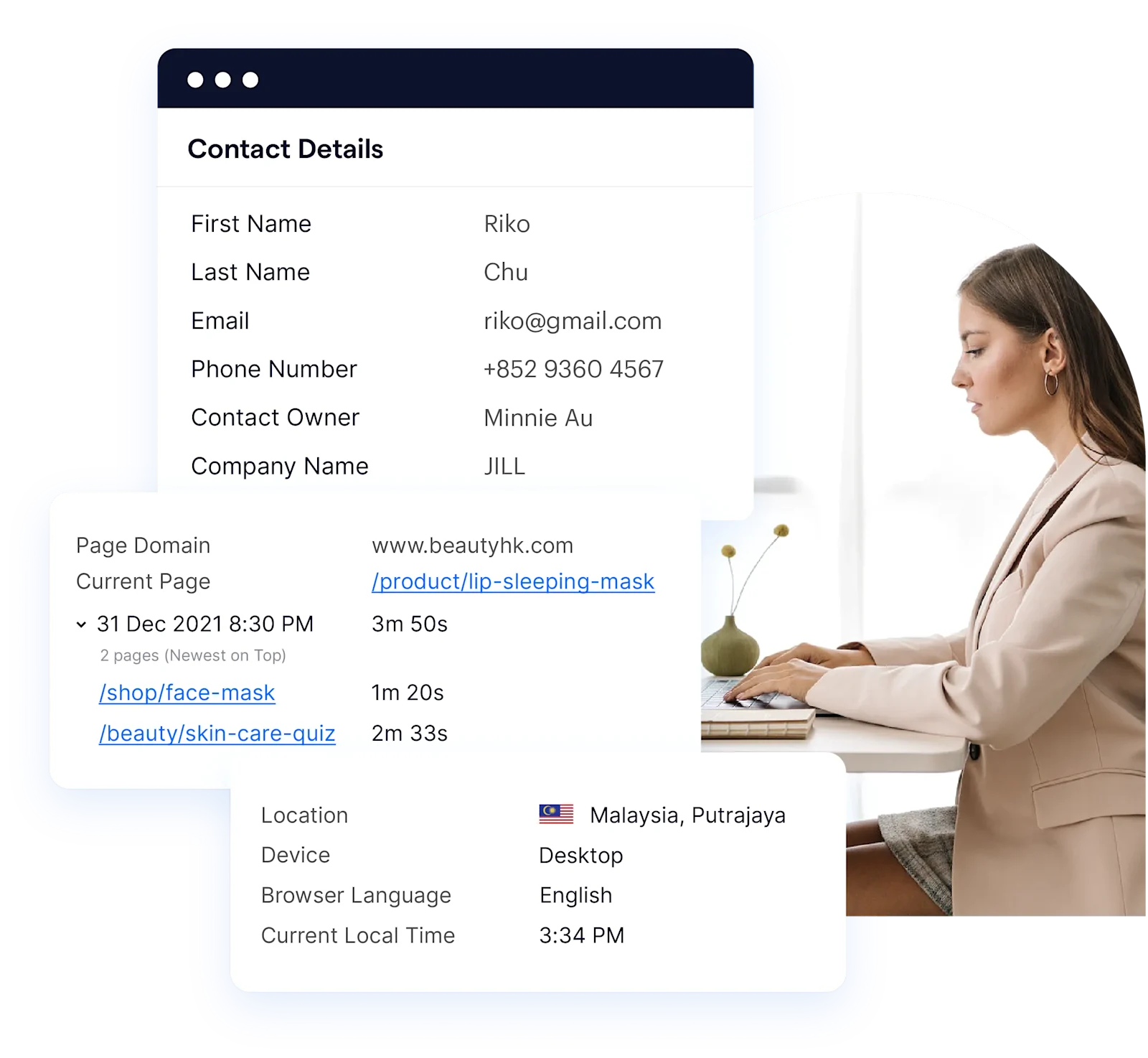
A conversation is more useful when it includes history. Good social CRM software lets your team see where the lead came from, what they asked before, which products they viewed, and whether they have already purchased.
That makes it easier to move a conversation forward instead of asking the customer to repeat themselves.
Automate repetitive work with AI and workflows
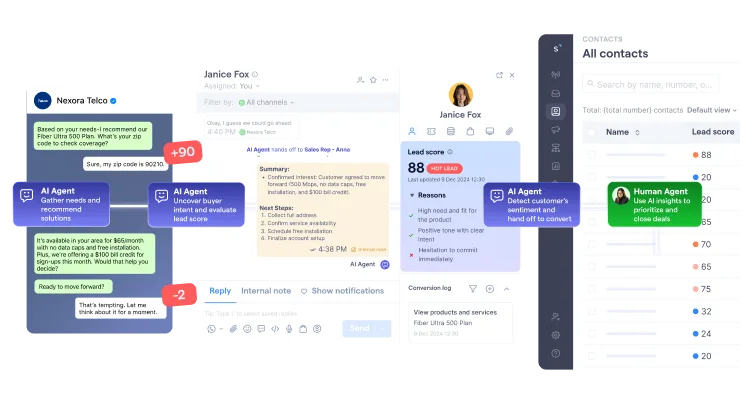
Most teams lose time on repetitive tasks such as greeting new leads, assigning chats, answering common questions, tagging contacts, or sending follow-ups.
A modern social CRM should automate these steps. Even better, it should use AI to identify intent, suggest replies, qualify leads, and escalate more complex cases to human agents.
This is where the difference between a basic inbox and a serious growth platform becomes clear.
Support sales inside the chat
For many businesses, conversations are not just for support. They are part of the buying journey.
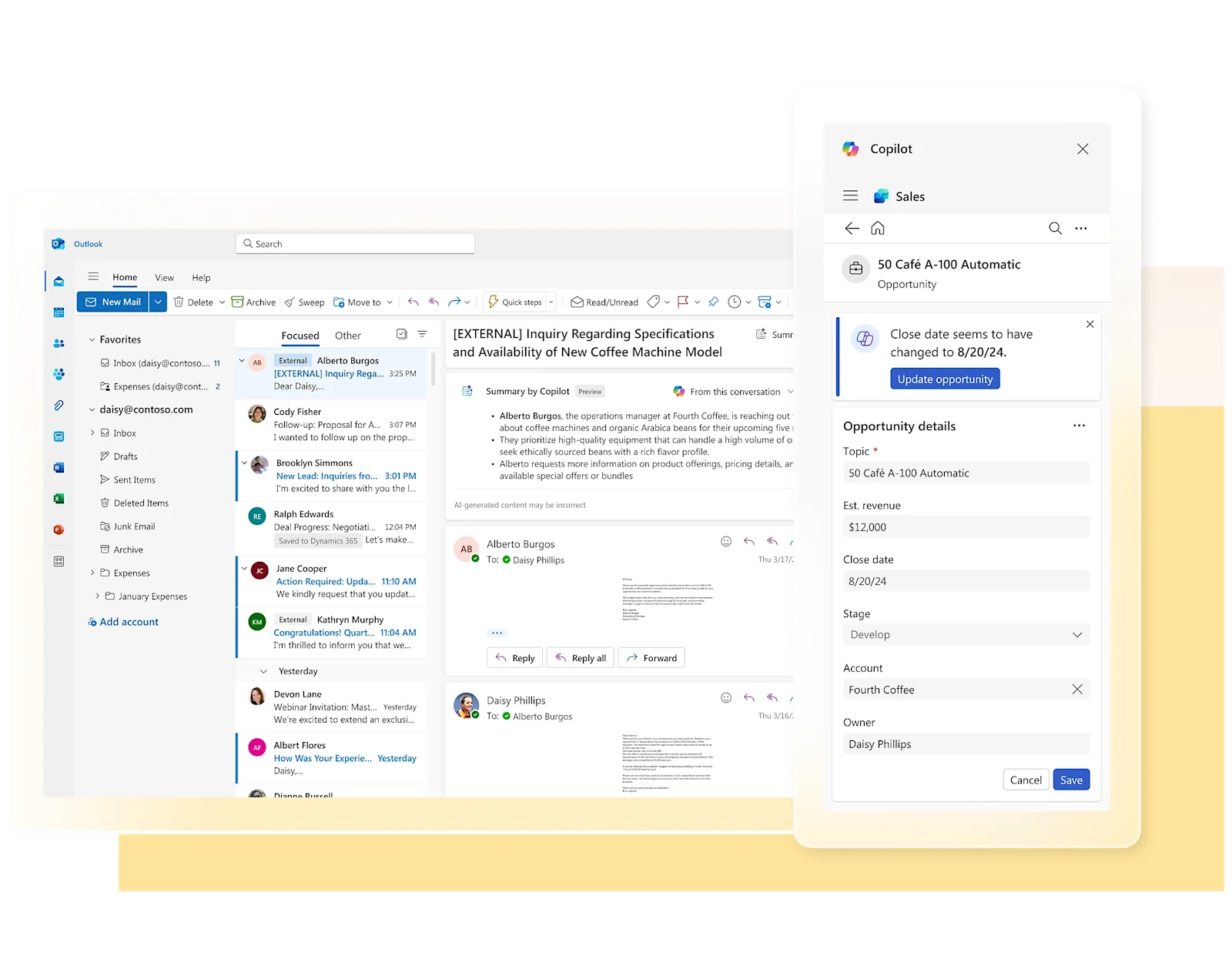
The right platform should help teams:
qualify leads automatically
share product information quickly
book appointments
send quotations or payment links
recover abandoned carts
follow up based on customer behaviour
This is especially useful for businesses selling through WhatsApp and social media, where speed often determines whether a lead converts.
Offer stronger customer support
Social CRM software allows you to understand each of the customers better. Customers expect fast replies and delays could lead to dissatisfaction. By using a unified inbox, auto routing and escalation paths, your customer service or sales agents can offer accurate assistance promptly.
Especially for retail O2O and e-commerce businesses, a lot of effort and attention is required to keep up with the decreasing buyers’ patience. Online buyers often switch between multiple touch points, so speed and context is everything. For example, a customer who purchased your product on Instagram may reach out to you on WhatsApp to enquire more about new products. If you have good CRM and social media management, your team can instantly identify the customer's needs and the type of product they are interested in.
Plan powerful inbound sales strategies
The first step to mastering inbound sales is to define the buyers’ journey. Social CRMs generate actionable insights that allow businesses to craft personalised frameworks and develop the most persuasive method of selling. It is a great opportunity to improve ROI, as targeting pain points and getting closer to the bull’s eye become easier. These systematic strategies make selling on social media at scale a convenient and time-saving process.
Learn more about the trends of social selling in Malaysia here.
Provide effective business marketing solutions
Social media platforms like like Instagram and TikTok are seeing high growth and engagement, content types such as short-form video perform well so using social media CRM tools is an innovative, contemporary solution with increased reliability, authenticity, immediacy, and accountability as compared to traditional marketing research such as letters or in-person interviews. It is all about getting the important numbers from customers and using them based on the metrics obtained on the platform.
On the analytics dashboard, businesses can observe customer behaviour on social media platforms such as which platforms perform better, metrics like reach, engagement, conversion, dwell time, as well as through their purchases, track the website and page visitor activities, and engage them through real-time conversations, reviews, and comments. From there on, it won't be difficult to devise an effective strategy with comprehensive and versatile marketing solutions to help businesses reach out to target audiences more accurately to generate the best possible campaign results.
Further reading: Effective strategies of omnichannel marketing in Malaysia
Offer stronger customer support
More than half of the consumers will stop doing business with certain brands after just one poor service experience. - Hubspot
Plan powerful inbound sales strategies
The first step to mastering inbound sales is to define the buyers’ journey. Social CRMs generate actionable insights that allow businesses to craft personalised frameworks and develop the most persuasive method of selling. It is a great opportunity to improve ROI, as targeting pain points becomes easier. These systematic strategies make selling on social media at scale a convenient and time-saving process.
Learn more about the trends of social selling in Malaysia here.
How Malaysian businesses use social CRM
1. Capture leads from social campaigns
A prospect comments on an Instagram post, clicks a WhatsApp ad, or submits a form from a landing page. Instead of sending that lead into a disconnected workflow, the business routes the enquiry into one shared inbox, enriches the profile, and starts follow-up immediately.
2. Qualify leads faster
A chatbot or AI agent can ask preset qualifying questions, such as budget, location, product interest, or appointment preference, before handing the conversation off to a human agent.
This helps the sales team prioritize the right opportunities.
3. Connect online and offline interactions
Many Malaysian businesses still sell through a mix of branch visits, social enquiries, and chat follow-ups. Social CRM helps consolidate these interactions into a single customer record, so staff can continue the conversation with full context.
4. Run targeted re-engagement campaigns
Teams can segment contacts based on behaviour, purchase history, or enquiry stage, then send relevant updates, reminders, or promotions instead of generic blast messages.
5. Manage support without losing sales opportunities
Support conversations often reveal new upsell or repeat purchase opportunities. A strong social CRM lets service teams resolve issues while maintaining access to profile data, order history, and campaign context.
Through SleekFlow, our staff members can handle 3-4 conversations at the same time instead of one to one. The result is quadruple.
Jeremy Tong
Managing Director, Lalamove
Real-life example of a Malaysian business achieving success with social CRM systems
JomCharge boosts response speed by 95% with SleekFlow's Social CRM

JomCharge faced mounting challenges as enquiries surged from EV drivers needing fast, on-the-go support. Traditional voice calls and emails created bottlenecks, while WhatsApp Web’s login limits restricted agent collaboration. This often led to delayed responses and frustrated customers. After adopting SleekFlow’s Social CRM, JomCharge streamlined operations with a unified inbox, multi-agent access, and automation for acknowledgments and off-hour replies. Agents gained the flexibility to respond on both mobile and desktop, while pre-filled WhatsApp chats from QR codes saved time by providing instant context.
With SleekFlow, JomCharge now manages over 1,200 monthly enquiries efficiently. Automated workflows and real-time alerts reduced average response times by 95%, doubling resolution speed compared to the old system. Automated CSAT surveys further ensured consistent feedback, driving continuous improvements. As a result, JomCharge achieved 2x higher customer satisfaction, proving how the right CRM solution can scale support while strengthening trust in Malaysia’s fast-growing EV ecosystem.
Interested in setting up a WhatsApp CRM with SleekFlow? Head to our blog for a step-by-step guide.
How to choose the right CRM for businesses in Malaysia?
Finding the right social CRM software in Malaysia is critical for streamlining processes and building stronger customer relationships. Use these steps to choose the best fit for your needs.
Understand your use case first
Start with the problem you want to solve.
Are you trying to:
respond faster to enquiries
increase lead-to-sale conversion
centralize chats across branches or teams
improve campaign attribution
reduce repetitive support workload
The best choice depends on the job the system needs to do.
Decide whether you need WhatsApp-only or omnichannel
A WhatsApp-focused tool may work for businesses that only sell through one channel. But for teams running social campaigns, website chat, and post-purchase support together, an omnichannel platform is usually the safer choice.
Check how well the system handles growth
A solution that works for three agents may break down at twenty. Review how the platform handles routing, reporting, multiple teams, permissioning, and integrations before you commit.
Review compliance and governance requirements
Your vendor should be able to explain how customer data is handled, what controls are available, and how the platform supports secure operations.
Evaluate ROI, not just subscription cost
The cheapest tool is not always the best value. A more capable system can save agent time, reduce missed leads, improve conversion, and lower the hidden cost of manual work.
Why businesses choose SleekFlow for social CRM in Malaysia
SleekFlow is built for teams that want to turn conversations into measurable business outcomes, not just manage messages.
With SleekFlow, businesses can:
Centralise WhatsApp, Instagram, Messenger, live chat, and other channels in one inbox
Automate lead capture, routing, tagging, and follow-up journeys
Use AI to handle repetitive queries and support personalized responses
Sync customer data with CRM and e-commerce systems
Track conversion and conversation performance with analytics dashboards
Organise service requests with ticketing workflows
Support secure operations with role-based access, data masking, and additional control features
This makes SleekFlow a strong fit for businesses that want a single platform for sales, marketing, and support, rather than separate point solutions for each team.
Common mistakes to avoid when implementing social CRM
Treating it as just another inbox
If you only centralize messages without defining ownership, workflows, and reporting, the platform will not deliver its full value.
Automating too much too early
Automation should remove friction, not create robotic experiences. Start with repetitive use cases, then expand.
Ignoring data quality
A CRM is only as useful as the data inside it. Make sure your forms, labels, custom fields, and integrations are clearly set up.
Measuring replies but not outcomes
Fast replies matter, but business impact matters more. Track lead qualification, appointments, conversions, resolution time, and customer satisfaction as well.
Want to outcompete your peers with SleekFlow's help?
Book your personalised demo with SleekFlow today and unlock the potential of seamless communication


