Social selling in the UAE: strategy, channels, examples and tools for 2026


TL;DR: Quick Summary
- Social selling in the UAE involves using social media platforms like Facebook, Instagram, and WhatsApp to build relationships, engage customers, and drive sales through personalized interactions rather than just promotional messaging.
- It differs from traditional selling by focusing on trust, engagement, and long-term relationships instead of one-way advertising and transactional interactions.
- Social messages—direct messages, comments, and replies—are essential for personalized engagement, establishing credibility, and nurturing customer connections.
- Benefits of social selling include enhanced customer engagement, targeted marketing, brand awareness, real-time feedback, competitive advantage, cost-effective promotion, and sustainable growth.
- Businesses can create a social selling strategy by defining goals, identifying audiences, developing content, engaging actively, leveraging social listening, using automation tools, and measuring results for continuous improvement.
- Platforms like SleekFlow enable UAE businesses to centralize social media interactions, automate messaging, segment customers, and deliver personalized campaigns, exemplified by TKD Lingerie achieving 40X ROAS through WhatsApp and social CRM.
Social selling is the practice of using social platforms and conversations to build relationships, qualify interest, and move prospects toward purchase.
Social commerce is the act of selling directly on or through social platforms, often through in-platform shops, product tags, or checkout features.
Conversational commerce is what happens when those journeys continue in DMs, messaging apps, or live chat.
Social media has become an integral part of our lives, including for businesses and customers in the main cities of the UAE, such as Dubai and Abu Dhabi. Hence, businesses are redefining their sales strategies to adapt to changing consumer behavior. Social selling goes beyond using social media for promotion. It's about building real connections, understanding customer needs, and providing customized solutions.
Businesses can strengthen trust, credibility, and customer loyalty by actively engaging with prospects, sharing valuable content, and exchanging meaningful social messages.
In the context of social selling, a "social message" refers to any communication or interaction between businesses and potential or existing customers on social media platforms. This can include direct messages, comments, replies, or any engagement that helps businesses convey information, offer assistance, address inquiries, or build relationships with their audience.
Social messages are crucial in the social selling process because they enable personalized interactions, allow businesses to showcase their expertise, and help establish meaningful connections with customers.
This guide aims to provide a comprehensive understanding of social selling and offer practical insights on how to effectively incorporate it into your business in the UAE. We'll cover everything from understanding the concept of social selling, to creating a winning strategy, along with exploring the benefits, tips, and tools to help businesses thrive in the competitive UAE market.
What is social selling
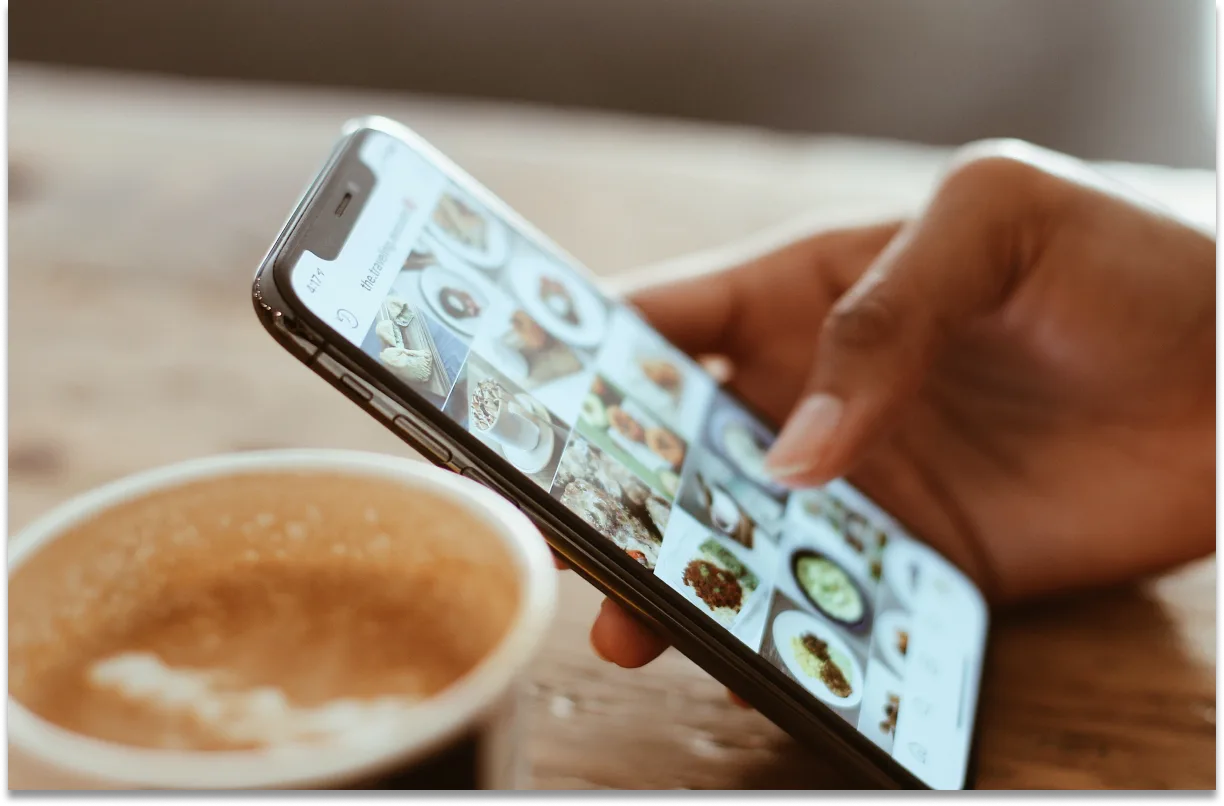
Social selling is the practice of using social selling platforms to build meaningful relationships with potential clients, nurture leads, and ultimately drive sales.
It goes beyond traditional sales tactics by fostering engagement, trust, and personalized interactions with potential customers. With social selling, the focus shifts from pushing products or services to providing value, addressing customer pain points, and building a brand that resonates with the target audience.
One way to achieve that is to learn how to integrate social media into your website. By doing so, you can improve your business by accessing a wider audience, tap into valuable insights, and cultivate a community of engaged followers.
Moreover, social selling aligns with the changing buyer's journey, where consumers increasingly rely on online research and peer recommendations before making purchasing decisions. By strategically positioning yourselves on social media, you can meet customers where they are, be part of their decision-making process, and guide them toward making informed choices.
Traditional selling vs. social selling

Social selling and traditional selling are two distinct approaches that businesses employ to drive sales and connect with customers. Traditional selling, characterized by one-way communication and transactional interactions, often relies on advertising, direct sales pitches, and mass marketing tactics. It prioritizes closing deals quickly and moving on to the next customer.
On the other hand, social selling embraces a relationship-focused approach by harnessing social media platforms for interactive conversations, trust-building, and nurturing lasting connections. Consequently, it provides businesses with the chance to forge genuine relationships, gain insights into customer needs, and drive sales in a more dynamic, customer-centric manner. The table below outlines the distinctions between these selling methods.
It's important to note that while the benefits of social selling are greater than traditional selling, it doesn't necessarily replace all traditional sales methods. The two approaches can complement each other, with social selling augmenting and enhancing the effectiveness of traditional sales techniques in the digital world.
Why Social Selling is important
Social selling has transformed the way businesses connect with customers and drive sales in the UAE. With its vibrant digital landscape and tech-savvy population, the UAE presents a compelling opportunity to leverage the power of popular social media platforms and incorporate a social message in business interactions. The country boasts high social media penetration, with a significant portion of the population actively using platforms like WhatsApp, Facebook, Instagram, and LinkedIn.
With over 7.3 million users on Facebook, it was recorded that the potential of Facebook Ads to reach the whole population in the UAE is approximately 77%. This widespread adoption of social media platforms further highlights the immense opportunity for businesses to leverage these channels for effective engagement and sales. Below are some of the benefits of social selling that businesses can enjoy when they incorporate social selling tools:
Enhanced customer engagement: Foster meaningful conversations and build trust through personalized interactions.
Targeted marketing: Utilize social media data to create focused campaigns that reach the right audience.
Brand building and awareness: Humanize your brand and increase visibility in the competitive UAE market.
Real-time customer feedback: Receive instant feedback, address concerns, and enhance products or services.
Competitive advantage: Stand out from competitors and establish your business as a leader in the digital landscape.
Cost-effective marketing: Utilize social selling as a budget-friendly alternative to traditional advertising methods.
Sustainable growth: Cultivate valuable connections, drive customer engagement, and achieve long-term success in the UAE.
By integrating a social selling platform into their sales strategy, businesses can provide personalized experiences, gain insights into customer preferences, and unlock growth opportunities in the vast marketplace of the UAE.
No time to manage your social media posts? Learn to automate comment and chat replies on Facebook and Instagram.
Best social selling channels in the UAE
The UAE is one of the most socially connected markets in the region. DataReportal estimates there were 12.5 million active social media user identities in the UAE in late 2025, equivalent to 110% of the total population. That figure does not mean 12.5 million unique people, and platform-level numbers below are often based on ad reach or registered members rather than monthly active users, so treat them as directional planning signals rather than perfect like-for-like comparisons.
LinkedIn for B2B, enterprise and professional services
LinkedIn is the strongest social selling channel for UAE businesses that sell to decision-makers, especially in B2B, enterprise, consulting, finance, education, and professional services. DataReportal reports that LinkedIn had 10.0 million members in the UAE in late 2025, with ad reach equivalent to 88.5% of the local internet user base. DataReportal also notes that LinkedIn’s figures are based on registered members, not monthly active users, which makes them directionally useful for planning but not directly comparable with other platforms. That still makes LinkedIn the clearest channel for authority-building, executive visibility, and trust-led B2B outreach in the UAE.
Instagram for retail, beauty, hospitality, lifestyle and D2C
Instagram remains one of the most important social selling channels in the UAE for visually led categories such as retail, beauty, wellness, hospitality, fashion, and D2C brands. DataReportal says Instagram had 8.05 million users in the UAE in late 2025, reaching 85.5% of adults aged 18+ and 70.5% of the total population. That scale makes Instagram a strong channel for product discovery, creator-led trust, comment engagement, and DM-led selling. For many B2C brands in the UAE, Instagram is not just for awareness; it is one of the most effective bridges from browsing to conversation.
WhatsApp for conversion, follow-up, service and repeat purchase
WhatsApp is where social selling often turns into revenue, even though public UAE platform-audience data for WhatsApp is less transparent than it is for ad-supported networks. What is clear from WhatsApp’s own business resources is that Ads that Click to WhatsApp are designed to support lead generation, sales, and marketing, and that businesses use them to move shoppers from Facebook and Instagram into direct chat conversations. WhatsApp also explicitly positions marketing messages as a way to follow up on Ads that Click to WhatsApp once people opt in. In practice, that makes WhatsApp one of the most important channels for converting social interest into qualified conversations, follow-up, customer service, and repeat purchase.
TikTok for discovery and top-of-funnel growth
TikTok is too large in the UAE to ignore at the discovery stage. DataReportal reports that TikTok had 12.5 million users aged 18+ in the UAE in late 2025. The same source notes that TikTok’s reported ad reach exceeded 100% of the local internet user base, and explicitly warns readers to interpret these figures cautiously. Even with that caveat, the signal is clear: TikTok has massive reach in the UAE and is highly relevant for top-of-funnel visibility, creative testing, and demand generation before prospects move into Instagram DMs, website forms, or WhatsApp chats.
Facebook and Messenger as supporting channels
Facebook and Messenger still matter in the UAE, but they should no longer be treated as the only foundation of a social selling strategy. DataReportal says Facebook had 9.70 million users in the UAE in late 2025, while Messenger reached 5.65 million users. Those are still meaningful numbers, especially for paid campaigns, retargeting, lead forms, and service conversations. But compared with the strategic role of LinkedIn for B2B, Instagram for visual commerce, and WhatsApp for conversion, Facebook and Messenger work better today as supporting channels inside a broader social selling system.
The best approach for UAE businesses
For most UAE businesses, the most practical social selling mix is to use TikTok and Instagram for discovery, LinkedIn for authority and B2B trust, and WhatsApp for conversion, follow-up, and retention. Facebook and Messenger still add value, especially for paid distribution and customer contact, but they are no longer the sole anchor. That channel mix is more current, more resilient, and more commercially useful than building your strategy around one Facebook statistic.
What makes social selling different in the UAE
Social selling in the UAE is not just “social media marketing with a local keyword added.” It works differently because the market is highly digital, highly mobile, and deeply messaging-led.
One of the biggest differences is social- and messaging-first customer behaviour. In many UAE categories, customers do not want to stay in a public feed for long. They may discover a brand on Instagram or TikTok, check credibility on LinkedIn or Google, and then move to a direct channel like WhatsApp to ask about price, availability, delivery, appointments, or custom options. That makes social selling in the UAE less about publishing content in isolation and more about reducing friction between discovery, conversation, and conversion.
The second difference is the importance of cross-channel buying journeys. A UAE buyer might see a creator mention a brand on TikTok, click through to Instagram, send a DM, then complete the purchase after a WhatsApp follow-up or support interaction. For B2B, the path may start on LinkedIn, continue through email or a website form, and close in WhatsApp or a sales call. That is why social selling in the UAE should be planned as a connected system, not as a single-platform tactic. Each channel plays a different role: discovery, trust-building, qualification, support, or conversion.
A third local factor is multilingual customer interaction. Social selling in the UAE often means serving audiences across English and Arabic, and in many sectors also Hindi, Urdu, Tagalog, or other languages depending on the customer base. That affects content, customer support, lead qualification, and handoff. A strategy that works well in one language but breaks in direct messages or customer service will struggle in the UAE, because buyers often expect quick, clear, and culturally comfortable communication once they move from public content into private conversation.
The fourth difference is the role of WhatsApp as a conversion and support layer. In many markets, a brand can treat social selling as mostly a content-and-traffic exercise. In the UAE, that is usually too shallow. Social platforms can create interest, but WhatsApp often becomes the place where that interest turns into action: quote requests, appointment booking, product questions, payment coordination, order updates, and repeat purchases. That does not mean every business should make WhatsApp its only channel. It means UAE social selling strategies are usually stronger when they are designed to move qualified prospects into direct, service-ready conversations instead of leaving them stuck in comments or DMs.
There is also an important licensing and permit reality that makes the UAE different from many generic “social selling” guides. If the article is speaking to founders, creators, freelancers, or individual sellers, it should acknowledge that social selling is not only a growth tactic. In some cases, it also intersects with business and media compliance. The UAE government says the eTrader licence in Dubai allows UAE nationals and GCC nationals residing in Dubai to practise business activities through social media accounts. Separately, the UAE Media Council says an Advertiser Permit is required for individuals who engage in advertising activities on social media platforms, whether for compensation or not.
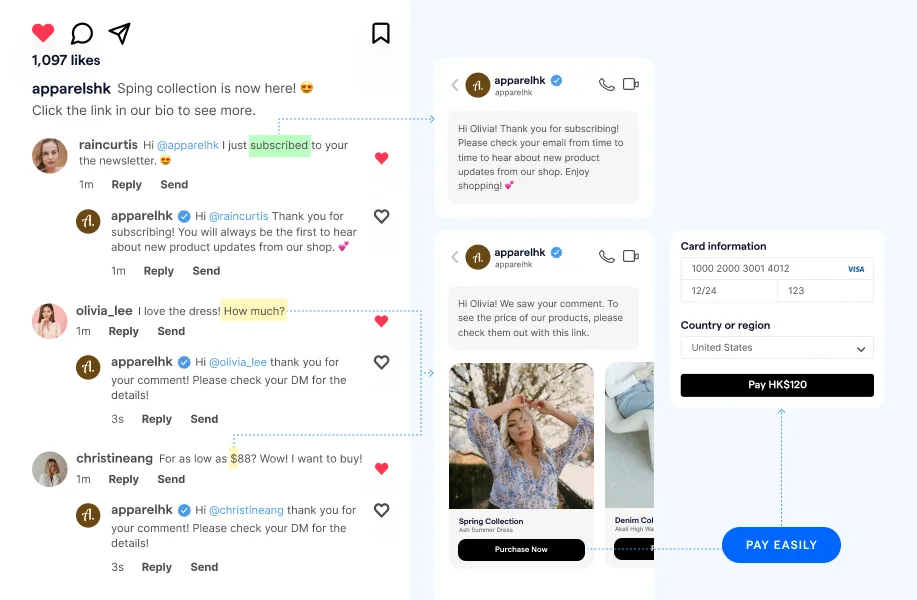
How to create a social selling strategy for your business in the UAE
Creating an effective social selling strategy is a crucial step for businesses aiming to maximize their online presence and drive sales.
By implementing a well-defined social selling strategy, businesses can establish themselves as trusted authorities, build strong customer relationships, and ultimately boost their sales and revenue in the digital marketplace.
Consider the steps below when you plan to utilize a social selling platform for your business.
Set goals: Define what you want to achieve through your social selling process.
Identify target audience: Understand who your ideal customers are and where they are active on social media.
Develop buyer personas: Create profiles of your ideal customers to tailor your approach.
Create a content strategy: Plan valuable and relevant content to engage your audience.
Engage and build relationships: Actively interact with your audience, answer questions, and provide value.
Use social listening: Monitor conversations and gain insights into customer preferences.
Leverage social selling tools: Use tools for efficiency in content scheduling, lead generation, and analytics.
Measure and optimize: Track metrics, analyze results, and adjust your strategy for better outcomes.
Need a highly effective social messaging channel to generate real results? Explore WhatsApp Business API.
Social selling tips and tools for UAE businesses
With the right social selling tips and tools, businesses can use social media to increase brand awareness, drive sales, and build relationships with customers. To make the most of social selling, consider implementing these social selling tips:
Learn how to integrate social media into your website and utilize multiple platforms when to maximize your reach and engagement rates.
Leverage automation tools to streamline your social selling process and save time.
Cultivate a consistent and authentic brand voice across all social media channels.
Collaborate with influential people in your industry to expand your reach, boost brand visibility, and increase credibility.
Take advantage of analytics tools provided by social media platforms to understand how your content performs, engage with your audience, and learn about your audience demographics.
Participate in industry-related groups, forums, and communities where your target audience is active.
Ask satisfied customers to share their positive experiences on social media, which can help build your credibility and attract new leads.
Keep up with the latest features, algorithm changes, and best practices on social media platforms to adapt your social selling strategy.
Bear in mind that these social selling tips do not guarantee immediate success. Social selling is a long-term strategy that requires consistency, patience, and genuine engagement.
Start your omnichannel social selling strategy on SleekFlow
Wondering how to integrate social media into your website? Consider SleekFlow’s omnichannel messaging platform. Centralize your social media accounts on one platform to streamline your sales, customer support, and marketing workflows.
Boost your social selling strategy and create customized customer experiences using SleekFlow's full suite of features, including SMS, live chat, and integrations with popular social and messaging apps, to boost your social selling strategy and create customized customer experiences.
The platform's smart rules and tailored messages make customer interactions smoother and more personalized, leading to increased engagement and conversion rates.
SleekFlow also helps businesses save time and effort through automation tools that streamline the social selling process. You can simplify your work with SleekFlow's Social Selling automations. These tools help you schedule messages, manage responses, and generate leads. This way, you can concentrate on building relationships and boosting sales.
Furthermore, SleekFlow's social CRM capabilities enable you to label and segment customers based on their preferences, enabling you to deliver targeted and relevant social messages. This level of personalization helps increase customer engagement and boosts the effectiveness of your social selling efforts.
Still feeling unsure? Have a look at the success story of TKD Lingerie, a renowned boutique located in Dubai and Abu Dhabi, and see how they achieved 40X ROAS using SleekFlow.
Which social selling channels work best for your business model?
The best social selling setup depends on what you sell and how customers prefer to buy. In the UAE, most businesses perform better with a mix of one channel for discovery, one for conversation, and one for conversion.
B2B and enterprise: LinkedIn + WhatsApp + website chat
For B2B brands, LinkedIn is usually the best channel for reaching decision-makers and building trust through thought leadership, case studies, and expert content. Once interest is created, website chat and WhatsApp help move the conversation forward faster through demo booking, qualification, and follow-up.
Retail and ecommerce: Instagram + WhatsApp + remarketing flows
For retail and ecommerce, Instagram is often the strongest channel for discovery because it combines product visibility, creator influence, and engagement. WhatsApp then helps convert interest into sales through product questions, recommendations, order support, and repeat purchase follow-up. Remarketing flows help bring back shoppers who did not convert the first time.
Hospitality, beauty and clinics: Instagram DMs + WhatsApp booking flows
For hospitality, beauty, wellness, and clinics, Instagram works well for attracting attention through visuals, reviews, and service results. Once someone shows interest, WhatsApp is better for booking, reminders, confirmations, and follow-up, making the journey smoother and more conversion-focused.
Services and education: Facebook or Instagram lead capture + WhatsApp qualification
For services and education businesses, Facebook and Instagram are useful for capturing leads through ads, content, and forms. WhatsApp is then the better channel for qualifying those leads, answering questions, and moving them toward a consultation, class, demo, or enrollment.
Match the channel mix to the way your customers buy
The key is not to use one platform for everything. A B2B company, an ecommerce brand, a clinic, and an education provider may all use social selling, but they should not use the same channel mix or conversion flow.
Successful social selling example for businesses in the UAE
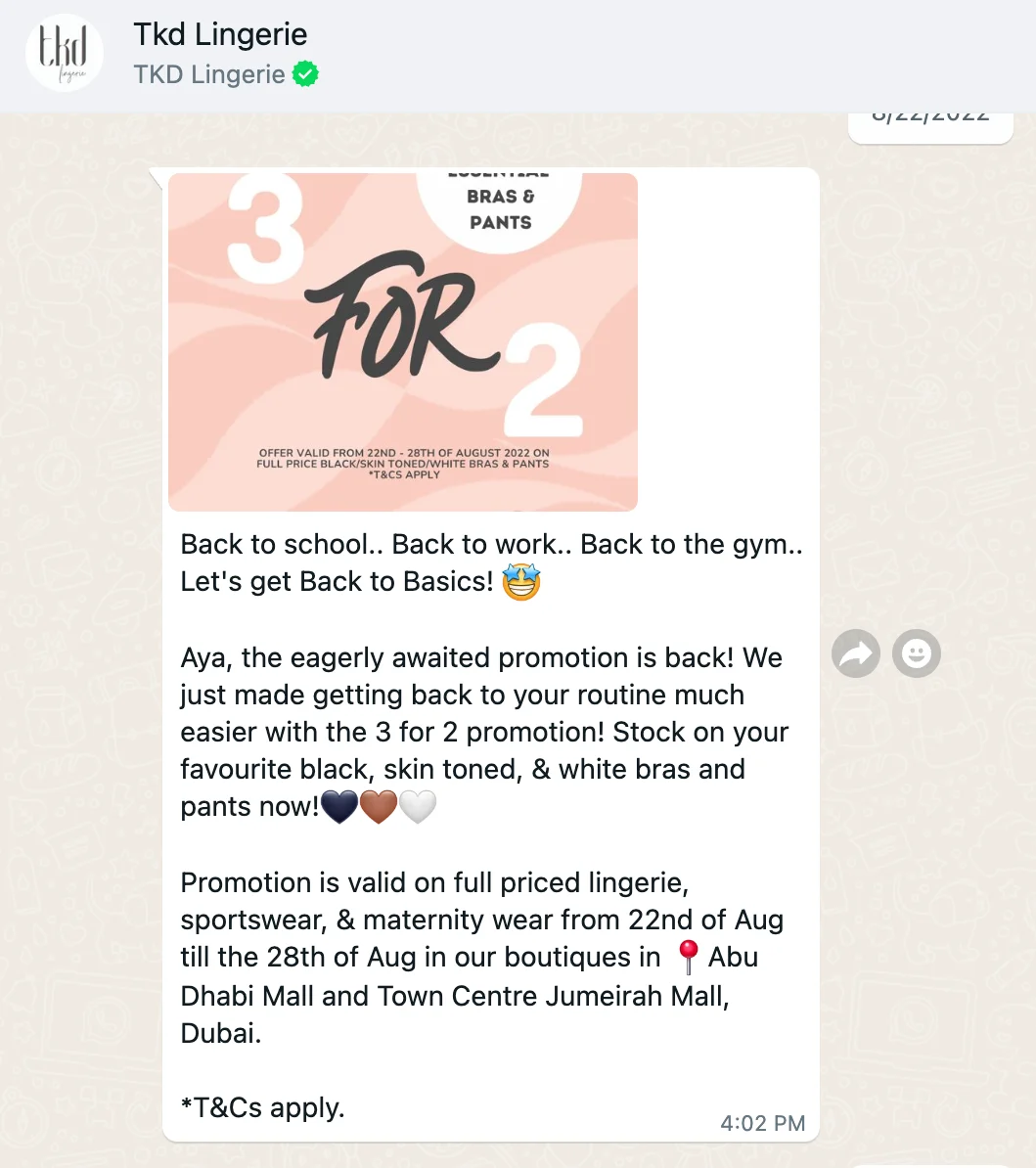
To stay connected with customers, TKD Lingerie uses WhatsApp as their main communication method and adopts WhatsApp Business API to manage their conversations. With the help of SleekFlow's social CRM feature which labels their customers based on preferences, they were able to launch a successful broadcast campaign to promote a promotion which resulted in a high message open rate and online-to-offline sales. TKD Lingerie's success story is a testament to the power of social selling and its ability to convey a social message effectively while driving business growth.
Take your customer relationship to the next level with SleekFlow!


