7 Marketing strategies for small businesses


In the current B2B landscape, the distinction between "digital marketing" and "marketing" has all but vanished. For small businesses, the challenge is no longer just about having an online presence but about orchestrating a symphony of touchpoints that guide a prospect from a cold lead to a loyal advocate. The days of relying solely on generic email blasts or sporadic social media posts are over. Today’s market demands precision, automation, and a deep technical understanding of how data flows between your CRM, your messaging channels, and your sales team.
Importance of having marketing strategies for a small business
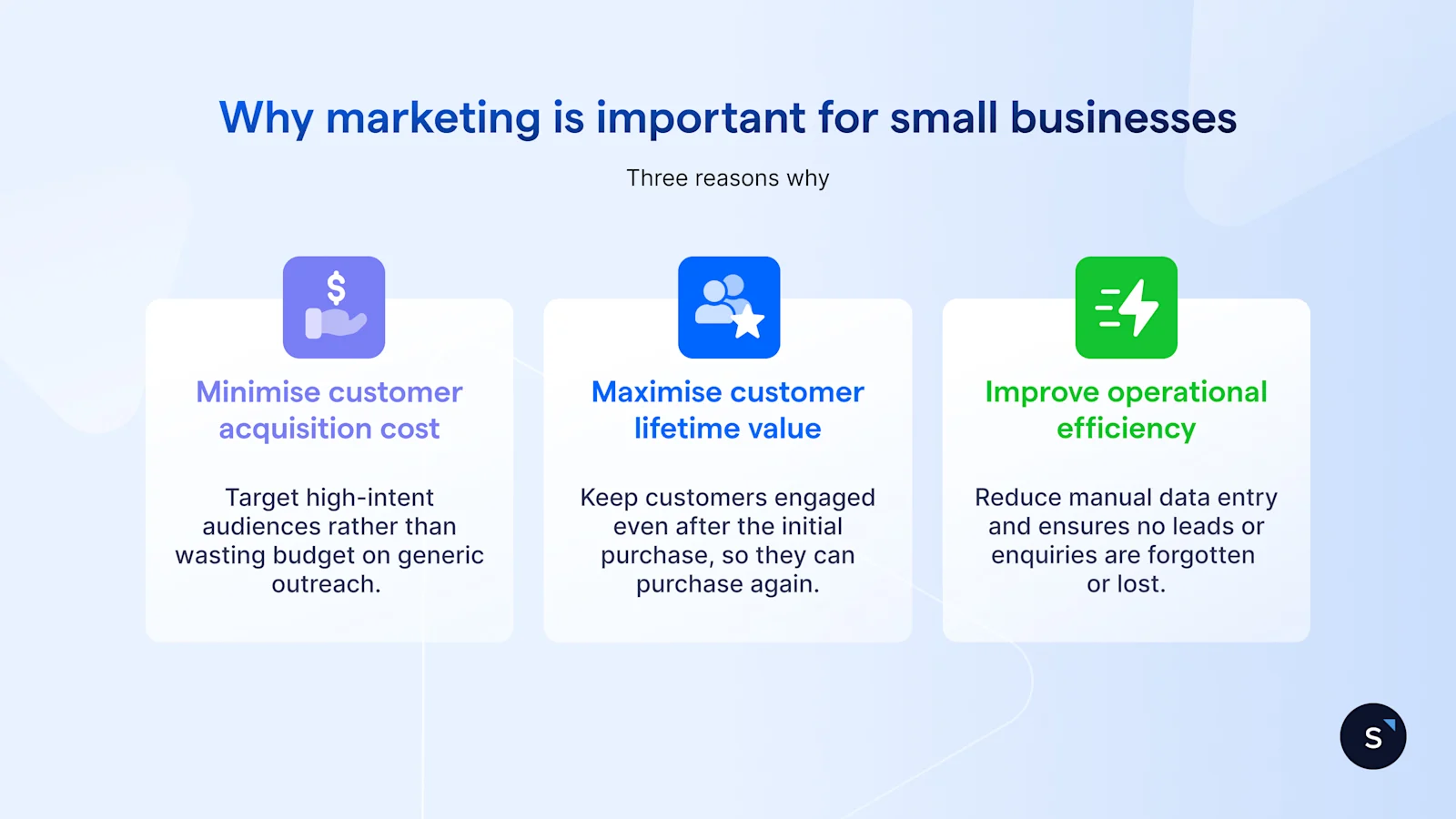
For a small enterprise, resources are finite. Every pound spent on marketing must demonstrate a tangible return on investment (ROI). A robust marketing strategy does not just generate noise; it engineers growth.
Without a strategy, businesses often fall into the trap of "tactical drift"—executing disconnected actions without a cohesive data structure. A strategic approach counters this by delivering three core technical benefits:
Minimises Customer Acquisition Costs (CAC): A strategy ensures you target high-intent audiences rather than waste budget on generic outreach.
Maximises Customer Lifetime Value (CLV): By implementing automated retention loops, you keep customers engaged long after the initial purchase, so they can purchase again.
Improves operational efficiency: Integrating marketing tools directly with sales workflows reduces manual data entry and ensures no customer enquiry is ever forgotten or lost in the cracks.
7 Marketing strategies for your small business
1. Implement an omnichannel communication architecture
Instead of checking five different apps, use a platform that consolidates messages from WhatsApp, Instagram, and Facebook into a single "unified inbox." This creates one continuous conversation history for every customer. Whether they message you on Instagram today or WhatsApp tomorrow, your team sees the full context without asking the customer to repeat themselves.
2. Leverage WhatsApp for low-friction acquisition
Make WhatsApp your primary channel for customer engagement. It is the preferred mode of communication for most consumers because it is incredibly low-friction— there are no login portals to remember or crowded inboxes to sift through, just instant connection in an app they already use and trust.
To scale this effectively, businesses rely on the WhatsApp Business API. This technology transforms WhatsApp from a simple chat app into a powerful revenue engine. It enables you to manage high volumes of conversations without losing the personal touch, offering features like automated workflows, verified business profiles (Blue Tick), and interactive buttons that drive customer actions much faster than typing.
3. Automate lead nurturing with event-triggered workflows
Move away from generic "drip" emails and switch to behavioural automation. By setting up webhooks (digital signals), you can trigger specific messages based on user actions. For example, if a customer abandons their cart on your website, the system detects the event and automatically sends a WhatsApp reminder 30 minutes later. It is timely, relevant, and entirely hands-free.
4. Bridge the gap between O2O (Online-to-Offline)
Turn your physical store visitors into digital leads. By placing dynamic QR codes in your shop or on product packaging, you encourage offline customers to scan and chat (perhaps to redeem a voucher or warranty). The moment they scan and send a message, you capture their phone number, allowing you to retarget offline shoppers with digital campaigns later.
5. Integrate your CRM for hyper-personalisation
Generic messages get ignored; personalised ones convert. By integrating your messaging platform with your CRM, you can segment your audience based on real data—such as "VIP customers" or "deals closing this week." A two-way sync ensures that if a customer updates their email in a chat, your central database is automatically updated.
6. Implement AI to drive smarter interactions
AI is no longer just a buzzword; it is a practical tool for efficiency. Instead of relying on manual replies, implement AI Agents trained on your company's knowledge base. These agents can draft accurate responses to complex questions, recommend products based on chat history, and even "read" a customer's sentiment to determine whether a manager needs to step in. This ensures your marketing conversations are always intelligent, consistent, and instant, even when your team is asleep.
7. Transform customer support into a marketing engine
In a crowded market, excellent support is your best marketing strategy. A happy customer buys more and stays longer. Shift your mindset from viewing support as a "cost centre" to a "retention engine." By using shared team inboxes and automated routing, you ensure no query is missed. When you resolve an issue quickly, you earn the right to cross-sell. Use that moment of satisfaction to suggest complementary products or request a referral, turning a support ticket into a new sales opportunity.
Examples of marketing strategies from SleekFlow clients
Pearl Holiday: Scaling lead generation with O2O and automation
Pearl Holiday, a boutique travel agency, utilised SleekFlow to master the Online-to-Offline (O2O) strategy. By placing WhatsApp QR codes on their event booth tables, they instantly captured visitor data, allowing them to follow up even if their staff were busy with other clients. They replaced manual follow-ups with automated WhatsApp broadcasts to 10,000 contacts, generating 2,000 new leads and achieving a 70-80% reply rate. Furthermore, by using round-robin routing, they ensured every new enquiry was automatically assigned to an available agent, ensuring no high-intent lead was left waiting. Read about how Pearl Holiday achieved success using SleekFlow.
Pristine AromaDriving 13X ROI with targeted broadcasts
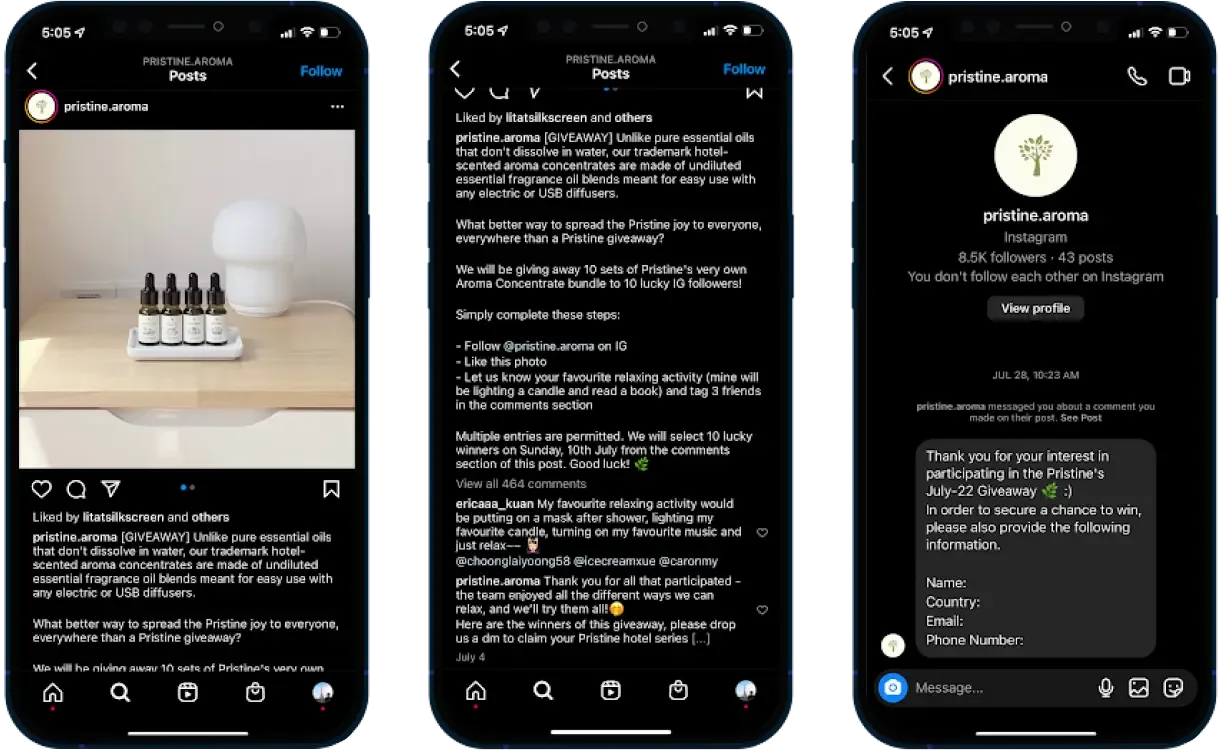
Pristine Aroma, a leading fragrance brand in Singapore, proved the power of moving from email to WhatsApp for sales campaigns. During their 9.9 sales event, they needed a way to cut through the noise and reach customers directly on their mobile screens. They sent a targeted WhatsApp broadcast offering a 20% discount code to a segmented list of customers. The campaign delivered a 56% open rate and a 16% click-through rate—significantly higher than industry averages for email. Most impressively, this single strategic broadcast resulted in an 18% conversion rate, delivering a massive 13X return on investment (ROI). Read about how Pristine Aroma story achieved success using SleekFlow.
Engineering your next phase of growth
The most effective marketing strategies for small businesses today are those that aggressively reduce friction. Whether it is the friction of moving from an ad to a purchase, or the friction of a support agent trying to locate an order number, removing these barriers drives growth.
By adopting a technical mindset—viewing your marketing as an ecosystem of API integrations, automated workflows, and data synchronisation—you move beyond simple promotion and start operating with the efficiency of an enterprise. Start by auditing your current communication channels and ask yourself: is my data flowing, or is it stagnant? The answer will define your next strategic move.


