How small businesses actually use AI: two Singapore founders explain


TL; DR: Quick Summary
- Most small businesses now use AI, but few can point to a measurable return on it.
- The founders who get results start with one specific, expensive bottleneck, not a company-wide rollout.
- Diamond Ateliers renders a bespoke ring with generative AI before it is made, cutting design turnaround from weeks to hours.
- ErgoTune uses AI for a queryable "second brain," workflow-based hiring, and long-tail content that was once too small to bother with.
- In both businesses, AI does the work and a person makes the final call.
Every brand says it uses AI now. Far fewer can point to the one place it actually earned its keep.
So how do small businesses actually use AI in ways that pay for themselves? The ones seeing a return rarely switch it on everywhere at once. They find one slow or expensive bottleneck, aim AI straight at it, and keep a person on the final call. Two Singapore founders we spoke to did exactly that, in very different businesses.
For SleekFlow's SleekTalks series, we sat down with both of them.
Neither built his business on AI, and neither started with a company-wide rollout. Each found one specific, expensive bottleneck and pointed AI at it. These were narrow fixes to problems they already had, not a strategy memo.
Joshua Chan co-founded and bootstrapped ErgoTune and its sister desk brand EverDesk+ with two co-founders, no funding, and no industry experience, before Una Brands acquired both in an eight-figure deal.
Donovan Siah built Diamond Ateliers, a bespoke jewelry brand, from a weekend side hustle he ran from home while holding down a full-time corporate job. It now has a showroom on Orchard Road and makes up to 100 custom rings a month.
Both founders did the same thing.
They found the narrow, specific place where AI could do real work, proved it there, then scaled from it. One renders products before they are built. The other handed his internal data, hiring, and content to it. In both, a person is always involved in the decision-making.
Adoption is not the hard part anymore. 58% of small businesses now use generative AI, up from 40% a year earlier. Getting a return from it is harder, and that is what these two got right.
How are retailers using AI to close high-consideration sales?
Retailers selling high-consideration products are using generative AI to show the outcome before the customer commits. At Diamond Ateliers, AI renders a bespoke ring during the design consultation, so buyers can see and adjust it before production starts. That turns a purchase made on trust into one made on something the customer can see, and it shortens the decision.
Diamond Ateliers: closing the trust gap in a bespoke purchase
Don sizes up his business from the customer's side. Bespoke jewelry tests that idea harder than most categories. A customer describes a ring they have never seen, the jeweler interprets that description, and weeks of work go into something the buyer cannot preview until it is finished.
Generative AI changed that.
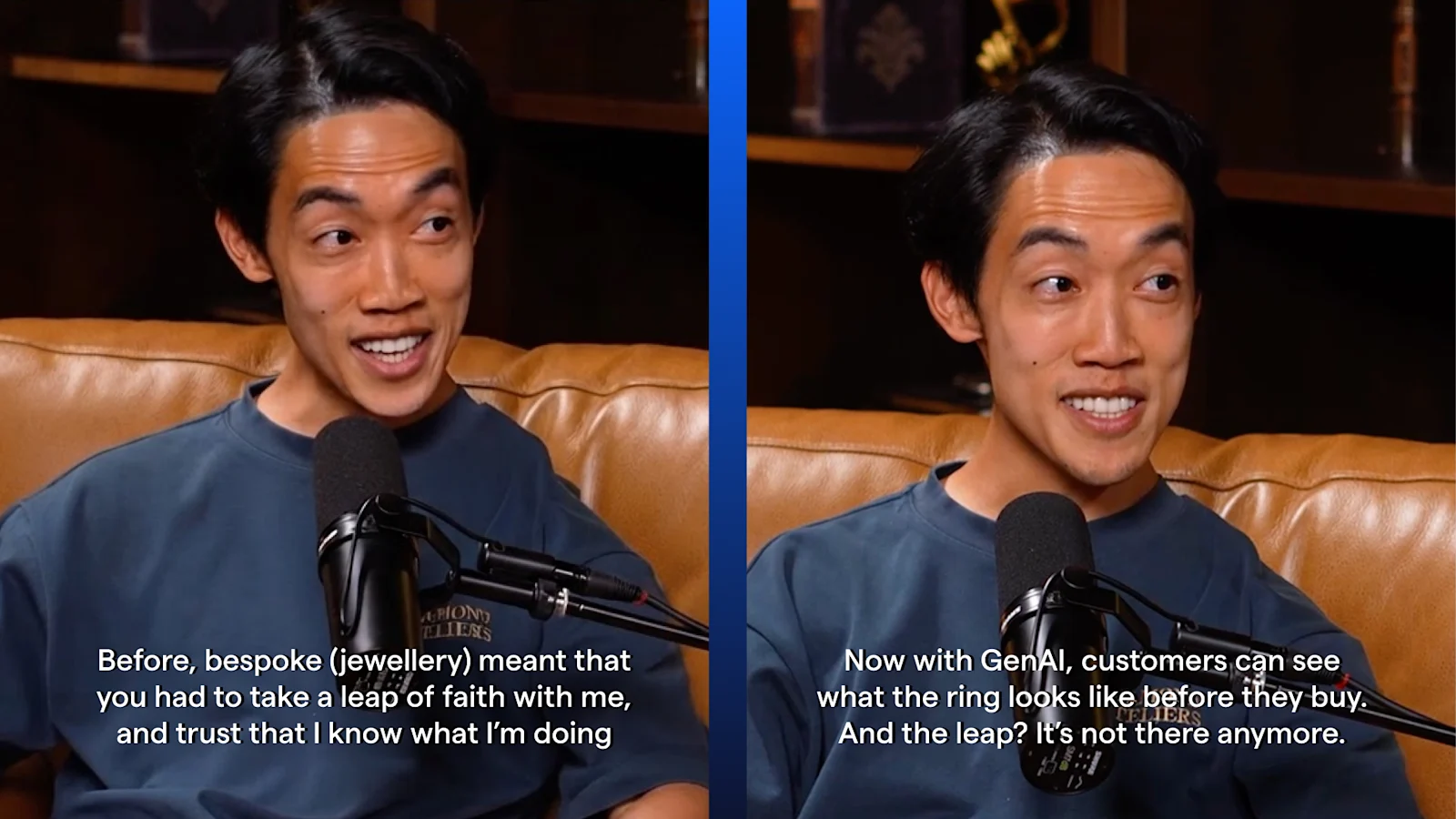
In Don's words, "we are able to actually showcase to you how your ring looks before it's made." The customer sees it, asks for changes, and commits once the design matches what they had in mind. Where bespoke once "meant you need to take a leap of faith with me," he says, "there's no need to leap anymore."
The CAD work Don's Hong Kong team once needed weeks for now takes hours:
Before: two to three weeks, sometimes a full month
After: a few hours, with the customer reviewing the render before anything is made
A person still decides whether a design is real.
Some customers arrive with their own AI concepts, and, as Don says, they "generate very very funny stuff." Someone on his team still has to look at the image and know, from years of working with metal and stone, whether it holds up, or as Don puts it, "it's up to us to discern whether it's feasible."
That judgment, honed over a third-generation family trade in diamonds, is the part AI doesn't take over. The payoff he points to is conversion: customers commit faster when the part of the sale that used to run on trust now runs on something they can see.
How are founders using AI to run leaner operations?
Founders are using AI to compress internal work, the kind customers never see. At ErgoTune, Joshua Chan pointed it at three jobs that used to eat time:
a "second brain" that lets anyone query customer, supplier, and sales data in plain language
a hiring process shaped around what AI already handles
content built for long-tail search terms that were once too small to justify writing
ErgoTune: rebuilding the internal operating system
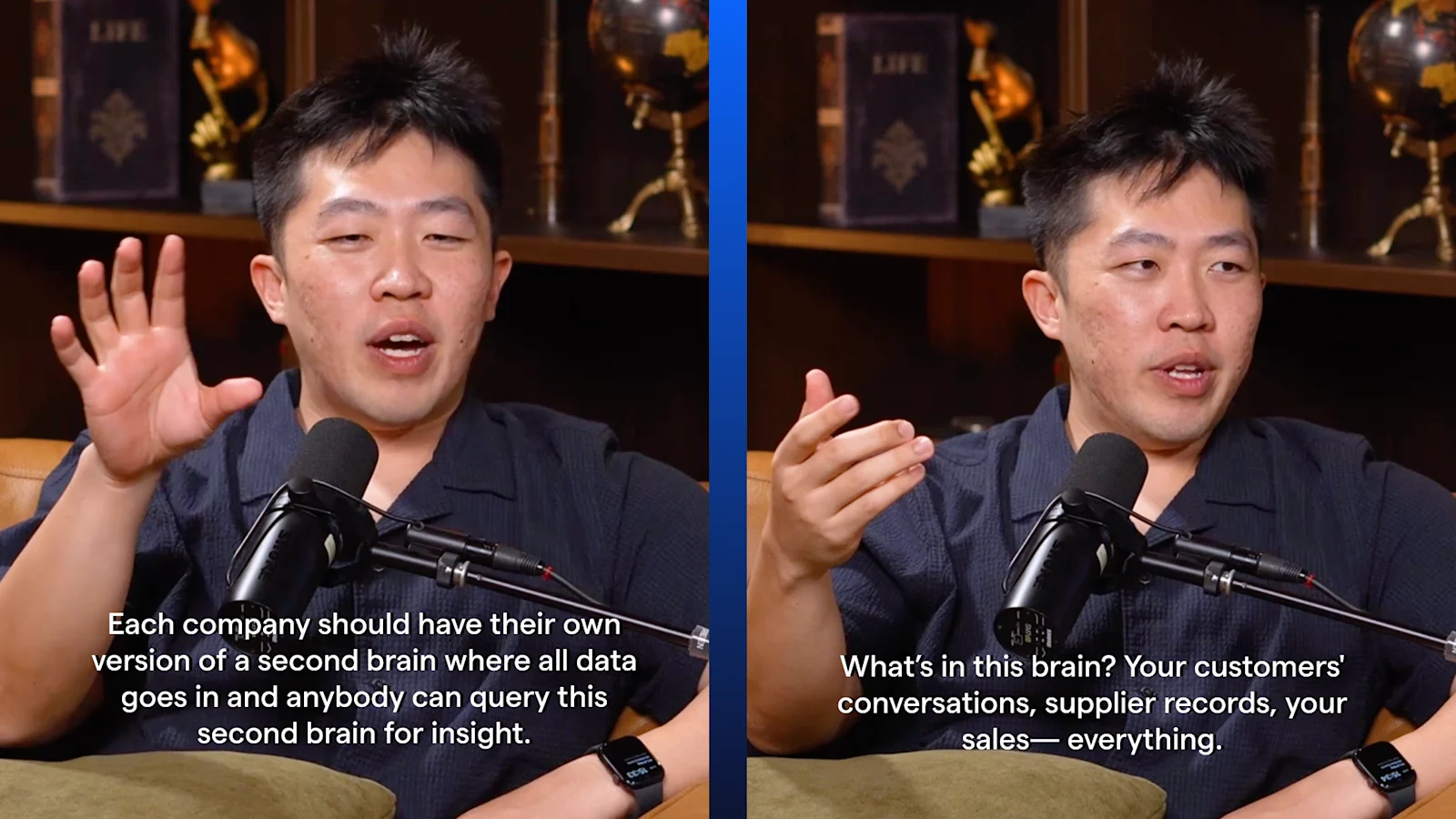
Joshua's approach runs on focus. He aims AI at the work that was eating time, and named three uses.
A second brain. "Each company should have their own version of a second brain where all data goes in, and anybody can query this second brain," he said. Customer conversations, supplier records, and sales data go into one place. Before that, finding a pattern in complaints meant reading the inbox by hand and counting how often a keyword came up. SleekFlow builds that same pattern-spotting into AgentFlow's Data Analyst Agent, which monitors conversations across channels and surfaces the recurring topics on its own.
Hiring around what AI can do. Before filling a role, Joshua maps the workflows it needs and checks which ones AI already handles. "If you can get AI to do it," he said, "then you have what we call your AI-first type of company." Headcount doesn't shrink by default, but every hire has a clearer brief. Mapping those workflows is one thing; building the ones AI runs takes an automation tool like SleekFlow's Flow Builder, so the repeatable steps run on their own and people keep the judgment calls.
Content that used to be uneconomic. A page targeting a keyword with maybe 10 searches a month never justified a writer's time. AI changed that math, so the low-volume terms competitors ignored became worth covering at scale.
Does AI replace people in a small business?
No. In both businesses, AI does the work up to a decision, and a person still makes the call, whether a design is physically buildable or whether a role still needs a human. AI carries the load and speeds the process; judgment stays with the people who own the outcome.
Neither founder ran a company-wide AI program on day one.
Each found a bottleneck they had already felt, a customer's leap of faith, or a pile of messages nobody had time to read, and fit a tool to it. Then they extended it.
Both keep a human checkpoint.
At Diamond Ateliers, every AI-rendered design still needs a jeweler to confirm it can physically be made. At ErgoTune, the hiring map hands AI the workflows it can run and leaves people the judgment it can't. Both founders describe AI and the person working as a team.
Where should a small business start with AI?
Start with one high-value bottleneck, a single conversation or workflow that is slow or runs on trust, rather than a broad "AI strategy."
Prove it there, then extend the same approach across the rest of the customer journey, from first conversation to repeat purchase. The first win funds the next one.
Both founders started from the same question: which single conversation or workflow is the real bottleneck right now?
For Don it was the pre-purchase leap of faith.
For Joshua it was a customer inbox nobody had time to read.
Neither reached for a company-wide rollout, and the wider numbers back the instinct. In MIT's 2025 report The GenAI Divide, about 95% of enterprise generative-AI pilots delivered no measurable return.
Those were big-company pilots, not corner shops, but the lesson travels down: our read is that spreading AI thin, before any single use case has proven itself, is where the budget tends to disappear.
The pilots that pay off start with one job.
How can SleekFlow help a small business use AI?
SleekFlow puts AI on a defined task and keeps a person on the decisions that matter, which is the pattern both founders described. That is what AgentFlow, SleekFlow's AI agent platform, is built for.
You train an agent on your own content and decide what it is allowed to do. It handles a defined job, like qualifying a lead or answering an order question, and passes anything beyond that to a person with the conversation attached.
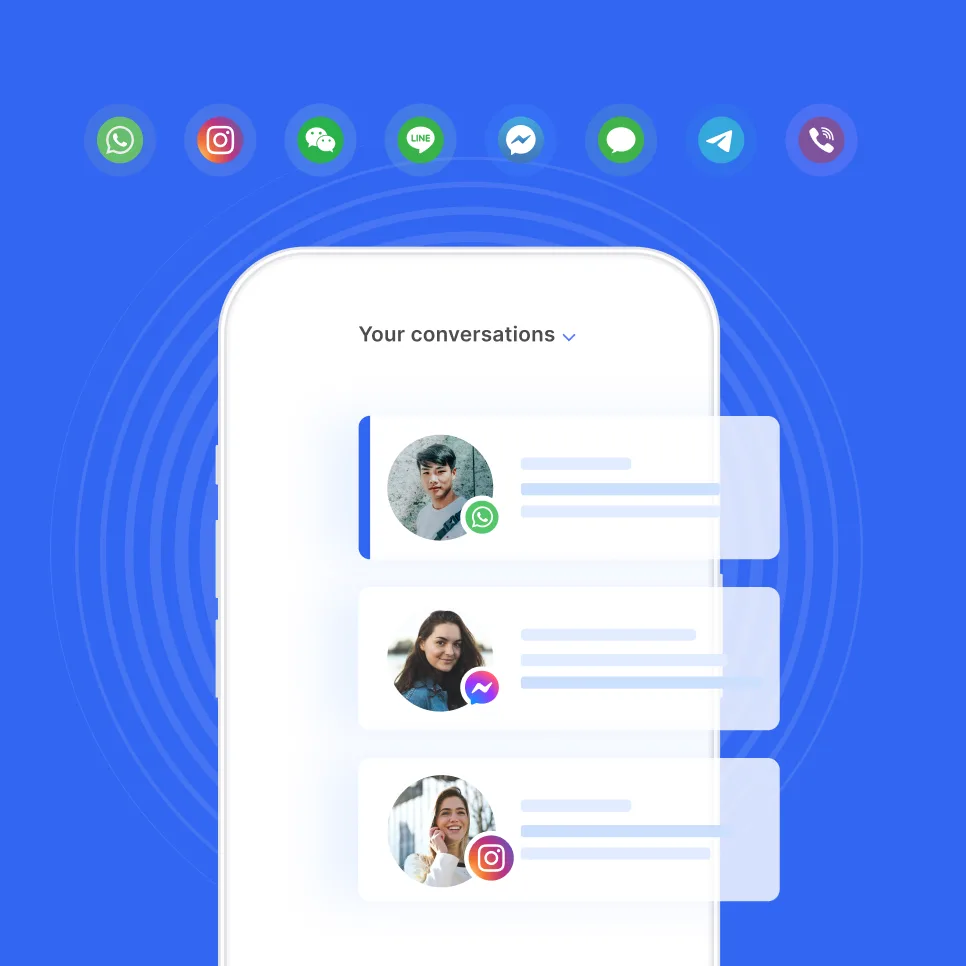
It works across WhatsApp, Instagram, Messenger, and web chat, wherever the customer already is.
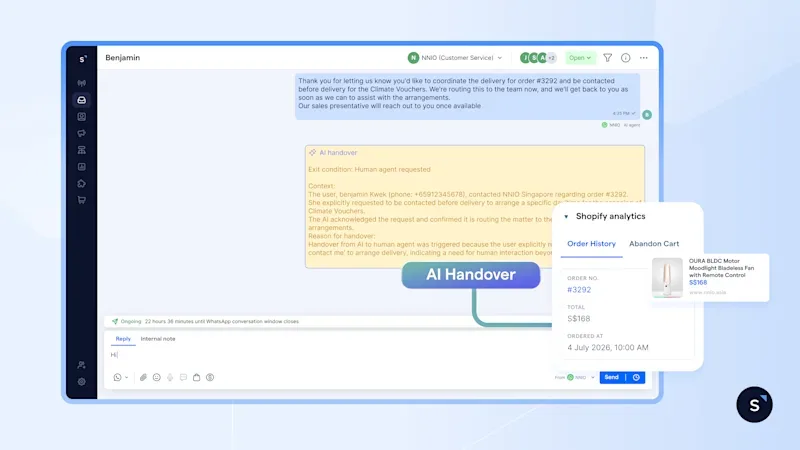
NNIO, a Singapore home-appliance brand founded in 2024, is a working example. Four separate teams were handling inquiries with no shared view of the customer, so after-hours messages piled up when buying intent was highest, and follow-ups slipped.
They put an AI agent on after-hours support, unified their channels into one inbox, and used Flow Builder to route conversations and capture retail warranty data.
40% faster response time
30% of inquiries handled by AI agents
260% increase in retention rates
20% more completed checkouts and a 5% higher conversion rate
Want to outcompete your peers with SleekFlow's help?
Pick the one task that is slow or runs on trust, put AI on it with a person keeping the final call, and let each win fund the next. It is a smaller, slower start than most AI plans promise, and the one more likely to still be working a year from now.


